
Meramec Bluffs – Lutheran Senior Services Photos


Portable Radio with Large Buttons

Large Button TV Remote

Shiatsu Neck Massager
Choosing a senior living community is a deeply personal decision, and photos offer a vital first look into daily life. Meramec Bluffs, a Lutheran Senior Services community, provides genuine imagery that showcases its warm atmosphere, engaging activities, and compassionate care. These photos help families envision their loved one thriving in a supportive, faith-based environment before scheduling an in-person visit.
You’re on a quest to find the perfect senior living community for your parent, grandparent, or maybe even for yourself. It’s a journey filled with emotions—hope, concern, and a deep desire for safety, comfort, and joy. In today’s digital age, your first step often isn’t a phone call or a drive; it’s a click. You browse websites, scanning for the one thing that can bridge the gap between a brochure’s promises and reality: photographs. Real, honest, telling photographs. When it comes to Meramec Bluffs – Lutheran Senior Services photos, you’re looking at more than just pictures of buildings. You’re looking for a window into a potential future. You’re searching for smiles that seem genuine, rooms that feel like homes, and corridors that look like they’ve heard laughter. This article is your guide to understanding what those photos truly offer, how to read them like a pro, and why Meramec Bluffs, as part of the respected Lutheran Senior Services network, presents a visual case for a life well-lived.
Let’s be honest. Marketing can be shiny. It can use beautiful, broad-angle lenses and professional staging that makes any space look magazine-worthy. But does it look lived-in? Does it feel loved? The power of authentic community photography lies in its imperfections—the slight clutter on a coffee table that says “someone was here,” the personal photos on a wall, the way sunlight falls across a favorite armchair. In the world of senior living, where the transition can be fraught with fear of the unknown, these visuals are paramount. They answer the unspoken question: “Will this place feel like home?” So, we’re going to look at the photos of Meramec Bluffs not just with our eyes, but with our hearts and our practical minds. We’ll explore what they show, what they might not show, and how to use them as a crucial tool in your decision-making process.
Key Takeaways
- Understanding meramec bluffs – lutheran senior services photos: Provides essential knowledge
📑 Table of Contents
- The Unignorable Power of Visuals in Senior Living Decisions
- Meramec Bluffs: A Snapshot of Community and Landscape
- Decoding the Daily Life: What the Photos Actually Show You
- The Critical Importance of Authentic, Unstaged Photography
- How to Critically Evaluate Senior Living Photos: A Practical Guide
- Beyond the Photos: The Non-Negotiable Next Step
- Conclusion: Let the Photos Guide, But Your Heart Decide
The Unignorable Power of Visuals in Senior Living Decisions
Why do we place such immense weight on photos? It’s simple: they bypass the jargon. A website can say “vibrant lifestyle” a hundred times, but a single photo of residents laughing together during a craft session, their faces concentrated and joyful, tells you everything. It’s the difference between reading a review and seeing a friend’s genuine smile after a great experience. For families, especially those helping a parent from afar, photos are the primary sensory input available before a visit. They build confidence or raise red flags.
Building Trust Before the First Visit
Trust is the currency of senior living. You are entrusting the care of someone you love to a team of strangers. Authentic photography is a direct deposit into that trust account. When you browse through a gallery of Meramec Bluffs Lutheran Senior Services images and see staff members engaged in conversation with residents, not just performing tasks, it signals a culture of person-centered care. You see a caregiver sitting at a table with a resident, looking at a photo album. That image communicates patience, relationship-building, and dignity far more effectively than a bullet point list of “24-hour care.” It’s proof of presence, not just service.
Conversely, a complete absence of resident faces in common areas, or only perfectly posed, stiff group shots, can be subconsciously telling. It might indicate a community where residents are kept out of sight, or where engagement is minimal. The best senior living photos feel like a peek into a real day. They show a mix of activity and quiet moments. You might see someone napping in a sunlit chair, a small group deeply involved in a trivia game, and another resident tending to a plant in a hallway garden. This variety mirrors real life, and that’s what you want to see.
Photos as an Emotional Barometer
Beyond logistics, photos are an emotional barometer. The transition to senior living is an emotional rollercoaster for the resident and the family. You need to see evidence of joy, contentment, and community to soothe those anxieties. Look for the small moments: the shared joke, the focused attention on a puzzle, the relaxed posture of someone enjoying a book. These are the micro-moments of happiness that define quality of life. In Meramec Bluffs photos, given its scenic location on the bluffs overlooking the Meramec River, you’ll likely also see the profound impact of nature on resident wellbeing. Images of balconies with river views, walking paths through landscaped grounds, or seasonal patio gatherings show an understanding that environment is a core component of care. Access to safe, beautiful outdoor spaces is not a luxury; it’s a therapeutic necessity, and photos that showcase this are showing you a holistic approach to wellness.
Meramec Bluffs: A Snapshot of Community and Landscape
Meramec Bluffs isn’t just a building; it’s a place defined by its extraordinary setting. Operated by Lutheran Senior Services, a faith-based, non-profit organization with a long history in Missouri, the community leverages its unique geography to offer a distinctive living experience. The photos should immediately communicate this sense of place. You’re not looking at a generic senior living facility plopped into a suburb. You’re looking at a community that is of its landscape.

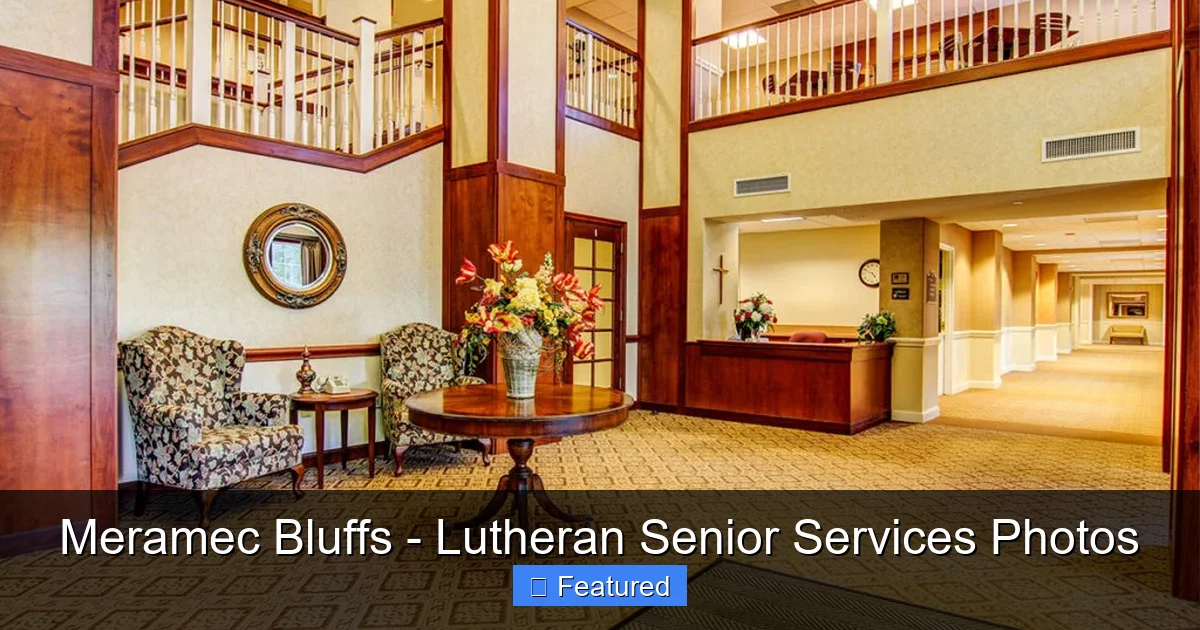
Visual guide about Meramec Bluffs – Lutheran Senior Services Photos
Image source: d354o3y6yz93dt.cloudfront.net
The Defining Feature: The Bluffs and River
The name isn’t a marketing gimmick. The community is situated on the actual bluffs high above the Meramec River. Therefore, a significant portion of the external and some internal photography should celebrate this. Look for wide-angle shots from resident balconies or windows that capture the vast river valley. You should see photos of the walking trails that wind through the wooded areas on the property. These aren’t just pretty pictures; they are evidence of an amenity that directly contributes to mental and physical health—access to nature, clean air, and stunning vistas. This is a key differentiator. When comparing to other communities, such as those in more urban settings, this natural setting is a massive selling point that should be visually prominent.
Seasonal photos are particularly telling. Do they show the community in spring with blossoming trees, in summer with lush greenery and perhaps residents on a shaded patio, in fall with breathtaking foliage, and in winter with a serene, peaceful snow cover? This shows a community that is alive year-round and encourages residents to engage with the changing seasons, a vital aspect of maintaining a connection to the rhythm of life.
Architecture and Campus Design
The architecture at Meramec Bluffs typically blends with its natural surroundings—think warm materials, large windows, and porches or patios that extend the living space outdoors. Photos should show a campus feel, not just a single institutional building. Look for images of smaller, residential-style buildings, gardens, courtyards, and maybe a central clubhouse or dining area that serves as the heart of the community. The design should feel inviting from the street, not imposing. This architectural approach, common in newer LSS communities, is intentionally designed to reduce the “institutional” feel that can be so off-putting. It signals that the focus is on creating a neighborhood, not just a facility.
Internally, the design should follow suit. Hallways should be well-lit, with natural light where possible, and adorned with resident art or local crafts. This isn’t just decoration; it’s a statement that this is a home, and the residents are its artists and owners. When you see photos of these interior common spaces, ask yourself: could I see myself or my loved one walking here comfortably? Does it feel warm and welcoming, or like a hotel lobby?
Decoding the Daily Life: What the Photos Actually Show You
This is where the detective work begins. You’re moving from “Is the place pretty?” to “What is life here actually like?” You must look beyond the surface of each Meramec Bluffs Lutheran Senior Services photo and ask narrative questions. Who is in the picture? What are they doing? Where is the photo taken? The answers build your story of the community.
Visual guide about Meramec Bluffs – Lutheran Senior Services Photos
Image source: d354o3y6yz93dt.cloudfront.net
The Three Critical Categories of Photos
Divide the photos you see into three buckets: Spaces, People, and Programs. A great photo gallery will have a healthy mix of all three. A gallery with only empty, perfect rooms is a red flag. A gallery with only staged group shots is also incomplete. You want the full spectrum.
- Spaces: This includes resident apartments (studio, one-bedroom), bathrooms, kitchens (if available), dining rooms, lounges, libraries, fitness centers, salons, and outdoor areas. For apartments, look for size, natural light, storage solutions, and safety features like grab bars (are they subtle and well-integrated?). Is there personalization? Do the photos show a resident’s own furniture and belongings, or just model furniture? The latter suggests a showroom, not a home. For common areas, assess cleanliness, modernity, and flexibility. Are there small, intimate seating nooks as well as larger gathering spaces? This indicates an understanding that social needs vary.
- People: This is the most important category. Are residents the focus? Are they engaged in natural activities—talking, reading, working on a puzzle, participating in a exercise class? Are their expressions genuine? Are staff members shown interacting with residents at eye level, demonstrating active listening and assistance? Pay special attention to photos of staff assisting residents with mobility or during meals. Is the assistance respectful and dignified? Does the staff member’s body language convey patience? These are the moments that define care quality.
- Programs & Activities: Photos of scheduled activities—music therapy, gardening, educational lectures, outings—show a commitment to a robust lifestyle. But look deeper. Are the activities diverse? Do they cater to different interests (creative, intellectual, physical, spiritual)? Do they include intergenerational programs (visits from school children)? Do they show both large group events and smaller, club-style gatherings? A rich activity program is a hallmark of a community that fights isolation and promotes purpose.
The “In-Between” Moments
The most telling photos are often the candid, “in-between” ones. The photo of a resident and a staff member sharing a quiet moment in a hallway. The shot of someone looking out a window with a cup of coffee. The picture of a table set for two for a simple lunch. These moments aren’t part of the official activity calendar, but they are the fabric of daily life. They show that the community supports not just scheduled engagement, but also the quiet, contemplative, and personal moments that are equally important to a person’s wellbeing. If the Meramec Bluffs photo gallery includes these, it’s a very positive sign of a community that values authentic human connection over a packed, performative schedule.
The Critical Importance of Authentic, Unstaged Photography
Let’s address the elephant in the room: stock photography. Some senior living websites, unfortunately, rely heavily on generic, perfectly-lit stock images of smiling, diverse groups of seniors doing vaguely “senior” activities (holding hands, looking at a sunset, playing chess). These are useless. They tell you nothing about the actual community. You must, therefore, demand authenticity from the Meramec Bluffs – Lutheran Senior Services photos you review.
Spotting the Genuine Article
How do you know if a photo is staged or authentic? Look for these cues:
- Imperfections: Are there personal items on shelves? Is there a slightly crooked painting? Is someone’s shirt not perfectly tucked? These are signs of real life.
- Natural Expressions: Are smiles relaxed and natural, or are they the “say cheese” forced grins? Are some residents simply observing, not participating? That’s realistic.
- Context: Does the background make sense? If it’s a craft activity, is there evidence of the project in progress (glue, scraps of paper)? If it’s a dining photo, does the food look like a typical meal, not a catered platter?
- Consistency: Do the people in different photos look like they belong to the same community? Do you see the same friendly faces in multiple shots, suggesting a real resident population? Stock photos will feature entirely different people in every shot.
Lutheran Senior Services communities, including Meramec Bluffs, generally pride themselves on transparency. Their marketing is often built on real stories and real images. They understand that families are making a monumental decision and need the truth. Therefore, their official website photo galleries should be a primary source of authentic imagery. Be wary of third-party listing sites that might mix in stock photos. Always try to view the official community website for the most accurate visual representation.
The Faith-Based Difference in Imagery
As a faith-based organization, Lutheran Senior Services integrates spiritual wellness into its mission. This may be reflected subtly or directly in photos. You might see images of a chaplain visiting with a resident, a small prayer group, a chapel space, or even just the general atmosphere of peace and service. It’s not about overt proselytizing in the photos; it’s about capturing an environment where spiritual needs are recognized and supported as part of holistic care. Look for a sense of calm, reverence in certain spaces, and staff interactions that seem to go beyond the physical to address emotional and spiritual comfort. This is a unique aspect of their care model that can be perceived visually if you know to look for it.
How to Critically Evaluate Senior Living Photos: A Practical Guide
Now that you know what to look for, let’s develop a systematic approach. Next time you click through a Meramec Bluffs photo gallery, have a notepad (or a notes app) open. We’re going to analyze like a pro.
The “First Glance” Test
Before you zoom in, what is your immediate emotional reaction? Do you feel a sense of warmth, light, and openness? Or do you feel a sense of coldness, clutter, or institutional sterility? Your gut reaction to the overall aesthetic is valid. Lighting is everything. Are the photos bright with natural light? Dark, fluorescent-lit hallways can feel depressing. Warm, incandescent lighting can feel cozy. Note the color palette. Are there warm woods, soft fabrics, and personal touches, or is it predominately institutional grays, beiges, and stark whites?
The Zoom-In Audit
Now, pick 3-4 representative photos—a resident room, a common area, and a dining shot—and zoom in. Conduct this quick audit:
- Maintenance & Cleanliness: Is the carpet clean and well-maintained? Are baseboards dust-free? Are windows clean? Are fixtures (faucets, door handles) in good repair? This is a direct indicator of overall facility upkeep and pride.
- Safety & Accessibility: In a bathroom photo, are grab bars present near the toilet and in the shower? Is the shower entry curbless or have a low threshold? Are there potential trip hazards like uneven flooring or cluttered pathways? In hallways, are handrails present and at the correct height?
- Furniture & Dcor: Is the furniture comfortable-looking, with arms on chairs to aid in standing? Does it look heavy and institutional, or more residential? Is the dcor personalized? Are there resident artworks on the walls? This shows a community that values individuality.
- Technology: Do you see modern, accessible call systems in rooms? Are there enough outlets for personal devices? Is there Wi-Fi signage? This indicates a community that embraces modern conveniences.
Reading Between the Lines of “Lifestyle” Shots
A photo of a chef in a kitchen doesn’t tell you about food quality. A photo of a full dining room doesn’t tell you about menu variety or dietary accommodations. These are “lifestyle” shots meant to evoke a feeling. Your job is to ask the follow-up questions that the photo can’t answer. For example:
- A photo of a bustling dining room: Is the seating flexible (2-tops, 4-tops, communal tables) or just long, cafeteria-style rows? The former supports varied social preferences.
- A photo of an activity: Is it led by a staff member or a resident volunteer? Resident-led activities often indicate a stronger sense of empowerment and community.
- A photo of an outdoor space: Is it shaded? Are there comfortable seating options? Is it secure (fenced, monitored)? A beautiful but unusable space is a missed opportunity.
These questions will form the basis for your conversation with the community’s sales director when you schedule a tour. “I saw in your photos you have a beautiful patio. Can you tell me about how often it’s used and what activities happen there?” This shows you’ve done your homework.
Beyond the Photos: The Non-Negotiable Next Step
Here is the cardinal rule of senior living research: **No amount of photos, videos, or reviews can replace a personal, in-person visit.** Photos are a filter. They help you shortlist communities that align with your aesthetic and initial values. But the final decision must be made with all your senses.
What Photos Can’t Capture
There are entire dimensions of community life that are impossible to photograph:
- Sound: Does the community hum with pleasant activity, or is there a constant, distressing overhead call system? Are staff voices kind and patient, or hurried and stressed? Do you hear music, conversation, or mostly silence?
- Smell: This is huge. What is the predominant odor? Is it clean, with a hint of coffee or baked goods? Or is it the unmistakable smell of disinfectant, urine, or stale food? A community that manages odors well is managing care fundamentals well.
- Touch & Feel: Is the furniture comfortable? Are fabrics soft? Is the temperature comfortable? Does the environment feel physically pleasant to be in?
- True Energy: The overall “vibe” or emotional atmosphere. Is there a sense of purpose and contentment, or a feeling of resignation and waiting? This is felt, not seen.
Scheduling Your Meramec Bluffs Tour: Be an Active Observer
When you call to schedule your visit, be specific. Say, “We’ve reviewed your online photos and are particularly interested in seeing the river-view apartments and the activity rooms in person. Can we ensure those are part of the tour?” This demonstrates your engagement.
During the tour, be a detective. Venture off the shown path. Peek into a corner of the dining room during a meal. Sit in a lounge chair for a moment. Observe interactions between staff and residents who are not being “showcased.” Ask to see a resident room that isn’t the model apartment. Ask the tour guide, “What’s your favorite part of this community, and what’s the biggest challenge you face here?” Their answer will be telling.
Also, use your visit to ask the questions the photos prompted. “I saw photos of your garden path. Who maintains it, and are residents involved?” “I saw a photo of a small-group activity. How often do those happen, and how are they decided?” “Can you walk me through a typical mealtime for a resident needing assistance?”
Finally, if possible, try to have a casual conversation with a current resident who isn’t being guided by staff. “What do you like most about living here? What’s the food like? How do you spend your days?” Their unvarnished opinion is gold. Remember, you are not just evaluating a building; you are interviewing a potential home for your loved one. The photos got you in the door; your senses and your questions will give you the final verdict.
Conclusion: Let the Photos Guide, But Your Heart Decide
The journey to finding the right senior living community is deeply personal and profoundly important. In our digital-first world, the Meramec Bluffs – Lutheran Senior Services photos you discover online are your first, and often most influential, conversation with the community. They offer a precious glimpse into the potential daily rhythms, the physical environment, and the social fabric of life on the bluffs. They can spark hope, alleviate fear, and help you form a shortlist of places worth a deeper look.
Approach these photos with a keen, critical, but hopeful eye. Look for authenticity over perfection. Seek evidence of genuine human connection, not just beautiful spaces. Notice how the community’s stunning natural setting is integrated into resident life. Let the images tell you a story—and then go write the next chapter with a personal visit. Ask the tough questions, trust your senses, and listen to your gut. Because at the end of the day, the best senior living community isn’t the one with the shiniest website; it’s the one that, when you walk in, feels like a place where your loved one can find peace, purpose, and a new chapter of joy. Meramec Bluffs, with its unique setting and faith-based mission, presents a compelling visual story. Now, it’s your turn to see if that story becomes your family’s reality.
Frequently Asked Questions
Are the photos of Meramec Bluffs on the website current and realistic?
Yes, Lutheran Senior Services strives to use current, authentic photography on its official community websites. These images are typically taken within the past year and aim to show real residents, actual apartments (often with resident permission), and genuine activities. They are not generic stock photos. However, for the most up-to-date view, always ask about recent renovations or new programs during your tour.
What specific things should I look for in photos of resident apartments?
Focus on natural light, size, storage solutions (closets, cabinets), and safety features like subtly integrated grab bars in bathrooms. Look for signs of personalization—can residents bring their own furniture and art? Check if the layout feels residential or institutional. Also, note the view from the window; at Meramec Bluffs, many apartments offer coveted views of the river bluffs.
Do the photos show the full range of care levels offered?
A comprehensive photo gallery should depict the entire continuum, from independent living apartments to assisted living and memory care environments. Look for differences in layout, safety features, and staff-to-resident interaction in photos from different care areas. If memory care areas are shown, look for secure, calming environments and specialized activity spaces. You can also review the Lutheran Senior Services Laclede Groves Guide for an example of how a full continuum of care is typically presented.
How can I use the photos to prepare for my in-person tour?
Print or save photos that raise questions for you. For example, if you see a cozy library but no computers, ask about technology access. If you see a beautiful outdoor space, ask about the maintenance schedule and resident-led gardening clubs. Use the photos to identify your priorities—is it the river view, the dining room, the fitness center?—and ensure those areas are highlighted during your visit. This makes you an active, informed participant.
Do the photos reflect the Lutheran heritage of the community?
The heritage is often reflected in the tone of the photos rather than overt symbols. Look for an overall atmosphere of peace, community, respect, and service. You might see images of chaplains, chapel services, or ecumenical gatherings. More subtly, the respectful way staff interact with residents in photos aligns with Lutheran values of dignity and compassion. The focus on creating a true “community” rather than just a facility is itself a reflection of this heritage.
What’s the biggest mistake families make when relying on photos?
The biggest mistake is treating photos as a final verdict. Photos are a starting point. The mistake is falling in love with a beautiful photo and then ignoring negative vibes or red flags during the actual visit. Conversely, a community with less-polished photos might have an incredibly warm, authentic atmosphere that a camera can’t capture. Always, always visit in person. Use the photos to get to 3-4 finalists, then let your senses and your heart make the final choice. Consider also reading about the general principles of evaluating senior living apartments to supplement your visual assessment with broader criteria.
