
Low Income Senior Housing Georgetown Tx


Tablet for Seniors

Lightweight Aluminum Walker

GPS Tracker for Elderly
Finding low income senior housing in Georgetown, TX can be a lifeline for older adults on fixed budgets who need safe, affordable, and supportive living environments. With rising costs of living and limited retirement savings, many seniors struggle to afford private rentals or assisted living. Fortunately, Georgetown offers several public and nonprofit programs designed specifically for seniors with limited income—including HUD-subsidized apartments, state-assisted housing, and community-based support services. This guide walks you through eligibility requirements, application processes, available properties, and practical steps to secure stable housing so you or your loved one can age in place with dignity and comfort.
Finding safe, dignified, and affordable housing as a senior doesn’t have to be overwhelming—especially in a growing city like Georgetown, Texas. As people age, maintaining independence becomes increasingly important, but rising rent prices and fixed incomes often create tension. That’s where low income senior housing in Georgetown, TX comes in: it provides a bridge between financial limitations and the need for reliable shelter.
Georgetown, located just north of Austin in Williamson County, has seen steady population growth over the past decade. While this brings economic opportunities, it also means higher housing costs across the board. For seniors living on Social Security, pensions, or disability benefits, these increases can be devastating. The good news? There are dedicated resources and housing programs tailored specifically for older adults who meet certain income thresholds. These aren’t just “cheap apartments”—they’re thoughtfully designed communities that prioritize accessibility, safety, and social connection.
In this comprehensive guide, we’ll walk you through everything you need to know about accessing low income senior housing in Georgetown. We’ll cover eligibility rules, how to apply, what to expect once you’re approved, and even share tips from residents who’ve navigated the system successfully. Whether you’re helping a parent move or planning ahead for your own future, this article will give you clear, actionable steps toward finding a place to call home.
Key Takeaways
- Georgetown has multiple low income senior housing options funded by HUD, Texas DSHS, and local nonprofits—ranging from subsidized apartments to supportive living communities.
- Eligibility is based on age (62+), income limits, and residency status, typically requiring applicants to earn no more than 50% of the area median income.
- Waiting lists are common but not universal; some properties like San Gabriel Senior Village have current openings or short wait times.
- Application assistance is often available through aging services agencies like Meal on Wheels or Area Agency on Aging of the Capital Area (AAA).
- Rent subsidies and utility allowances reduce out-of-pocket costs, making monthly payments as little as $50–$200 for qualified seniors.
- Transportation, meals, and healthcare access are integrated into many housing programs, enhancing quality of life and independence.
- Staying informed and applying early increases chances of securing placement; regular check-ins with housing coordinators are recommended.
📑 Table of Contents
- Understanding Low Income Senior Housing in Georgetown, TX
- How to Qualify for Low Income Senior Housing in Georgetown
- Available Low Income Senior Housing Options in Georgetown
- Applying for Low Income Senior Housing: Step-by-Step Process
- Support Services and Community Resources
- Future Outlook for Low Income Senior Housing in Georgetown
- Conclusion: Finding Dignity Through Affordable Housing
Understanding Low Income Senior Housing in Georgetown, TX
When most people hear “low income senior housing,” they think of government-subsidized apartments or nonprofit-run complexes. And while those exist, the landscape is actually broader than many realize. In Georgetown, options include:
– Publicly funded developments managed by the U.S. Department of Housing and Urban Development (HUD)
– State-subsidized units through the Texas Department of Housing and Community Affairs (TDHCA)
– Nonprofit-operated senior villages offering both rental units and supportive services
– Tax-credit housing developed under the Low-Income Housing Tax Credit (LIHTC) program
What ties all these together? They follow strict federal and state guidelines regarding rent calculations, occupancy rules, and resident rights. Most importantly, they serve individuals aged 62 and older whose household income falls below 50% of the Georgetown-area median income—which currently sits around $80,000 annually for a single person.
One thing worth noting: unlike emergency shelters or transitional housing, low income senior housing isn’t meant for crisis situations. It’s intended for long-term stability. Residents usually sign annual leases and must maintain compliance with community rules while enjoying protections against unfair eviction.
The Importance of Age-Appropriate Design
Beyond affordability, modern low income senior housing emphasizes livability. Many new or renovated buildings feature:
– Ground-floor units with no stairs
– Walk-in showers and grab bars
– Emergency pull cords in bathrooms
– Wide doorways for wheelchair access
– On-site laundry and community rooms
– Scheduled social activities and wellness programs
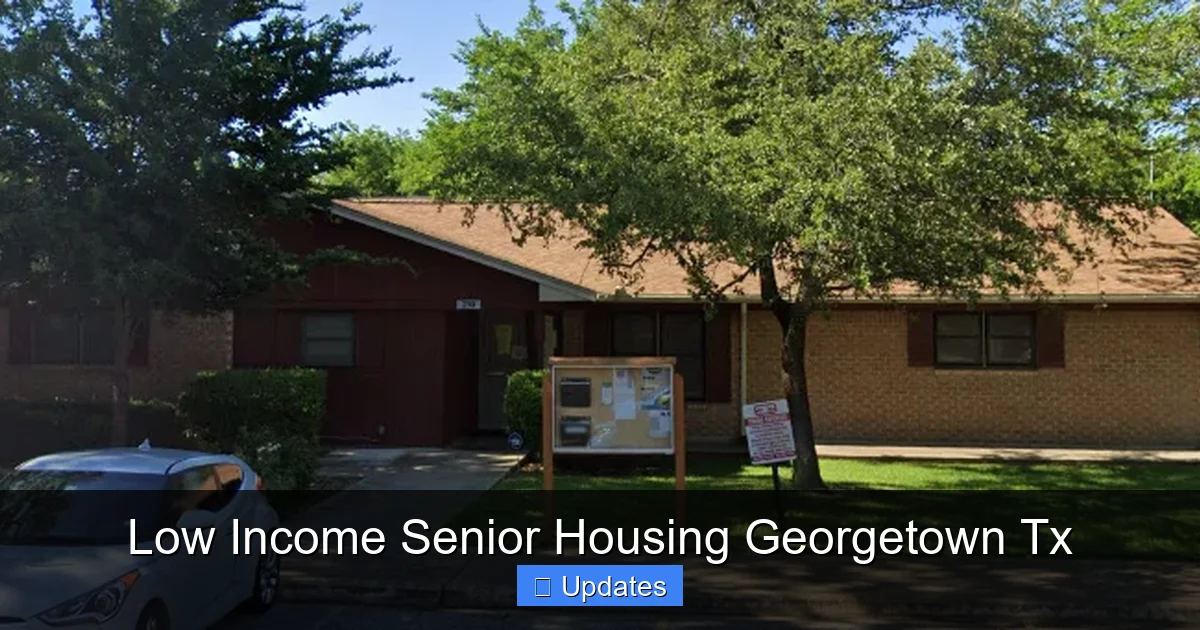
For example, San Gabriel Senior Village—a well-known option in Georgetown—offers studio and one-bedroom layouts with kitchenettes, private patios, and access to meal plans and transportation services. It’s not just an apartment; it’s a hub for connection and care.
How to Qualify for Low Income Senior Housing in Georgetown
Visual guide about Low Income Senior Housing Georgetown Tx
Image source: lowincomehousing.us
The first step toward securing housing is understanding whether you qualify. While each property sets its own specific criteria, general eligibility includes:
Age Requirement: Applicants must be at least 62 years old. Some exceptions exist for disabled individuals under 62, but those cases require additional documentation.
Income Limits: Your gross annual income (before taxes) must fall at or below 50% of the Georgetown Metropolitan Statistical Area’s median income. As of 2024, that threshold is approximately $42,000 for a one-person household. If you live with others, their income may count too—but spouses can sometimes be excluded if one is disabled or over 60.
Citizenship/Residency Status: You don’t need to be a U.S. citizen, but you must provide evidence of eligible immigration status if applicable. All applicants undergo background checks covering criminal history, credit, and landlord references.
It’s also helpful to gather documents before applying:
– Birth certificates or passports for age verification
– Recent pay stubs or benefit statements
– Bank statements showing cash reserves (if required)
– Proof of residency (utility bill, lease agreement)
Keep in mind: having a slightly higher income doesn’t automatically disqualify you if other factors help your case—like being terminally ill or having high medical expenses. Each application is reviewed individually.
Special Considerations for Veterans and Disabled Seniors
Seniors who served in the military or live with disabilities may qualify for priority placement or reduced rents. For instance:
– Veteran Affairs Supportive Housing (VASH) vouchers can supplement Section 8 programs
– Mobility-impaired residents can request ADA-compliant units
– Hearing-impaired applicants might access TTY-enabled communication systems
If you’re unsure about your eligibility, contact the Area Agency on Aging of the Capital Area—they offer free screenings and can clarify complex rules.
Available Low Income Senior Housing Options in Georgetown
Visual guide about Low Income Senior Housing Georgetown Tx
Image source: lowincomehousing.us
While exact availability changes frequently due to waitlists and renovations, here are some active or recently updated properties serving Georgetown seniors:
San Gabriel Senior Village: Located near downtown Georgetown, this nonprofit community offers 72 studio and one-bedroom units. Rent starts as low as $180/month thanks to HUD subsidies. Services include weekly housekeeping, scheduled transportation to medical appointments, and a communal dining room. Waitlist status varies—call (512) 869-2220 to inquire.
Williamson County Housing Authority (WCHA): Though not exclusively senior-focused, WCHA administers several mixed-income developments where seniors can receive preference. Their website lists current openings at sites like Cedar Creek Apartments and Oak Ridge Commons. Applications go through their centralized portal.
Texas Department of Housing & Community Affairs (TDHCA): TDHCA funds affordable housing statewide, including projects in Georgetown. Check their “Find Affordable Housing” tool online to filter by unit type, income level, and accessibility features.
Nonprofit Partners: Groups like Caritas Communities and St. Vincent’s House occasionally develop senior-specific housing. These often include wraparound services like case management, mental health counseling, and volunteer companionship.
Pro tip: Don’t assume you’ll get first dibs just because you’re local. Many applicants come from surrounding counties like Travis or Bell. Being flexible about nearby towns can open more doors.
Comparing Costs and Amenities
| Property Name | Avg. Monthly Rent | Included Utilities | Special Features |
|————————–|——————-|——————–|——————————————-|
| San Gabriel Senior Village | $175–$220 | Water/Sewer | Meals, Transp., Activities |
| Cedar Creek (WCHA) | $300–$450 | None | Pet-Friendly, Fitness Center |
| LIHTC Units (Various) | $250–$600 | Electric Only | On-Site Nurse, Shuttle Service |
Remember: lower rent doesn’t always mean fewer amenities. Always ask about included services during tours.
Applying for Low Income Senior Housing: Step-by-Step Process
Visual guide about Low Income Senior Housing Georgetown Tx
Image source: lowincomehousing.us
Once you’ve identified a property that fits your needs, the next phase is the application itself. Here’s how to approach it:
Step 1: Pre-Screening
Call the leasing office or visit their website to confirm they accept applications from your income bracket and age group. Ask about waitlist length and deposit policies.
Step 2: Gather Documentation
Prepare copies of ID, income verification, bank records, and references. Having everything ready speeds up processing.
Step 3: Submit Application
Most places use online portals now, but paper forms are still accepted. Include a brief personal statement explaining why this housing matters to you.
Step 4: Attend Interview/Tour
Many complexes require an in-person meeting before finalizing approval. Use this time to ask questions about noise levels, visitor policies, and maintenance response times.
Step 5: Await Decision
Processing takes 30–90 days. If approved, you’ll receive a notice with move-in instructions. If denied, request written reasons so you can improve future applications.
Don’t be discouraged by rejections—they happen! Revise your paperwork, seek help from advocacy groups, and try another property.
Common Mistakes to Avoid
– Submitting incomplete forms (double-check every box!)
– Providing outdated income info (use statements from the last 30 days)
– Missing deadlines (some places close applications quarterly)
– Not following up (call monthly to stay visible on waitlists)
Support Services and Community Resources
Affordable housing alone isn’t enough—seniors also need access to healthcare, nutrition, and social engagement. Georgetown and surrounding areas offer robust support networks:
Meal Programs: “Meals on Wheels” delivers hot lunches Monday–Friday to homebound seniors. Volunteers also check on wellness during deliveries.
Transportation: Capital Metro’s “Senior Rides” provides free paratransit within Georgetown city limits for qualifying adults over 60.
Health Clinics: Williamson Medical Clinic and Central Health operate clinics with sliding-scale fees based on income.
Legal Aid: Texas Legal Services Center offers free consultations for housing disputes, estate planning, and elder abuse cases.
These services integrate seamlessly with many housing programs. For instance, residents at San Gabriel Senior Village often receive automatic referrals to Meal on Wheels upon move-in.
Building a Support Network
Isolation is a real risk for seniors in any setting—even supportive ones. Proactive residents join book clubs, gardening groups, or faith-based gatherings to build relationships. Many housing staff organize bingo nights, movie screenings, and field trips to local museums.
If you’re assisting a relative, encourage them to attend orientation sessions and introduce themselves to neighbors. Small talk over fences or mailboxes goes a long way.
Future Outlook for Low Income Senior Housing in Georgetown
As Georgetown continues expanding, planners are prioritizing aging-friendly infrastructure. Recent city council resolutions allocate funds for:
– Universal design upgrades in new constructions
– Expansion of senior shuttle routes
– Partnerships with UT Health Austin for on-site health fairs
However, demand far outpaces supply. According to the Texas Department of Housing, there’s a projected shortage of 15,000 affordable senior units statewide by 2030. Advocacy efforts are underway to increase funding and streamline approval processes.
One promising initiative is the “Aging in Place” grant program, which helps homeowners modify their houses for safety (ramps, stairlifts, bathroom rails). While not housing per se, it keeps elders independent longer—reducing pressure on institutional care.
How You Can Help
If you’re not yet a senior but want to support the cause:
– Volunteer at Meal on Wheels or senior centers
– Advocate for policy changes at city hall
– Donate furniture or supplies to transitional housing programs
– Share accurate information on social media to combat myths about eligibility
Education reduces stigma and improves access for everyone.
Conclusion: Finding Dignity Through Affordable Housing
Navigating the world of low income senior housing in Georgetown, TX can feel daunting—but you don’t have to do it alone. With careful research, persistence, and support from local agencies, securing stable, dignified housing is absolutely possible. The key is starting early, staying organized, and leaning on trusted resources.
Whether you’re seeking housing now or preparing for later years, remember: your voice matters. Reach out to the Area Agency on Aging, tour properties personally, and never hesitate to ask for clarification. Affordable housing isn’t charity—it’s a fundamental human right, especially when aging gracefully requires both security and community.
Take the first step today. Call (512) 943-1400 to speak with a housing counselor or visit wcchousing.org. Your future self will thank you.
Frequently Asked Questions
What is the minimum age for low income senior housing in Georgetown?
Most low income senior housing programs in Georgetown require applicants to be at least 62 years old. Some exceptions exist for disabled individuals under 62, but proof of disability and medical necessity is required.
Can I still qualify if my income is slightly above the limit?
Possibly. While 50% of area median income is the standard cutoff, exceptions can be made for seniors with high medical expenses, utility costs, or dependents. Contact the property directly or consult a housing counselor for guidance.
Are pets allowed in low income senior housing?
It varies by property. Some, like Cedar Creek Apartments, welcome small pets with deposits. Others restrict animals entirely. Always ask about pet policies during tours or calls.
How long do waitlists typically take?
Wait times range from a few months to over two years depending on demand and property size. San Gabriel Senior Village often has shorter waits than larger state-funded complexes.
Do I need to prove I live in Georgetown?
Yes. You must show proof of residency in the Georgetown metropolitan area or adjacent Williamson County. Utility bills, lease agreements, or driver’s licenses work.
What happens if I lose my job or benefit income drops?
Notify the housing authority immediately. They may recalculate your eligibility and adjust rent accordingly. Retroactive payments or refunds are possible if you were overcharged.
