
Low Income Senior Housing Contra Costa County


Smart Plug with Alexa

Electric Kettle with Auto Shutoff

Compression Socks
Finding low income senior housing in Contra Costa County doesn’t have to be overwhelming. With a mix of public, nonprofit, and faith-based options, many seniors can access safe, affordable homes close to medical care, family, and community support. This guide walks you through how to qualify, where to apply, and which local resources can make the process smoother.
Finding a place to live as a senior shouldn’t mean choosing between affordability and comfort. For thousands of older adults in Contra Costa County, the reality is all too familiar: rising housing costs, shrinking incomes, and limited options for those on fixed budgets. That’s why low income senior housing in Contra Costa County has become such a lifeline—offering not just shelter, but dignity, security, and connection.
Contra Costa County, nestled in the heart of California’s Bay Area, is home to vibrant communities like Walnut Creek, Concord, Richmond, and Antioch. Yet despite its scenic parks and cultural attractions, many seniors here struggle to find housing that fits their needs and wallets. The good news? There are real solutions—many of them free to explore, backed by state and federal funding, and tailored specifically for older adults.
This article breaks down everything you need to know about accessing low income senior housing in Contra Costa County, from eligibility rules to application tips and local resources. Whether you’re looking for an apartment, a retirement community, or supportive living, we’ve got practical advice to help you move forward with confidence.
Key Takeaways
- Affordable Options Exist: Contra Costa County offers several subsidized senior housing communities supported by HUD, county programs, and nonprofits—many with rents under $1,000 per month.
- Eligibility Is Based on Income: Applicants must meet both income limits (usually 30–50% of area median income) and age requirements (typically 62+), though some exceptions exist for disabled residents.
- Waiting Lists Are Common: Due to high demand, many programs maintain long waitlists—but applying early and checking frequently increases your chances of securing a spot.
- Support Services Vary: Some housing includes meals, transportation, health monitoring, or social activities—be sure to ask what’s included when researching options.
- Local Agencies Can Help: Organizations like the Contra Costa County Aging & Adult Services and Catholic Charities assist with applications, referrals, and advocacy.
- Housing Choice Vouchers May Apply: If you’re on Section 8, your voucher might cover rent at approved senior properties—check with your local Public Housing Authority.
- Faith-Based and Nonprofit Programs Offer Alternatives: Groups like St. Joseph’s Abbey House provide low-cost housing with spiritual support and community engagement.
📑 Table of Contents
- Understanding Low Income Senior Housing in Contra Costa County
- Top Low Income Senior Housing Programs in Contra Costa County
- How to Apply for Low Income Senior Housing in Contra Costa County
- Financial Assistance and Additional Benefits
- Community Resources and Support Networks
- Success Stories from Contra Costa Seniors
- Looking Ahead: Trends and Future Opportunities
- Final Thoughts: It’s Worth the Effort
Understanding Low Income Senior Housing in Contra Costa County
Low income senior housing refers to subsidized residential options designed specifically for adults aged 62 and over who earn below a certain percentage of their area’s median income. In Contra Costa County, these programs are primarily funded through the U.S. Department of Housing and Urban Development (HUD), county agencies, and private nonprofits. The goal? To ensure that no senior is forced into unsafe or unaffordable housing due to financial constraints.
These housing types aren’t one-size-fits-all. You’ll find everything from studio apartments to two-bedroom units, some with shared dining halls and others offering private kitchens. What they share is a commitment to affordability, accessibility, and respect for each resident’s independence. Many also include value-added services like meal plans, transportation, wellness checks, and recreational activities—making them more than just places to sleep; they’re true homes.
One common misconception is that “low income” means extremely poor. In reality, eligibility usually caps household income at 30–60% of the county’s median income. As of recent data, that’s roughly $45,000–$75,000 annually for a single person (depending on program rules). So if you’re on Social Security, SSI, or have a modest pension, you may still qualify.
Types of Low-Income Senior Housing Available
Not all low-income senior housing looks the same. Here’s a quick overview of the main categories available in Contra Costa County:
- Publicly Subsidized Housing: Managed by HUD-approved property owners, these units use federal funds to keep rent affordable. Examples include properties affiliated with the Housing Authority of the County of Contra Costa (HACCC).
- Nonprofit-Developed Communities: Groups like the Diablo Valley Community Services Foundation build and manage affordable senior complexes with wraparound services.
- Faith-Based Facilities: Churches and religious organizations often run low-cost housing for members and non-members alike. These may include spiritual programming alongside daily support.
- Continuing Care Retirement Communities (CCRCs): While not always low-cost, some CCRCs offer entry-level affordable units with potential future upgrades to assisted living or memory care.
- Senior Apartments with Subsidies: Standalone buildings where at least 90% of units go to seniors, and rents are capped based on income.
Each type has its own application process and waitlist policies. But no matter which path you take, starting early and staying organized will dramatically improve your odds.
Who Qualifies for Low Income Senior Housing?
Qualifying hinges on two main factors: age/income and residency. Let’s unpack both.
First, applicants must generally be **at least 62 years old**, though some programs accept younger individuals with qualifying disabilities. Income limits vary slightly by program but typically follow HUD guidelines. For example:
- A single applicant earning under $36,000/year may qualify for most programs.
- A couple could make up to $41,000 and still be eligible.
These numbers are updated annually—so it pays to check the latest figures before applying. Also worth noting: asset limits (like savings or investments) sometimes apply, especially for Medicaid-related programs. However, primary residences and retirement accounts are often exempt.
Second, you must live, work, or have family ties in Contra Costa County. Some programs prioritize local residents, while others serve anyone in the broader Bay Area. Again, specifics depend on the landlord or sponsoring organization.
If you’re unsure whether you qualify, don’t hesitate to call the Contra Costa County Aging & Adult Services. Their staff can walk you through the math and point you toward suitable options.
Top Low Income Senior Housing Programs in Contra Costa County
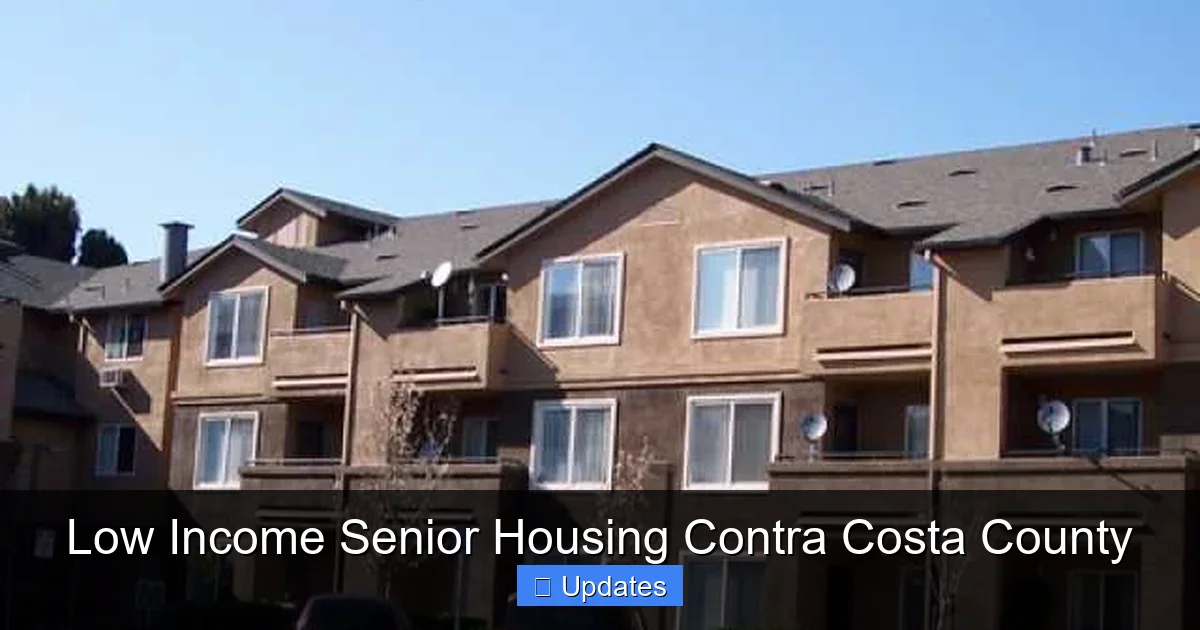
Visual guide about Low Income Senior Housing Contra Costa County
Image source: lowincomehousing.us
Now let’s spotlight some of the most reliable and well-regarded low-income senior housing programs currently operating in Contra Costa County. These aren’t exhaustive lists—just starting points to explore further.
Housing Authority of the County of Contra Costa (HACCC)
The HACCC oversees several affordable senior housing developments across the county. Properties like the Walnut Creek Senior Apartments and Richmond Heights Commons offer studio and one-bedroom units with rents as low as $400–$800/month. All units are reserved for seniors earning 30–50% of AMI.
Applications are submitted online or in person during open enrollment periods (often twice a year). Waitlists can stretch into years, so persistence pays off. The HACCC website also features a searchable database of participating landlords and upcoming application windows.
Catholic Charities of the East Bay
Through its St. Joseph’s Abbey House in Walnut Creek, Catholic Charities provides permanent supportive housing for low-income seniors facing homelessness or chronic instability. Residents receive case management, mental health support, and access to food pantries.
What sets this program apart is its holistic approach: faith-based community spirit combined with concrete assistance. Eligibility focuses on income (under $30,000 for singles) and residency. Referrals come via partner agencies like the Contra Costa Health Services.
Diablo Valley Community Services Foundation
This nonprofit runs several senior complexes, including the Sunset Gardens in Danville and Paseo del Sol in Pleasant Hill. Both feature private units, on-site laundry, and scheduled social events. Rents start around $900/month but remain well below market rate thanks to subsidies.
The foundation prioritizes veterans and survivors of domestic violence among its applicant pool. Applications are accepted year-round, though spots fill quickly.
Bay Area Community Resources (BACR)
While BACR serves a wider geographic area, its Oakland Senior Housing Initiative includes satellite sites in East Contra Costa cities. These units emphasize accessibility—wide doorways, roll-in showers, and emergency call systems—and connect residents to healthcare navigation services.
How to Apply for Low Income Senior Housing in Contra Costa County
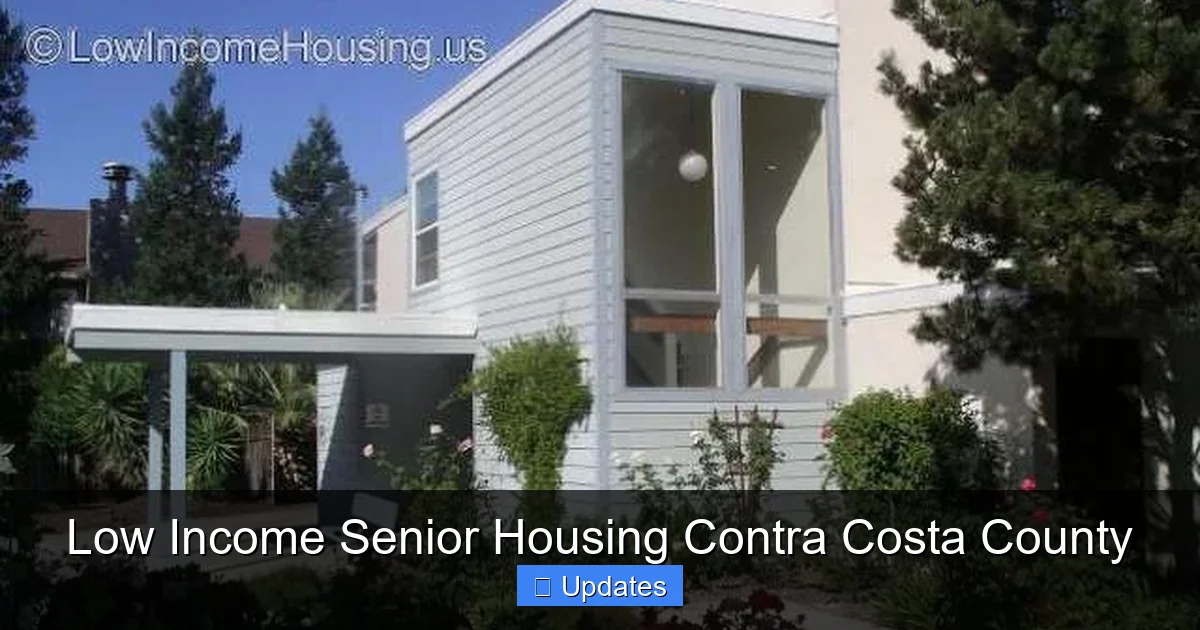
Visual guide about Low Income Senior Housing Contra Costa County
Image source: lowincomehousing.us
Applying may feel daunting, but breaking it into steps makes it manageable. Follow this roadmap:
- Gather Required Documents: Most programs require proof of age (birth certificate or passport), income (Social Security statements, pay stubs, bank records), ID, and residency (utility bill, lease, or voter registration).
- Research Open Enrollment Periods: Unlike first-come-first-served lotteries, many HACCC and nonprofit programs hold formal application rounds. Sign up for email alerts through their websites.
- Submit Your Application Early: Even if you’re not ready to move immediately, getting on the list gives you priority later. Some programs allow “pre-applications” to reserve your spot.
- Attend an Interview or Orientation: Many landlords require an in-person meeting to assess compatibility and discuss house rules.
- Follow Up Regularly: Call every 3–6 months to confirm your status. Sometimes vacancies open unexpectedly!
Pro tip: Consider working with a senior advocate or legal aid group. They can help interpret complex forms, challenge denials, and even negotiate better terms.
Common Mistakes to Avoid
Even experienced applicants stumble. Watch out for these pitfalls:
- Missing Deadlines: Don’t assume you can submit anytime. Set calendar reminders for enrollment windows.
- Incomplete Paperwork: Double-check signatures, dates, and document copies. Missing pages = automatic rejection.
- Assuming Automatic Approval: Meeting income limits doesn’t guarantee placement. Demand still exceeds supply.
- Ignoring Alternative Programs: If one waitlist is too long, apply to three others. Diversify your chances.
Remember: persistence is key. Many successful applicants waited 18–24 months before moving in—but they kept showing up.
Financial Assistance and Additional Benefits

Visual guide about Low Income Senior Housing Contra Costa County
Image source: lowincomehousing.us
Beyond rent subsidies, several programs offer extra financial help for utilities, medical copays, or emergency repairs. Here’s what to look for:
- Utility Allowances: HUD-funded housing often deducts estimated utility costs from gross income when calculating eligibility—meaning higher net income thresholds.
- Medicaid Waivers: If you’re enrolled in Medi-Cal, certain waivers cover home modifications or personal care attendants at subsidized housing.
- Property Tax Relief: California’s California Veterans’ Property Tax Exclusion and Senior Citizens Property Tax Assistance Program can reduce tax burdens for homeowners—freeing up more money for rent.
- Transportation Vouchers: Agencies like Wheels to Work provide discounted rides to medical appointments and grocery stores for seniors in low-income housing.
Don’t overlook these extras—they can stretch your budget further and improve quality of life.
Tips for Maximizing Your Benefits
Here’s how to get the most from available supports:
- Bundle Services: Choose housing that includes meal delivery, housekeeping, or fitness classes. One-stop convenience saves time and money.
- Join Resident Committees: Active participation can lead to policy changes—like adding more accessible units or expanding visiting hours.
- Network Within Your Building: Fellow residents often share leads on vacancies, repair crews, or volunteer opportunities.
- Update Your Info Promptly: Notify your landlord of any income changes or medical updates. Some benefits adjust automatically; others require recertification.
And always keep copies of every document you submit. Lost paperwork happens—having backups prevents delays.
Community Resources and Support Networks
You’re not alone in this journey. Contra Costa County boasts a robust network of nonprofits, government offices, and peer groups dedicated to helping seniors thrive.
Key Contact Points
- Contra Costa County Aging & Adult Services: Offers counseling, referral services, and caregiver support. Phone: (925) 313-6800. Website: cchealth.org/aging.
- Area Agency on Aging (AAA): Part of California’s statewide system, the AAA connects seniors to housing, nutrition, and legal aid. Visit seniorcareca.org.
- Elder Abuse Hotline: Report neglect or exploitation confidentially at (800) 678-9999.
- Legal Aid Society of Marin (LASM): Though based in Marin, LASM serves parts of Contra Costa and offers free housing counselors. Call (415) 499-2924.
These folks speak your language—and they won’t judge. Lean on them.
Online Tools and Databases
Several websites compile up-to-date listings of available housing:
- 211 Contra Costa: Dial 211 or visit 211cc.org to search for housing, food, and health resources.
- HUD’s Housing Search Tool: Filter by location, rent range, and special needs at hud.gov.
- California Department of Social Services: Find state-funded programs at cdss.ca.gov.
Bookmark these now—you’ll thank yourself later.
Success Stories from Contra Costa Seniors
Real people have navigated this system successfully. Meet Maria, 78, who relocated from her cramped mobile home after learning about Sunset Gardens through a senior center workshop. “I was scared at first,” she says, “but the staff helped me every step of the way. Now I have my own kitchen, take weekly bingo nights, and walk to the pharmacy.”
Or David, 65, a Vietnam veteran who used his GI Bill benefits plus a HACCC voucher to secure stable housing near his daughter in Antioch. “Before, I worried about eviction notices,” he recalls. “Now I sleep soundly knowing my rent won’t spike next month.”
Their stories aren’t outliers—they’re proof that with the right guidance, affordable senior housing is within reach.
Looking Ahead: Trends and Future Opportunities
The landscape of low income senior housing in Contra Costa County is evolving. New construction projects aim to add 500+ units by 2026, thanks to state grants and developer incentives. Meanwhile, advocates push for “age-friendly” zoning laws that allow accessory dwelling units (ADUs) on existing lots—giving families creative ways to house relatives affordably.
Technology also plays a growing role. Virtual tours, online applications, and telehealth integration make access easier than ever. And as baby boomers age into their 70s and 80s, demand will only grow—so now’s the time to act.
If you’ve been putting off the search, consider this your nudge: help is closer than you think.
Final Thoughts: It’s Worth the Effort
Securing low income senior housing in Contra Costa County takes time, patience, and paperwork—but the payoff is priceless peace of mind. No one should face old age without a safe, dignified place to call home.
Start small: pick one resource from this article, gather your documents, and make that first call. Even if it’s just to ask questions, you’re taking control.
And remember—this community cares. From volunteers serving meals to neighbors cheering each other on, there’s a support system waiting for you.
Your golden years deserve more than survival. They deserve comfort, connection, and choice. With the right information and a little courage, you can build exactly that.
Frequently Asked Questions
What is the income limit for low income senior housing in Contra Costa County?
Most programs cap income at 30–50% of the area median income. For a single person, that’s approximately $36,000–$55,000 annually as of 2024. Couples can earn up to $41,000–$62,000. Exact figures vary by program—always verify with the housing provider.
Do I need to be a Contra Costa County resident to apply?
Yes, most subsidized senior housing prioritizes county residents. However, some nonprofit and faith-based programs serve the broader Bay Area. Check individual program rules before applying.
Are pets allowed in low income senior housing?
It depends on the property. Many allow small dogs or cats with breed/size restrictions and liability insurance. Service animals are always permitted under federal law. Ask during the application process.
Can I apply if I already have a Section 8 voucher?
Absolutely! Your voucher may cover rent at participating senior properties. Contact your local Public Housing Authority to confirm acceptance policies.
What if my application is denied?
Request written feedback. You may appeal or reapply after six months. Consider seeking help from a senior advocate or legal aid organization to review your case.
Is there assistance with moving costs?
Some nonprofit programs offer relocation grants or volunteer movers for qualified applicants. Contact Catholic Charities or Diablo Valley Community Services Foundation for details.
