
How to Apply for Senior Housing in Massachusetts


Smart Plug with Alexa

Smart Health Watch for Seniors

Adjustable Walker with Wheels
Finding senior housing in Massachusetts can feel overwhelming—but it doesn’t have to be. This guide walks you through the entire application process, from understanding eligibility requirements to submitting your documents and navigating waiting lists. Whether you’re looking for low-income apartments or independent living communities, we’ll help you take confident steps toward a secure, comfortable home.
Finding a safe, affordable place to live as you age is one of the most important decisions seniors face. In Massachusetts—a state known for its rich history, vibrant cities, and strong social services—there are many options for senior housing. But with so many programs, waiting lists, and paperwork involved, knowing where to start can be confusing.
That’s why this guide exists: to walk you through every step of applying for senior housing in Massachusetts. Whether you’re seeking low-income apartments near Boston, supportive housing in Worcester, or a peaceful retirement community in Cape Cod, we’ll break down the process clearly and compassionately. You deserve a home that feels like yours—secure, accessible, and full of dignity.
In this article, you’ll learn:
– Who qualifies for senior housing in Massachusetts
– How to find available units using official tools
– What documents you’ll need (and why)
– Tips for speeding up your application
– Resources to help you along the way
Let’s get started.
Key Takeaways
- Eligibility matters: Most senior housing in Massachusetts requires applicants to be at least 62 years old and meet income guidelines. Some properties also consider health needs or veteran status.
- Start early: Waiting lists for subsidized senior housing can be long—some stretch into years. Begin your search and gather documents as soon as possible.
- Know your options: Massachusetts offers public housing, Section 202 Supportive Housing, assisted living, and continuing care retirement communities (CCRCs).
- Use official tools: The Massachusetts Rental Housing Search tool and MassHousing resources make it easier to find available units that match your needs.
- Get help: Nonprofits like the Massachusetts Senior Housing Coalition and local Area Agencies on Aging provide free application assistance and advocacy.
- Beware of scams: Only use trusted sources like HUD.gov or your local PHA. Never pay upfront fees to anyone claiming to “guarantee” placement.
- Appeals are possible: If denied, you have the right to request an informal hearing and reapply after six months in many cases.
📑 Table of Contents
- Understanding Senior Housing Options in Massachusetts
- How to Find Available Senior Housing Units
- Gathering Required Documents
- Completing and Submitting Your Application
- Navigating Waiting Lists and Priority Systems
- Financial Assistance and Additional Benefits
- Getting Help Along the Way
- What to Do After You’re Approved
- Frequently Asked Questions About Senior Housing in Massachusetts
Understanding Senior Housing Options in Massachusetts
Massachusetts offers a wide range of senior housing types designed to meet different levels of independence, care needs, and budgets. Understanding these options will help you narrow your search and choose the best fit.
Types of Senior Housing Available
There are four main categories:
1. Public Housing for Seniors
Managed by local Public Housing Authorities (PHAs), these developments offer rent based on income—typically capped at 30% of your household income. Units are often located in urban neighborhoods and may include utilities, meal programs, or transportation services. To qualify, you usually must be 62 or older and meet income limits set by HUD.
2. Section 202 Supportive Housing
Funded by the U.S. Department of Housing and Urban Development (HUD), Section 202 properties provide affordable housing with supportive services like meals, housekeeping, and health monitoring. These are ideal for seniors who want independence but might benefit from occasional assistance. Applicants must be 62+ and have low to moderate incomes.
3. Assisted Living Facilities
Unlike independent living, assisted living provides help with daily activities such as bathing, medication management, and meals—all within a residential setting. Costs vary widely; some facilities accept Medicaid waivers, while others operate on private pay. These are regulated by the Massachusetts Executive Office of Elder Affairs.
4. Continuing Care Retirement Communities (CCRCs)
CCRCs offer a continuum of care—from independent living to skilled nursing—on one campus. While entry fees can be high (sometimes hundreds of thousands), they provide peace of mind knowing future care needs will be met. Some CCRCs offer financial aid or sliding scale options.
Who Is Eligible?
Most senior housing programs in Massachusetts require applicants to be at least 62 years old. However, exceptions exist:
– Veterans may qualify earlier if they have service-related disabilities.
– Certain supportive housing programs welcome younger individuals with significant disabilities (under 62).
– Some faith-based or nonprofit communities have their own age or residency rules.
Income is another key factor. For example, HUD defines “low income” as earning no more than 80% of area median income (AMI). In Massachusetts, that’s around $75,000 for a single person in 2024. Even if you’re slightly above that threshold, some properties allow exceptions based on medical expenses or family size.
How to Find Available Senior Housing Units
The first hurdle isn’t just finding housing—it’s knowing where to look. Fortunately, Massachusetts has centralized tools to simplify your search.
Use the Massachusetts Rental Housing Search Tool
Visit mass.gov/rental-housing to access the state’s official database. Filter by location, bedroom count, accessibility features, and whether the property serves seniors. Many listings include photos, floor plans, and contact info for leasing offices.
Contact Local Public Housing Authorities
Each city and town in Massachusetts has a PHA managing subsidized housing. Examples include:
– Boston Housing Authority
– Worcester Housing Authority
– Springfield Housing Authority
Call or visit their websites to ask about senior-specific waitlists. PHAs often host open houses or application workshops—attending one can give you insider tips.
Leverage MassHousing Resources
MassHousing, the state’s housing finance agency, maintains a list of approved affordable housing developments. Their website includes details on income limits, amenities, and application deadlines. They also offer counseling services to help renters understand their rights and options.
Explore Nonprofit and Faith-Based Communities
Organizations like Episcopal Retirement Services (ERS) or Hebrew SeniorLife operate senior housing across the state. These often combine affordability with mission-driven values like intergenerational connection or cultural preservation. Check their websites for eligibility criteria and virtual tours.
Gathering Required Documents
Once you identify potential housing, you’ll need to assemble several documents before applying. Being prepared saves time and reduces stress.
Essential Application Documents
Here’s what nearly every program asks for:
- Proof of Age: Birth certificate, driver’s license, or passport showing you’re 62 or older.
- Income Verification: Last three months of pay stubs, Social Security award letters, pension statements, or unemployment benefits documentation.
- Bank Statements: Recent checking/savings account summaries (usually last 2–3 months).
- Tax Returns: Federal Form 1040 for the past two years.
- Lease History: Previous landlord references and eviction records (if any).
- Medical Documentation (for supportive housing): Doctor’s notes confirming need for assistance with ADLs (activities of daily living).
- Veteran Status (if applicable): DD-214 form or VA benefit letter.
Tip: Keep digital copies of everything in a folder on your phone or cloud storage. That way, you won’t lose them during mailing or uploading.
What If You Don’t Have All Documents?
Some agencies offer provisional acceptance while you gather missing items. Others accept notarized affidavits explaining delays (e.g., “I lost my birth certificate due to a hurricane”). Always ask the leasing office directly—they may surprise you with flexibility.
Completing and Submitting Your Application
Now comes the actual application. While forms vary by property, most follow a similar structure.
Step-by-Step Application Process
Follow these steps carefully:
- Read the instructions thoroughly. Each program has unique rules—for instance, some require in-person interviews, others accept online submissions.
- Fill out all fields completely. Omit nothing, even if it seems irrelevant. Blank answers can delay processing.
- Double-check numbers. Mistakes in income or Social Security numbers cause rejections.
- Sign and date each page. Unsigned applications are invalid.
- Submit via preferred method:
- Online portal (if offered)
- Mailed certified letter with return receipt
- In person at the PHA or leasing office
- Pay required fees (if any): Most public housing is free to apply, but some private senior communities charge non-refundable screening fees ($25–$100). Never pay more than $100 unless verified by HUD.
Avoiding Common Mistakes
– Applying too late: Waiting until winter when vacancies drop drastically.
– Using outdated income data: Self-employed seniors should include year-to-date profit/loss statements.
– Not following up: Call monthly to check application status. Persistent applicants move up waiting lists faster.
Navigating Waiting Lists and Priority Systems
One of the biggest challenges in Massachusetts senior housing is the wait. But understanding how priority works can improve your chances.
How Waiting Lists Work
When a unit opens, PHAs don’t randomly pick names. Instead, they follow strict order:
1. **Over-income residents** (if applicable)
2. **Disabled individuals under 62**
3. **Veterans with service-connected disabilities**
4. **Seniors 85+**
5. **All other qualified applicants**
Some properties use lottery systems instead, especially for high-demand areas like Cambridge or Brookline.
Tips to Improve Your Placement Speed
– Apply to multiple locations: The more places you’re on the list, the better.
– Update your information regularly: Notify the PHA if your income changes or you develop new health needs.
– Attend community meetings: Build relationships with staff—they remember active applicants.
– Consider smaller towns: Rural areas like Pittsfield or North Adams often have shorter waits.
Remember: patience pays off. As one Worcester resident shared, “I waited 18 months, but now I have a beautiful garden apartment with weekly bingo nights. Worth it!”
Financial Assistance and Additional Benefits
Even with subsidies, senior housing costs add up. Fortunately, Massachusetts offers extra financial support.
Supplemental Security Income (SSI)
If your income falls below federal thresholds, SSI can cover part of your rent. Apply through the Social Security Administration—don’t assume you’re ineligible because you own a car or have modest savings.
Property Tax Relief Programs
Many seniors qualify for Chapter 61 exemptions, which reduce real estate taxes on owner-occupied homes. This frees up cash for rent or utilities. Contact your local assessor’s office for forms.
Utility Discounts
Programs like Low-Income Home Energy Assistance Program (LIHEAP) help pay heating bills. Apply annually between October and March.
Transportation Vouchers
MBTA subsidizes reduced-fare passes for seniors over 60. Visit mbta.com/senior-rider for details.
Getting Help Along the Way
You don’t have to do this alone. Several organizations specialize in helping seniors navigate housing.
Area Agencies on Aging (AAA)
Every county in Massachusetts has an AAA offering free case management, application coaching, and emergency shelter referrals. For example:
– Greater Boston AAA (serves Suffolk, Norfolk, Middlesex counties)
– Berkshire Regional Planning Commission (Western MA)
– Essex County Elder Services
Call your local AAA—they often host “Housing Fairs” where PHAs and nonprofits set up booths.
Legal Aid Clinics
If you’re facing eviction or discrimination, contact Legal Assistance Corporation of Central and Western Massachusetts. They provide pro bono help with tenant rights and fair housing laws.
Senior Advocacy Groups
Join coalitions like the Massachusetts Senior Housing Coalition to stay informed about policy changes and new funding opportunities. They publish newsletters and hold webinars.
What to Do After You’re Approved
Congratulations—you got a unit! Now comes the fun part: making it home.
Move-In Checklist
Before signing the lease:
– Inspect the unit for mold, leaks, or broken appliances
– Test smoke detectors and carbon monoxide alarms
– Confirm parking availability and guest policies
– Ask about pet rules (many senior complexes allow small dogs)
Settling In
Introduce yourself to neighbors and building staff. Attend orientation events—they often include tours of community rooms, fitness classes, and volunteer sign-ups. Consider joining resident councils; they influence programming and maintenance requests.
Maintaining Your Tenancy
Keep rent payments on time (even if slightly under budget). Report repairs promptly. Participate in annual recertifications to keep your subsidy intact.
Frequently Asked Questions About Senior Housing in Massachusetts
Is there a waiting list for senior housing in Massachusetts?
Yes, many subsidized senior housing programs maintain waiting lists due to high demand. Length varies by location—urban areas like Boston tend to have longer waits than rural towns. Starting your application early increases your chances significantly.
Visual guide about How to Apply for Senior Housing in Massachusetts
Image source: housingauthorityguide.com

Visual guide about How to Apply for Senior Housing in Massachusetts
Image source: boulderhousing.org
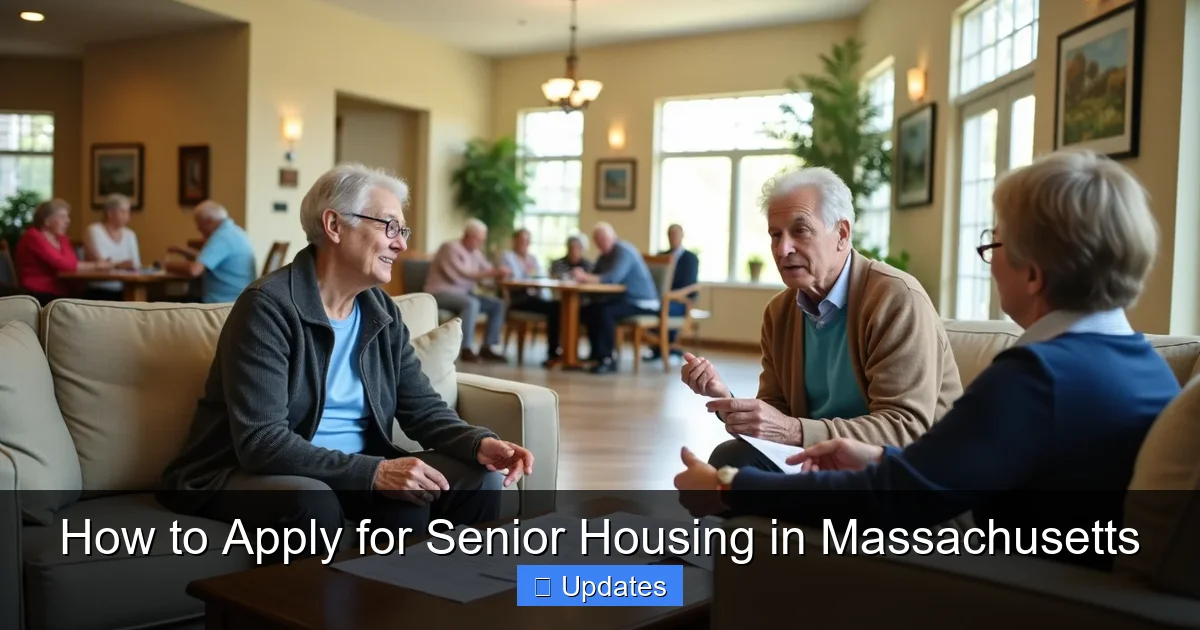
Visual guide about How to Apply for Senior Housing in Massachusetts
Image source: seniorsite.org
Can I apply for senior housing if I’m under 62?
Possibly. Some supportive housing programs accept applicants under 62 if they have qualifying disabilities. Veterans with service-connected conditions may also qualify earlier. Check with individual properties or contact your local Area Agency on Aging for guidance.
Are there senior housing options without a waiting list?
While rare, some private or faith-based communities offer immediate availability. These often come with higher rents or entrance fees. Searching for “senior housing Massachusetts no waiting list” may yield limited results—but always verify legitimacy through HUD.gov or MassHousing.
How much does senior housing cost in Massachusetts?
Rent varies widely. Public housing typically charges 30% of income (minimum $25/month). Private assisted living averages $4,000–$7,000/month. Section 202 units often cost $400–$900/month after subsidies. Use the Massachusetts Rental Housing Search tool to compare prices by zip code.
Can I bring my pet to senior housing?
Many modern senior communities welcome small pets, though breed restrictions and weight limits apply. Always review the pet policy in your lease agreement. Service animals are always allowed without fees.
What happens if I’m denied housing?
You have the right to request an informal hearing within 14 days. Denials must cite specific reasons (e.g., “over-income”). Reapply after six months if circumstances change. Legal Aid clinics can help contest unfair decisions.
Frequently Asked Questions
How long does it take to get approved for senior housing in Massachusetts?
Approval timelines vary. Simple applications may process in weeks, while complex cases (like those requiring disability verification) can take months. Waiting lists add additional delays—sometimes 1–3 years. Starting early and staying engaged is key.
Do I need to have lived in Massachusetts to apply for senior housing here?
No, residency isn’t always required. However, some programs prioritize state residents or limit occupancy to Massachusetts taxpayers. Always confirm eligibility criteria with the specific property or PHA.
Can I apply for both public housing and private senior housing at the same time?
Absolutely. Applying broadly increases your options. Just remember: public housing uses income-based rent calculations, while private communities charge fixed rates. Overlapping applications won’t hurt your chances.
What if my income fluctuates due to freelance work or investments?
Include average monthly earnings over the past year. Provide tax returns and bank statements showing volatility. PHAs understand irregular income—just explain it clearly in your application notes.
Are there senior housing options near healthcare facilities?
Many CCRCs and faith-based communities partner with hospitals or clinics. Also, use the Massachusetts Rental Housing Search filter for “near medical center.” Proximity to urgent care or rehab centers adds valuable safety.
How do I report a problem with my senior housing unit?
Contact your property manager immediately. For unresolved issues, file a complaint with the Massachusetts Attorney General’s Consumer Hotline (1-888-283-3759) or submit an online form at mass.gov/ag/consumer-complaints/housing.