
Fun Games to Play with Senior Citizens


Foot Massager Machine

Tablet for Seniors

Hearing Aid Cleaning Kit
Engaging in games is a powerful, joyful way to support the well-being of older adults. This guide explores a wide variety of fun games to play with senior citizens, from gentle physical activities to brain-teasing puzzles and nostalgic favorites. We provide practical tips for adapting any game to suit different abilities, ensuring everyone can participate, connect, and have a great time. The focus is on creating positive experiences that foster laughter, mental sharpness, and meaningful social interaction.
Key Takeaways
- Games are vital for holistic health: They aren’t just for fun; they combat isolation, maintain cognitive function, improve motor skills, and boost emotional well-being in seniors.
- Adaptability is key: The best games can be easily modified for physical limitations, cognitive changes, or sensory impairments, ensuring full inclusion.
- Nostalgia is a powerful tool: Games and topics from a person’s younger years (e.g., 1940s-1960s) can spark incredible joy, memory recall, and conversation.
- Focus on process over competition: The goal is participation, connection, and enjoyment. Avoid high-pressure scoring; emphasize teamwork and shared laughter.
- Simple can be profound: You don’t need expensive equipment. Many of the most effective games use everyday items like cards, balls, or just conversation.
- Observe and follow lead: Pay attention to individual energy levels and interests. Be prepared to switch activities if something isn’t resonating.
- Intergenerational play is magic: Involving grandchildren or younger family members creates unique bonding opportunities and benefits all ages.
📑 Table of Contents
Why Play Matters: More Than Just a Game
Let’s be honest: when we think about activities for older adults, we might first think of bingo or a simple card game. And those are wonderful! But the world of fun games to play with senior citizens is vast, vibrant, and incredibly impactful. Playing is a fundamental human need, regardless of age. For seniors, engaging in playful activities is a direct route to improved quality of life. It’s a powerful antidote to the isolation and monotony that can sometimes accompany aging. When we play, we laugh, we strategize, we connect, and we feel a sense of purpose and belonging. The benefits are not just emotional; they are deeply physical and cognitive. A good game can get the heart rate up slightly, improve hand-eye coordination, and give the brain a fantastic workout. It strengthens social bonds, creating shared memories and inside jokes. So, whether you’re a family member, a professional caregiver, or a friend, bringing a game into your time together is one of the most thoughtful and beneficial things you can do. It says, “I value your company, your mind, and your joy.”
The Mind-Body-Social Connection
Every game engages multiple parts of our being. A simple game of catch involves gross motor skills (arm movement), fine motor skills (grasping the ball), visual tracking, and social anticipation (“Will they catch it?”). A trivia game taps into long-term memory, recall speed, and often sparks lively discussion about the “good old days.” This integrated engagement is what makes play so uniquely beneficial. It’s a holistic exercise that feels nothing like a chore. The laughter that erupts when someone tells a silly story during a game or the focused silence during a puzzle releases endorphins and reduces stress hormones. For seniors managing chronic pain or the emotional weight of loss, these moments of light-hearted engagement are medicine for the soul. The key is to choose and adapt games that meet the individual where they are, celebrating ability rather than focusing on limitation.
Brain-Boosting & Cognitive Games
Keeping the mind active is a top priority for many seniors and their loved ones. Cognitive games are like a gym for the brain, helping to maintain memory, processing speed, and problem-solving skills. The best part? They can be incredibly fun and social. The goal is mental stimulation, not a high-stakes exam. We want to create an environment of curiosity and gentle challenge.

Visual guide about Fun Games to Play with Senior Citizens
Image source: funpartypop.com
Trivia with a Personal Twist
Standard trivia can be intimidating if you’re not up on current sports or pop culture. The magic happens when you tailor trivia to the generation. Create questions about music from the 1940s-1960s, classic Hollywood films, historical events they lived through (like the moon landing), or even vintage advertisements. You can find pre-made decks for specific decades online or make your own. This isn’t about testing knowledge; it’s about unlocking memories. The answer “Perry Como” might trigger a story about a first dance or a family radio tradition. That story is the real prize. For those with significant memory challenges, use trivia as a prompt for conversation rather than a quiz. Show a picture of a 1950s car and ask, “What does this remind you of?” The memories will flow.
Word Play & Puzzle Power
You don’t need a fancy puzzle book. Simple word games are fantastic. Try:
- Category Lists: Pick a category (e.g., “Types of Trees,” “Songs with ‘Love’ in the Title”). Take turns naming items. No pressure to be fast; celebrate every answer.
- Crossword Puzzles & Word Searches: Large-print versions are widely available. Work on one together, with one person calling out letters and another filling it in. It’s collaborative and low-pressure.
- Anagrams: Write a long word (like “CELEBRATION”) on a board and see how many smaller words you can make from it. This is great for small groups.
For a truly accessible option, consider sit-down games for senior citizens that prioritize cognitive engagement without requiring mobility. Many of these are perfect for one-on-one or small group settings and can be played from a comfortable chair.
Gentle Movement & Physical Games
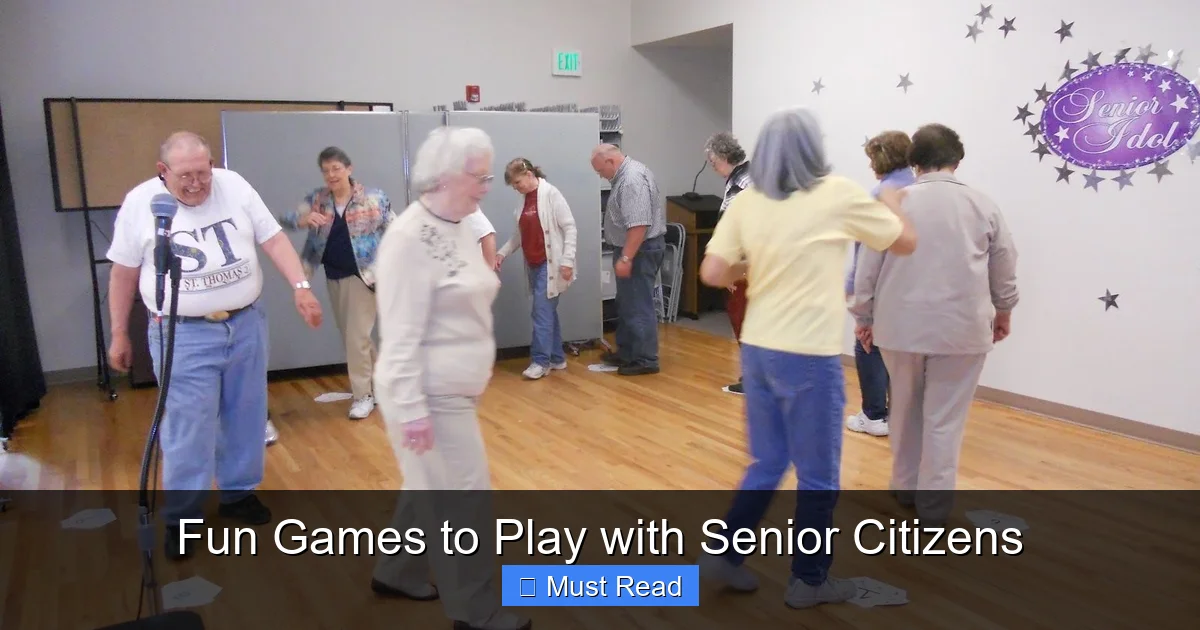
Movement is life. For seniors, gentle, purposeful movement improves circulation, maintains joint flexibility, and enhances balance. Games that incorporate movement make exercise feel like play, not a prescription. Safety is paramount: ensure the space is clear of tripping hazards, chairs are stable, and movements are slow and controlled.

Visual guide about Fun Games to Play with Senior Citizens
Image source: i.pinimg.com
Balloon Volleyball
This is a classic for a reason. All you need is a balloon and a makeshift “net” (a piece of string or tape on the floor, or just an imaginary line). Players stand or sit on either side and try to keep the balloon aloft, tapping it over the line. It encourages arm movement, gentle tracking, and lots of laughter when the balloon drifts slowly or pops. You can play with just two people or in teams. The balloon’s slow speed eliminates the need for rapid reactions, making it inclusive for most ability levels.
Bean Bag Toss (Cornhole)
Adapt the classic cornhole game. You can purchase a senior-friendly version with larger, lighter boards and bean bags, or even make a simple target on the floor with tape. The act of picking up a bean bag, aiming, and tossing it engages the entire upper body and core. Scoring can be simplified or ignored entirely—just aim for the target. For those with very limited mobility, place the target very close and allow underhand tosses from a seated position.
Chair Yoga & Stretch Games
Turn stretching into a game. Use a soft stuffed animal or bean bag. One person gently tosses it to another. The catcher must hold the stretch (e.g., reaching overhead, twisting torso) until they name a color, an animal, or a memory from the 1950s. Then they toss it to someone else. This combines gentle movement with a cognitive or conversational task, making it a full mind-body activity. Always emphasize smooth movements and never push into pain.
Social Connection & Storytelling Games
Humans are storytellers. For seniors, sharing life stories is a way to process a lifetime of experiences and leave a legacy. Games that facilitate storytelling build deep connections and validate a person’s life history. These are perfect for multi-generational gatherings.
Visual guide about Fun Games to Play with Senior Citizens
Image source: i.pinimg.com
The “Storytelling Circle” with Prompts
Gather in a circle. Use a talking piece (a soft ball, a special stone). The person holding it shares a short story based on a prompt. Prompts can be simple: “My first job,” “A favorite holiday memory,” “My proudest moment,” “A piece of advice I’d give my younger self.” Keep it open-ended. The rule is: no interrupting, no correcting, just active listening. This creates a safe, revered space. After the story, the next person shares. You’ll be amazed at the tales that emerge. This activity directly combats loneliness by creating genuine listening and shared understanding.
Bingo with a Meaningful Twist
Bingo is the gold standard for a reason. It’s easy to learn, has a clear structure, and is exciting. To make it more meaningful, create custom bingo cards. Instead of numbers, use squares with prompts like “Has traveled to another country,” “Loves gardening,” “Has a grandchild named…”, “Remembers listening to [specific old-time radio show].” As the caller reads the prompt, people who it applies to cover that square. It becomes a lively conversation starter as people explain, “Oh, I’ve been to Canada!” or “My grandmother loved that show!” This transforms a simple game of chance into a powerful community-building exercise. For more classic and fun sit-down options, explore activities to do with seniors that are perfect for any gathering.
Talent Show & Show-and-Tell
Not a competitive talent show, but a “show-and-tell” style gathering. Invite everyone to share something: a cherished photograph and its story, a piece of music they love (played on a phone or sung), a poem they wrote or admire, a demonstration of a old skill (like knitting a few rows), or a favorite recipe. The focus is on sharing, not performing. This honors the rich inner lives of seniors and gives them a platform to be the expert, the teacher, the star.
Nostalgia & Themed Games
Nostalgia is a direct portal to positive emotions and memory recall for many seniors. Theming games around a specific decade, holiday, or shared cultural experience can unlock incredible engagement and joy. It’s about creating a time capsule of fun.
Decade-Specific Trivia & Music
Pick a decade—maybe the 1940s (WWII era), 1950s (rock ‘n’ roll), or 1960s (space race). Create trivia questions about major events, fashion, and inventions from that time. More importantly, create a playlist of top hits from that decade. Play a few seconds of a song and have people guess the title or artist. Then, let the music play in the background as you chat or do a simple activity. The music itself is a profound mood-lifter and memory trigger. You could even have a “decade dance” with gentle, seated arm movements to the music.
Classic Board Games Reimagined
Games like Scrabble, Checkers, and Dominoes are timeless. Adapt them as needed. Use larger tiles or boards for visual impairment. Play in teams (an experienced player paired with a newer one) to reduce pressure. For Scrabble, you could use a timer to add a fun challenge, or play “collaborative Scrabble” where everyone builds one big word together on a large board. The key is the tactile feel of the pieces and the strategic thinking, not winning.
Holiday & Seasonal Fun
Tie games to the current season or holiday. For Halloween, have a pumpkin-decorating contest (painting, stickers—no carving if that’s unsafe). For Christmas, play “Name That Carol” with a few notes played on a phone. For the 4th of July, have a red, white, and blue bean bag toss. For St. Patrick’s Day, try a leprechaun-themed scavenger hunt for green items around the room. These themed activities mark the passage of time and create festive, communal memories. You can find specific ideas for occasions like St. Patrick’s Day games for seniors that are designed to be easy and engaging.
Tech-Touched Games for the Modern Senior
Technology isn’t just for the young! Many seniors are eager to engage with tech if it’s presented as a fun, accessible tool. Tech-based games can offer new forms of cognitive challenge and connection, especially for those with limited mobility or who live far from family.
Tablet & Smartphone Games
Games like solitaire, mahjong, or word puzzle apps (e.g., Words With Friends, crossword apps) are excellent. The large touchscreens are often easier to see and use than a small phone. The best part? Many of these games allow you to play with friends or family remotely. A grandparent and grandchild can play a daily game of Words With Friends, creating a regular, fun point of connection. Look for apps specifically designed for seniors with large buttons, simple interfaces, and no time pressure. The cognitive benefits of pattern recognition, strategy, and vocabulary are significant.
Motion-Sensor Gaming (Wii, Switch)
Consoles like the Nintendo Wii or Switch, with their motion-sensor controllers, can be fantastic for gentle, full-body movement. Games like virtual bowling, tennis, or simple yoga are low-impact and can be played from a seated position. The visual feedback on the screen is engaging and can improve hand-eye coordination. It’s crucial to set this up in a safe, clear space and assist with the controller if needed. The shared experience of laughing while trying to mimic a bowling swing is a social event in itself.
The Golden Rule: Adapting Games for Success
This is the most important section. The perfect game on paper can fail if it doesn’t suit the players. Successful adaptation is an art of observation and creativity. The goal is to remove barriers, not create challenges.
Consider Physical Abilities
Can the person stand for long? If not, ensure all games have a seated version. Can they grasp small pieces? Use larger poker chips, jumbo playing cards, or bean bags instead of small marbles. Is their range of motion limited? Modify a tossing game to be underhand and from a very short distance. Always have a sturdy chair with armrests available for rest. The environment matters too: ensure excellent lighting, reduce background noise (turn off the TV), and arrange seating in a circle so everyone can see each other.
Consider Cognitive & Sensory Changes
For someone with dementia or memory loss, simplify rules drastically. Use one game at a time. Focus on sensory stimulation—the feel of fuzzy dice, the sound of a ball bouncing, the bright colors of a game board. Use short, clear instructions. Demonstrate rather than just explain. For vision impairment, use high-contrast colors (black on yellow), large print, and tactile items. For hearing loss, face the person when speaking, reduce other noise, and consider using simple hand signals for game actions.
Emotional & Social Dynamics
Read the room. Some seniors may be shy or competitive. Frame everything cooperatively. Instead of “You lose if you get a Queen,” try “Let’s see if we can get all the Queens out together!” Praise effort and participation, not just winning. Be mindful of group composition; sometimes a one-on-one game is less intimidating and more intimate than a large group. Most importantly, be flexible. If a game isn’t working after five minutes, gracefully transition to something else. The aim is positive engagement, not rigidly following a plan.
Conclusion: The Real Win is the Connection
Finding fun games to play with senior citizens is about so much more than filling time. It’s a profound act of care and respect. It’s about seeing the whole person—their history, their humor, their strategic mind, their competitive spark (or their peaceful enjoyment of a simple task). The games themselves are just the vehicle. The real treasure is the laughter that makes sides ache, the quiet concentration during a puzzle, the shared memory sparked by a trivia question, and the feeling of being truly seen and included. Start simple. A deck of cards, a balloon, a favorite song playlist. Observe what brings a sparkle to the eye. Adapt, improvise, and most importantly, play with a spirit of joy and curiosity. You’re not just passing an hour; you’re building a moment of light, strengthening a bond, and actively contributing to a life well-lived. So, pick a game, gather some people (or just one special person), and let the fun begin.
Frequently Asked Questions
Are these games safe for seniors with mobility issues?
Absolutely. The majority of games highlighted are designed to be played from a chair. Always ensure the seating is stable and has armrests. Games like balloon volleyball, bean bag toss, and card games are perfect for seated play. The key is to choose activities that match the individual’s range of motion and avoid any sudden, risky movements.
How do games help seniors with dementia or Alzheimer’s?
Games provide structured, positive engagement that can reduce anxiety and agitation. Simple, familiar games with sensory elements (like matching large, colorful cards or sorting objects by color) can stimulate the brain without causing frustration. Focus on the process and sensory pleasure, not on rules or winning. The social interaction and sense of accomplishment, however small, are incredibly beneficial.
What if my senior loved one isn’t interested in games?
Start by connecting the game to their personal interests. If they love gardening, try a plant-themed matching game or sorting seeds. If they love music, use a “name that tune” game with songs from their youth. Frame it as a shared activity, not a “game.” Begin with very short sessions (5-10 minutes) and follow their lead. The goal is shared positive time, not forcing a specific activity.
How many people should be involved?
It depends entirely on the person and the game. One-on-one games foster deep connection and are great for those who get overwhelmed in groups. Small groups of 3-4 are ideal for conversation-based games like storytelling circles or collaborative puzzles. Larger groups (5+) work well for classic bingo or team-based trivia. Always prioritize the comfort of the senior over group size.
Is technology really a good option for less tech-savvy seniors?
It can be, with patience and the right setup. Start with a tablet with a single, simple game app (like a large-print solitaire). Do the initial setup together and place a physical reminder (a sticky note) with one-tap instructions. Focus on the shared experience—you can play on a separate device and compare scores or help each other through a level. The social connection of playing *with* someone, even digitally, is often more valuable than the game itself.
How often should we play games with a senior?
Consistency is more important than duration. Short, daily sessions of 15-30 minutes are far more beneficial than one long, exhausting session once a week. Incorporate games into your regular routine—after lunch, during an afternoon coffee break. This creates a predictable, enjoyable ritual that both of you can look forward to. Watch for signs of fatigue and stop while it’s still fun.
