
Difference Between Regular and Senior Flex


Glucose Monitor Kit

Large Display Clock with Date

Book Holder Stand
Choosing the right golf shaft flex can make or break your game. The difference between regular and senior flex lies in flexibility, swing speed compatibility, and player age—senior flex is softer and ideal for slower swings, while regular flex suits average to faster swing speeds. Picking the correct one improves distance, accuracy, and overall comfort on the course.
Key Takeaways
- Flex Determines Shaft Bend: Shaft flex refers to how much a golf club bends during the swing. More bend means more flex, affecting launch angle and control.
- Senior Flex is Softer Than Regular: Senior flex shafts are more flexible, making them easier to load and ideal for players with slower swing speeds, typically under 85 mph.
- Regular Flex Matches Average Swing Speeds: Regular flex is designed for golfers with swing speeds between 85–95 mph, offering a balance of distance and accuracy.
- Age and Physical Condition Matter: Older players or those with reduced strength often benefit from senior flex due to its ease of use and ability to generate more clubhead speed.
- Incorrect Flex Hurts Performance: Using a shaft too stiff (like regular when you need senior) can reduce distance and cause slices; too flexible can lead to hooks and inconsistency.
- Testing is Essential: The best way to choose between regular and senior flex is through a professional club fitting or launch monitor session.
- Not Just for Seniors: Younger players with slow swings or physical limitations may also benefit from senior flex—flex choice is about swing dynamics, not age alone.
📑 Table of Contents
- Understanding Golf Shaft Flex: The Foundation of Your Swing
- What Is Shaft Flex and Why Does It Matter?
- Regular Flex: Who It’s For and How It Performs
- Senior Flex: Designed for Slower, Smoother Swings
- How to Choose Between Regular and Senior Flex
- Common Myths About Regular and Senior Flex
- Final Thoughts: Making the Right Choice for Your Game
Understanding Golf Shaft Flex: The Foundation of Your Swing
When it comes to golf equipment, few components are as misunderstood—or as impactful—as shaft flex. Whether you’re a weekend warrior or a seasoned club pro, the flex of your golf shaft plays a crucial role in how far, how straight, and how consistently you hit the ball. Yet, many golfers simply grab a club off the rack labeled “regular” or “senior” without understanding what those terms really mean—or why they matter.
Shaft flex refers to the amount a golf club’s shaft bends during the swing. This bending, or “loading,” stores energy that is released at impact, helping to propel the ball forward. The more flexible the shaft, the more it bends. The less flexible, the stiffer it remains. This simple concept has a huge effect on ball flight, distance, and control. Think of it like a fishing rod: a stiff rod gives you power and precision for big fish, while a soft, flexible rod is better for lighter lines and delicate casts. In golf, your swing speed and strength determine which “rod” works best for you.
Two of the most common flex options you’ll encounter are regular and senior flex. While they may sound like they’re just for different age groups, the real difference lies in performance. Regular flex is designed for golfers with moderate to fast swing speeds, while senior flex caters to those with slower swings—often due to age, injury, or natural athletic ability. Choosing between them isn’t about how old you are; it’s about how you swing. Getting it right can add yards to your drive, tighten your dispersion, and make the game more enjoyable. Getting it wrong? You might be fighting your clubs instead of playing your best.
What Is Shaft Flex and Why Does It Matter?
Visual guide about Difference Between Regular and Senior Flex
Image source: suchgolf.com
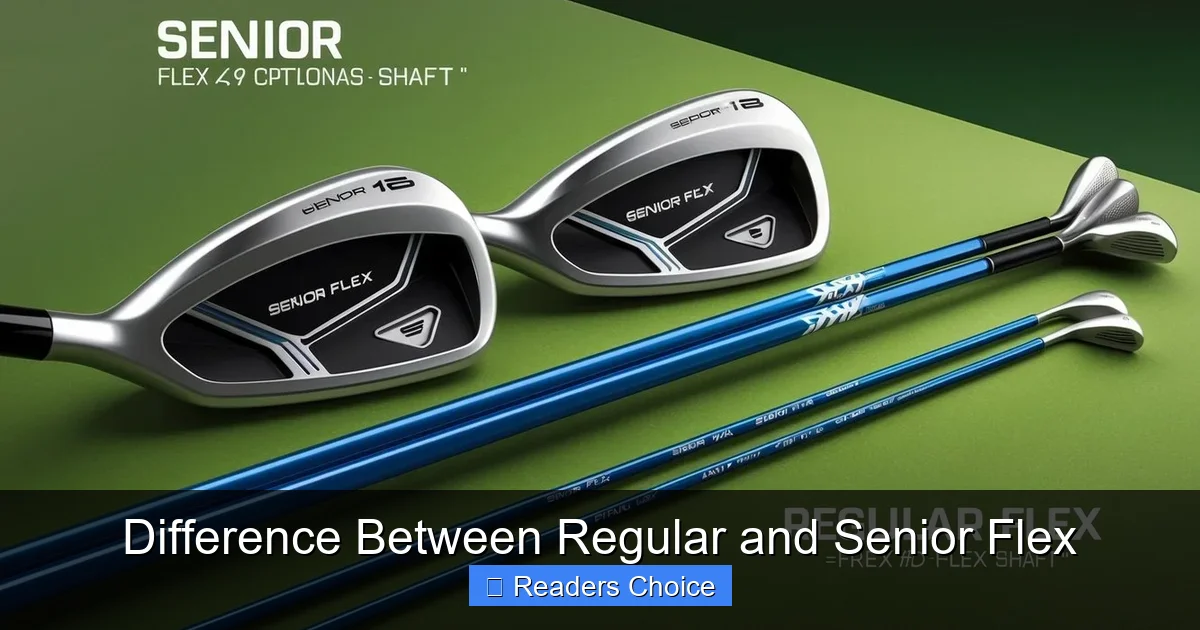
Before diving into the difference between regular and senior flex, it’s important to understand what shaft flex actually is—and why it’s one of the most critical factors in club performance. Shaft flex is a measure of how much a golf club’s shaft bends under the force of your swing. This bending occurs during the backswing, downswing, and especially at the moment of impact. The flex rating tells you how resistant the shaft is to this bending.
Golf shafts are typically labeled with one of five flex ratings: Ladies (L), Senior (A or S), Regular (R), Stiff (S), and Extra Stiff (X). Each corresponds to a range of swing speeds and player profiles. For example, Ladies flex is the softest and designed for very slow swings, while Extra Stiff is for elite players with extremely fast swings. Regular and senior flex fall in the middle of this spectrum, making them popular choices for a wide range of golfers.
But why does flex matter so much? Because it directly affects three key aspects of your shot: launch angle, spin rate, and accuracy. A shaft that’s too stiff won’t bend enough to help you generate optimal clubhead speed, especially if your swing is slower. This can lead to low ball flight, reduced distance, and a tendency to slice the ball. On the other hand, a shaft that’s too flexible can bend too much, causing the clubface to close too early or too late, resulting in hooks, fades, or inconsistent strikes.
Imagine trying to hit a drive with a broomstick—it’s stiff, unyielding, and hard to control. Now imagine using a rubber hose—it bends wildly with every movement. Neither is ideal. The right flex is like a well-tuned spring: it stores energy efficiently and releases it at the perfect moment for maximum power and control.
How Flex Affects Ball Flight and Distance
Let’s break it down with a practical example. Suppose two golfers—one with a 75 mph swing speed and another with a 90 mph swing—both use a regular flex driver. The golfer with the 90 mph swing might get decent results, maybe even good distance, because the regular flex matches their swing speed. But the golfer with the 75 mph swing? They’re likely struggling. The shaft isn’t bending enough to help them generate speed, so the ball launches low, spins too much, and falls short of the fairway.
Now, if both switch to a senior flex, the results flip. The 90 mph golfer might now be fighting a hook or inconsistent ball flight because the shaft is too soft—it’s bending too much, causing the clubface to close prematurely. But the 75 mph golfer? They suddenly find more distance, a higher launch, and straighter shots. The senior flex helps them “load” the shaft properly, storing and releasing energy more efficiently.
This is why flex isn’t just a technical detail—it’s a performance enhancer. The right flex helps you maximize your natural swing, while the wrong one can hold you back, no matter how much you practice.
The Science Behind Shaft Flex
Shaft flex is measured in a lab using a machine that applies a specific amount of force to the tip of the shaft and measures how much it deflects. This deflection is recorded in inches or millimeters and used to assign a flex rating. However, real-world performance depends on more than just lab numbers. Factors like shaft material (steel vs. graphite), weight, torque (twist resistance), and kick point (where the shaft bends most) also play a role.
For instance, graphite shafts are generally lighter and more flexible than steel, making them popular in senior flex drivers and irons. They also absorb vibration better, which is easier on the joints—a big plus for older players. Steel shafts, while stiffer and more durable, are heavier and less forgiving on slow swings.
The kick point—also called the bend point—is another subtle but important factor. A low kick point shaft bends more toward the head, promoting a higher launch. A high kick point bends more near the grip, producing a lower, more penetrating ball flight. Senior flex shafts often have a lower kick point to help slower swingers get the ball airborne, while regular flex may have a mid or high kick point for better control.
Understanding these nuances helps explain why two shafts with the same flex rating can feel and perform differently. It’s not just about the label—it’s about the entire design.
Regular Flex: Who It’s For and How It Performs
Visual guide about Difference Between Regular and Senior Flex
Image source: tellmemoregolf.com
Regular flex is one of the most commonly used shaft flexes in golf, and for good reason. It strikes a balance between flexibility and control, making it suitable for a wide range of players. But who exactly should use regular flex, and what can they expect in terms of performance?
In general, regular flex is designed for golfers with swing speeds between 85 and 95 miles per hour (mph) with a driver. This range covers a large portion of amateur golfers—especially men in their 20s to 50s with average to above-average strength and flexibility. If you’re hitting your driver around 200–230 yards consistently, regular flex is likely a good match.
One of the main advantages of regular flex is its versatility. It provides enough bend to help generate clubhead speed without sacrificing too much control. This means you can still shape shots, work the ball left or right, and maintain accuracy—something that’s harder to do with a shaft that’s too soft. Regular flex also tends to produce a mid-to-high launch angle with moderate spin, which is ideal for maximizing carry distance while keeping the ball in play.
Performance Benefits of Regular Flex
Let’s say you’re a 45-year-old golfer who plays twice a week and averages 88 mph with your driver. You’ve been using a senior flex for years, thinking it would help you hit the ball farther. But during a recent lesson, your instructor suggests trying a regular flex. After a few swings, you notice something: the ball is launching a little lower, but it’s also rolling out more. Your total distance increases by 10–15 yards, and your misses are less severe.
Why? Because the regular flex matches your swing speed better. The shaft isn’t bending excessively, so the clubface stays more stable through impact. This reduces side spin, which means fewer slices and hooks. The slightly lower launch also helps the ball cut through wind and land more predictably on the fairway.
Another benefit of regular flex is consistency. Because it’s not overly sensitive to swing changes, it’s more forgiving of minor tempo variations. This makes it a great choice for golfers who are still developing their swing or playing in varying conditions.
When Regular Flex Might Not Be Ideal
Of course, regular flex isn’t perfect for everyone. If your swing speed is below 80 mph, you might struggle to load a regular flex shaft properly. This can lead to weak, low shots that fall short of the green. You might also notice more vibration on mishits, especially if the shaft is made of steel.
Additionally, golfers with physical limitations—such as arthritis, shoulder pain, or reduced flexibility—may find regular flex too demanding. The extra stiffness requires more effort to swing, which can lead to fatigue or discomfort over 18 holes.
It’s also worth noting that regular flex may not be the best choice for players with very smooth, slow tempos. Even if your swing speed is in the 85–95 mph range, a deliberate, rhythmic swing might benefit more from a senior flex that helps “whip” the clubhead through impact.
Senior Flex: Designed for Slower, Smoother Swings

Visual guide about Difference Between Regular and Senior Flex
Image source: sunrisegolf.co
Senior flex, often labeled as “A” (for Amateur) or “S” in some brands, is specifically engineered for golfers with slower swing speeds—typically under 85 mph with a driver. This doesn’t mean it’s only for older players. Younger golfers with physical challenges, women, or anyone with a naturally smooth, slower swing can benefit from senior flex.
The primary advantage of senior flex is its increased flexibility. This allows the shaft to bend more during the swing, helping to generate additional clubhead speed even with less force. For players who struggle to get the ball airborne or reach the green in regulation, senior flex can be a game-changer.
Who Should Use Senior Flex?
Senior flex is ideal for:
– Golfers over 55 with declining strength or flexibility
– Players recovering from injury or surgery
– Women with average swing speeds (typically 70–85 mph)
– Juniors or beginners still developing their swing
– Anyone with a smooth, slow tempo who needs help launching the ball
For example, a 68-year-old retiree who used to play competitively but now swings at 78 mph might find that regular flex drivers feel “dead” and hard to control. Switching to a senior flex model could restore his confidence, add 20 yards to his drive, and reduce joint strain.
Performance Advantages of Senior Flex
The biggest benefit of senior flex is improved launch and distance. The softer shaft helps slower swingers achieve a higher ball flight with less effort. This is especially helpful on long par-3s or par-5s where carry distance matters.
Senior flex also promotes better timing. Because the shaft bends more, it “loads” and “unloads” more gradually, giving players with slower tempos a better chance to sync their release with impact. This can lead to more solid contact and fewer thin or fat shots.
Additionally, senior flex shafts are often made of lightweight graphite, which reduces overall club weight. This makes the club easier to swing, less tiring, and more comfortable—particularly important for older players or those with joint issues.
Potential Drawbacks of Senior Flex
While senior flex offers many benefits, it’s not without limitations. The increased flexibility can make the shaft less stable, especially for players with fast transitions or aggressive swings. This can lead to inconsistent ball flight, hooks, or a “whippy” feel that’s hard to control.
Also, because senior flex promotes a higher launch, it may not be ideal in windy conditions. The ball can balloon or get knocked down by headwinds, reducing overall distance.
Finally, some golfers feel that senior flex lacks feedback. The softer shaft absorbs more vibration, which can make it harder to feel where you struck the ball. This might affect your ability to adjust and improve.
How to Choose Between Regular and Senior Flex
So, how do you decide which flex is right for you? The answer isn’t based on age, gender, or even experience—it’s based on your swing speed, tempo, and physical condition.
Step 1: Measure Your Swing Speed
The most reliable way to choose between regular and senior flex is to measure your driver swing speed. You can do this at a golf shop, driving range with launch monitor technology, or during a professional club fitting. Here’s a general guideline:
– Under 75 mph: Consider Ladies or Senior flex
– 75–85 mph: Senior flex is likely best
– 85–95 mph: Regular flex is ideal
– 95–105 mph: Stiff flex may be better
– Over 105 mph: Extra Stiff is recommended
Keep in mind that these are averages. Your tempo, transition, and release also matter.
Step 2: Consider Your Physical Condition
Are you dealing with joint pain, reduced flexibility, or fatigue during a round? Senior flex’s lighter weight and softer feel can make golf more enjoyable and less taxing on your body. Even if your swing speed is borderline, the comfort factor might make senior flex the better choice.
Step 3: Test Both Flexes
The best way to know for sure is to test both regular and senior flex shafts. Hit 10–15 balls with each and compare:
– Distance (carry and total)
– Ball flight (high, low, straight, curved)
– Feel (smooth, harsh, controlled)
– Consistency (dispersion pattern)
Many golf shops offer demo days or fitting sessions where you can try different shafts. Some even let you swap out shafts on the spot.
Step 4: Consult a Professional Fitter
A certified club fitter can analyze your swing using high-speed cameras and launch monitors. They’ll look at your swing speed, angle of attack, tempo, and release point to recommend the optimal flex—and even suggest specific shaft models that match your profile.
Common Myths About Regular and Senior Flex
There are several misconceptions about shaft flex that can lead golfers to make the wrong choice. Let’s clear up a few of the most common myths.
Myth 1: Senior Flex is Only for Old People
False. While senior flex is popular among older golfers, it’s not exclusive to them. Younger players with slow swings, women, juniors, and those with physical limitations can all benefit from senior flex. Flex is about swing dynamics, not age.
Myth 2: Regular Flex is for “Real” Golfers
This outdated idea suggests that using senior flex is somehow less legitimate. In reality, choosing the right flex is a sign of smart equipment selection. Even tour pros use different flexes depending on conditions and clubs. Using senior flex doesn’t make you weak—it makes you efficient.
Myth 3: You Can’t Improve with Senior Flex
Some believe that using a softer shaft limits your ability to develop a faster swing. But the opposite is often true. Senior flex can help you make better contact, build confidence, and enjoy the game more—all of which can motivate you to practice and improve.
Myth 4: All Senior Flex Shafts Are the Same
Just like regular flex, senior flex comes in many variations. Some are softer, some are lighter, and some have different kick points. A premium senior flex shaft from a top brand can outperform a budget regular flex model.
Final Thoughts: Making the Right Choice for Your Game
The difference between regular and senior flex isn’t just about labels—it’s about matching your equipment to your unique swing. Regular flex offers a balance of power and control for average to faster swingers, while senior flex provides extra help for those with slower speeds or physical challenges.
The key is to focus on performance, not perception. Don’t let age, ego, or marketing dictate your choice. Instead, let data, testing, and comfort guide you. Whether you’re a 30-year-old with a smooth tempo or a 70-year-old looking to enjoy the game longer, the right flex can make all the difference.
Remember, golf is supposed to be fun. If your clubs feel right, you’re more likely to play well—and keep coming back for more. So take the time to get fitted, test your options, and find the flex that helps you play your best. Your scorecard—and your shoulders—will thank you.
Frequently Asked Questions
What is the main difference between regular and senior flex?
The main difference is flexibility. Senior flex shafts are softer and bend more during the swing, making them ideal for slower swing speeds. Regular flex is stiffer and better suited for average to faster swings, offering more control and consistency.
Can a young golfer use senior flex?
Yes, absolutely. Senior flex isn’t just for older players. Younger golfers with slow swing speeds, physical limitations, or smooth tempos can benefit from the added flexibility and ease of use that senior flex provides.
How do I know if I need regular or senior flex?
The best way is to measure your driver swing speed. If it’s below 85 mph, senior flex is likely better. If it’s between 85–95 mph, regular flex is probably ideal. A professional club fitting can give you the most accurate recommendation.
Will switching to senior flex add distance?
It can, especially if your current shaft is too stiff. Senior flex helps slower swingers generate more clubhead speed and launch the ball higher, which often results in greater carry and total distance.
Is senior flex only for drivers?
No, senior flex is available for all clubs—drivers, fairway woods, hybrids, and irons. Many golfers use senior flex throughout their bag for consistency and improved performance across all shots.
Can I adjust my swing to use regular flex instead of senior?
It’s possible, but not always practical. While strength and flexibility training can increase swing speed over time, forcing a stiffer shaft before you’re ready can hurt your game. It’s better to use the right flex now and upgrade later if needed.
