
Compression Stockings vs Support Socks: Which?


Heated Blanket

Bed Exit Alarm Sensor

Digital Thermometer
Compression Stockings vs Support Socks can be confusing because both can feel snug on the legs. But they are not the same thing. The main difference is how much support they give and what they are made to do.
For many seniors, the better choice depends on comfort, ease of use, and the reason for wearing them. Support socks may suit simple daily wear, while compression stockings may be better when a stronger level of compression is needed.
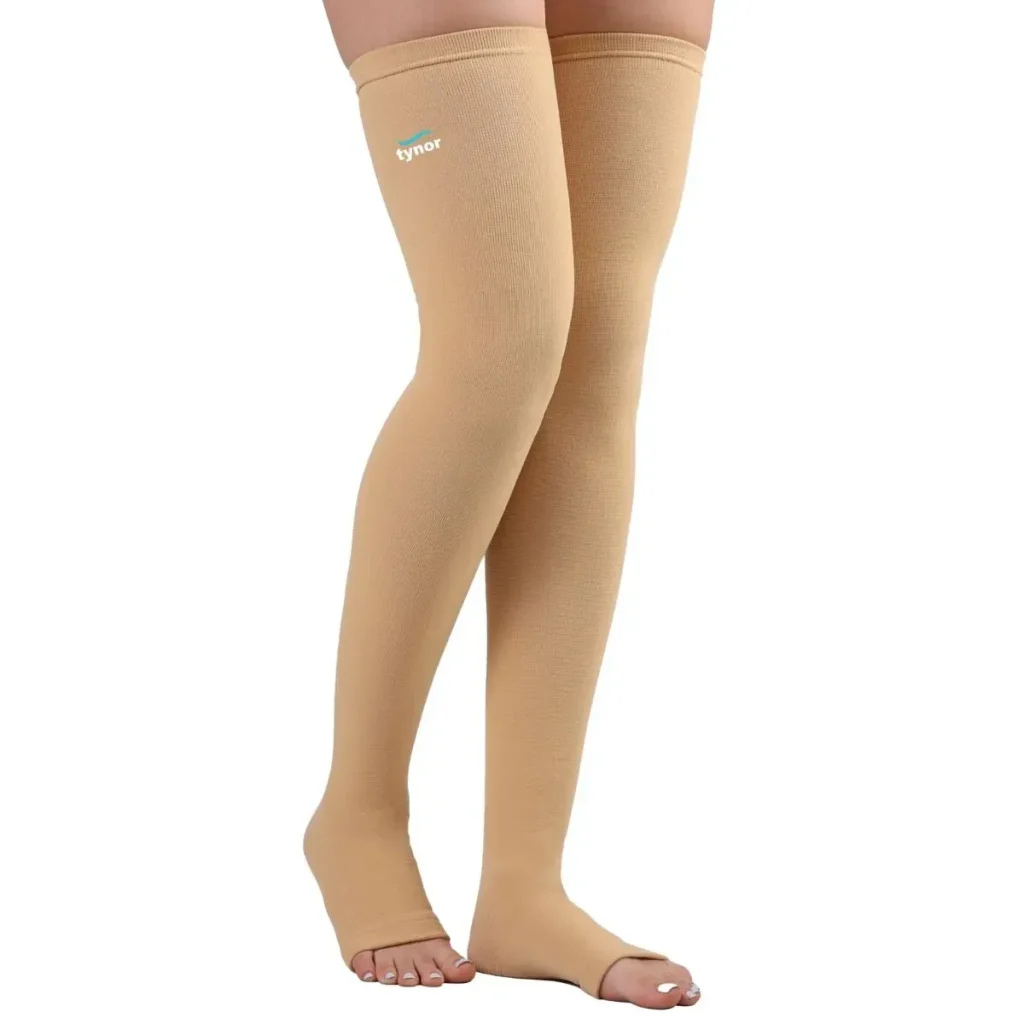
Quick Comparison
For simple everyday support, support socks are often easier to wear. They are usually a more relaxed choice for people who mainly want a snug, comfortable sock.
Compression stockings are the better choice when controlled compression is the main need. The right level depends on the product and the person. If compression is being used for a medical reason, it is wise to ask a healthcare professional about the right type and fit.
The best choice is not always the tightest one. Fit, comfort, and the reason for wearing the sock matter more.
Compression Stockings vs Support Socks At a Glance
Both options can feel supportive, but they serve different roles. Here are the main differences.
| Feature | Compression Stockings | Support Socks |
|---|---|---|
| Main purpose | Controlled leg compression | Everyday comfort and support |
| Pressure | More structured | Usually lighter |
| Daily comfort | Depends on fit | Often easier for casual wear |
| Ease of putting on | May take more effort | Usually easier |
| Best for | People who need compression | People wanting light support |
| Medical use | May be used for specific needs | Not usually designed as medical compression |
Compression Stockings Review for Seniors
Compression stockings are designed to apply pressure to the legs. The pressure can vary by product, length, and compression level.
For seniors, the biggest issue may not be the stocking itself. It may be putting it on correctly.
Ease of Use
A compression stocking can be harder to put on than a normal sock. It needs to sit in the right place and stay smooth.
This may matter for someone with limited hand strength or reduced finger movement.
A stocking that is too hard to pull on may end up being more trouble than it is worth.
Key Strengths
- Provides more structured compression
- Available in different compression levels
- Can cover more of the leg
- May be useful when controlled compression is needed
- Can provide a secure fit when sized correctly
Potential Drawbacks
- May take more effort to put on
- Correct sizing is important
- Stronger compression can feel tight
- Removal may also require extra effort
- Some people may find them less comfortable for casual wear
Support Socks Review for Seniors
Support socks are generally aimed at comfort and light support. They can feel snug without having the same role as medical compression stockings.
They may be a simple option for everyday wear when strong compression is not the goal.
Ease of Use
Support socks are often easier to put on and remove. This can be useful for seniors who want a simple daily routine.
The fit still matters. A sock should not bunch up or feel painfully tight.
Key Strengths
- Usually simple to wear
- Often comfortable for everyday use
- Less effort to put on
- Good option for light support
- Easy to include in a normal dressing routine
Potential Drawbacks
- May not provide enough compression for a specific medical need
- Support level can vary by product
- May not offer the same controlled pressure as compression stockings
- A loose or poor fit can reduce comfort
Which Is Easier for Seniors to Use?
For ease of use, support socks usually have the advantage.
They tend to require less pulling and adjusting. That can make a difference for someone who has stiff fingers, weaker grip, or simply wants an easy morning routine.
Compression stockings can still work well. The key is finding the right size and a design that is easy to handle.
A product that is hard to put on every morning may not be the best daily choice.
Caregivers should also consider this point. A stocking that takes a lot of effort may make dressing more difficult.
Performance Comparison
The two products should not be judged by the same goal.
Compression stockings focus on controlled compression. Support socks focus more on comfort and light support.
If the goal is simply to wear a comfortable sock with some support, a support sock may be enough.
If a healthcare professional has recommended compression, a support sock may not be an equal substitute.
The compression level also matters. Not all compression stockings provide the same amount of pressure.
Comfort, Accessibility, and Senior-Friendly Design
Comfort starts with the right fit.
A compression stocking that is too tight may be difficult to tolerate. One that is too loose may not provide the intended fit.
Support socks can feel easier for everyday use, especially when strong compression is not needed.
For seniors, look for:
- A clear size guide
- Soft and comfortable fabric
- A secure but comfortable top
- Smooth seams
- Easy-to-handle material
- A length that suits the intended use
If putting the product on requires a lot of force, consider whether an easier design would be more practical.
Features Comparison
The most useful feature depends on the user’s goal. More features do not always mean a better choice.
| Feature | Compression Stockings | Support Socks |
|---|---|---|
| Controlled compression | Main feature | Usually not the main feature |
| Everyday comfort | Depends on fit | Often a strong focus |
| Easy dressing | Can be harder | Usually easier |
| Compression options | Often available | Usually more limited |
| Senior-friendly fit | Important | Important |
Price, Maintenance, and Long-Term Value
Price can vary widely across both categories. Material, brand, construction, length, and compression level can all affect cost.
Compression stockings may cost more when they use specialized construction or offer a particular compression level.
Support socks may be a simpler and lower-cost choice for normal daily wear.
But price alone should not decide the purchase.
Consider:
- How often the socks will be worn
- How easy they are to wash
- How long they maintain their fit
- Whether replacement pairs are easy to find
- Whether the user can put them on without help
- Whether the product actually meets the intended need
A cheaper sock is not good value if it is uncomfortable and stays in the drawer.
Who Should Choose Compression Stockings?
Choose compression stockings if:
- Controlled compression is the main goal.
- A healthcare professional has recommended compression.
- The user wants a more structured compression garment.
- The user is comfortable with the extra effort needed to put them on.
- The correct size and compression level can be selected.
Who Should Choose Support Socks?
Choose support socks if:
- Everyday comfort is the main goal.
- Only light support is wanted.
- Easy dressing is important.
- The user does not need a specific compression level.
- A simple sock is preferred for daily wear.
Compression Stockings vs Support Socks — Final Verdict
Best for most simple daily use: Support Socks
Best for controlled compression: Compression Stockings
Best for easy use: Support Socks
Best when compression has been specifically recommended: Compression Stockings
There is no universal winner. Compression stockings are designed around controlled pressure, while support socks are usually more focused on comfort and light support.
Scoring Summary
These scores are a practical comparison of the two product categories, not laboratory test results.
| Category | Compression Stockings | Support Socks |
|---|---|---|
| Ease of Use | 7/10 | 9/10 |
| Senior-Friendly Design | 7/10 | 9/10 |
| Compression Support | 10/10 | 5/10 |
| Everyday Comfort | 8/10 | 9/10 |
| Value | 8/10 | 9/10 |
How We Evaluate Products
This comparison focuses on practical factors that matter when seniors choose legwear.
We look at ease of use, comfort, fit, accessibility, compression, maintenance, and long-term practicality.
The goal is not to make one category look better. It is to explain the trade-off clearly.
Senior-Specific Buying Considerations
The right choice should fit the person’s daily routine.
Physical Effort
Think about how much pulling is needed. Compression stockings may require more effort than regular support socks.
Fit
Check the size guide before buying. A poor fit can affect both comfort and usefulness.
Controls
There are no electronic controls here. Instead, pay attention to how easy the material is to handle.
Maintenance
Check washing instructions before buying. Simple care can make a big difference when the socks are worn often.
Storage
Keep pairs together and store them in an easy-to-reach place.
Safety
If compression is being used because of a health condition, ask a healthcare professional which type and level are appropriate.
Common Buying Mistakes
Avoid these common mistakes:
- Choosing the tightest option automatically
- Ignoring the size guide
- Buying compression stockings without understanding the compression level
- Assuming support socks are the same as compression stockings
- Choosing a product that is too difficult to put on
- Focusing only on price
The biggest mistake is buying based on the word “support” alone. The actual design and compression level matter.
Safety
Compression products can have health implications. A person with a medical condition affecting circulation should not assume that any compression product is suitable.
If compression stockings are being considered for a specific medical reason, it is best to ask a healthcare professional about the appropriate compression level and fit.
Stop using a product if it causes significant pain, unusual discomfort, or other concerning symptoms, and seek appropriate professional advice.
Frequently Asked Questions
Are compression stockings the same as support socks?
No. Compression stockings are designed to provide controlled compression. Support socks usually provide lighter support and focus more on everyday comfort.
Are support socks easier for seniors to put on?
Often, yes. They generally require less effort than stronger compression stockings, although the exact design can vary.
Are compression stockings better than support socks?
Neither is automatically better. Compression stockings are better when controlled compression is needed. Support socks may be better for simple daily comfort.
Can seniors wear compression stockings every day?
Some people do wear them regularly, but the suitable type and compression level depend on the individual. If they are being used for a medical reason, professional guidance is a good idea.
Should compression stockings feel very tight?
They should feel appropriately snug for their intended compression level, but they should not simply be chosen because they feel extremely tight. Proper sizing matters.
Can support socks replace compression stockings?
Not necessarily. A support sock may not provide the same level or type of compression as a compression stocking. If compression was recommended for a specific reason, check with a healthcare professional before switching.
Conclusion
The main difference between Compression Stockings vs Support Socks is the level and purpose of support. Compression stockings are built around controlled compression, while support socks are generally aimed at light support and everyday comfort.
For seniors who want simple daily wear, support socks may be easier to manage. For someone who needs a specific compression level, compression stockings may be the more suitable option. The best choice comes down to the user’s needs, comfort, fit, and the reason for wearing them.
