
Compression Stockings vs Compression Socks: What’s Better?


Electric Jar Opener

Lightweight Aluminum Walker

Spill-Proof Travel Mug
Compression Stockings vs Compression Socks can be confusing because the terms are often used for the same type of compression garment. In fact, medical sources commonly use “compression socks” and “compression stockings” interchangeably.
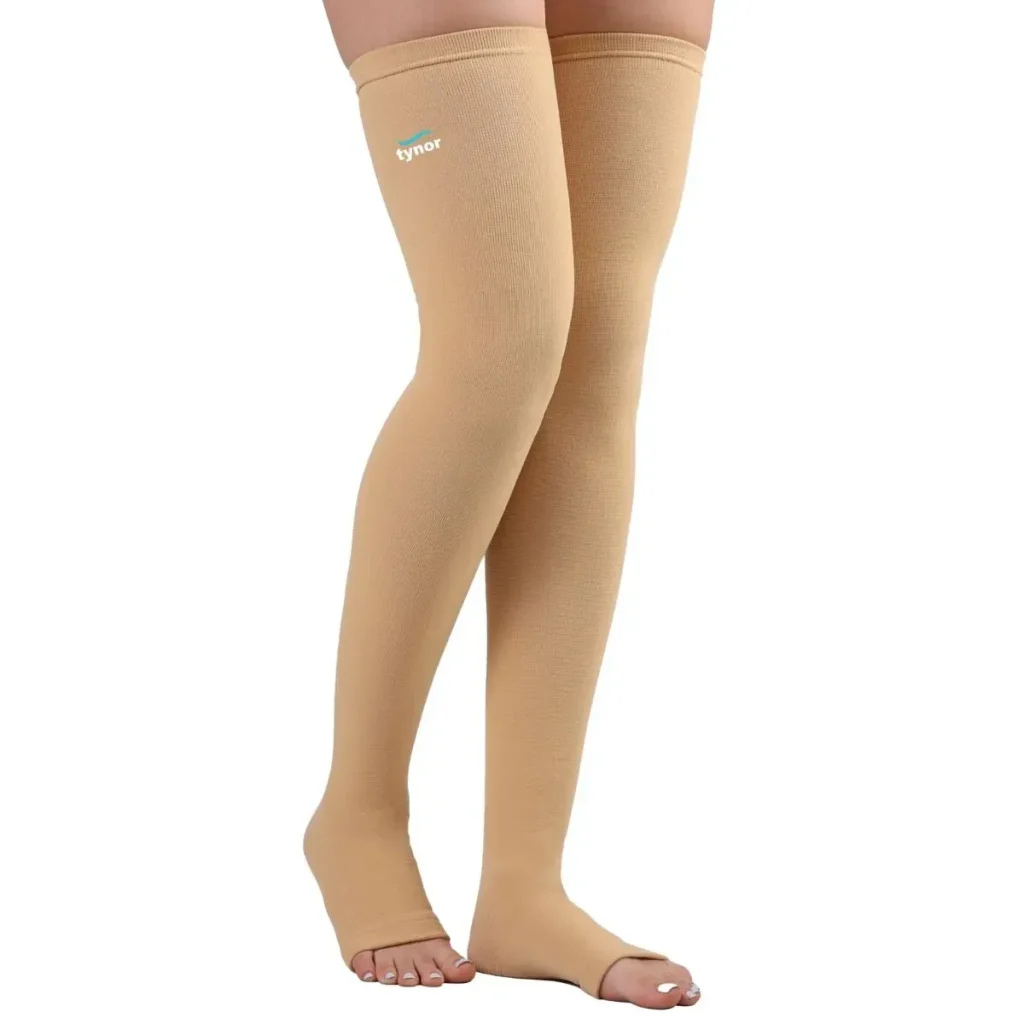
The bigger difference is usually length, compression level, fit, and intended use. For many seniors, a knee-high compression sock may be simpler to put on and wear. A longer stocking may make more sense when compression is needed higher up the leg.
Quick Comparison
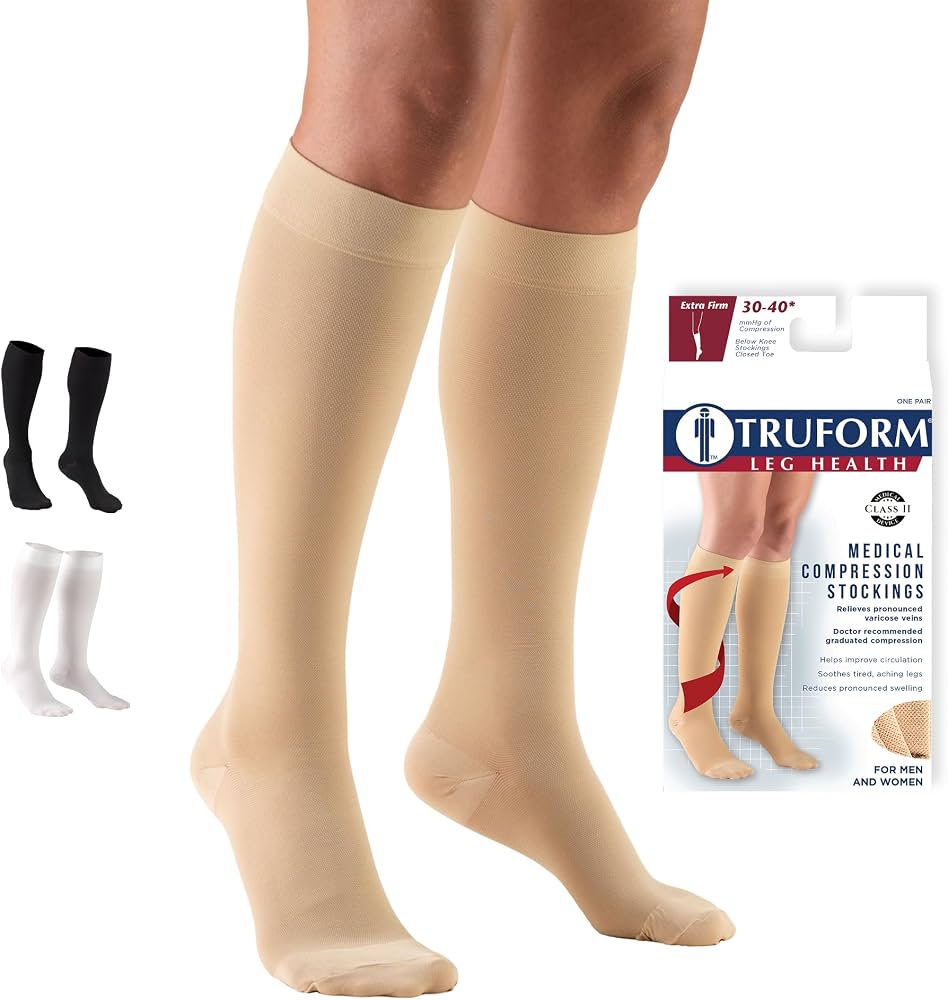
For most everyday users, knee-high compression socks are the simpler choice. They are usually easier to put on, easier to remove, and cover the lower leg where many people need compression.
Compression stockings are better when more leg coverage is needed. They can extend to the thigh or higher, depending on the design. The right choice depends less on the name and more on the required compression, length, fit, and medical guidance.
The key point: “compression stockings” and “compression socks” are not always two separate products.
Compression Stockings vs Compression Socks At a Glance
Both can provide graduated pressure, but their length and intended use can differ. The exact product should be checked before buying.
| Feature | Compression Stockings | Compression Socks |
|---|---|---|
| Typical length | Knee-high to thigh-high or longer | Often knee-high |
| Ease of use | Can be harder to put on | Usually simpler |
| Leg coverage | More options | Usually lower leg |
| Compression levels | Mild to medical-grade options | Wide range |
| Everyday convenience | Depends on length | Often convenient |
| Best for | Users needing more coverage | Many everyday users |
Compression Stockings Review
Compression stockings are designed to apply pressure to the legs. They may be knee-high, thigh-high, or available in other lengths.
For seniors, the main advantage is flexibility. A suitable stocking can provide compression over more of the leg when that coverage is needed.
Ease of Use
Longer stockings can require more effort to put on. The fabric must be positioned correctly and smoothed over the leg.
This can be difficult for someone with limited hand strength or flexibility.
The stocking should not be rolled or folded because this can create an overly tight band.
Key Strengths
- More length options
- Can cover more of the leg
- Available in different compression levels
- Useful when a healthcare professional recommends longer coverage
- Can provide graduated compression
Potential Drawbacks
- Longer styles may take more effort to put on
- Correct sizing is important
- Stronger compression can be harder to handle
- May be less convenient for everyday use
Compression Socks Review
Compression socks are commonly used as a general term for compression garments. Many are knee-high and provide graduated compression that is tightest around the ankle and gradually becomes looser farther up the leg.
For many seniors, the shorter design can make daily use easier.
Ease of Use
A knee-high sock usually requires less pulling and positioning than a thigh-high stocking. That may make it easier for someone who wants a simple daily routine.
Still, compression socks can be snug. Putting them on may require more hand strength than ordinary socks.
Key Strengths
- Often easier to handle
- Usually easier to store
- Knee-high styles can be convenient
- Available in different compression levels
- Good option when lower-leg coverage is sufficient
Potential Drawbacks
- May not provide the coverage needed higher on the leg
- Firm compression can still be difficult to put on
- Incorrect sizing can cause discomfort
- Not every style is suitable for every medical need
Which Is Easier for Seniors to Use?
For many seniors, knee-high compression socks have the practical advantage.
They generally involve less fabric and less pulling than longer stockings. That can matter when bending, reaching, or gripping is difficult.
However, ease of use depends heavily on the compression level. A very firm knee-high garment may be harder to put on than a lighter compression stocking.
A caregiver may also find either option easier when the garment fits properly and an appropriate application aid is available.
The easiest compression garment is not necessarily the shortest one. It is the one that provides the needed compression while remaining manageable to put on correctly.
Performance Comparison
The important performance factor is not simply whether the garment is called a sock or stocking. It is how the garment applies compression and whether its coverage matches the user’s needs.
Graduated compression garments are generally tighter around the ankle and less tight higher up the leg. This pressure can help reduce blood pooling and swelling in the legs.
A longer stocking may provide coverage farther up the leg. A knee-high sock may be enough when only lower-leg compression is appropriate.
So there is no universal performance winner.
Comfort, Accessibility, and Senior-Friendly Design
Comfort depends on proper sizing, fabric, compression level, and individual preference.
A knee-high design may be easier for someone who wants a quick daily routine. A longer stocking may be preferable when more coverage has been recommended.
For seniors, look for:
- A correct size
- A suitable compression level
- Smooth fabric without bunching
- A design that does not require excessive pulling
- Easy-to-follow care instructions
- Help or an application device when needed
If a garment causes pain, numbness, tingling, skin discoloration, or skin damage, it should not simply be treated as something to “get used to.” These symptoms warrant removing the garment and seeking appropriate medical advice. Cleveland Clinic
Features Comparison
The most useful differences are usually length, compression, and ease of application.
| Feature | Compression Stockings | Compression Socks |
|---|---|---|
| Length options | Often more extensive | Commonly knee-high |
| Coverage | Lower leg or higher | Usually lower leg |
| Application | Can require more effort | Often easier |
| Compression choice | Varies by product | Varies by product |
| Daily convenience | Depends on design | Often high |
Do not choose based on the word “stocking” or “sock” alone. Check the actual product specifications.
Price, Maintenance, and Long-Term Value
Price varies widely based on compression level, construction, brand, and whether the garment is custom fitted.
Neither category is automatically cheaper.
Maintenance is also similar in principle. Compression garments need proper washing and care to maintain their fit and effectiveness. NHS guidance notes that some compression stockings need replacement roughly every three to six months, depending on the product and condition. nhs.uk
For long-term value, consider:
- How often the garment will be worn
- How easy it is to put on
- Whether replacement is readily available
- How well the garment fits
- How difficult it is to wash and dry
- Whether an application aid is needed
A slightly more expensive garment may offer better value if it is easier to use consistently.
Who Should Choose Compression Stockings?
Choose compression stockings if:
- More leg coverage is needed.
- A healthcare professional recommends a longer garment.
- Thigh-high coverage is appropriate for the user’s needs.
- The user can manage the extra fabric or has caregiver assistance.
- The available stocking provides the correct compression and fit.
Who Should Choose Compression Socks?
Choose compression socks if:
- Knee-high coverage is appropriate.
- Everyday simplicity matters.
- The user prefers a shorter garment.
- The sock is easier to put on and remove.
- The selected compression level is appropriate.
Compression Stockings vs Compression Socks — Final Verdict
There is no universal winner because the two terms can describe overlapping products.
Best for most everyday users: Compression socks, when knee-high coverage is appropriate.
Best for more leg coverage: Compression stockings.
Best for ease of use: Usually knee-high compression socks.
Best for medical needs: Whichever length, compression level, and fit are appropriate for the individual’s situation.
The biggest mistake is treating the name as the deciding factor. Fit, compression level, length, and the reason for wearing the garment matter more.
Scoring Summary
Because compression stockings and compression socks overlap so much, a simple score can be misleading. A better comparison is based on the intended use.
| Category | Compression Stockings | Compression Socks |
|---|---|---|
| Ease of use | 7/10 | 9/10 |
| Coverage flexibility | 10/10 | 8/10 |
| Everyday convenience | 7/10 | 9/10 |
| Senior-friendly potential | 8/10 | 9/10 |
| Overall versatility | 9/10 | 9/10 |
These are practical comparison scores, not medical ratings. The right product can differ from person to person.
How We Evaluate Products
This comparison focuses on practical factors that matter during everyday use.
We consider:
- Ease of use
- Fit
- Comfort
- Accessibility
- Compression and coverage
- Maintenance
- Safety
- Long-term practicality
- Value
The comparison does not assume hands-on testing or laboratory testing.
Senior-Specific Buying Considerations
A few checks can prevent a frustrating purchase.
Physical Effort
Consider how much pulling and bending is needed to put the garment on.
Fit
Correct sizing is important. A garment that is too loose may not provide the intended compression, while one that is too tight may be uncomfortable.
Compression Level
Compression strength varies. If compression is being used for a medical condition, ask a healthcare professional which level and type are appropriate.
Maintenance
Check washing and drying instructions before buying. Regular care can help maintain the garment.
Application
If putting on the garment is difficult, an application aid or caregiver assistance may help.
Common Buying Mistakes
Avoid these common mistakes:
- Choosing only by price
- Assuming all compression levels are the same
- Buying the wrong size
- Choosing a longer garment without needing the extra coverage
- Ignoring how difficult the garment is to put on
- Treating discomfort as normal
- Forgetting to check care instructions
Safety
Compression garments are not appropriate for everyone.
People with certain circulation problems, severe unexplained swelling, fragile skin, open wounds, or reduced sensation may need professional advice before using compression garments. People with peripheral artery disease should get guidance before using them.
The garment should feel snug, not painfully tight. Stop using it and seek medical advice if you develop significant pain, numbness, tingling, skin discoloration, skin damage, or worsening swelling.
Frequently Asked Questions
Are compression stockings and compression socks the same?
Often, the terms are used interchangeably. Both can describe garments that apply compression to the legs. The actual length and compression level can differ.
Are compression socks easier for seniors to put on?
Often, yes. Knee-high socks may require less pulling and positioning than longer stockings. However, firm compression can still be difficult to apply.
Are compression stockings better than compression socks?
Not necessarily. Stockings may be better when more leg coverage is needed, while knee-high socks may be more convenient for everyday use.
What compression level should a senior use?
There is no single level that is right for every senior. If the garment is being used for a medical condition, a healthcare professional can help determine the appropriate compression and fit.
Can compression garments be uncomfortable?
They can feel tight, especially when first worn. However, significant pain, numbness, tingling, skin discoloration, or skin damage should not be ignored.
Should compression socks or stockings be worn at night?
Unless specifically advised otherwise by a healthcare professional, compression garments are generally worn during the day and removed at bedtime.
Conclusion
Compression Stockings vs Compression Socks is less about choosing between two completely different products and more about choosing the right compression garment for the job. Knee-high compression socks may be easier for everyday use, while longer compression stockings can provide more coverage when needed.
For seniors, prioritize proper fit, suitable compression, comfort, and ease of application. If the garment is being used because of a medical condition, getting professional guidance is more important than simply choosing the product with the most compression.
