
Can You Take Sat Senior Year


Weekly Pill Organizer

Glucose Monitor Kit

Adjustable Walker with Wheels
You absolutely can take the SAT during your senior year of high school—and for many students, it’s a smart move. Whether you’re aiming to improve your score, meet application deadlines, or strengthen your college profile, senior-year testing offers real advantages. With proper planning and focused prep, this final opportunity can make a meaningful difference in your admissions journey.
Taking the SAT during your senior year might sound like a last-minute scramble—but for countless students, it’s actually a strategic and powerful move. You’ve spent three years building your academic foundation, and now, as a senior, you’re in a unique position to leverage that knowledge, maturity, and focus to perform your best on the SAT. Whether you’re aiming for a top-tier university, seeking merit-based scholarships, or simply trying to round out your college applications, the SAT remains a valuable tool—even in your final year of high school.
The good news? You’re not too late. In fact, many high-achieving students take the SAT for the first time—or retake it—during senior year. Colleges understand that students’ academic journeys vary, and they welcome strong scores regardless of when they’re earned. What matters most is demonstrating your readiness for college-level work, and the SAT is one clear way to do that. Plus, with the rise of test-optional policies, having a solid SAT score can give you an edge, especially if your GPA or extracurriculars aren’t as strong as you’d like.
So, can you take the SAT senior year? The short answer is a resounding yes. But the smarter question is: *When* and *how* should you take it to maximize your chances of success? This guide will walk you through everything you need to know—from test dates and registration tips to study strategies and score reporting timelines—so you can make the most of your final high school year.
Key Takeaways
- Yes, you can take the SAT in senior year: There are multiple test dates available from August through June, giving seniors several chances to sit for the exam.
- Early senior-year testing is ideal: Taking the SAT in August, October, or November allows time for score improvements and early application submissions.
- Many colleges accept senior-year scores: Most schools, including highly selective ones, accept SAT scores from tests taken through December of senior year—and sometimes even later.
- Senior-year prep can be more focused: With fewer academic distractions than junior year, seniors often have more bandwidth for targeted SAT study.
- Retaking the SAT is common and encouraged: Colleges typically consider your highest section scores (via superscoring), so a senior-year retake can boost your composite.
- Test-optional doesn’t mean test-blind: Even at test-optional schools, a strong SAT score can strengthen your application, especially if other parts are weaker.
- Plan ahead for score reporting: Allow 2–4 weeks for official score delivery, so schedule your test date with college deadlines in mind.
📑 Table of Contents
- Understanding SAT Test Dates for Seniors
- Do Colleges Accept SAT Scores from Senior Year?
- Benefits of Taking the SAT in Senior Year
- How to Prepare for the SAT in Senior Year
- Navigating College Applications with Senior-Year SAT Scores
- Common Misconceptions About Senior-Year SAT Testing
- Real Student Success Stories
- Final Thoughts: Make Senior Year Your SAT Advantage
Understanding SAT Test Dates for Seniors
One of the first things seniors should know is that the College Board offers multiple SAT test dates throughout the school year, and several of them fall squarely within the senior academic calendar. The SAT is typically administered seven times a year: in August, October, November, December, March, May, and June. For seniors, the most relevant windows are from August through December.
Key Senior-Year Test Dates
– **August**: This is often considered the ideal time for seniors to take the SAT. It’s before most college application deadlines, and it gives you a full summer to prepare. Plus, if you’re not happy with your score, you’ll have time to retake it in the fall.
– **October**: A popular choice for Early Decision and Early Action applicants. Many top schools have November 1 deadlines, so an October test date ensures your scores arrive on time.
– **November**: Still within range for many early applications, especially if you’re applying Regular Decision. Some schools accept scores through this date.
– **December**: The final widely accepted test date for Regular Decision applications. Most colleges will accept December scores, but you’ll need to check individual school policies.
Why Timing Matters
Timing isn’t just about deadlines—it’s about preparation and mental readiness. Taking the SAT too late in the year can create unnecessary stress, especially if you’re juggling college essays, recommendation letters, and final exams. On the other hand, testing too early without adequate prep can lead to underperformance.
For example, imagine Sarah, a high school senior who took the SAT in March of her junior year and scored a 1250. She wasn’t thrilled with her math section, so she decided to retake it in August of senior year after a focused summer study plan. With consistent practice and targeted review, she raised her score to a 1420—a jump that significantly strengthened her applications to competitive universities.
The lesson? Senior year offers a fresh opportunity to refine your skills and aim higher. And because you’re more familiar with high school content by this point, you may actually perform better than you did as a junior.
Do Colleges Accept SAT Scores from Senior Year?

Visual guide about Can You Take Sat Senior Year
Image source: soflotutors.com
This is one of the most common questions among seniors: “Will colleges even accept my SAT score if I take it in senior year?” The answer is overwhelmingly yes—but with some important nuances.
Most Colleges Accept December Scores
The vast majority of four-year colleges and universities in the U.S. accept SAT scores from tests taken through December of senior year. This includes highly selective institutions like Harvard, Stanford, MIT, and the University of California system. In fact, many schools explicitly state that December is the final acceptable test date for Regular Decision applicants.
For Early Decision or Early Action applicants, the cutoff is usually earlier—often October or November. But even then, some schools will accept November scores if they arrive shortly after the deadline. Always check the admissions website of each school you’re applying to, as policies can vary.
Superscoring and Score Choice
Another reason senior-year testing is valuable? Colleges that practice superscoring will take your highest section scores across multiple test dates. So even if you took the SAT in junior year and again in senior year, they’ll combine your best math score with your best reading and writing score—no matter when you earned them.
For instance, if you scored 680 in Math and 620 in EBRW in March, but then improved to 720 in Math and 650 in EBRW in October, your superscore would be 720 + 650 = 1370. That’s a significant boost, and it’s one reason retaking the SAT in senior year can be so effective.
Additionally, the College Board’s Score Choice feature allows you to choose which test dates to send to colleges. You’re not required to send all your scores—so if you have a bad testing day, you can leave that score off your record.
Test-Optional vs. Test-Blind Policies
It’s also important to understand the difference between test-optional and test-blind schools. Test-optional schools allow you to decide whether to submit SAT scores as part of your application. If you choose not to, your application will still be reviewed holistically. However, if you *do* submit a strong score, it can enhance your profile—especially if your GPA or coursework is less competitive.
Test-blind schools, like the University of California system, do not consider SAT scores at all, even if you submit them. In these cases, your score won’t help or hurt your application. But for the majority of schools that are test-optional, a good SAT score can still be a valuable asset.
So even in a test-optional era, taking the SAT in senior year can be a smart strategic move—particularly if you’re applying to schools where scores are still considered.
Benefits of Taking the SAT in Senior Year
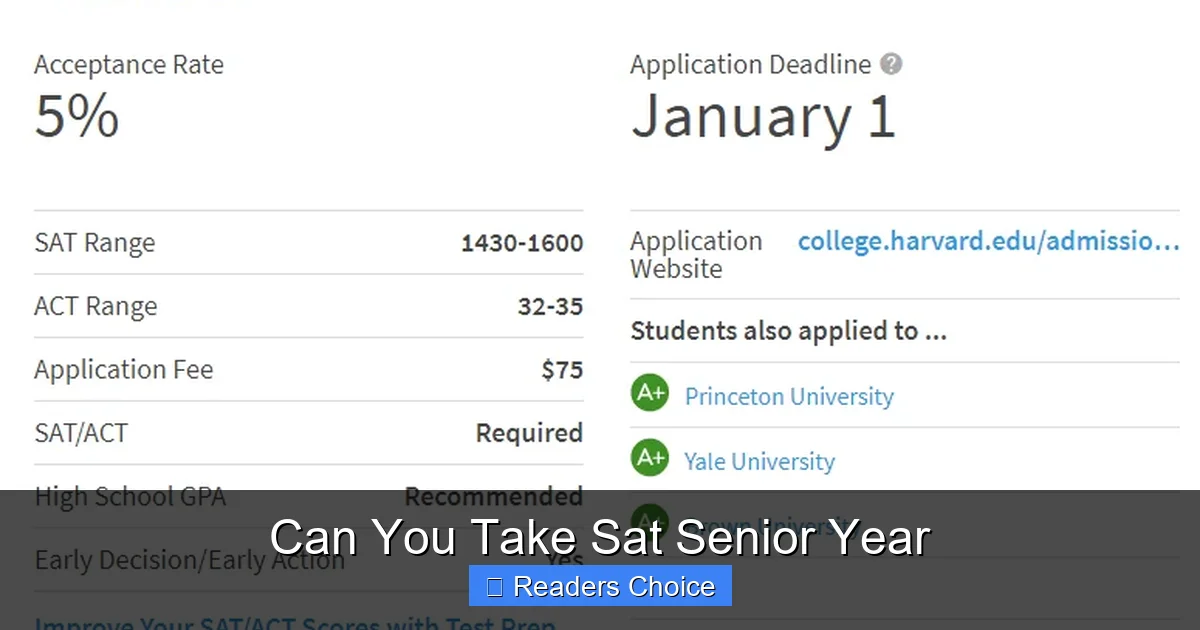
Visual guide about Can You Take Sat Senior Year
Image source: niche.com
You might be wondering: “If I already took the SAT in junior year, why bother again as a senior?” The truth is, senior year offers unique advantages that can lead to better performance and stronger applications.
More Academic Maturity
By senior year, you’ve completed most of your core high school courses—especially in math and English. You’ve likely taken Algebra II, Precalculus, and advanced literature classes, all of which align closely with SAT content. This means you’re better prepared than you were as a sophomore or even a junior.
For example, the SAT Math section covers topics up to Algebra II, and many students don’t fully grasp these concepts until their junior or senior year. Taking the test later gives you the benefit of having recently studied the material.
Less Academic Pressure
Junior year is often the most academically intense year of high school. You’re juggling AP exams, final projects, and college prep—all while trying to maintain a strong GPA. Senior year, by contrast, tends to be lighter. Many students have already completed their most challenging courses, and the pressure to maintain a perfect transcript eases up.
This shift allows you to focus more energy on SAT prep. You can dedicate evenings and weekends to practice tests, review sessions, and skill-building without the constant stress of midterms and finals.
Clearer College Goals
As a senior, you likely have a better sense of which colleges you’re interested in and what kind of scores they expect. This clarity can motivate you to aim higher and tailor your prep to specific score goals.
Say you’re applying to a school where the middle 50% of admitted students scored between 1400 and 1500. If your current score is 1350, you now have a concrete target: raise your score by 50–150 points. That kind of focused goal-setting can make your study plan more effective.
Opportunity for Improvement
Let’s face it—most students don’t ace the SAT on their first try. In fact, the average score increase from the first to the second attempt is around 100 points. Senior year gives you the chance to learn from past mistakes, refine your strategies, and walk into the test with confidence.
And because colleges superscore, even a modest improvement in one section can boost your overall composite. A 50-point gain in Math or EBRW might be all it takes to cross a threshold that opens doors to more schools or scholarship opportunities.
How to Prepare for the SAT in Senior Year

Visual guide about Can You Take Sat Senior Year
Image source: assets-global.website-files.com
Preparation is key—no matter when you take the SAT. But senior-year prep has its own rhythm and requirements. Here’s how to make the most of your study time.
Create a Realistic Study Schedule
Start by identifying your target test date. If you’re aiming for October, begin studying at least 8–12 weeks in advance. Break your prep into manageable chunks: 3–5 days a week, 1–2 hours per session.
Use a planner or digital calendar to block out study times. Treat them like appointments—non-negotiable and focused. Include time for full-length practice tests every 2–3 weeks to track your progress.
Use High-Quality Study Materials
Not all SAT prep resources are created equal. Stick to official materials from the College Board, such as the SAT Practice Tests on Khan Academy. These are free, accurate, and aligned with the real exam.
Supplement with reputable prep books like The Official SAT Study Guide or books from Princeton Review or Kaplan. Avoid outdated or unofficial materials that may teach incorrect strategies.
Focus on Weak Areas
Take a diagnostic test early on to identify your strengths and weaknesses. Are you struggling with algebra? Do you run out of time in the Reading section? Use your results to prioritize your study plan.
For example, if you’re strong in Reading but weak in Math, spend 70% of your time on math practice and 30% on reading review. Targeted practice is far more effective than general review.
Practice Under Real Conditions
Take full-length, timed practice tests in a quiet environment. Mimic test-day conditions: no phone, strict timing, and minimal breaks. This builds stamina and helps you manage anxiety.
After each test, review every question—even the ones you got right. Understand why the correct answer is right and why the others are wrong. This deep review is where real learning happens.
Consider a Tutor or Prep Course
If you’re struggling to improve on your own, consider hiring a tutor or enrolling in a prep course. A good tutor can provide personalized feedback, teach test-taking strategies, and keep you accountable.
Many online platforms offer affordable, flexible options—perfect for busy seniors. Just make sure the instructor has experience with the current SAT format.
Stay Healthy and Balanced
Don’t sacrifice sleep, nutrition, or mental health for SAT prep. Burnout hurts performance more than it helps. Aim for 7–8 hours of sleep, eat well, and take breaks.
Incorporate stress-relief activities like walking, meditation, or talking with friends. A calm, focused mind performs better on test day.
Navigating College Applications with Senior-Year SAT Scores
Once you’ve taken the SAT, the next step is ensuring your scores reach the right colleges—on time.
Understand Score Reporting Timelines
Official SAT scores are typically available 2–3 weeks after the test date. However, during busy testing periods (like October and December), processing can take up to 4 weeks. Plan accordingly.
If you’re applying Early Decision with an October test date, your scores should arrive by mid-November—just in time for most deadlines. For Regular Decision, December scores usually arrive by early January, which is acceptable for most schools.
Send Scores Strategically
You can send scores for free to up to four colleges when you register for the SAT. Use this wisely—choose schools where you’re likely to apply.
If you take the test again, you can send additional scores for a fee. Use Score Choice to send only your best test dates. But remember: some schools require all scores, so check their policies.
Self-Report When Allowed
Many colleges allow you to self-report your SAT scores on your application. This means you can enter your scores directly without waiting for official reports. Official scores are usually required only after you’re admitted.
This speeds up the process and reduces stress. Just make sure your self-reported scores match your official ones—discrepancies can lead to admission revocation.
Use Scores to Strengthen Your Application
Even at test-optional schools, a strong SAT score can tip the scales in your favor. If your GPA is slightly below average or your extracurriculars are limited, a high SAT score can demonstrate academic potential.
For example, a student with a 3.4 GPA but a 1450 SAT score might still be competitive at a school where the average GPA is 3.7. The score shows they can handle rigorous coursework.
Common Misconceptions About Senior-Year SAT Testing
Despite the clear benefits, some myths persist about taking the SAT in senior year. Let’s clear them up.
“Colleges Prefer Junior-Year Scores”
False. Colleges don’t care when you take the SAT—only how you perform. They understand that students mature at different rates and may need extra time to prepare.
“It’s Too Late to Make a Difference”
Not true. As long as you test by December (or earlier for early applications), your scores will be considered. Many students improve significantly with focused senior-year prep.
“I Should Only Take It If I’m Applying to Elite Schools”
No. A good SAT score can help at any school—especially for merit scholarships. Many state universities and private colleges offer thousands in aid based on test scores.
“I Have to Take It in Junior Year to Be Competitive”
Not necessarily. While early testing is helpful, many admitted students take the SAT in senior year. What matters is your final score, not your timeline.
“Test-Optional Means I Shouldn’t Bother”
Not always. If you can achieve a strong score, it’s worth submitting. It can compensate for weaker areas and show initiative.
Real Student Success Stories
Let’s look at a few real-world examples of seniors who used SAT testing to their advantage.
Case Study: Maria’s 200-Point Jump
Maria took the SAT in March of her junior year and scored a 1200. She wasn’t satisfied, so she spent the summer working with a tutor and using Khan Academy. In August of senior year, she retook the test and scored a 1400. That score helped her earn a full-tuition scholarship to her dream school.
Case Study: James’s Last-Minute Boost
James didn’t take the SAT until October of senior year. He scored a 1380, which was strong enough to qualify him for admission to several state universities. He used that score to negotiate a better financial aid package.
Case Study: Aisha’s Strategic Retake
Aisha took the SAT three times—once in junior year and twice in senior year. Her superscore of 1520 helped her stand out in a competitive applicant pool, even though her GPA was modest.
These stories show that it’s never too late to aim higher.
Final Thoughts: Make Senior Year Your SAT Advantage
Taking the SAT in senior year isn’t a sign of poor planning—it’s a smart, strategic move that can open doors. With the right mindset, preparation, and timing, you can turn your final year of high school into your best testing opportunity.
Remember: colleges value growth, effort, and results. A strong SAT score earned in senior year carries just as much weight as one from junior year—if not more, because it reflects your maturity and determination.
So don’t stress about when you took the test. Focus on what you can do now. Set a goal, make a plan, and give it your best shot. Your future self will thank you.
Frequently Asked Questions
Can I take the SAT in senior year?
Yes, you can take the SAT during your senior year. The College Board offers test dates from August through June, and most colleges accept scores through December of senior year.
Will colleges accept my SAT score if I take it in December?
Most four-year colleges accept SAT scores from December of senior year for Regular Decision applications. However, Early Decision and Early Action applicants should aim for October or November test dates.
Is it too late to improve my SAT score in senior year?
No, it’s not too late. Many students significantly improve their scores with focused senior-year prep. Superscoring also allows colleges to consider your best section scores across multiple tests.
Should I take the SAT if my school is test-optional?
If you can achieve a strong score, yes. A good SAT score can strengthen your application, especially if your GPA or extracurriculars are less competitive.
How many times can I take the SAT in senior year?
You can take the SAT as many times as you want, but most students take it 1–3 times. The College Board allows unlimited retakes, but consider your time and stress levels.
Do I have to send all my SAT scores to colleges?
No, thanks to Score Choice, you can select which test dates to send. However, some schools require all scores, so check each college’s policy before deciding.