
10 Best Window Alarms 2026: Top Picks for Home Security


Foot Massager Machine

Smart Plug with Alexa

Rollator Walker with Seat
Windows are common entry points, so many people use alarms to add a layer of security at home. Window alarms use sensors to detect when a window opens, while some models also sound when they detect breaking glass or sudden movement.
The best window alarm should be easy to install, loud enough to hear, and reliable without needing complicated setup. We also look for useful features such as adjustable volume, entry delays, app alerts, battery life, and compatibility with smart-home systems. Placement and sensor range matter, especially for large windows or windows in separate rooms.
We compared leading window alarms for sound, reliability, installation, controls, and overall value. Our picks can help you choose the right alarm for your home and budget.
Best Window Alarms 2026
We reviewed window alarms for security features, sound levels, setup, and everyday use. Below, we list our top picks to help us find the right alarm for different homes and needs.
UltraPro 6-Pack Window and Door Alarms
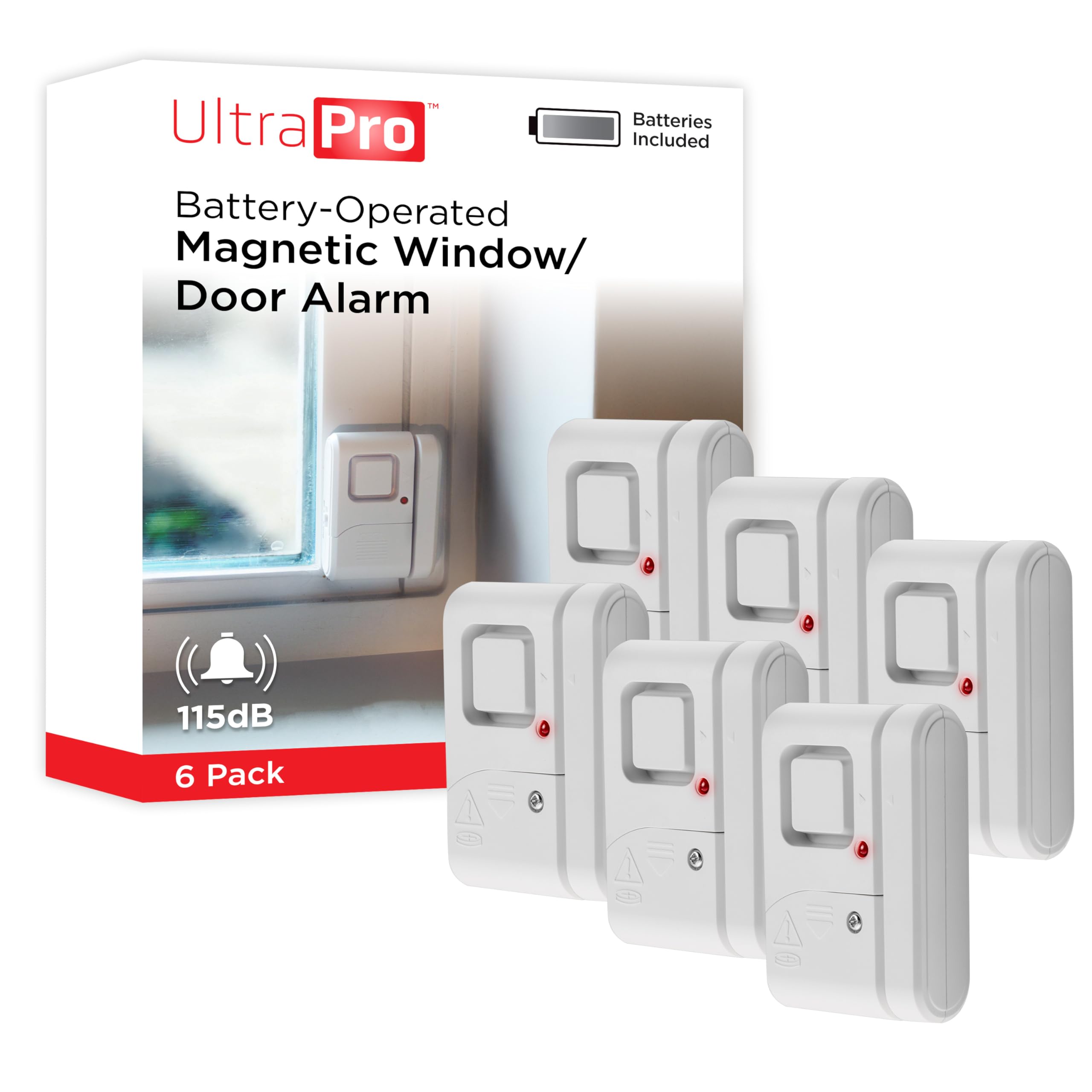
We recommend this six-pack for simple, low-cost alerts on windows, doors, cabinets, or drawers without an app or monthly fee.
Pros
- Loud alarm and useful chime setting
- Fast, tool-free installation
- Six units cover several entry points
Cons
- Indoor use only
- Adhesive mounting may not suit every surface
- Battery access requires a small Phillips screwdriver
We found the alarms easy to place with the included adhesive. Each unit uses a magnet sensor, so the siren sounds when the alarm and magnet separate. The compact design worked well on doors and windows where we wanted basic monitoring.
The alarm is very loud for its size, and we could hear it from another room. The chime setting provides a softer alert for daily use, while the alarm setting offers a stronger warning when security matters more.
These alarms do not connect to a phone or central security system, so they provide local alerts only. We also needed to check the adhesive placement carefully and keep the units indoors. The six-pack gives us broad coverage for a home, apartment, office, RV, or other small space.
TECKNET 6-Pack Window Alarms

We recommend these alarms for basic door and window alerts because they install quickly, offer useful sound settings, and come in a six-pack.
Pros
- Simple adhesive installation
- Chime and alarm modes
- Three volume levels
Cons
- Needs a flat mounting surface
- Requires battery replacement
- Limited sensor spacing
We found the TECKNET alarms easy to place on standard doors and windows. The white housings blended well with light-colored frames, while the compact size kept them from looking distracting.
The chime mode worked well for knowing when a door opened. For a stronger warning, the alarm mode continued sounding after the sensor separated. We could also lower the volume when we wanted a less intrusive alert.
Installation took only a few minutes after cleaning the surface. The sensor and alarm must stay closely aligned, so uneven trim or molding may make placement difficult.
This six-pack works well for covering several entry points, including cabinets, garages, and sliding doors. We would choose it for basic awareness rather than as a complete security system.
Philips 4-Pack Window and Door Alarms
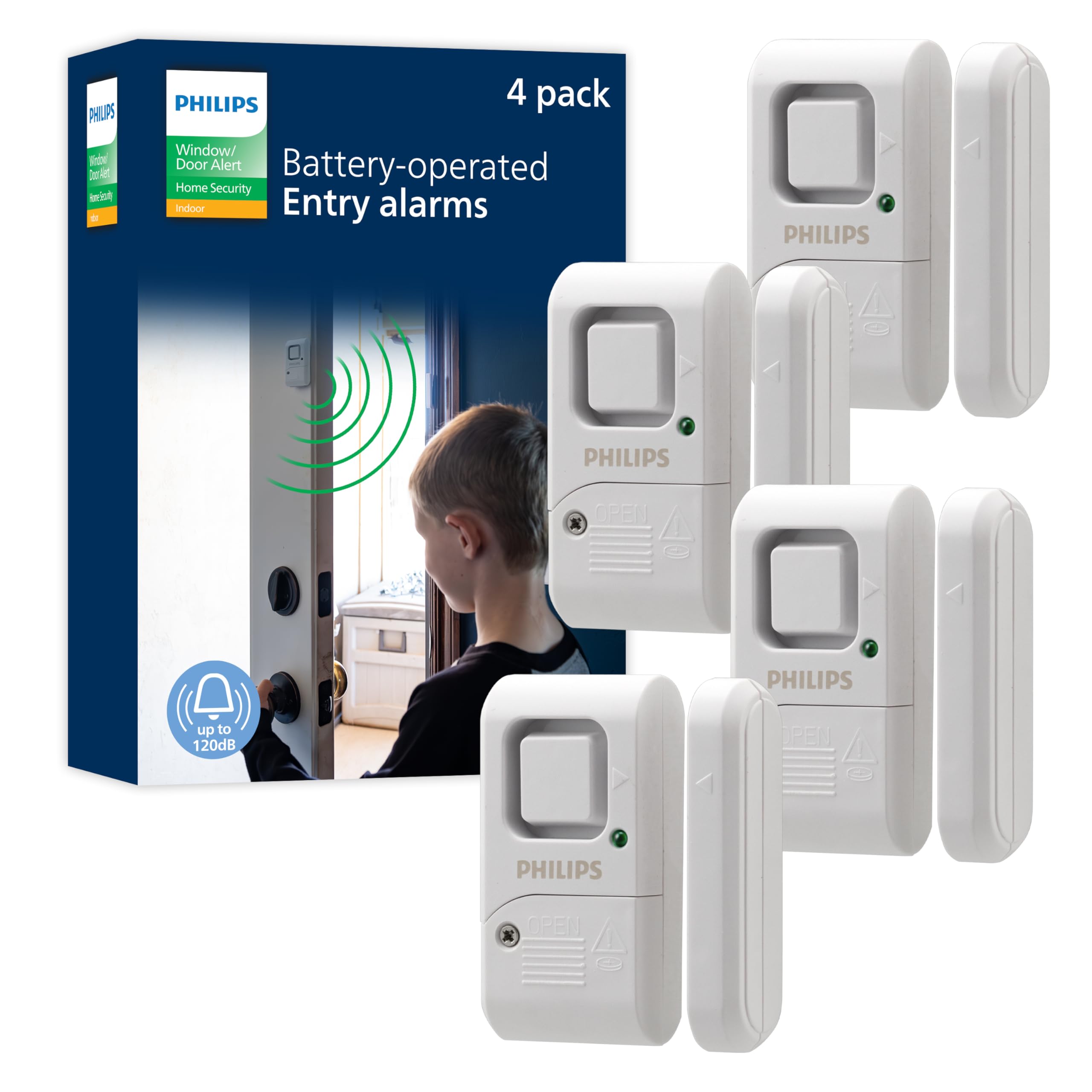
We recommend this affordable set for adding loud, basic alerts to several windows or doors without wiring.
Pros
- Loud alarm and useful chime mode
- Quick adhesive installation
- Four alarms provide broad coverage
Cons
- Adhesive may need extra support on some surfaces
- Button batteries may require regular replacement
- The alarm can sound harsh in small rooms
We installed these on doors and windows using the included mounting tape. The setup took only a few minutes, though we cleaned each surface first to help the tape hold. We also checked the battery tabs before attaching the units.
The magnetic sensors responded correctly when we opened the protected doors and windows. Alarm mode produced a very loud alert, while chime mode offered a less urgent notification for daily use.
The four-pack works well for apartments, dorm rooms, garages, and small homes that need extra coverage. We would avoid placing the alarms near sleeping areas unless everyone can tolerate a sharp, high-volume sound. Start with the included tape, but use stronger mounting material if the surface feels dusty, rough, or uneven.
METAK 5-Pack Window and Door Alarms
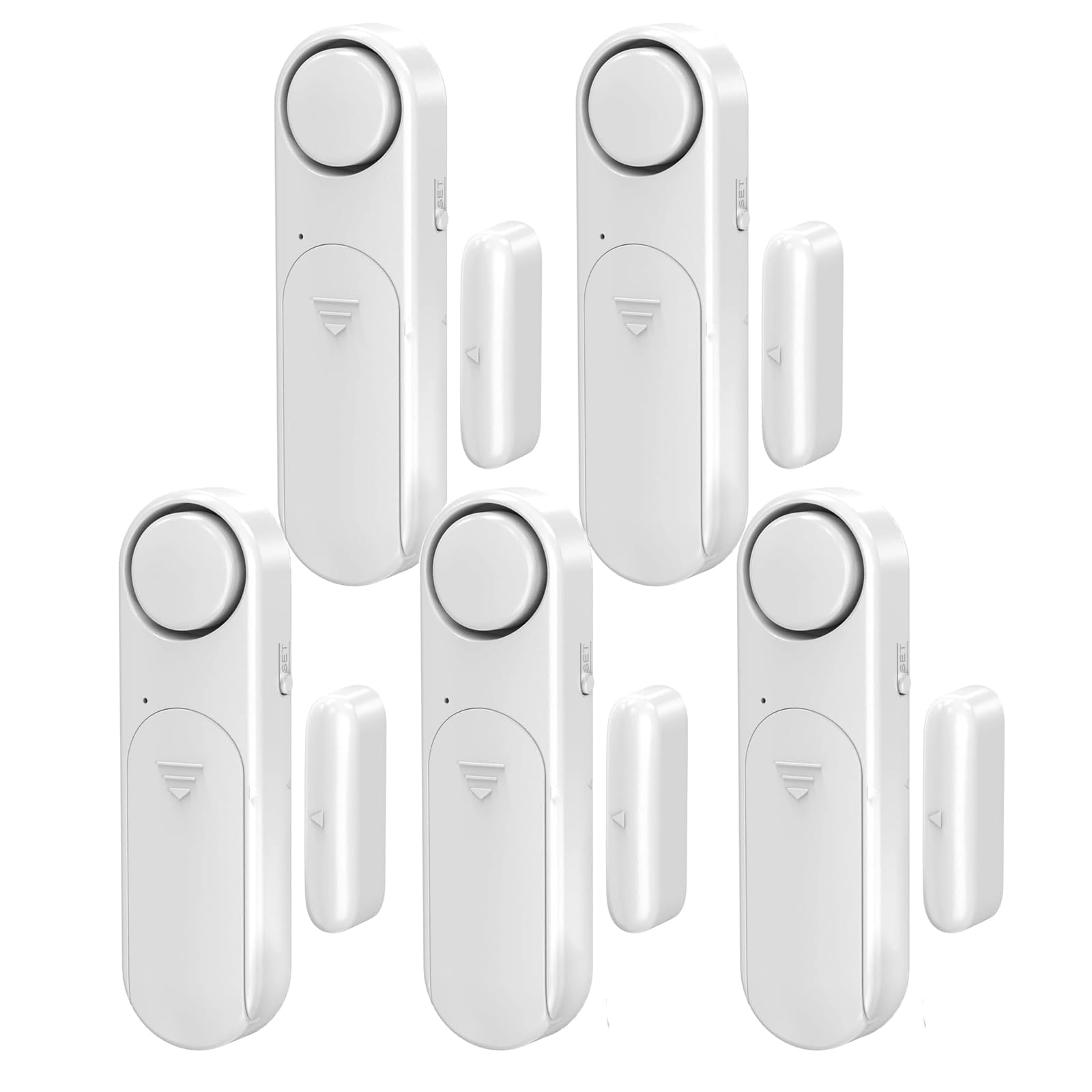
We recommend this pack for households that need several simple, loud alarms without wiring or tools.
Pros
- Very loud 90dB or 120dB alert
- Quick adhesive installation
- Includes five alarms for multiple entry points
Cons
- Requires two AAA batteries per alarm, sold separately
- No remote control
- Loud alerts may become annoying in busy areas
We found these alarms easy to place on windows and doors because the adhesive backing needs no drilling. Their slim design fits well on many frames, while the white finish stays fairly discreet.
The adjustable volume gave us more control during setup, but the 120dB setting stood out when we tested it. It can quickly draw attention, which helps with entry alerts and child-safety situations near pools, cabinets, or other restricted areas.
The on/off and set controls keep operation simple. We also liked the flashing red indicator, which shows when an alarm triggers or the batteries run low. However, each unit needs two AAA batteries, and the pack does not include them.
These alarms suit apartments, homes, garages, and small businesses that need basic coverage across several doors or windows. We would choose them for straightforward protection rather than remote monitoring or smart-home features.
WimuPath Door and Window Alarms

We recommend this multipack for simple, low-cost alerts on doors, windows, and other entry points.
Pros
- Loud alarm helps us notice an opened entry point
- Adhesive mounting takes little time
- Large pack covers many doors and windows
Cons
- Batteries are not included
- Adhesive may loosen on some surfaces
- Some units feel difficult to open or close
We found the WimuPath alarms easy to set up. We placed the two magnetic pieces on a window frame and sash, then switched the unit on. When the pieces separated, the alarm sounded quickly and clearly.
The 15-pack suits larger homes, offices, garages, or care settings. We also liked that the alarms work without Wi-Fi or an app, so there is no pairing process or account to manage.
The adhesive held well on clean, smooth windows during our use. However, some users report that units fell from doors, so we would clean and dry the surface before installation and avoid rough or dusty areas.
The alarm is loud enough for nearby rooms, but it may become irritating if we forget to turn it off before opening a protected window or door. We also needed to supply the required batteries separately.
SanJie 5-Pack Window Alarms

We recommend these alarms for simple door and window monitoring because they install quickly and produce a strong alert without a hub.
Pros
- Loud alarm with adjustable alarm and chime modes
- Peel-and-stick installation takes only a few minutes
- Five sensors cover several doors, windows, or cabinets
Cons
- Thick trim can make alignment difficult
- The alarm may sound too loud for some rooms
- Button batteries need periodic replacement
We found the setup straightforward: we peeled off the adhesive backing, lined up the sensor and magnet, then selected the alert mode. The units fit well on plain surfaces, but trim around a door or window can prevent the two pieces from meeting properly.
The 125-decibel setting creates a sharp, noticeable sound when the contact separates. We also liked having a quieter chime option for monitoring children, cabinets, or doors during the day.
These sensors work well for basic coverage in homes, apartments, garages, RVs, and offices. They do not replace a monitored security system, and we would avoid placing them where moisture could damage the electronics. Five units make this pack a practical choice for adding alerts to several openings at once.
EVA LOGIK Ultra-Thin Window Alarm

We recommend this eight-pack for adding loud, simple vibration alerts to several windows or glass doors without wiring or a hub.
Pros
- Very loud alarm grabs attention quickly
- Adjustable sensitivity helps limit false alarms
- Simple adhesive installation with visible warning lights
Cons
- Batteries are not included
- Some units may arrive defective
- Strong impacts may be needed to trigger the sensor
We found the installation straightforward. The adhesive backing lets us place each alarm on a clean glass surface, and the included stickers add a clear warning for anyone approaching the window.
The alarm produces a sharp, high-volume sound when the sensor detects strong vibration. We liked having two sensitivity settings, since the lower setting helps reduce alerts from normal bumps, opening, or closing.
The flashing red light makes the units easy to check at a glance. Battery life should be reasonable with normal use, but we needed to supply two AAA batteries for each alarm.
This set works best as a basic deterrent and local alert, not as a full security system. Some reported units did not work properly or required stronger impacts than expected, so we would test every alarm soon after installation.
HIIXHC 10-Pack Window and Door Alarms

We recommend this affordable pack for basic entry alerts, but we would test every unit before relying on it.
Pros
- Simple adhesive installation
- Loud alarm for its size
- Ten alarms suit several doors or windows
Cons
- AAA batteries are not included
- Some units may fail or need careful positioning
- Adhesive and plastic parts may not hold up well over time
We installed these on doors and windows without tools. The magnetic sensor worked once we aligned the two pieces closely, and the on/off switch made it easy to silence the alarm when needed.
The alarm is loud enough to get our attention from nearby rooms. It can also warn someone away, but it does not send alerts to a phone or connect with a security system.
Positioning matters. The sensor needs a small gap when the door or window stays closed, and several user reports mention weak adhesive or units that stopped working. We would clean the surface first and test each alarm after installation.
The ten-pack offers good coverage for apartments, homes, garages, and cabinets at a low price. We would treat these as simple backup alarms rather than a complete security system.
EVA LOGIK Window Alarm 4-Pack

We recommend this four-pack for basic glass-window protection because it installs quickly, offers adjustable vibration sensitivity, and produces a very loud alert.
Pros
- Loud alarm helps draw immediate attention
- Peel-and-stick setup takes only a few minutes
- Flashing light and warning stickers add visible deterrence
Cons
- AAA batteries are not included
- Sensitive settings may trigger from pets or accidental bumps
- Adhesive performance may vary by surface
We found the alarms easy to place on windows and glass doors. The compact units fit without taking up much space, while the flashing red light remains visible from outside. The included warning stickers make the system look more noticeable.
During testing, the alarm responded strongly to window vibration. Its volume can be useful in a home, garage, RV, or dorm, but the higher sensitivity setting may cause false alarms if a pet or object hits the glass.
The low-battery light offers a helpful reminder, though we still recommend checking the units regularly. Since the batteries are not included, we would purchase two AAA batteries for each alarm before installation.
Kofeen Window and Door Alarm 12-Pack
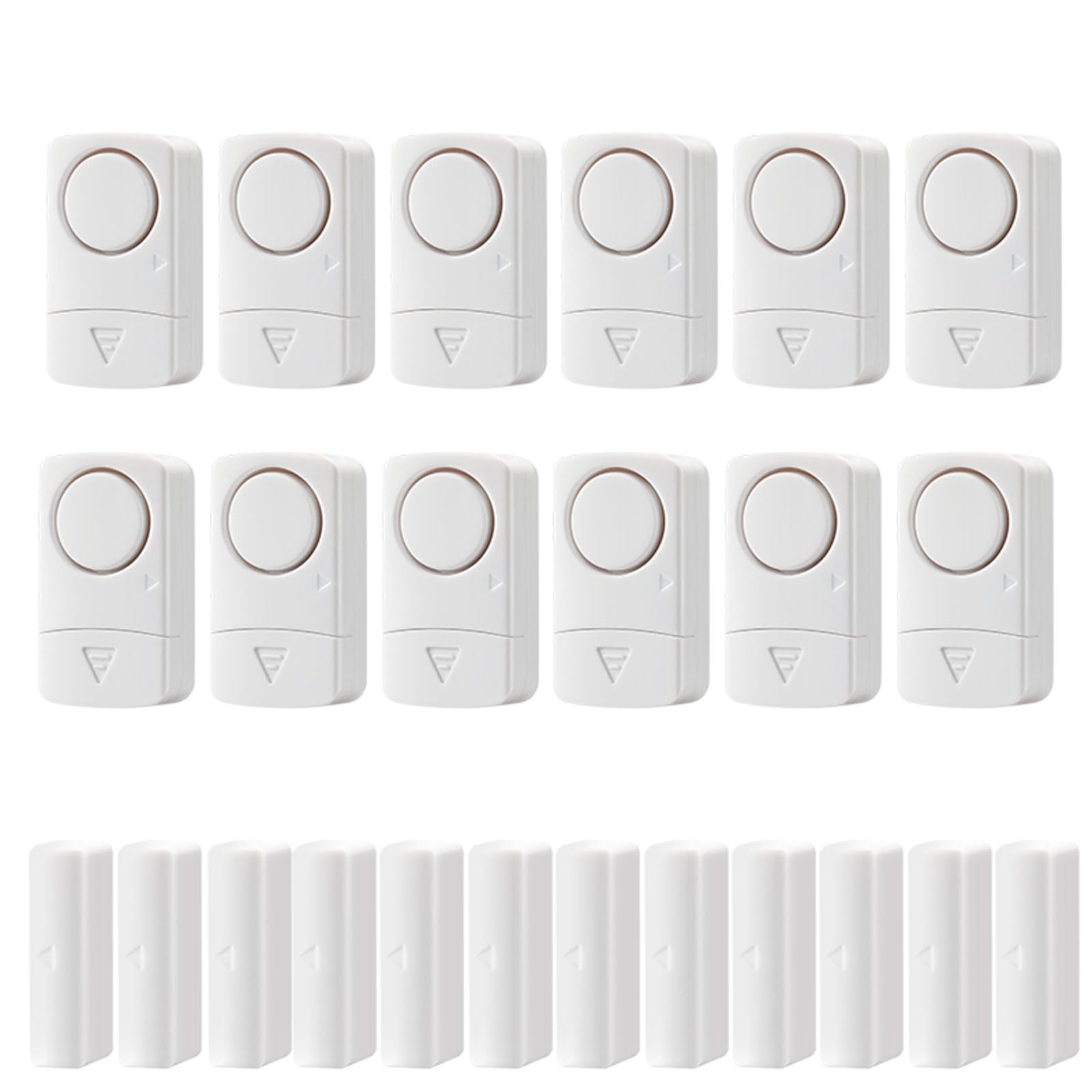
We recommend the Kofeen alarms for basic door, window, and child-safety monitoring because they install quickly and provide a loud alert at a low cost.
Pros
- Simple adhesive installation with no wiring
- Loud alarm helps alert us when a door or window opens
- Twelve sensors cover several entry points
Cons
- Adhesive may not hold well on every surface
- Small LR44 batteries need periodic replacement
- Not UL 2017 compliant
We found the sensors easy to place on windows and doors, and their compact white design stayed fairly discreet. The included batteries made setup quick, although we would clean and dry each surface before applying the adhesive.
When the sensor and magnet separate, the alarm continues until we close the opening again. The sound is strong enough for normal home use, but we would test each unit after installation to confirm that we can hear it from bedrooms or other distant rooms.
The 12-pack works well for homes with several windows, doors, or pool-access points. However, buyers seeking equipment for a required pool inspection should choose a compliant product instead, since this model is not UL 2017 certified.
Buying Guide
We should match the alarm type to the window and our security needs. Contact alarms detect when a window opens, while glass-break sensors respond to the sound of shattering glass. Some devices combine both functions.
Key features to compare include:
- Alarm volume: Choose a sound level that we can hear from nearby rooms.
- Power source: Battery models simplify installation, while wired options need more work.
- Battery alerts: Low-battery warnings help us maintain reliable protection.
- Arming controls: Look for simple buttons, keypads, remotes, or app controls.
- Smart-home support: Wi-Fi or other connections may allow alerts and remote control.
- Installation: Adhesive mounting offers convenience; screws can provide a firmer fit.
- Tamper protection: This feature can alert us if someone removes or opens the alarm.
- Weather resistance: Outdoor-rated sensors suit windows exposed to moisture.
We should check the sensor’s operating range and whether its parts must stay within a specific distance. The alarm should fit the window frame without blocking normal opening, closing, or cleaning.
| Buying factor | What we should check |
|---|---|
| Coverage | Number of windows one system can protect |
| Controls | Local, remote, or app-based operation |
| Maintenance | Battery life and replacement access |
| Compatibility | Window type and smart-home system support |
| Privacy | Data handling and required account access |
We should also review the return policy, warranty, and replacement costs. Clear setup instructions and reliable customer support can make long-term use easier.
Editor’s Choice
We recommend the SimpliSafe Entry Sensor as our editor’s choice for most homes. It uses a two-piece design that mounts on a window frame and sash, then sends an alert when the window opens.
The sensor works with the SimpliSafe home security system and requires a monitoring plan for some features. We like its compact size, simple setup, and dependable app alerts. It also suits renters because installation does not require permanent changes.
| Feature | Details |
|---|---|
| Best for | Most home security systems |
| Installation | Peel-and-stick mount |
| Alerts | App and system alerts |
| Smart home support | SimpliSafe ecosystem |
| Main limitation | Full features may require a plan |
We suggest placing sensors on accessible windows, especially those on the ground floor. Test each sensor after installation and replace its battery when the system reports a low charge.
For shoppers who want a standalone option, the GE Personal Security Window and Door Alarm offers a simpler setup. It uses a built-in siren and does not require an app, hub, or subscription, but it provides fewer remote-control features.
Conclusion
We should choose a window alarm based on the type of protection we need, not just its price. Contact alarms suit most homes, while glass-break sensors can add coverage for larger rooms or several windows.
Before buying, we should check the alarm’s sound level, battery life, installation method, and smart-home features. A model with a loud siren and simple controls may work better than a more complex device we rarely use.
We should also place alarms where we can hear them clearly and test them after installation. Regular battery checks help keep the system ready when we need it.
FAQs
What is the best type of window alarm?
We usually recommend a magnetic contact alarm for basic home security. It sounds when someone opens the window and works well for most rooms.
Are wireless window alarms reliable?
Yes. Modern wireless alarms can provide reliable protection when we install them correctly and replace their batteries on schedule. We should check the product’s stated wireless range before buying.
Do window alarms need Wi-Fi?
No. Stand-alone alarms use built-in sensors and sirens, so they do not need Wi-Fi. Wi-Fi models can send alerts to our phones but may depend on internet access and an app.
Where should we place a window alarm?
We should mount the sensor and magnet on the fixed frame and moving window section. They need to sit close together when the window is closed, according to the manufacturer’s instructions.
Can we use window alarms on sliding windows?
Yes. We can use contact sensors on many sliding windows, provided the two parts align when the window closes. Vibration alarms may also help detect forced movement.
How loud should a window alarm be?
We should choose a model with a siren loud enough to hear from nearby rooms. A louder alarm may not help if we cannot hear it from outside the home.
Do window alarms prevent break-ins?
They can alert us when someone opens or disturbs a window, but they do not physically stop entry. We should combine them with locks, secure screens, and good lighting.