
Best Wet Cat Food for Senior Cats with Kidney Disease


Automatic Jar Opener

Portable Wheelchair

Compression Socks
Choosing the right wet food for a senior cat with kidney disease is a critical part of their care. You need high-moisture, low-phosphorus formulas with controlled, high-quality protein. Renal-specific diets from trusted brands are often formulated for this exact purpose. Always work closely with your veterinarian to select and monitor the best option for your cat’s specific condition. Proper hydration through wet food is non-negotiable for kidney support.
Watching your beloved senior cat slow down is tough. When a diagnosis of chronic kidney disease (CKD) enters the picture, it can feel overwhelming. You want to do everything right, and nutrition becomes your most powerful tool. Choosing the best wet cat food for senior cats with kidney disease isn’t about picking the most expensive bag; it’s about understanding what their struggling bodies need and providing it in the most appealing, digestible form possible. This guide will walk you through the “why” and “how” of selecting the perfect renal diet, cutting through the marketing to focus on science and your cat’s well-being.
First, let’s acknowledge the emotional weight here. Your cat has been your companion for years. Now, you’re their primary advocate. The good news is that with proper dietary management, many cats with CKD live comfortably for years. Wet food is almost always the cornerstone of this management because of its high water content. But not all wet food is created equal for kidney support. We’ll break down the exact nutritional targets, review top brands, and give you practical tips to get your feline friend eating again.
Key Takeaways
- Hydration is Paramount: Wet food provides essential moisture to help flush toxins and reduce strain on failing kidneys.
- Protein Must Be Controlled & High-Quality: The goal is to limit the total protein amount while ensuring it comes from highly digestible sources to minimize waste toxins.
- Phosphorus Restriction is Critical: Lowering phosphorus slows the progression of kidney damage; look for explicit “low phosphorus” or “restricted phosphorus” on the label.
- Sodium and Potassium Need Management: Reduced sodium helps with blood pressure, while added potassium counters losses from increased urination.
- Palatability is a Top Concern: Cats with kidney disease often feel nauseous and lose appetite; the food must be extremely tasty to ensure they eat enough.
- Veterinary Guidance is Essential: Kidney disease has stages; your vet can recommend prescription diets or specific non-prescription options based on bloodwork and your cat’s needs.
📑 Table of Contents
- Understanding Kidney Disease in Your Senior Cat
- Key Nutritional Needs for Renal Support
- What Makes the Best Wet Food? The Criteria
- Top Recommended Wet Foods for Senior Cats with Kidney Disease
- Feeding Strategies & Practical Tips
- The Vital Role of Your Veterinarian: A True Partnership
- Conclusion: Nourishing the Golden Years
Understanding Kidney Disease in Your Senior Cat
To appreciate why certain foods are recommended, you need a basic understanding of what’s happening inside your cat’s body. Chronic kidney disease is a progressive condition where the kidneys gradually lose their ability to filter waste, balance electrolytes, and produce urine. It’s incredibly common in senior cats, with estimates suggesting that 30-40% of cats over 10 years old develop some form of CKD.
What is Chronic Kidney Disease (CKD)?
Think of your cat’s kidneys as a sophisticated water treatment plant. Healthy kidneys remove toxins from the blood and excrete them in urine. They also regulate hydration, blood pressure, and red blood cell production. In CKD, the filtering units (nephrons) are damaged and die off. The remaining nephhrons work harder, but eventually, they can’t keep up. Waste products like creatinine and urea build up in the blood (azotemia), leading to symptoms like increased thirst and urination, lethargy, poor appetite, and weight loss.
Why Wet Food is Non-Negotiable
One of the biggest challenges with CKD is that the damaged kidneys can’t concentrate urine well, leading to massive fluid loss. Your cat becomes perpetually dehydrated, which further harms kidney function. Wet cat food typically contains 70-80% water, while dry food contains about 10%. By feeding a wet food diet, you are essentially administering fluid therapy with every meal. This helps:
- Dilute toxins in the urine and bloodstream.
- Reduce the workload on the kidneys.
- Help prevent the formation of painful urinary crystals, which senior cats are also prone to.
In fact, for many cats in the early to moderate stages of CKD, simply increasing water intake through diet can have a profound clinical benefit. If you’re unsure about your cat’s hydration status, a quick skin tent test (gently pinching the skin on their neck) can offer a clue—if it doesn’t snap back quickly, dehydration is likely.
Key Nutritional Needs for Renal Support
Renal diets are carefully formulated to address the specific metabolic imbalances caused by CKD. It’s not just about “low protein” as old myths suggested. Modern veterinary nutrition focuses on the quality and quantity of protein, alongside other critical adjustments. Here’s what to look for on the guaranteed analysis or ingredient list.
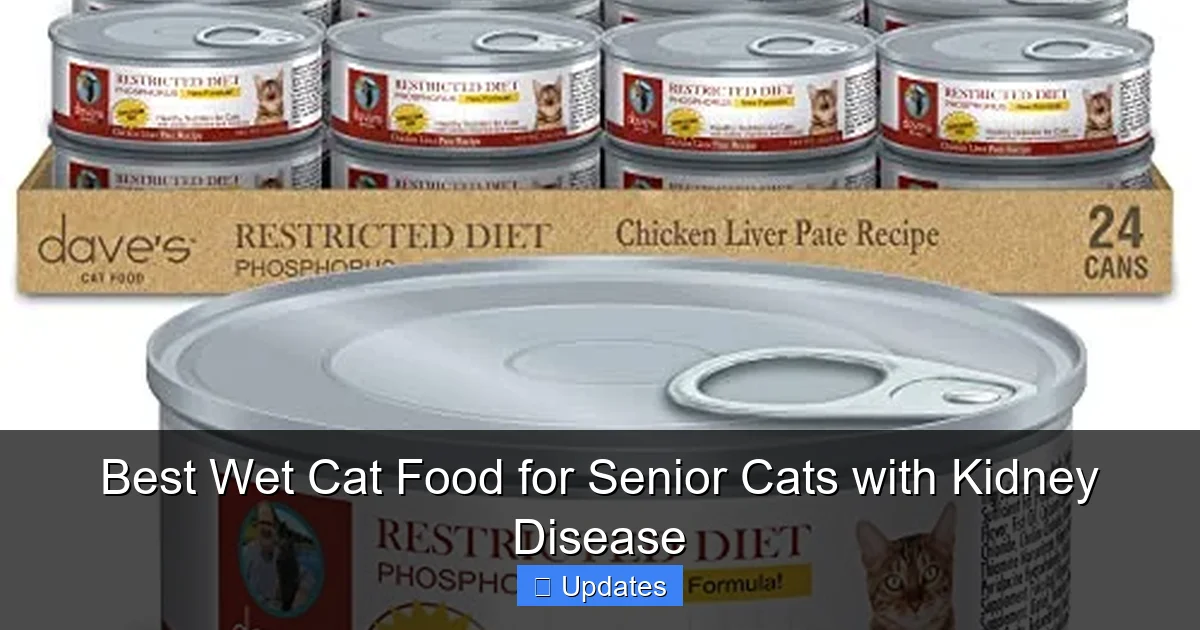
Visual guide about Best Wet Cat Food for Senior Cats with Kidney Disease
Image source: m.media-amazon.com
Controlled, High-Quality Protein
The goal is to provide enough protein to maintain muscle mass (which is a huge battle in senior cats) without overloading the kidneys with nitrogenous waste. This means moderate levels of highly digestible animal protein. Look for diets with protein levels around 30-35% on a dry matter basis (DM). The protein should come from named animal sources like chicken, turkey, or fish, not fillers. Excess protein from low-quality sources creates more work for the kidneys.
Strictly Restricted Phosphorus
This is arguably the most important nutrient to control. When kidneys fail, they can’t excrete phosphorus efficiently. High blood phosphorus (hyperphosphatemia) accelerates kidney damage, causes mineral imbalances, and contributes to nausea. The best wet cat food for senior cats with kidney disease will have very low phosphorus levels, often achieved by using non-meat protein sources (like egg whites) and limiting bone-in meats. Prescription renal diets are legally required to meet strict phosphorus limits.
Adjusted Sodium and Added Potassium
Sodium is often reduced to help manage hypertension, a common complication of CKD. Potassium is typically supplemented because CKD cats lose too much in their dilute urine, leading to hypokalemia, which causes muscle weakness and poor appetite. A good renal diet will have balanced, controlled levels of both electrolytes.
Increased Omega-3 Fatty Acids & B Vitamins
Omega-3s (EPA/DHA) from fish oil have anti-inflammatory properties that may help protect remaining kidney tissue. B Vitamins are lost in the excessive urine of CKD cats and are essential for energy metabolism. Many renal diets are fortified with these to combat lethargy and inappetence.
Calorie Density
Cats with CKD are often underweight due to nausea and reduced appetite. The food must be calorically dense so they can consume fewer ounces (which may be all they can handle) and still get adequate energy. This is why renal diets often have higher fat content.
What Makes the Best Wet Food? The Criteria
Now that you know the nutritional goals, let’s translate them into what you should look for on the can or pouch. Not every wet food meets these criteria, and many “senior” or “indoor” formulas are not suitable for kidney disease.
Visual guide about Best Wet Cat Food for Senior Cats with Kidney Disease
Image source: catfoodhouse.com
1. Moisture Content: Higher is Better
Aim for foods with 78%+ moisture. Broth or gravy-based foods can encourage drinking, but be cautious of ones with excessive sodium or unknown thickeners. Pate formulas are often more nutrient-dense per ounce than flaked or shredded in gravy.
2. Phosphorus Level: The Golden Metric
This is the hardest number for consumers to find on standard labels, as it’s not always listed on the guaranteed analysis. You may need to contact the manufacturer or rely on veterinary reviews. For non-prescription foods, look for brands that explicitly market “low phosphorus” or “renal support.” Prescription diets are your safest bet for guaranteed low phosphorus.
3. Protein Source and Level
Check the ingredient list. The first few ingredients should be specific animal proteins (e.g., “chicken breast,” “salmon”). Avoid foods where “meat by-products” or “poultry by-product meal” are the primary protein if you have concerns about consistency. The crude protein percentage on the label should be moderate (not ultra-high like a kitten food).
4. Added Supplements
Look for added omega-3 fatty acids (fish oil, salmon oil), antioxidants (vitamin E, selenium), and B-vitamin complexes. These are bonuses that support overall health.
5. Palatability & Texture
Your cat’s willingness to eat is everything. Some cats prefer smooth pate, others like flaked fish. You may need to try a few textures. Smell is a huge factor—foods with strong, natural aromas (like fish or poultry) are often more appealing to nauseous cats.
Top Recommended Wet Foods for Senior Cats with Kidney Disease
Based on veterinary nutrition guidelines, clinical experience, and owner reviews, here are top-tier options. Always introduce any new food slowly over 7-10 days to avoid gastrointestinal upset.

Visual guide about Best Wet Cat Food for Senior Cats with Kidney Disease
Image source: canna-pet.com
Prescription Diets (The Gold Standard)
These are formulated under strict regulatory guidelines (AAFCO) for the dietary management of CKD. They are available only through a veterinarian.
- Royal Canin Veterinary Diet Renal Support: Available in several textures ( loaf, pâté, gravy). It features a precise antioxidant complex, omega-3s, and a very low phosphorus level. The “Renal Support” line is designed to be highly palatable, which is a major win.
- Hill’s Prescription Diet k/d: Perhaps the most well-known renal diet. It uses controlled, high-quality protein and is very low in phosphorus. Comes in pate and stew varieties. Many cats take to it readily.
- Purina Pro Plan Veterinary Diets NF Renal Function: Another excellent option with a focus on restricted protein, phosphorus, and sodium, plus enhanced omega-3s. The “Flavor: Salmon & Shrimp” is often a hit.
Important: Your vet will help you choose between these based on your cat’s specific bloodwork (phosphorus level, potassium, etc.) and preferences.
Non-Prescription Options (For Early Stages or Supplementation)
For cats in very early IRIS Stage 1-2 or for owners seeking a non-Rx maintenance food, these are the best over-the-counter contenders. They are not a substitute for a prescription diet in moderate to advanced CKD but can be part of a plan.
- Blue Buffalo Natural Veterinary Diet Kidney Support: A non-prescription option with controlled protein and phosphorus, supplemented with omega-3s and vitamins. Good for cats who refuse prescription foods, but discuss with your vet first.
- Ziwi Peak New Zealand Venison &; Fish Canned Cat Food: While not a labeled “renal” diet, it is extremely high in moisture (over 80%), has moderate protein from premium sources, and is grain-free. Its low-carb, high-fat profile can be suitable for some CKD cats under veterinary guidance. It’s costly but very palatable.
- Tiki Cat Luau (Pate varieties): These are not renal-specific but are exceptionally high in moisture (over 82%) and have moderate protein levels from real meats. They can be used to boost hydration in a cat eating a renal diet, or as part of a home-prepared mix with a vet nutritionist’s approval.
Feeding Strategies & Practical Tips
Getting a picky, nauseous senior cat to eat their renal food is often the biggest hurdle. Here’s how to make it happen.
The Slow Transition
Never suddenly switch foods. Mix a small amount of the new renal food with their old food, gradually increasing the new food over 7-10 days. This helps their digestive system and palate adjust. If your cat stops eating during the transition, slow it down.
Maximizing Appeal
- Warm it up: Gently warming the food (to body temperature) releases aromas and makes it more enticing.
- Add “toppers”: A tiny sprinkle of a strong-smelling, low-phosphorus topper like a bit of canned salmon juice (not the meat, which is high in phosphorus), a drop of fish oil, or a crumble of their old treat (use sparingly).
- Texture matters: If they won’t eat pate, try a flaked or shredded version. Some cats prefer food that is almost liquidy.
- Freshness is key: Serve small, fresh portions. Don’t leave wet food out for more than 30-60 minutes, as it dries out and loses smell.
Meal Frequency & Hydration Boosters
Offer 3-4 small meals per day instead of 1-2 large ones. This keeps energy levels stable and may stimulate appetite. Place multiple water bowls around the house—ceramic or stainless steel are best—and consider a cat water fountain (moving water is more appealing). You can also add a little water or low-sodium chicken broth (ensure no onion/garlic!) to their food to further increase fluid intake.
When They Refuse to Eat
A cat not eating for 24-48 hours is a medical emergency, especially with CKD. Contact your vet immediately. They may prescribe an appetite stimulant (like mirtazapine) or a nausea medication (like maropitant). In severe cases, a feeding tube may be discussed to ensure nutritional needs are met.
The Vital Role of Your Veterinarian: A True Partnership
Managing kidney disease is a team sport between you and your vet. They are your guide to interpreting bloodwork and adjusting the plan.
Regular Monitoring is Crucial
Your vet will recommend blood tests (SDMA, creatinine, phosphorus, potassium, etc.) every 3-6 months, or more often if the disease is advancing. These numbers tell you if the diet is working or if adjustments are needed. For example, if phosphorus remains high despite a renal diet, a phosphate binder may be added.
Prescription vs. Non-Prescription: The Vet Decides
Do not self-prescribe a renal diet. The stage of your cat’s CKD (determined by bloodwork and urine tests) dictates the nutritional plan. A cat in Stage 2 may do well on a carefully chosen non-Rx food, while a Stage 3 or 4 cat almost certainly needs a prescription diet for adequate phosphorus control. Your vet’s recommendation is based on your individual cat’s lab values.
Addressing Concurrent Issues
Senior cats with CKD often have other problems: arthritis, hyperthyroidism, dental disease. These can further suppress appetite. A holistic approach—managing pain, treating hyperthyroidism, ensuring dental comfort—is essential for your cat to feel well enough to eat their renal food. Discuss all concerns with your vet; they can help coordinate care.
Conclusion: Nourishing the Golden Years
Selecting the best wet cat food for senior cats with kidney disease is one of the most tangible ways to show your love and support. It boils down to this: prioritize high-moisture, low-phosphorus, and moderate high-quality protein. Prescription renal diets from Royal Canin, Hill’s, or Purina are the most reliable starting points for confirmed CKD. Be patient, creative, and persistent with feeding. Your cat’s appetite might fluctuate, but consistent intake of the right nutrients is the goal.
Remember, you are not alone in this journey. Your veterinarian is your co-pilot. Keep them updated on your cat’s eating habits, energy, and litter box output. With the right diet, loving care, and regular medical oversight, you can provide your senior cat with a good quality of life for as long as possible. It’s about managing the disease, not just treating it, and every can of appropriate wet food is a step in the right direction.
Frequently Asked Questions
Can I feed my cat with kidney disease regular senior wet food?
No. Standard “senior” wet foods are not formulated for kidney support and often have phosphorus levels too high for a CKD cat. They lack the precise nutrient balance needed to manage the disease. Always choose a food specifically designed for renal support, ideally a prescription diet recommended by your vet.
Is homemade cat food a good option for kidney disease?
Homemade diets can be risky because achieving the precise, strict nutrient balances—especially low phosphorus and controlled protein—is extremely difficult without professional formulation. A deficiency or excess can accelerate kidney damage. If considering homemade, work exclusively with a board-certified feline nutritionist to create a balanced recipe.
What treats are safe for a cat with kidney disease?
Treats must be very low in phosphorus. Small pieces of cooked chicken breast or turkey (no skin/bone) can be okay in strict moderation. Avoid all dairy, cheese, bones, and commercial treats not labeled for renal support. The best “treat” is often a bit of their own renal food offered as a reward.
How long should I try a new renal food before deciding my cat hates it?
Offer the new food for at least 7-10 days, mixing it gradually with the old food. Some cats need time to adjust to new smells and textures. If after two weeks of consistent offering (with warming, toppers, etc.) your cat still refuses, contact your vet. They may suggest a different flavor/texture or an appetite stimulant to help with the transition.
My cat drinks a lot of water. Do I still need wet food?
Yes, absolutely. Increased thirst is a classic sign of CKD because the kidneys can’t conserve water. Your cat is drinking to compensate for massive fluid loss. Wet food provides water directly in their meal, which is more efficient for hydration than drinking alone. It’s a critical part of their fluid therapy.
When should I start feeding a renal diet?
The moment CKD is diagnosed. The earlier you implement a renal diet, the more effectively you can slow disease progression and manage symptoms. Your vet will recommend a specific diet based on the IRIS stage (1-4) determined by bloodwork. Don’t wait for severe symptoms to start.