
10 Best Toilet Safety Rails for Disabled Adults: Top-Rated, Sturdy Options and Buying Guide


Large Button TV Remote

Digital Thermometer

Automatic Can Opener
Toilet safety rails help people with mobility limits sit down and stand up more safely and with less pain. These rails come in models that clamp to the bowl, attach to the floor, or stand alone around the toilet. They aim to add stable handholds, reduce falls, and make bathroom routines more independent for disabled adults and seniors.
Choosing the right rail means matching stability, fit, and comfort to the user and the bathroom. The most important factors are how secure the rail is on your toilet, the height and grip design for the user, and whether the mounting works with your bathroom layout. We tested and compared models across those points to find rails that balance safety, ease of use, and simple installation.
Best Toilet Safety Rails for Disabled Adults
Below is our full list of the best toilet safety rails for disabled adults. We chose sturdy, easy-to-install rails that improve balance and make transfers safer. Our picks focus on comfort, adjustability, and reliability for everyday use.
Lianjindun Toilet Safety Rails

We recommend this rail if you need a sturdy, adjustable toilet aid that installs quickly and folds away for storage.
Pros
- Very stable and strong for daily use
- Height and width adjust to fit most toilets
- Folds for storage and moves easily when needed
Cons
- Toilet lid can hit the frame on some seats
- Suction feet could feel less secure on certain floors
- Padding shows wear over time with heavy use
We set this up in minutes and the assembly really was simple. The frame felt solid the first time we leaned on it, and it held steady when we tested standing and sitting motions.
Adjusting height and width let us match different toilets in our home. The padded grips made transfers easier, and the fold-flat feature helped when we needed to store it between guests.
One annoying detail: the toilet seat lid bumped the frame on one of our toilets until we changed the seat position. The suction-style feet helped grip, but we preferred adding rubber pads for extra confidence on slick tile.
Overall, this rail gave us reliable support after surgery and during recovery. It won’t replace wall-mounted grab bars for heavy-duty use, but it makes most bathrooms much safer without tools or drilling.
Pelegon Toilet Safety Rails

We recommend this if you need a sturdy, adjustable frame that makes toilet transfers safer and fits most toilets.
Pros
- Very stable under weight and gives solid support.
- Tool-free, quick assembly we actually set up in minutes.
- Height and width adjust to fit many toilet styles.
Cons
- Back rail sits close to the tank on some toilets, which can limit space.
- Lightweight frame means it can shift if not tightened well.
- Handles are padded but may wear with heavy daily use.
We put this rail around a standard home toilet and felt the frame hold steady when leaning and pushing to stand. The grip felt secure and the padding made transfers less painful after surgery.
Assembly really is easy. We followed the instructions and had it ready without drills or extra parts. Moving it for cleaning took only a few lifts because the frame is light.
Fit varies by toilet. On one model the back bar nearly touched the tank, which made positioning tight. On others it adjusted nicely and stayed put once tightened.
Durability seems good for normal use. The aluminum feels solid and the powder coat looks like it will resist wear. Customer support was responsive when we checked about sizing.
Overall, this rail worked well for recovery and everyday help. It gives confidence during sits and stands, but check your toilet tank spacing before buying.
KMINA Toilet Safety Rails

We recommend this if you want a sturdy, adjustable toilet rail that feels solid and stays put during daily use.
Pros
- Very stable with suction pads and rubber centering
- Easy, tool-free setup and quick adjustments
- Fits a range of users with height and width settings
Cons
- Bulkier than simple rail models
- Requires checking toilet and wall clearances before buying
- Suction pads need firm, clean surfaces for best hold
We used this frame for a few weeks and noticed how solid it felt when sitting and standing. The stainless steel construction does not wobble, and the armrests give confident support for someone with weak knees.
Installation took only a few minutes without tools. We pushed the armrests into place, tightened the adjustment threads, and set the lateral suction cups; the numbered height scale made lining both sides easy.
Adjusting width and angle helped fit different toilet shapes. The 27″ and 30″ width settings and the 0°/45° angle options made it simple to avoid nearby pipes or walls, though you must measure first to be sure it will clear your bathroom layout.
The armrests are comfortable and feel durable. For heavier users up to 330 lb it held steady in our use, but the unit does add visual bulk compared with minimalist bars.
Overall, this rail gives confidence for daily transfers and feels like a long-lasting choice for seniors or disabled adults who need reliable bathroom support.
HOMLAND Toilet Safety Rails
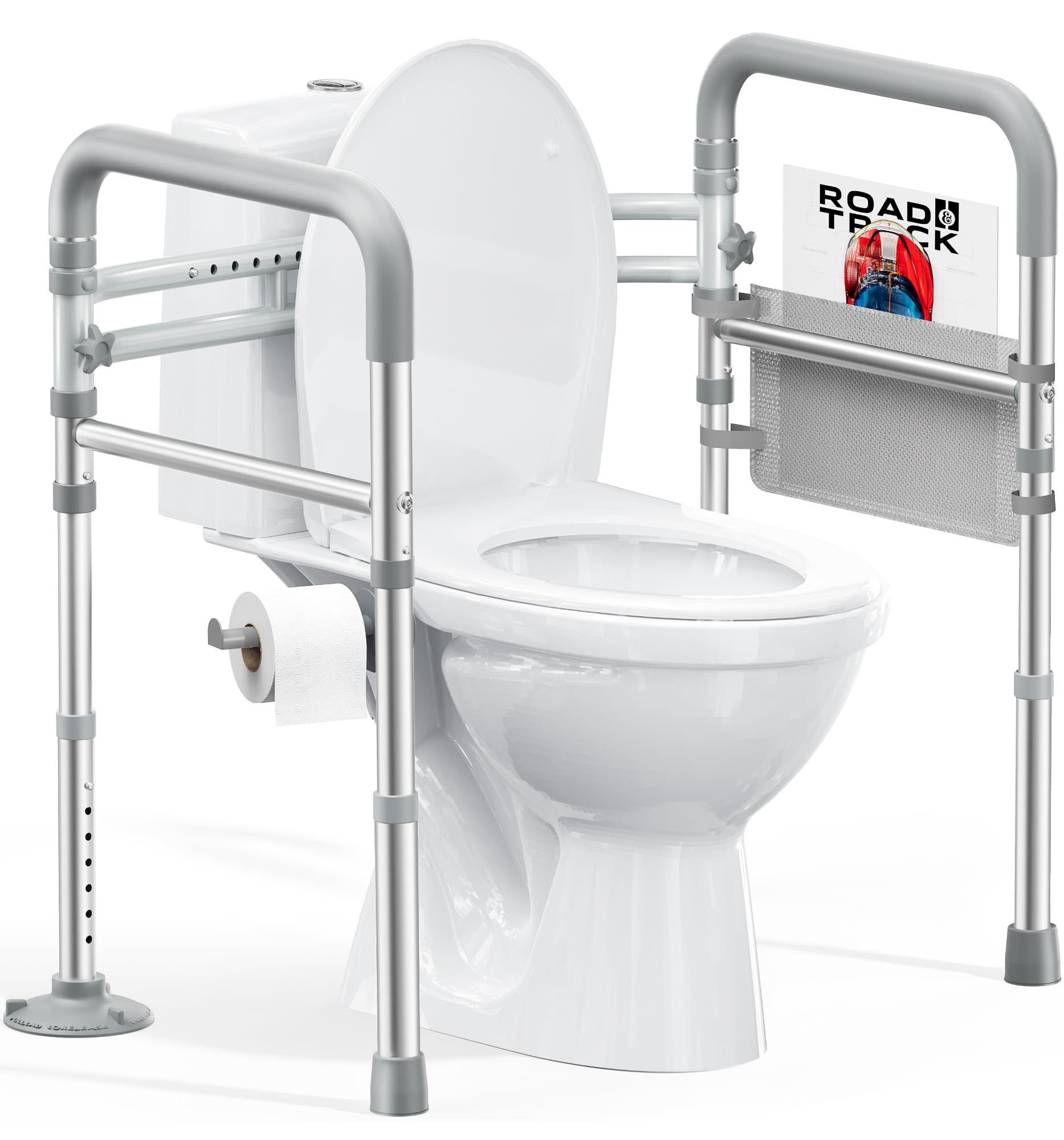
We recommend this if you need a stable, adjustable toilet rail that’s easy to install and fits most toilets.
Pros
- Solid aluminum frame feels sturdy and lightweight.
- Padded armrests make standing and sitting more comfortable.
- Folds flat for storage or travel.
Cons
- Slight wobble for people with very poor balance.
- Suction cups only work on smooth, grout-free floors.
- Assembly takes a few extra minutes to tighten clamps.
We used this rail after a knee surgery and liked that it adjusted to our preferred height and width quickly. The foam grips felt secure under our hands and did not dig in. Setup was simple: the button-lock tubes snap and the extra C-clamps at the backrest gave us confidence the frame wouldn’t shift.
When moving from sit to stand the frame gave good leverage for support. On tile with large grout lines the suction cups didn’t seal well, so we swapped to the rubber feet on the rear legs and it improved stability. For heavier users up to 350 lbs the aluminum held steady without feeling flimsy.
Transport and storage worked well because it folds down to a slim profile. If someone needs absolute rock-solid steadiness for severe balance problems, this might feel a bit wobbly, but for most seniors, post-op patients, or pregnant users it provided reliable help.
Medical King Toilet Safety Rail
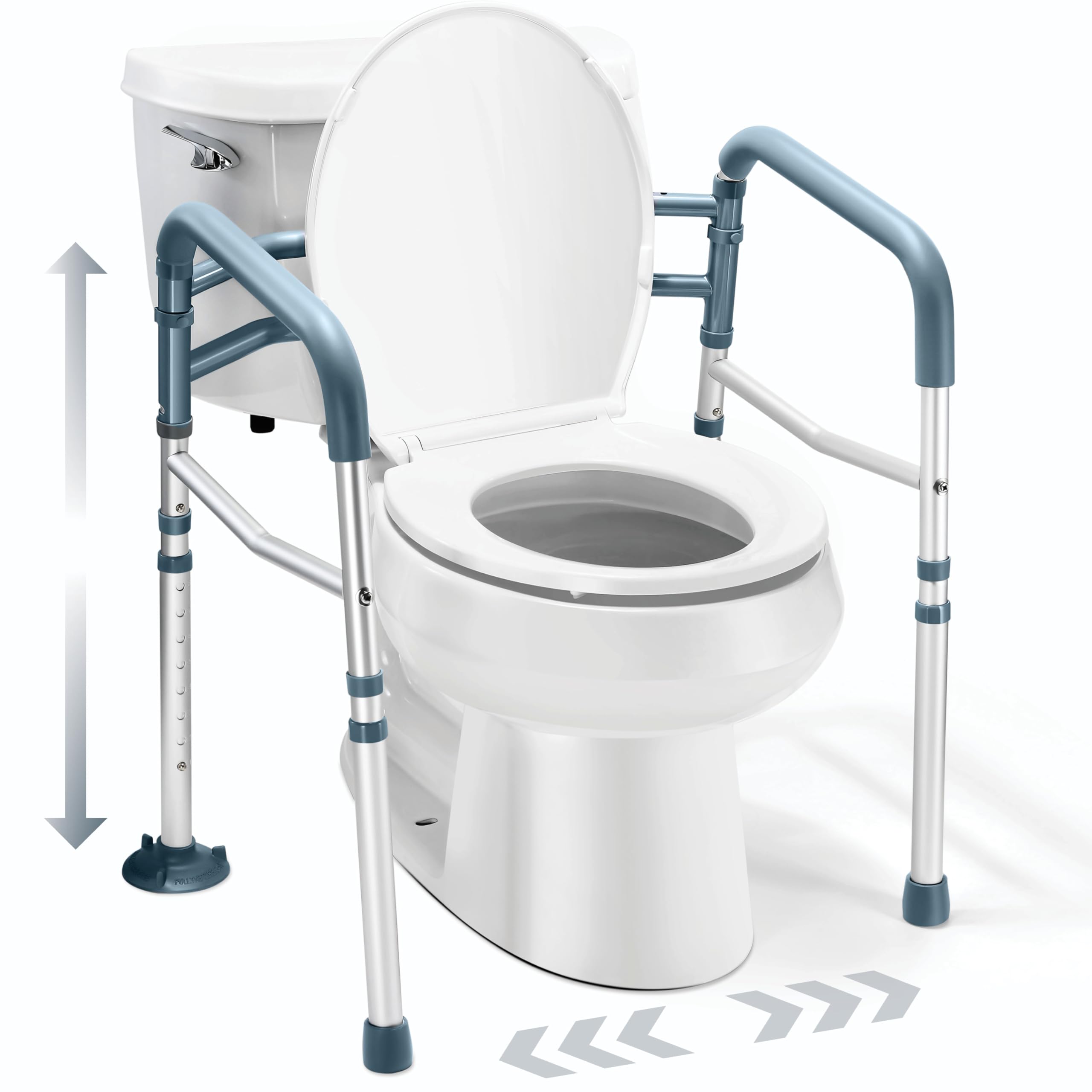
We recommend this rail for people who need steady, portable support getting on and off the toilet because it feels solid and adjusts to most toilets.
Pros
- Strong, stable feel that helps with standing and sitting.
- Easy to fold, move, and reassemble quickly.
- Soft, textured handle grips add comfort and non-slip contact.
Cons
- Back suction cups can lose grip on some floors.
- Metal frame can shift if user leans unevenly.
- Not bolted down, so it may feel less secure for very unsteady users.
We used this rail for several weeks after ankle surgery and liked how much steadier it made transfers. The aluminum frame held up under repeated use and the textured rubber handles helped our hands stay put when pushing up.
Setup took only a few minutes. We adjusted height and width easily and moved it between bathrooms without fuss. Folding it for storage felt practical for travel or guests.
On the downside, the rear suction feet didn’t always hold on tile or when the floor was wet. We found it safest when paired with a bath mat or on dry, even floors. For someone who needs a permanently fixed aid, a mounted bar will feel more secure.
HOMLAND Toilet Safety Rail
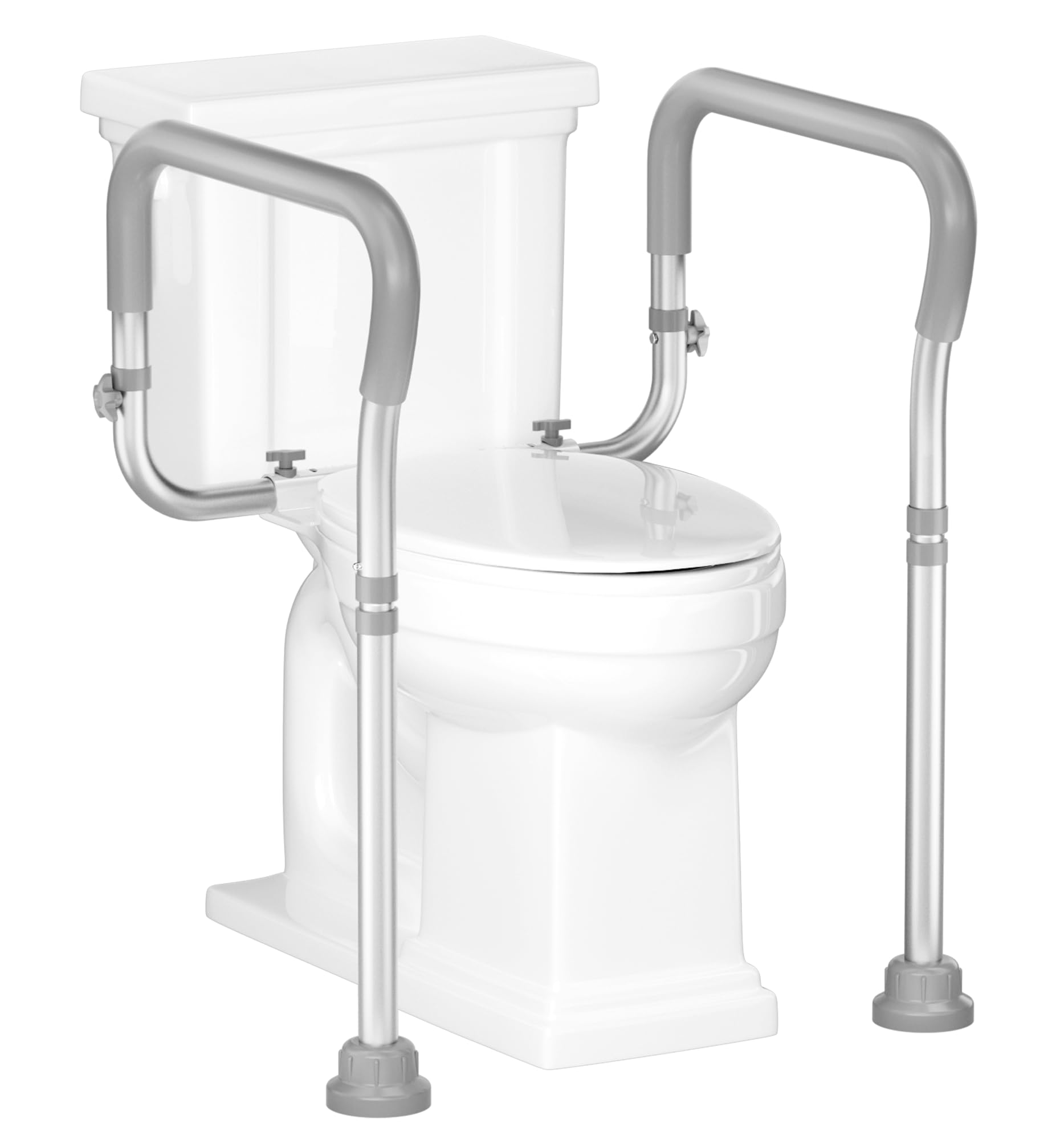
We recommend this if you need a simple, bolted-on rail that helps with sit-to-stand and fits standard two-hole toilets.
Pros
- Lightweight but feels solid when in use
- Padded grips are comfortable and non-slip
- Adjustable height and width for a better fit
Cons
- Only fits two-hole toilets with specific bolt spacing
- Not as sturdy for very heavy users
- Installation can be fiddly if your seat hardware is odd
We used this rail after surgery and found it quick to set up. The aluminum frame felt light during handling but gave a reassuring support when we used it to stand. The padded EVA grips made leaning in and pushing up more comfortable than bare metal.
Adjusting the width and height took a minute, and the rail matched our toilet when the bolts lined up. When the seat screws were tight, the rail stayed put and felt much steadier than freestanding models. Expect to measure your toilet first; it only works with a 5.5-inch center-to-center bolt pattern.
For heavier users or oddly shaped bowls, the rail felt less solid. We wouldn’t rely on it for full body weight transfer by someone very large, but it worked well for elderly family members and post-op patients who need light to moderate help. If your toilet matches the fit requirements, this is an affordable, practical pick.
HWAEYEM Toilet Safety Rails (520 lbs)
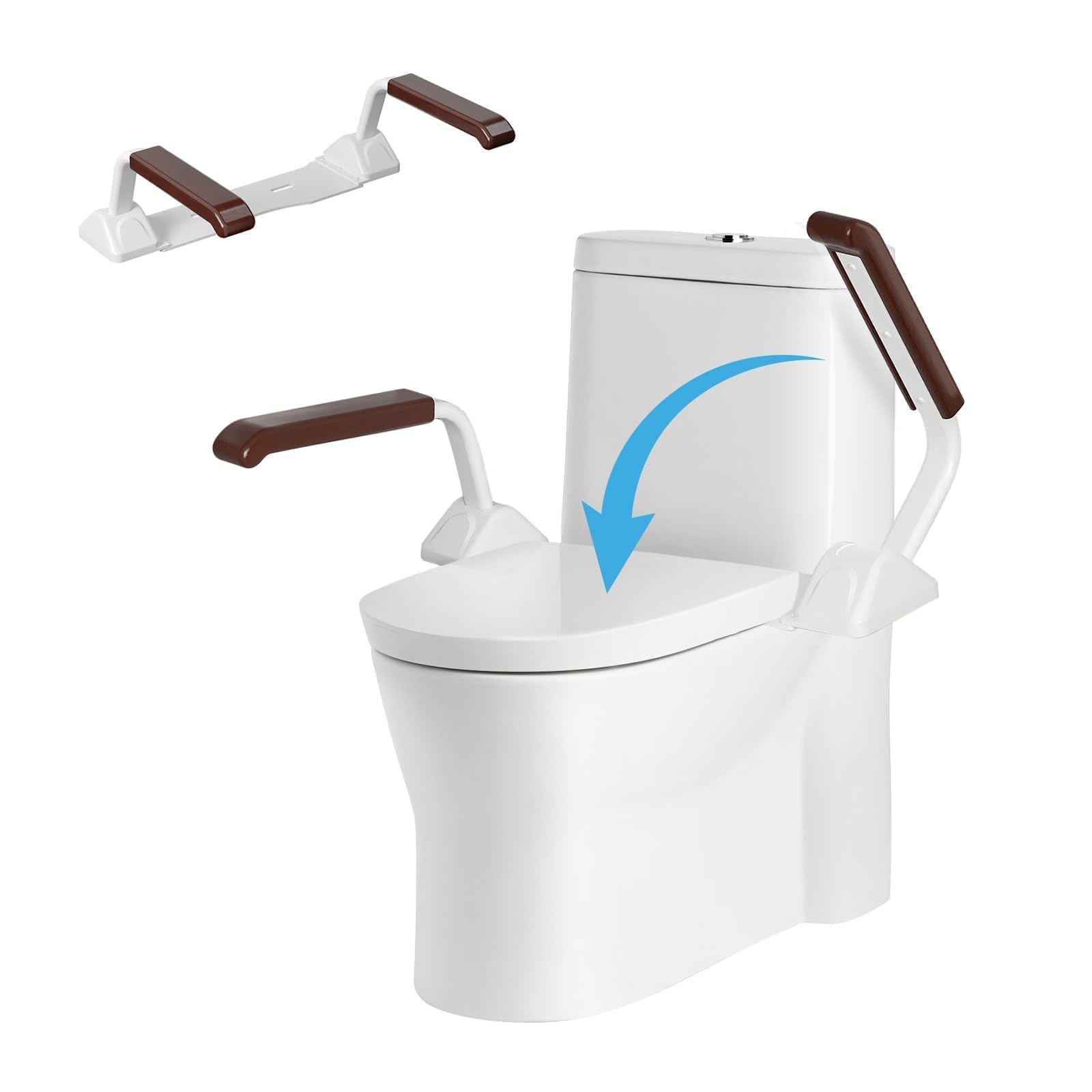
We recommend this rail if you want a sturdy, foldable toilet support that feels secure and saves bathroom space.
Pros
- Very solid and stable under weight.
- Fold-up arms free up room when not needed.
- Clean look that fits most standard toilets.
Cons
- Not compatible with bidet or smart toilets.
- Bolt holes on some toilets can be a tight fit.
- Assembly needs basic tools and a bit of muscle.
We installed this on a standard toilet and found the rails feel heavy-duty. The wood-topped handles are comfortable and gave us real confidence when standing and sitting. Flipping the arms up was smooth and cleared space quickly.
We used the included hardware and the instructions were clear. One bolt did need a little extra force to seat into the porcelain, so we tapped it gently and tightened carefully. Once mounted, the frame did not wobble and handled our weight tests without shifting.
Caregivers will like the swing-up arms for better access while helping someone. The rails sit close to the bowl, so getting into a sliding chair or transferring is easier. Keep in mind this won’t fit some bidet-style toilets, so check your seat type before buying.
Medline Toilet Handle Safety Rail

We recommend this rail if you need a sturdy, adjustable, and easy-to-move toilet support for short-term recovery or daily use.
Pros
- Sturdy aluminum frame feels solid and reliable.
- Folds for storage and moves easily between bathrooms.
- Adjustable width and height to fit most toilets and users.
Cons
- One arm can feel slightly wobbly on some toilet setups.
- You may need to remove or modify the existing seat to install.
- Weight limit and fit may not suit very large users or nonstandard toilets.
We used the Medline rail during a recovery period and noticed how quickly it added confidence when sitting and standing. The closed-cell armrests provided a comfortable grip and the bars felt secure under normal use.
Assembly took minimal time and no special tools, which helped us set it up before surgery. Folding the arms back gave us extra room when needed, and moving it between bathrooms proved simple thanks to its light weight.
A few toilets required slight adjustments or seat removal to line up the bolts, and one arm sometimes shifted if users leaned hard to one side. Overall, it held up well for everyday transfers and short-term rehab needs.
Coelineao Toilet Safety Rails (300 lb)

We recommend this rail when you need a simple, sturdy grab bar that fits most toilets and installs fast.
Pros
- Sturdy aluminum frame holds up well under use.
- Adjustable width and height fit different toilets and people.
- Foam handles feel comfortable and non-slip.
Cons
- Suction feet can be less stable on uneven floors.
- Metal frame shows scratches over time.
- Bulkier than slim rail options when folded.
We installed this rail in our bathroom in under five minutes. The fit around our toilet was roomy but secure, and the foam grips made getting up easier right away.
We used both the suction-style feet and the rubber pads. The big suction cups held well on smooth tile, but felt less confident on textured or worn flooring. Swapping to the rubber feet solved that for us.
Adjusting the width and height was straightforward; the parts clicked into place without tools. After a few weeks of daily use the frame stayed firm, though some cosmetic scratches appeared from moving it for cleaning.
Vive Toilet Safety Rail (Flip-Up Handles)
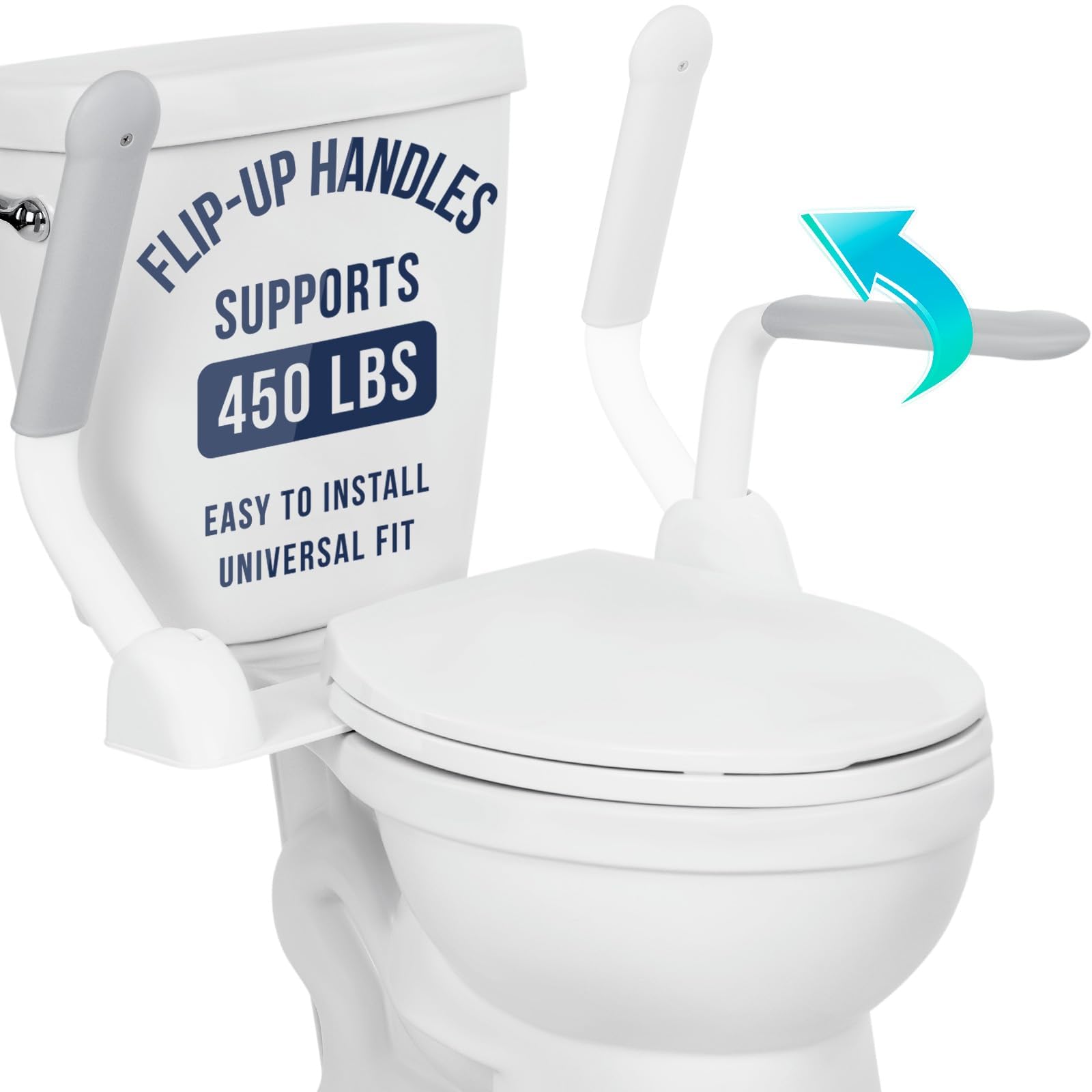
We recommend this rail when you need a sturdy, easy-to-install aid that helps people sit and stand safely.
Pros
- Very stable and supports heavy users.
- Flip-up arms free space when not needed.
- Quick, tool-free assembly.
Cons
- Not compatible with curved or smart toilets.
- Arm width is not adjustable for all users.
- Requires at least 2″ clearance behind seat bolts.
We installed the rail in a small bathroom and found it steady the first time someone used it. The metal frame felt solid under weight and did not wobble when pushing up from the seat.
The flip-up handles made a clear difference for family members who wanted the toilet free when they did not need the rails. Lifting and lowering the arms was smooth and felt secure.
Fitting took only minutes with no extra tools. We did need to check the tank shape and clearance first, since this unit does not work with curved tanks or some bidet seats.
Overall, this rail gives reliable support for people who need help standing or sitting, as long as your toilet matches the fit requirements.
Buying Guide
We look for stability first. A rail must hold weight without wobbling, so check the maximum weight rating and how it mounts to the toilet or floor.
We consider fit and adjustability next. Measure the toilet height and bowl width before buying. Adjustable height, width, and angle help the rail work for different users.
We focus on materials and build. Metal frames with rust-resistant finishes last longer than thin plastics. Padded grips add comfort and reduce hand strain.
We pay attention to installation and tools. Some rails clamp to the bowl, others bolt into the floor. Choose the style that matches our bathroom and our comfort with DIY or a professional install.
We value safety features. Look for non-slip feet, secure clamps, and locking mechanisms. Smooth, rounded edges reduce the chance of scrapes.
We check maintenance and hygiene. Removable, wipeable pads and finishes that resist mold make cleaning easier. Quick-disconnect parts simplify repairs and replacement.
We think about user needs and mobility level. Stronger, fixed rails suit those needing maximum support. Lighter, portable rails fit users who travel or move between bathrooms.
We weigh cost against durability and features. Higher price may mean longer life and better safety. Balance budget with the needs of the user.
Editor’s Choice
We picked the Drive Medical Raised Toilet Seat with Arms as our Editor’s Choice. It blends stability, comfort, and ease of use in one simple design.
The seat adds 4 inches of height and includes sturdy arms that lock into place. That helps users sit and stand with less strain and reduces the risk of falls.
Installation takes just minutes and needs no tools. The padded arms make transfer easier and stay secure under normal use.
Key features we liked:
- Height: 4 inches for easier transfers
- Support: Solid armrests that lock in place
- Fit: Works with most standard toilets
- Maintenance: Easy to clean, wipeable surface
We tested it for comfort and stability over repeated use. The seat held up well and did not shift when users leaned on the arms.
We recommend this model for adults who need extra height and firm arm support but prefer a simple, tool-free setup.
Conclusion
We recommend choosing a rail that matches the user’s strength, bathroom layout, and budget. Comfort and safety matter most, so prioritize sturdy mounts and secure grips.
We prefer rails with easy installation and clear instructions. Adjustable height and quick-release features help when needs change or caregivers assist.
For tight spaces, compact or clamp-style rails work well. For heavy users, floor-mounted or reinforced rails provide extra support and stability.
We suggest testing a rail before long-term use if possible. This helps confirm fit and comfort and reduces the chance of returns or unsafe adjustments.
Key points to remember:
- Check weight capacity and materials.
- Measure your toilet and surrounding space.
- Look for non-slip grips and rust-resistant finishes.
We encourage reading verified user reviews and consulting a healthcare professional when mobility or balance is a concern. This ensures the chosen rail supports independence and reduces fall risk.
FAQ
What types of toilet safety rails exist?
We list two main types: clamp-on rails that attach to the bowl and freestanding frames that surround the toilet. Each type has pros and cons depending on strength, balance, and bathroom layout.
How do we pick the right rail for weight and stability?
Check the rail’s weight limit and read user reviews. Look for models with wide bases, non-slip feet, and secure fasteners.
Can rails fit every toilet?
Not always. Some toilets have unusual shapes or tight spaces. Measure around the bowl and between the tank and the wall before buying.
Are rails hard to install?
Most rails install in 10–30 minutes with basic tools. Some clamp-on models require no tools at all. We recommend following the manufacturer’s instructions.
Do safety rails damage bathrooms?
Properly installed rails usually do not damage surfaces. Use protective pads and avoid over-tightening clamps to prevent marks.
Can we move rails between bathrooms?
Yes, many rails are portable. Lightweight and clamp-on models are easiest to transfer, while heavy frames may be harder to move.
How do we clean and maintain them?
Wipe rails weekly with mild soap and water. Check fasteners and grips monthly for wear and tighten as needed.
Are toilet rails covered by insurance or Medicare?
Coverage varies. We advise checking with your insurer or Medicare plan for durable medical equipment rules and reimbursement.