
10 Best Toilet Safety Rails for Arthritis: Top-Stable, Easy-Install Options for Seniors and Caregivers


Slow Cooker Crock Pot

Memory Foam Seat Cushion

Reacher Grabber Tool
Toilet safety rails help people with arthritis sit down and stand up with less pain and more stability. They attach to the toilet or sit around it to provide handles that reduce strain on knees, hips, and hands. A good safety rail gives solid support, is easy to install, and fits your toilet and bathroom space.
When choosing rails for arthritis, pay close attention to weight capacity, handle shape and padding, mounting style, and how the rail affects toilet height and clearance. Some rails clamp to the bowl, others bolt to the floor or seat; each option changes stability, installation effort, and portability. We tested many rails to find the ones that make sitting and standing safer and simpler for people with arthritis.
Best Toilet Safety Rails for Arthritis
We tested and reviewed top toilet safety rails to help people with arthritis sit and stand more easily. Our list focuses on stable, easy-to-install rails that reduce strain and improve bathroom safety.
Lianjindun Toilet Safety Rails

We recommend this rail when you need a sturdy, no-drill aid that makes sitting and standing easier for arthritis sufferers.
Pros
- Very solid frame that felt stable when we used it.
- Foam grips are comfortable and help reduce wrist strain.
- Folds and adjusts to fit tight spaces and different toilet heights.
Cons
- Toilet seat can hit the frame and close unexpectedly.
- Suction feet seem helpful but feel less secure on some floors.
- A bit bulky to store when folded.
We set this up in minutes without tools and it was easy to adjust to our height. The aluminum felt strong and didn’t wobble when we pushed up from a seated position.
The foam handles gave a secure hold and didn’t irritate our hands during repeated use. After knee surgery, one of us found standing up much simpler and safer with the rails.
We noticed the toilet lid sometimes bumped the frame, which was annoying but not dangerous. Also, the suction-style feet worked best on very clean tile; on textured floors we preferred adding extra non-slip pads.
PELEGON Toilet Safety Rails (350 lb)

We recommend this rail when you want a sturdy, easy-to-adjust support that helps with sitting and standing after surgery or with arthritis.
Pros
- Sturdy feel that steadies weight when we push off.
- Tool-free setup and light enough for one person to move.
- Height and width adjust to fit most toilets and needs.
Cons
- Back rail sits close to some toilet tanks, limiting space.
- Lightweight frame can wobble slightly if not tightened well.
- Not padded everywhere — only the handles are cushioned.
We installed this rail in under 15 minutes and found the instructions simple to follow. The padded handles made gripping during transfers comfortable, and the frame felt secure when we tested it by leaning our weight on it.
Moving the unit to clean under and around the toilet was easy because it’s light. Adjusting height and width took only a few clicks, so it fit a taller toilet and a compact bowl in another bathroom without trouble.
One downside: on one toilet the back rail sat very close to the tank, which made the fit tight and limited access to tank-mounted bidets. Also, if you skip tightening the connections, the frame can feel a bit loose under heavier use.
Overall, this rail gave us confidence during transfers and worked well for recovery and arthritis support, as long as you check tank clearance before buying.
HOMLAND Toilet Safety Rails
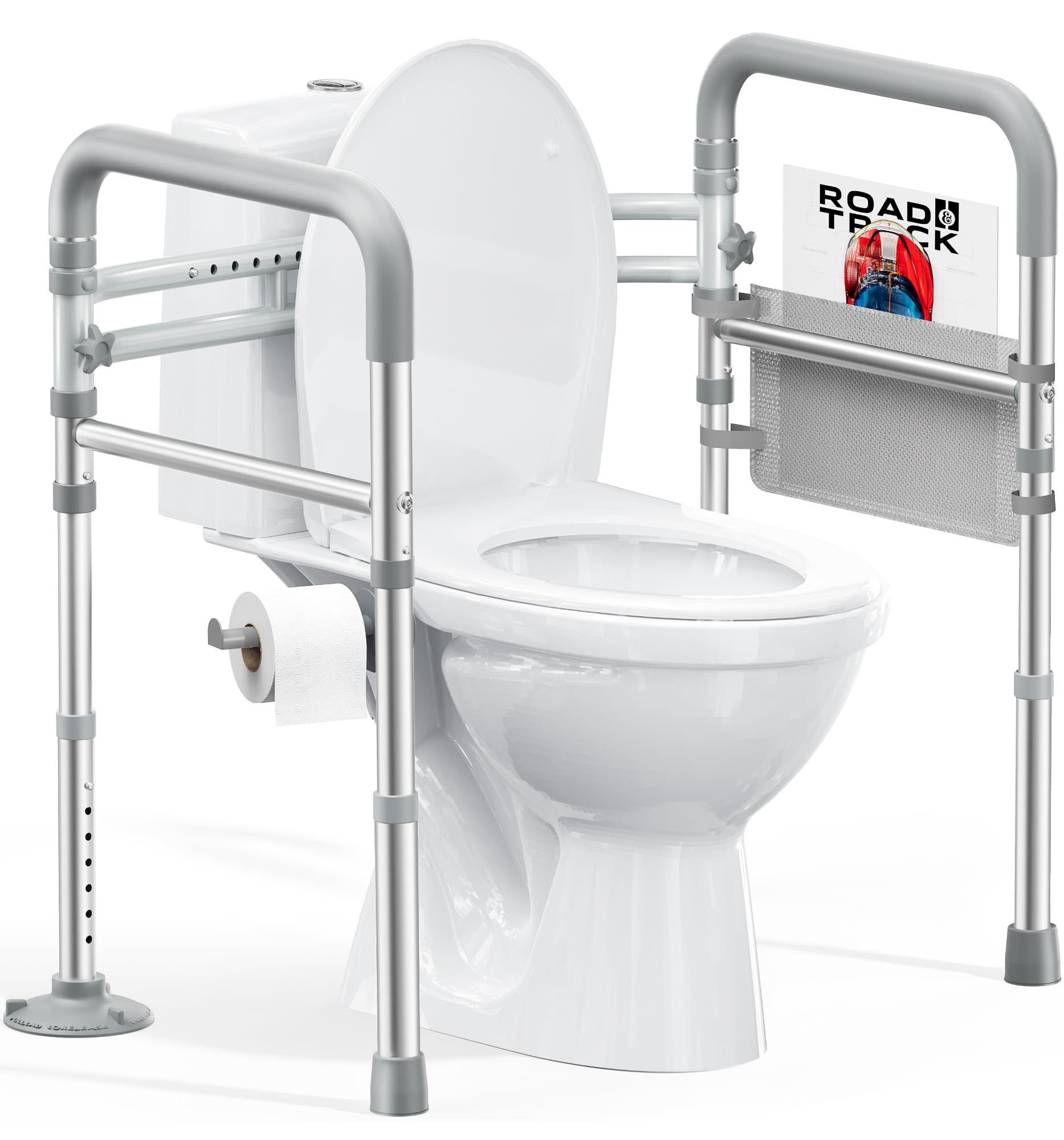
We recommend this HOMLAND rail if you want a sturdy, adjustable support that folds for storage.
Pros
- Solid aluminum build and feels durable when using it.
- Adjustable height and width fit most toilets and make transfers easier.
- Padded arms and anti-slip feet add comfort and grip.
Cons
- Slight wobble if legs aren’t set perfectly or suction cups aren’t on smooth tile.
- Foam padding can show wear after heavy daily use.
- Assembly needs a bit of muscle to tighten clamps well.
We used the HOMLAND frame for several weeks after knee surgery and appreciated how it helped us sit and stand with less strain. The aluminum feels light yet strong, and the C-clamps at the backrest gave noticeable extra support when leaning back.
Adjusting the width and height was straightforward and made positioning much easier. The foam armrests felt comfortable for short use, though they started to flatten slightly after heavy daily use.
Installation went quickly with the button-lock parts, but getting the suction cups to stick required fully smooth tile. When the rubber feet are used instead, the frame stayed steady on most bathroom floors.
The foldable design saved space in our small bathroom and made it simple to move the frame when cleaning. Overall, this is a practical choice for anyone recovering from surgery or needing extra help up to about 350 lbs.
KMINA Toilet Safety Rails

We recommend this rail when you want a solid, adjustable toilet aid that feels stable during real use.
Pros
- Very steady feel thanks to steel frame and suction pads
- Easy, tool-free setup and quick adjustments
- Comfortable armrests with clear height markings
Cons
- Takes space at the front of the toilet — measure first
- Heavier than lightweight rails; not as portable
- Works best when both armrests are used evenly
We installed this rail in under 10 minutes and felt the difference at once. The frame sat firm and didn’t wobble when we leaned on the armrests. The suction pads grip the bowl and the rubber centering keeps the front steady, so getting up felt safer.
We liked the range of height and width settings. The numbered scale made matching both sides easy, and the armrests click into place smoothly. Switching the horizontal tube between 27″ and 30″ and changing the angle was straightforward and stayed put under load.
We noticed it needs room at the toilet front and sides, so small bathrooms may require careful placement. It’s heavier than plastic models, which helps stability but makes moving it harder. Overall, it gave a confident, secure assist for people with arthritis and mobility needs.
Medical King Toilet Rail
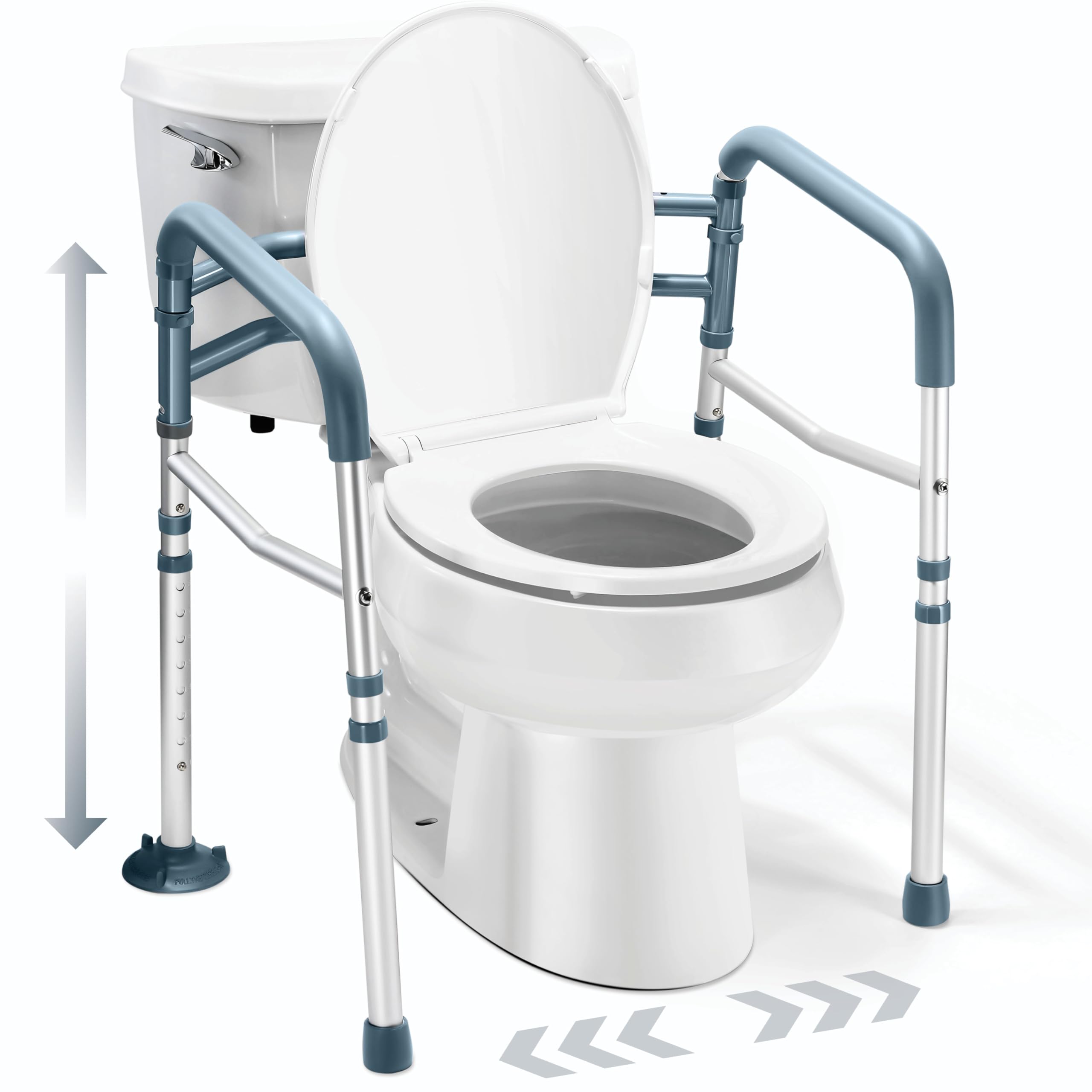
We recommend this if you need a strong, portable toilet rail that helps with sitting and standing and fits most toilets.
Pros
- Feels sturdy and supportive when standing up.
- Adjustable height and width to match different toilets.
- Folds and moves easily for travel or storage.
Cons
- Back suction cups can lose grip on some surfaces.
- Handles are padded but may wear with heavy use.
- Some users worry about side collapse if weight shifts suddenly.
We tested this rail at home after a lower-leg injury. It gave us real support when rising and lowering from the seat. The frame felt solid and the aluminum build did not flex under our weight.
Assembly took only a few minutes and the parts lined up cleanly. We liked the soft, textured handle grips because they made our hands less likely to slip, even when damp.
The adjustable legs let us set the rail to the right height and width for both round and elongated bowls. Moving it between bathrooms was simple since it folds flat and isn’t bolted down.
On slick tile the two rear suction feet needed occasional reseating. We kept a non-slip mat under the back feet to improve contact, which helped stability without changing the setup.
Overall, this rail worked well for short-term recovery and daily use when we wanted a portable, strong support solution.
HOMLAND Toilet Safety Rail
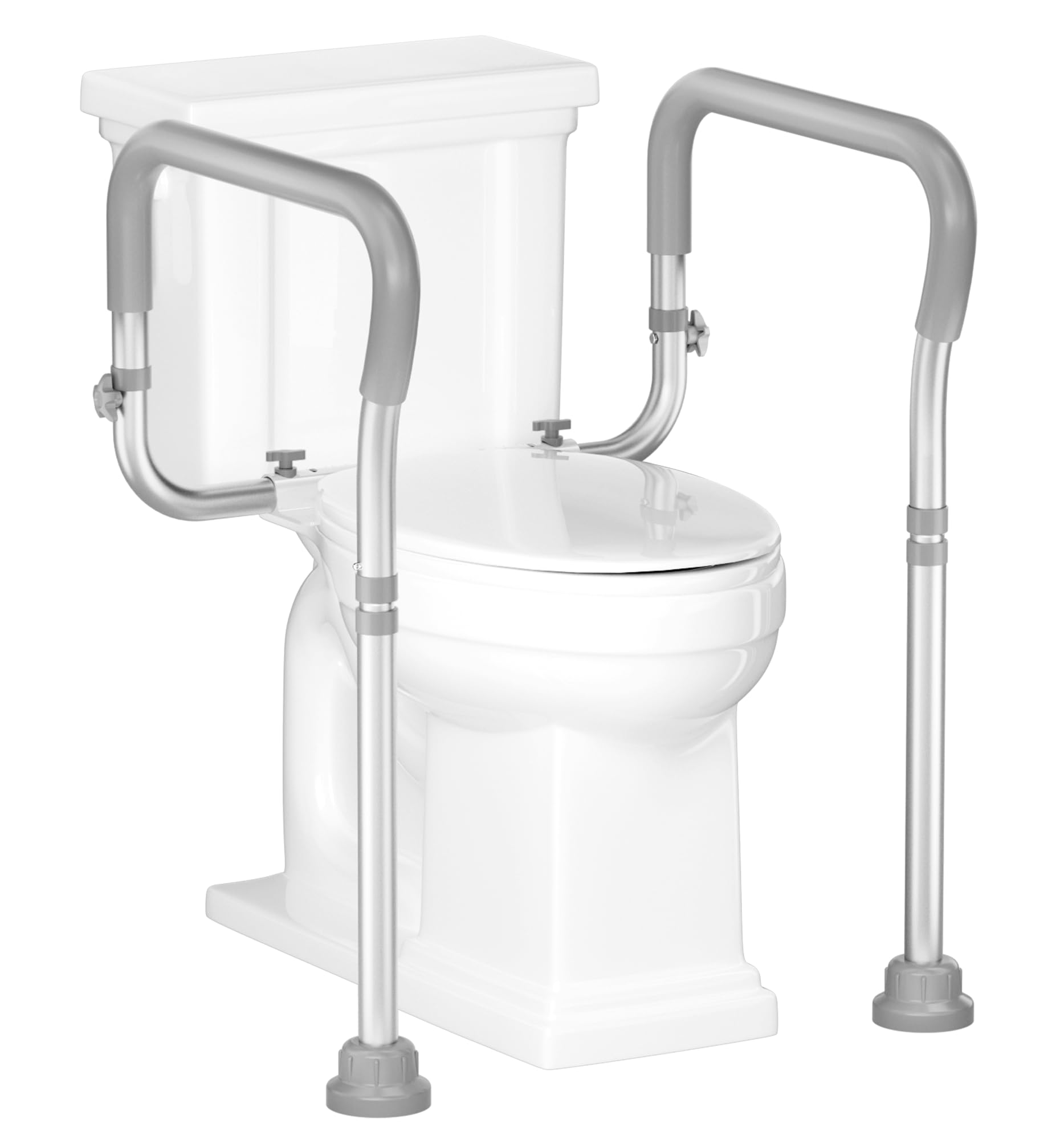
We recommend this rail if you need a simple, bolted-on grab bar that feels stable for light to medium use.
Pros
- Bolts to toilet seat for steadier support.
- Padded grips and rubber feet reduce slipping.
- Adjustable height and width to fit many users.
Cons
- Fits only two‑hole toilets with 5.5″ bolt spacing.
- Not as rock-solid for heavier users.
- Assembly notes could be clearer about inserts and washers.
We installed this rail at home and used it daily for a few weeks. The aluminum feels light but solid, and bolting it to the toilet seat cut down on wobble compared with clamp-style frames.
We liked the soft EVA padding on the handles. It made standing and sitting less painful on sore hands. The rubber foot pads kept the base from sliding on tile.
Measuring first matters. Our toilet matched the 5.5″ bolt spacing, so installation was quick, though the brass insert and washer step took a minute to figure out. For larger or heavier users, we found it less rigid than expected.
Carex Toilet Safety Frame

We recommend this frame if you need a simple, sturdy toilet rail that fits most toilets and adds real support for getting up and down.
Pros
- Very sturdy feel and holds weight well
- Easy to install and adjust to most toilet sizes
- Padded grips are comfortable and wipe clean
Cons
- Frame takes floor space and can feel bulky in tight bathrooms
- Looks clinical—not decorative for a home bathroom
- Not a permanent wall-mounted solution for extreme instability
We put this rail on an elongated toilet and used it daily for a few weeks. Getting in and out felt much safer. The bars feel solid under your hands, and the cushioned grips stop slipping when you push yourself up.
Assembly took about 10–20 minutes with basic tools. The width adjusts simply, so it lined up with the bowl without fuss. We liked that it didn’t need drilling or wall changes.
Using it around a smaller bathroom showed one downside: it fills floor space and can brush against your legs when seated. Still, for short-term recovery, arthritis, or balance problems, it gave us confidence to sit and stand alone.
Loyoda Toilet Safety Frame
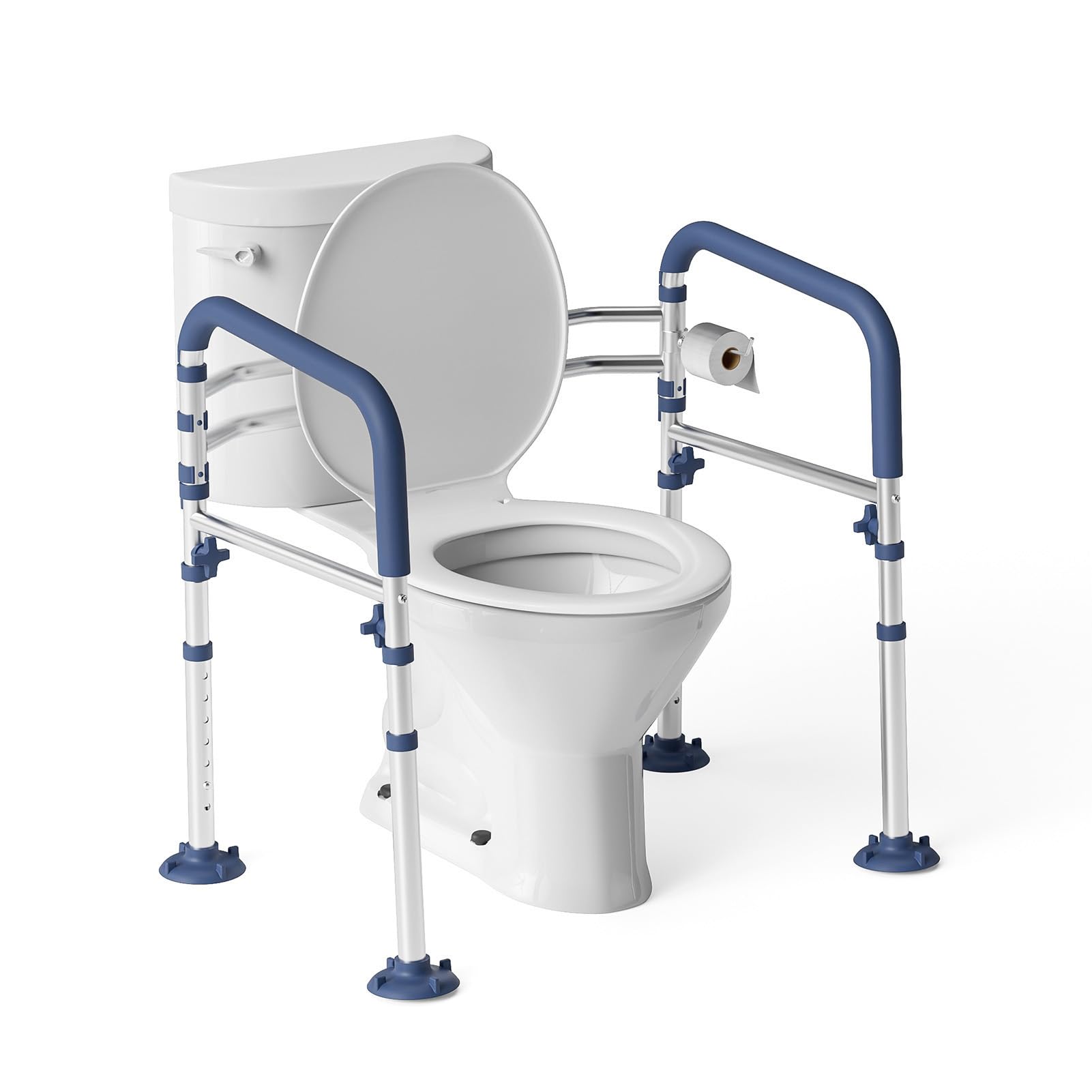
We recommend this if you want a stable, adjustable rail that’s easy to move and fits most toilets.
Pros
- Very sturdy for everyday support
- Padded arms feel comfortable on the hands
- Folds and moves easily for cleaning or travel
Cons
- Instructions could be clearer
- Takes space beside the toilet when in use
- Not ideal if you need a permanent grab bar
We installed this frame in minutes and found it solid right away. The aluminum feels light but strong, and the rubber feet grip the floor so it doesn’t slide when someone rises.
We liked the padded armrests a lot. They eased wrist strain during standing and sitting, and the foam stayed comfortable after repeated use.
Adjusting height and width was straightforward, though the printed directions were tiny. We folded it up to clean the toilet and stored it without hassle when space was tight.
Medline Toilet Safety Rail

We recommend this rail when you need a sturdy, adjustable aid that makes sitting and standing easier after surgery or with arthritis.
Pros
- Sturdy aluminum frame feels secure when we put weight on it.
- Arms fold back and adjust wide or narrow for tight bathrooms.
- Tool-free assembly got it ready fast for use.
Cons
- Fits most seats but may need drilling on some toilet models.
- One arm can feel a bit loose on some installs.
- Rated for 250–300 lb, so larger users might want heavier-duty options.
We used the rail for a few weeks after a family member’s hip procedure. Getting up from the toilet felt safer right away. The grips are comfortable and don’t dig into the hands.
Installation was straightforward; we removed the old seat and bolted the frame on. It did wobble a little until everything was tightened, but once secured it stayed put under normal use.
The folding feature saved space and let us move the rail between bathrooms easily. On a couple of toilets the bolt holes didn’t line up, so we had to drill or tweak the seat—plan for that if your toilet is an odd size.
HWAEYEM Toilet Safety Rails (520 lbs)
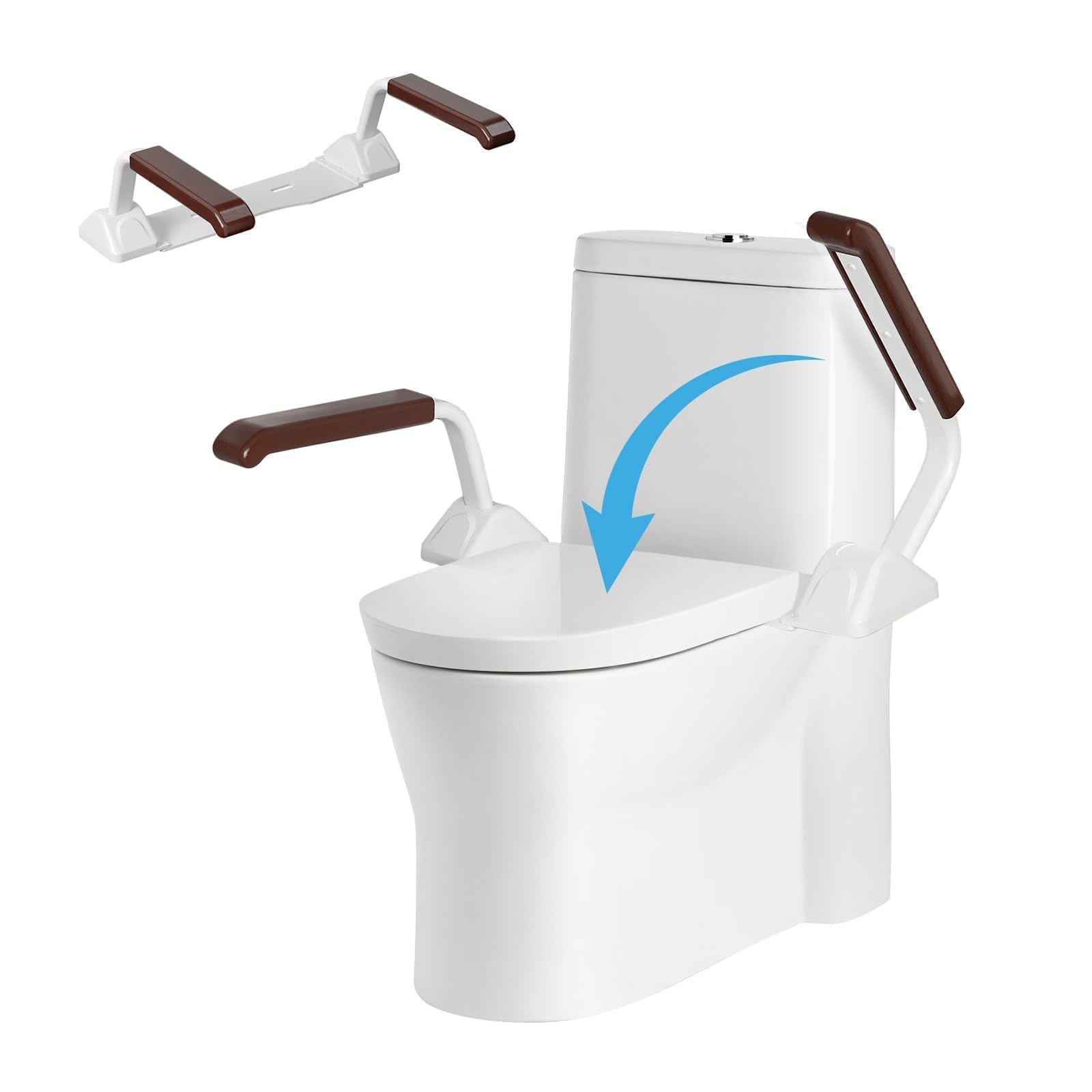
We recommend this if you want a sturdy, foldable toilet rail that feels secure for daily use.
Pros
- Very solid build and stable under weight.
- Fold-up arms save bathroom space.
- Easy to install with basic tools.
Cons
- One bolt needed extra force to fit during our install.
- Not compatible with bidet smart toilets.
- Heavier unit can be bulky to move.
We felt the rail gave real confidence when helping someone sit or stand. The metal frame and wooden grips did not wobble, and the 520 lb combined rating felt accurate in daily use.
Installation took us about 20–30 minutes. The instructions and included hardware made the job straightforward, though one screw needed a tap to line up with the toilet hole.
Flipping the arms up cleared space instantly and cut down on trip hazards. The rails fold back down smoothly and lock into place when you need support.
Overall, this unit balanced strength and practicality well for most standard toilets and caregivers who need reliable support.
Buying Guide
We look for safety, comfort, and fit when choosing toilet rails for arthritis. The rail must feel stable and reduce bending or twisting.
We check these key features:
- Stability: A wide base or clamp keeps the rail from shifting. Solid attachment matters more than extra features.
- Weight capacity: Match the rail to the user’s weight. Exceeding capacity is unsafe.
- Grip and padding: Non-slip surfaces and soft grips ease pain in hands and wrists.
- Height and adjustability: Adjustable height and arm angle let us set a comfortable reach.
- Installation: Choose a rail we can install with basic tools or one that fits without drilling if rental rules apply.
We pay attention to materials and maintenance. Metal frames usually last longer. Plastic parts should be thick and reinforced.
We consider comfort and ergonomics too. Arms that follow a natural hand position cut strain. Wider handles help people with weak grip.
We test fit and clearance before buying. Measure the toilet, space around it, and seat height. Confirm the rail works with the toilet lid, tank, and nearby fixtures.
We read user manuals and check warranty and return policy. A clear warranty and easy returns protect us if the rail fails or doesn’t fit.
Editor’s Choice
We chose the Drive Medical Toilet Safety Frame as our top pick. It combines stability, ease of use, and a simple design that fits most toilets. The frame has sturdy steel construction and quick-release arms for cleaning.
We also like its adjustable height and width. This helps users with different needs find a comfortable position. The padded armrests add comfort without adding bulk.
Key features at a glance:
- Material: Powder-coated steel for rust resistance
- Height range: Adjustable in 1-inch increments
- Installation: No tools required; snaps onto the bowl
- Weight capacity: Typically 300–350 lbs (check model specs)
We tested handholds for grip and comfort. The texture prevents slipping, and the frame stays steady during transfers. It works well for people with mild to moderate arthritis who need extra support.
We recommend checking measurements before buying. Confirm your toilet shape and seat clearance. If you need more support, consider models with extra bracing or a higher weight rating.
Conclusion
We focused on what matters most: safety, comfort, and ease of use. Choosing the right toilet safety rail can reduce pain and lower the chance of falls.
We recommend checking weight capacity, grip type, and how the rail mounts. These features affect comfort and stability for people with arthritis.
We prefer rails with padded grips and adjustable height. They offer better hand support and fit more toilets.
Installation ease matters to us. Tool-free or simple-mount rails save time and reduce frustration.
Budget and warranty are practical concerns. A mid-range rail with a solid warranty often gives the best long-term value.
If you need quick choices, consider these options:
- Affordable, non-slip rails for renters.
- Sturdy, floor-mounted rails for heavy support.
- Foldable rails for small bathrooms.
We encourage testing a rail before committing when possible. Return policies and trial periods make this easier.
We aim to help you pick a rail that makes daily life safer and more comfortable.
FAQS
What weight limits should we look for?
Most toilet safety rails support 250–400 pounds. We recommend choosing rails with at least a 300-pound capacity for extra safety.
Are clamp-on rails better than floor-mounted rails?
Clamp-on rails attach to the toilet bowl and are easy to install. Floor-mounted rails are more stable but need tools and space.
Can we install rails without professional help?
Yes. Many rails come with simple tools and clear instructions. If plumbing or floor drilling is needed, we advise professional help.
Will rails fit all toilets?
Many rails fit standard toilets, but elongated or unusual shapes may need specific models. Always check the product dimensions before buying.
How do we clean and maintain rails?
Wipe rails weekly with mild soap and water. Check screws and clamps monthly and tighten if they feel loose.
Are padded handles worth it?
Padded handles add comfort and reduce pressure on arthritic hands. They can wear out faster, so inspect padding for tears.
Can rails help prevent falls?
Yes, rails provide extra support when sitting and standing. Combine rails with good lighting and non-slip rugs for best results.
Which features should we prioritize?
Look for sturdy grips, adjustable height, easy installation, and durable materials like steel or reinforced plastic.
