
Best Raised Toilet Seats for Bathroom: Top Picks, Features, and Buying Guide


Fall Detection Smart Watch

Electric Kettle with Auto Shutoff

Anti-Glare Reading Glasses
Raised toilet seats lift the bowl height to make sitting down and standing up easier for people with limited mobility, recent surgery, or joint pain. They come in several styles—clip-on, hinged, padded, and commode-style—and can fit most home toilets without major changes. A well-chosen raised toilet seat reduces strain and increases safety by adding stable support and a comfortable seat height.
When choosing a raised toilet seat, pay attention to how it attaches to the toilet, the height it adds, weight capacity, padding, and whether it has armrests or a lid. Some models require tools or a specific bowl shape, while others snap on for quick use; measuring your toilet and considering balance needs will help you pick the right type. We tested a range of popular models to find the ones that offer secure fit, comfort, and easy cleaning to guide you through the Best Of List and our Buying Guide.
Best Raised Toilet Seats
Below is our full list of the best raised toilet seats for safer, more comfortable bathroom use. We tested options for stability, ease of cleaning, and user comfort to help you pick the right fit for your needs.
Lunderg Solva Raised Toilet Seat
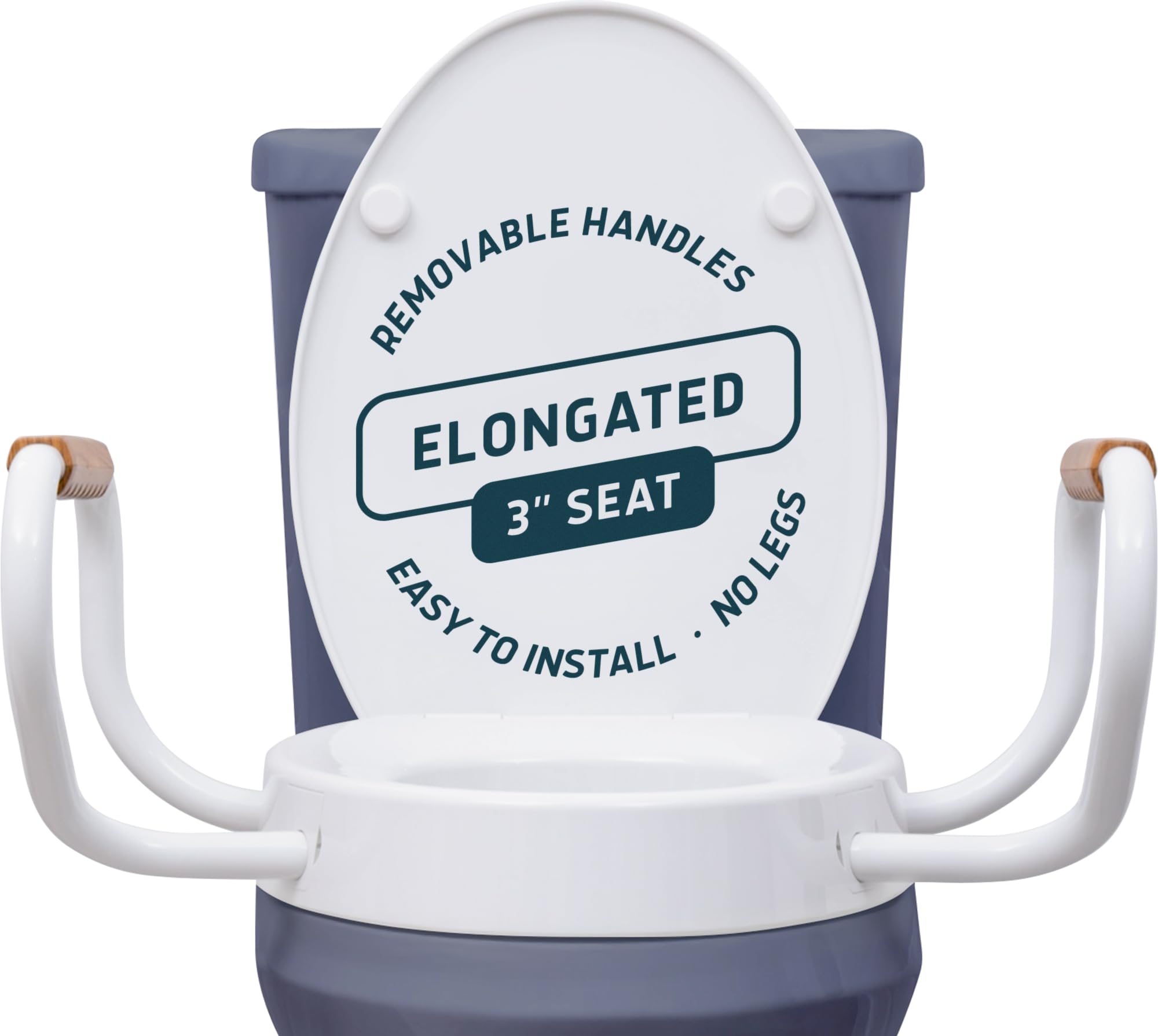
We recommend this if you want a stable, comfortable raised seat that looks like a normal toilet and is easy to clean.
Pros
- Feels like a regular seat and has a soft-close lid.
- Bolts to the toilet so it stays very steady.
- Clean design — no floor legs and simple removal for deep cleaning.
Cons
- Fits elongated toilets only.
- Handles are low for taller users.
- Only available in white.
We installed this seat after trying a few other risers. Right away we noticed it sits and functions like the seat we already knew, not a clunky medical add-on. The soft-close lid and the full-seat lift make daily use smooth and cleanup quick.
The bolt-on mounting feels solid under weight and when we leaned to one side it did not wobble. That gave us confidence during transfers and reduced the nervous shifting we saw with clamp-style risers. The absence of floor legs also made the bathroom easier to clean and removed a tripping point.
We did find two limits. It only fits elongated bowls, so it won’t work on round toilets. Taller family members told us the handles could sit higher for easier reach. Still, the look and build quality made it our go-to when we wanted something safe that didn’t scream “medical.”
Buy the Lunderg Solva Raised Toilet Seat on Amazon
Drive Medical Raised Toilet Seat (with Handles)

We recommend this if you need a simple, sturdy way to add 5 inches of comfortable height to a standard toilet.
Pros
- Adds useful height and makes standing easier
- Padded arms give steady support when sitting or rising
- Tool-free install and a strong locking clamp
Cons
- Plastic surface can show stains and needs frequent cleaning
- Arms may be tight for larger hips and might require removal
- Not a perfect fit on every toilet; check fit before relying on it
We used this seat for a few weeks after knee surgery and it made a clear difference. The extra 5 inches meant less bending and less strain when standing. The padded arms felt solid and cut down on wobble.
Installation really is simple. We popped the old seat off, dropped this on, and tightened the worm-screw clamp. It stayed secure through daily use and felt safer than a plain raised ring.
Cleaning takes some work. The plastic finish traps marks and needs regular wiping. One of our toilets had a shape that made the clamp hard to align, so try it in place before you need it for real use.
Kohler Hyten 3″ Elevated Seat
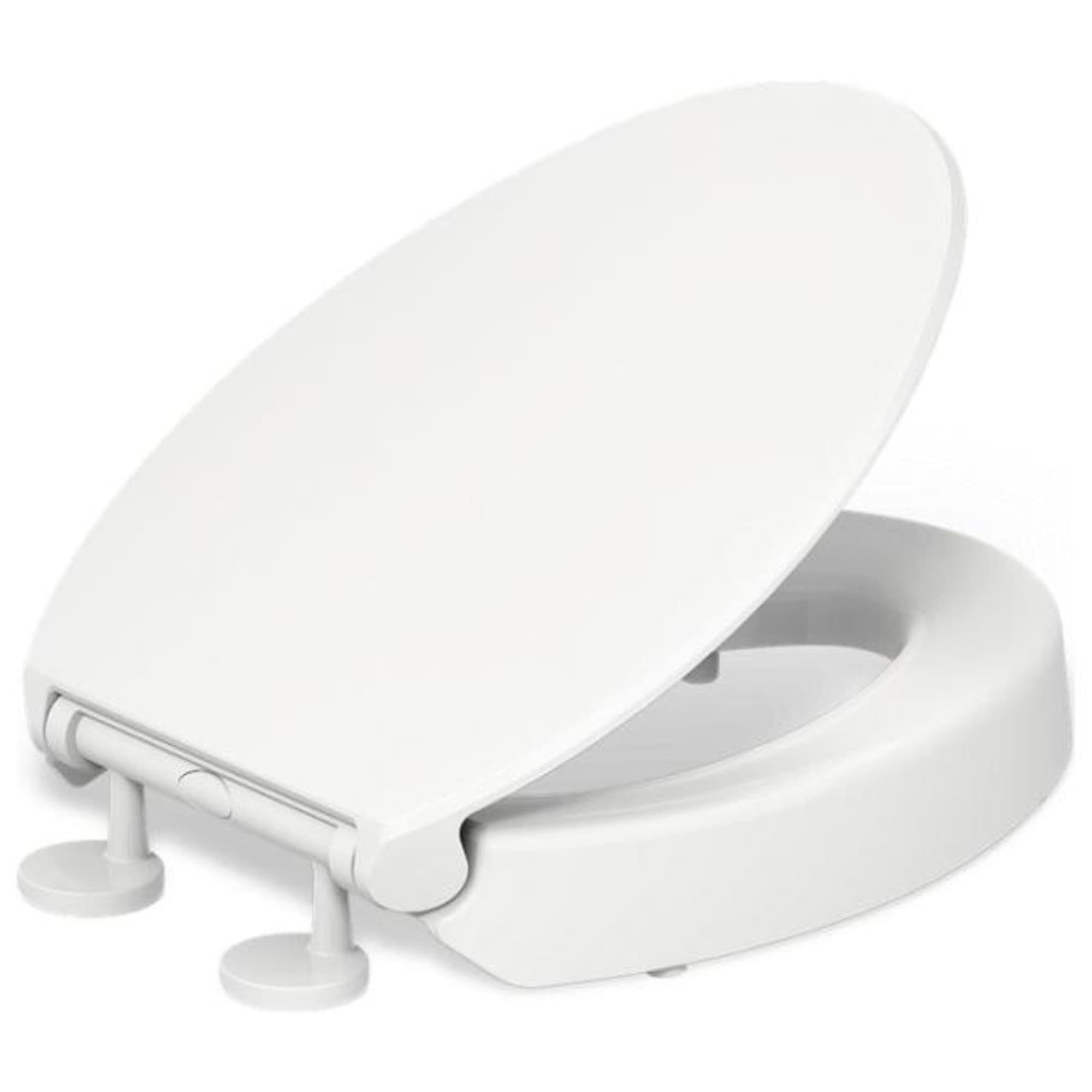
We recommend this seat when you want a modest height boost that feels sturdy and installs like a normal toilet seat.
Pros
- Adds useful height without looking like a medical riser
- Quiet-close lid and quick-release make cleaning easy
- Grip-Tight hardware holds the seat firmly in place
Cons
- Costs more than basic raised seats
- Plastic surface can feel firm after long sits
- Not returnable once opened, so buy carefully
We installed the Hyten on an elongated bowl and noticed the three-inch lift right away. Sitting and standing felt easier, especially for anyone with sore knees or a recent hip issue.
The quiet-close action worked smoothly every time. We liked how the seat lowered gently and how the quick-release let us snap the seat off to clean around the bolts.
Installation was straightforward from above the bowl and the Grip-Tight bumpers kept the seat from shifting. It looked like a regular seat, so it did not change the bathroom’s style.
On the downside, the seat is pricier than simple raised models and the plastic feels a bit hard during longer use. Also note the no-returns rule after opening, so double-check fit before you unbox.
Vive Raised Toilet Seat Riser (with Handles)
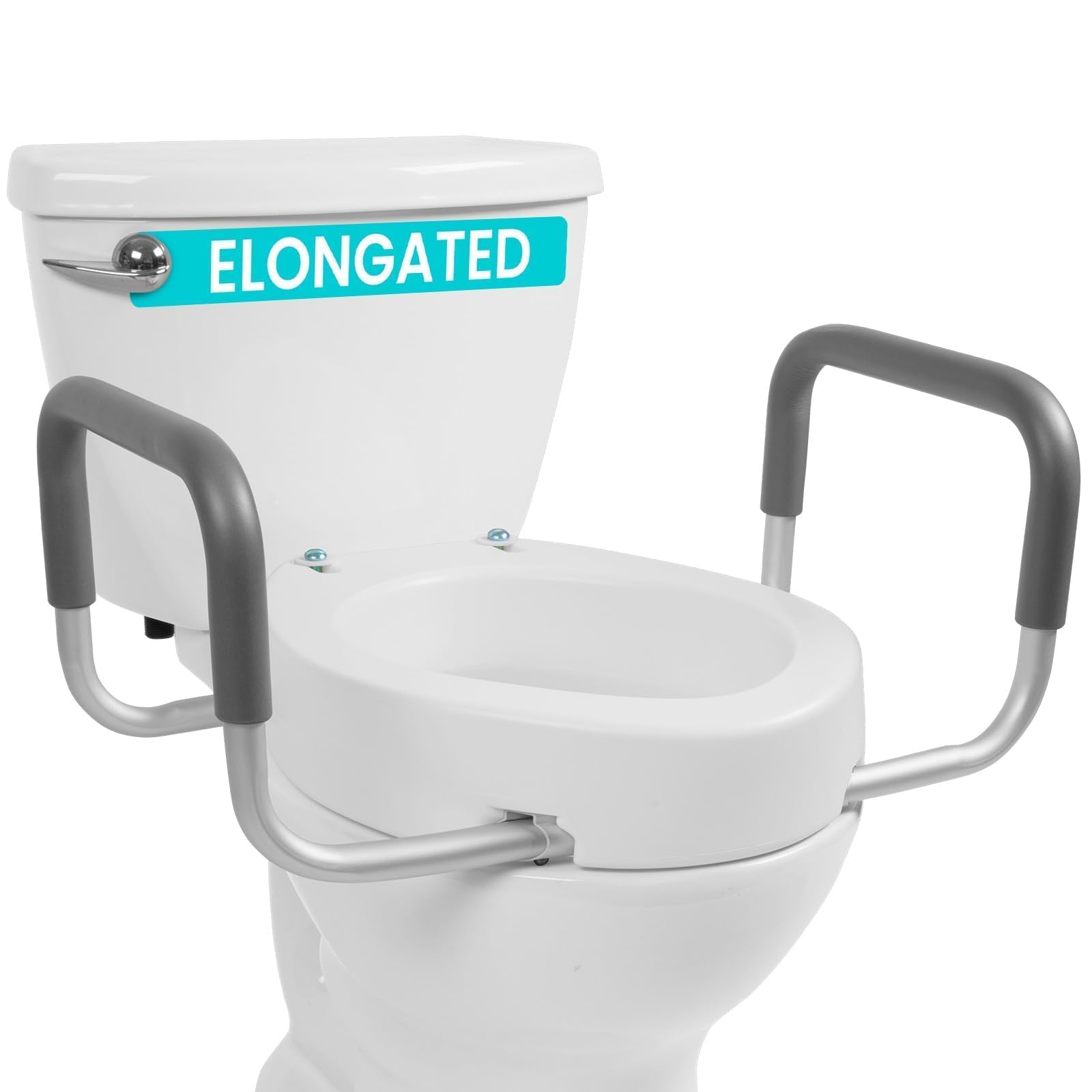
We recommend this if you need extra seat height and sturdy handles to make sitting and standing easier.
Pros
- Adds noticeable height without changing your toilet.
- Padded handles give a firm, comfortable grip.
- Solid build that felt stable under weight.
Cons
- Cleaning means removing the riser, which is a bit annoying.
- A bit wide for some bathrooms or small users.
- Fixed 3.5″ lift may be too high or too low for some needs.
We installed this riser in an elongated toilet and found it simple to fit under the existing seat. The tool-free setup was quick, and the unit did not wobble when we sat down. Handles lined with foam felt secure and easy on the hands.
Using it for a few weeks, we noticed less strain getting up and down, especially after someone had knee surgery. The plastic felt durable and the aluminum supports gave confidence when leaning on the rails. However, reaching into corners to clean meant unbolting it occasionally, which was a hassle.
The width felt roomy for most adults, but it might be tight in narrow bathrooms or for smaller users. Overall, the riser worked exactly as intended and felt like a practical, low-cost safety fix for everyday bathroom use.
HealthSmart 5″ Raised Toilet Seat

We recommend this if you need a simple, portable boost to make sitting and standing easier after surgery or with limited mobility.
Pros
- Adds a solid 5 inches of height so getting up takes less effort.
- Easy to install—no tools or assembly; we set it on the bowl in seconds.
- Lightweight and easy to clean for travel or short-term use.
Cons
- Fits round toilets only, so it won’t work with elongated bowls.
- Can feel a bit loose on some toilets; sliding reports vary.
- Pure plastic seat may be less comfortable over long periods.
We used this after a family member’s hip surgery and found it very handy. The riser lifts the seat to a comfortable level and made transfers easier. It felt stable most of the time and cleaned quickly between uses.
Placement is simple: lift the existing seat and drop the riser in. Three slip-resistant pads helped keep it from shifting on our porcelain bowl, though a couple of bathrooms we tried it in had a tiny bit of wiggle. For short-term rehab or travel, its portability stood out.
The plastic surface is firm and not padded, so it’s fine for shorter recovery periods but might feel hard if you sit a long time. Weight capacity seemed reliable for everyday use. If you need a quick, low-cost solution that’s easy to move, this does the job well.
HealthSmart 5″ Raised Toilet Seat
Bemis Assurance 3″ Raised Toilet Seat with Handles

We recommend this if you want a sturdy, easy-to-clean raised seat that really helps with sitting and standing.
Pros
- Very solid feel and stable under weight
- Clean Shield keeps messes off the ring and speeds cleaning
- Handles give real support when standing up or sitting down
Cons
- Bulky compared with simple risers
- Needs a toilet with enough rim space to fit securely
- Hinges add weight for handling or lifting
We installed this seat ourselves and noticed how firm it felt the first time we sat. The aluminum support arms do not wiggle, and that gave us confidence when helping someone stand.
The Clean Shield under the ring kept splash and mess away from the seat edge. Wiping the smooth plastic took little time and the self-sustaining hinges stopped the seat from slamming.
We found the setup straightforward with the Snap 2 Secure system and the included tool. Still, we had to check measurements first—this one needs enough bowl rim to clamp on firmly.
Overall, the Bemis Assurance balances comfort and safety. It shines when you need a reliable, long-term raised seat with strong handles.
Bemis Rise 4.5″ Raised Toilet Seat

We recommend this seat if you want a very stable, bolt-on riser that helps with standing and sitting after surgery or for everyday mobility support.
Pros
- Bolts to the bowl for solid, wobble-free support.
- Built-in handles give confident balance when getting up.
- Easy to wipe clean and stays sturdy over time.
Cons
- Underside has tight crevices that make deep cleaning harder.
- Adds fixed height—no soft-close lid or cushioning.
- Handles may not help larger users and can be removed.
We installed this riser in minutes and felt the difference right away. The bolt-on fit stopped any shifting, so getting up felt safer than with clamp-style models.
We used the handles every day for steadying ourselves. They held firm even when pressure was uneven, which gave us real confidence during transfers.
Cleaning worked well on the flat surfaces but we noticed grime collected in small gaps underneath. Removing the seat for a deeper clean took a few extra steps.
Overall, this Bemis unit felt solid and reliable in real use. It’s a practical choice when stability matters more than extra features like soft-close or padding.
HOMLAND Toilet Seat Riser

We recommend this if you need a sturdy, adjustable raised seat that helps with sitting and standing.
Pros
- Very stable — welded aluminum frame and angled legs feel solid.
- Comfortable — thick padded seat makes longer sits easier.
- Adjustable — height and width tweak to fit different toilets and users.
Cons
- Bulky legs may not fit very small or short toilet bowls.
- Padded top can be warm in summer and needs wiping to stay dry.
- Assembly takes a few minutes and needs basic adjustments.
We used this for a few weeks after a friend’s knee surgery and found the frame truly held firm. The handrails gave extra confidence when standing up, and the rubber feet stopped any slipping.
Adjusting height and width felt simple; we moved it up and down while testing different users. The padded seat was noticeably softer than hard plastic risers, which helped during longer bathroom visits.
Cleaning proved easy with a damp cloth, though the pad does hold warmth. Overall, it worked well every day and felt built to last.
Medical King Riser

We recommend this riser for people who need a sturdy, easy-to-use seat that helps with sitting and standing.
Pros
- Very stable and supports heavier users.
- Padded seat feels comfortable for longer use.
- Foldable and portable for travel or small bathrooms.
Cons
- Assembly can be fiddly and take longer than advertised.
- Some connectors fit very tightly during setup.
- Heavier than basic models, so moving it takes effort.
We used this riser for a few weeks during recovery and found it solid under daily use. The aluminum frame felt strong and the non-slip feet kept it steady while we sat and stood.
The padded pad is pleasantly firm and stays dry; it made longer bathroom trips less painful. Armrests with foam grips gave us extra balance when getting up.
Putting it together took longer than the 2-minute claim for us, mostly because some plastic inserts were tight. Once assembled, adjustments were simple and the unit stayed secure.
soundfuse Raised Toilet Seat Riser
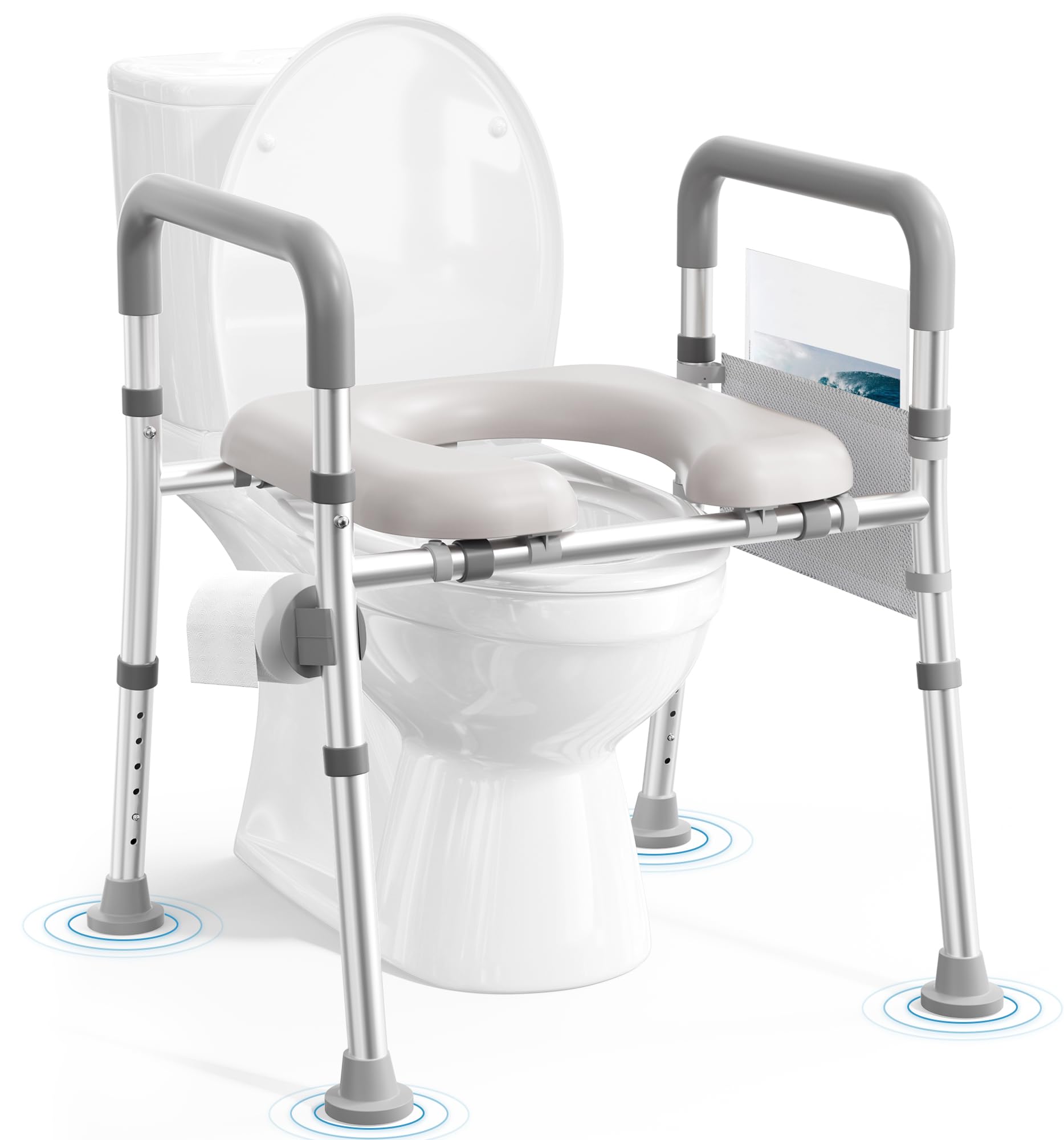
We recommend this if you need a sturdy, adjustable raised seat that makes sitting and standing safer for people with limited mobility.
Pros
- Very stable — aluminum frame and rubber feet feel solid.
- Easy to use — handles and cushion make transfers gentler.
- Adjustable — height and width fit many toilet shapes.
Cons
- Padding on armrests can arrive damaged.
- Bulkier than simple plastic risers; storage needs more space.
- Assembly instructions require careful attention.
We tried this riser for several weeks and it held up well to daily use. The aluminum frame felt firm when leaning on the handles, and the rubber feet stopped any sliding on tile.
The padded seat made long bathroom visits much more comfortable than hard risers. We also used it briefly as a shower chair; the waterproof cushion wipes clean quickly.
Adjusting the height and width took a few minutes and the fit on an elongated bowl was snug once set. Assembly is straightforward, but the small parts and instructions demand focus so nothing gets misaligned.
Buying Guide
We look for raised toilet seats that match the user’s needs and bathroom setup. Measure the toilet bowl shape and height first so the seat fits securely and feels stable.
We check material and build quality. Plastic seats are light and easy to clean; padded seats add comfort; metal-reinforced seats offer more strength.
We evaluate mounting and safety features. Look for secure clamps or locking systems, non-slip bases, and sturdy armrests if needed. These reduce wobble and fall risk.
We consider weight capacity and user ability. Choose a seat rated above the user’s weight and with handles sized for easy gripping. Seats with tool-free installation simplify setup for caregivers.
We compare adjustability and additional features. Some seats offer height increments, removable liners, or quick-release designs for cleaning. Think about whether portability or permanent fit is more useful.
We factor in comfort and hygiene. Contoured shapes and smooth surfaces make sitting and cleaning easier. Removable tops or antimicrobial finishes help maintain cleanliness.
We balance cost and warranty. A higher price can mean better materials and longer life, but a clear warranty is more important for long-term peace of mind.
We prioritize safety, fit, and ease of cleaning when choosing. Use a simple checklist: measurements, weight capacity, mounting type, comfort, and maintenance.
Editor’s Choice
We picked the seat that balances safety, comfort, and ease of use. It raises the toilet height enough to reduce strain, and the surface stays stable during use.
We value secure mounting and a non-slip design. The chosen model uses adjustable clamps and rubber pads to prevent shifting. It also fits most standard toilets without tools.
Comfort matters to us, so we looked for a contoured seat and soft-close lid. Padding is firm but cushioned, which helps with longer sits. The lid lowers gently to avoid noise.
We favor models that are easy to clean and maintain. Smooth plastic with quick-release hinges lets us wipe down surfaces fast. Removable parts resist stains and buildup.
Key features we liked:
- Height options: multiple sizes to match different needs
- Stability: strong clamps and anti-slip pads
- Comfort: contoured shape and cushioned top
- Cleaning: quick-release parts and smooth finish
We tested durability and user feedback before choosing this seat. It showed consistent performance and fewer complaints about wobble or discomfort. This makes it our top pick for most users seeking a raised toilet seat.
Conclusion
We chose raised toilet seats to make bathrooms safer and more comfortable for people with limited mobility. Choosing the right seat depends on height needs, stability, and ease of cleaning.
We prefer models with sturdy clamps or handles for extra support. Foam seats work for short-term use, while molded plastic or padded options last longer and clean more easily.
We recommend checking weight limits and installation style before buying. Measure your toilet and think about whether you need armrests or a detachable lid.
We list three quick tips to guide a purchase:
- Measure the toilet bowl and desired height.
- Pick a seat with strong attachment and easy cleaning.
- Consider added features like handles or padding for comfort.
We stand by choosing seats that match the user’s needs rather than the newest features. A simple, secure seat often gives the best daily benefit.
FAQS
What is a raised toilet seat?
We explain: a raised toilet seat adds height to a standard toilet. It helps people who have trouble sitting or standing.
Who should use one?
We recommend them for seniors, people recovering from surgery, and those with joint or balance issues. They reduce strain and lower fall risk.
How do we choose the right height?
Measure from the floor to the top of the user’s knee when seated. Common raises are 2″, 3″, and 4″. Pick a height that lets the user sit and stand with minimal effort.
Are raised seats safe and stable?
Yes, when fitted correctly. Look for models with secure clamps or non-slip pads. We always test fit before regular use.
How do we clean and maintain them?
Most have smooth, non-porous surfaces. Wipe with mild soap and disinfectant. Remove and check clamps periodically.
Can they fit all toilets?
Many models fit round and elongated bowls. Some require a specific mounting style. We check the product specs and toilet shape before buying.
Do raised seats require tools to install?
Some snap on without tools; others need a wrench for clamps. Installation time usually ranges from a few minutes to 15 minutes.
Will they affect toilet accessories like bidets?
They can change how accessories fit. We verify compatibility with bidets or specialty seats to avoid interference.
