
Best Golf Ball for Senior Women


Automatic Can Opener
Medication Reminder Alarm

Smart Doorbell Camera
The best golf ball for senior women is engineered for slower swing speeds, featuring softer compression to maximize distance and enhanced feel for superior control around the greens. Prioritize balls with low spin and durable covers to balance performance with longevity. Selecting the right match can dramatically improve your game by adding yards and precision to every shot.
Best Golf Ball for Senior Women
Remember that feeling? Stepping up to the tee, the perfect swing in your mind, only to watch the ball balloon weakly to the right or struggle to get any roll on the fairway. If you’re a senior woman golfer, you’ve likely noticed your distance isn’t what it used to be. The clubs might be easier to swing, but the ball… that little white sphere can feel like it’s working against you. You’re not imagining it. Our swing speeds naturally slow, and our hand strength changes, which means the golf balls designed for Tour pros—with their high compression and firm covers—are literally too hard to compress properly. It’s frustrating, but it’s also the most solvable problem in your bag. The right golf ball can feel like a magic trick, adding yards, creating a softer feel on chips, and bringing the fun back to the game. Finding the best golf ball for senior women isn’t about cutting corners; it’s about matching the equipment to your beautiful, evolved game. Let’s talk about how to do exactly that.
This isn’t about needing a “senior” or “women’s” ball with a pink ribbon. It’s about physics and feel. It’s about understanding what your swing needs to perform its best and finding a ball that responds. Over the years, I’ve seen so many friends give up on distance because they were using the wrong ball. They’d buy the latest model advertised for speed, not realizing it required a swing speed they no longer had. Choosing the right ball is the single most affordable and impactful upgrade you can make. It’s like finally wearing shoes that fit—you wonder how you ever played without them. So, let’s break down the science, the features, and the specific balls that are changing the game for senior women golfers just like you.
Key Takeaways
- Prioritize soft compression: These balls compress fully on slower swings for maximum distance and a soft feel.
- Choose low-spin designs: They reduce sidespin, helping minimize slices and hooks for straighter, more consistent shots.
- Select high-visibility colors: Bright orange, yellow, or pink balls are much easier to track in flight and locate on the course.
- Opt for two-piece construction: This simple design maximizes distance and durability, ideal for players with moderate swing speeds.
- Look for ionomer covers: They offer a great balance of a soft feel and excellent durability, often at a better price point.
- Consider alignment aids: Balls with lines or markings can significantly improve putting accuracy and setup consistency.
- Test multiple models: Your ideal ball depends on your exact swing speed and feel preference, so try a few.
📑 Table of Contents
- Why Your Golf Ball Matters More Now Than Ever
- Decoding Compression: The Heart of the Matter
- Cover Material: Urethane vs. Surlyn – The Feel and Spin Battle
- Dimple Design: The Aerodynamics You Never See
- Top Contenders: Our Recommended Golf Balls for Senior Women
- Practical Tips for Testing and Choosing
- Beyond the Ball: The Holistic Game for Senior Women
- Conclusion: Finding Joy, One Ball at a Time
Why Your Golf Ball Matters More Now Than Ever
Let’s start with the “why.” Golf ball technology is a science of trade-offs. A ball built for maximum distance for a 110+ mph swing speed (think PGA Tour players) is engineered to be very hard. It won’t compress fully at a 60 mph swing speed, meaning you’re not transferring energy efficiently. The result? A loss of distance, a harsh feel, and a ball that doesn’t spin much on short game shots, making it harder to control. Conversely, a ball built for a slower swing is designed to compress easily at lower speeds, launching higher and spinning more on approach shots and around the greens. For a senior woman, this is everything. It’s the difference between a ball that fights you and one that becomes your partner.
The Swing Speed Reality Check
The first step is knowing your typical driver swing speed. You don’t need a fancy launch monitor (though they’re great!). Many driving ranges now have simulator bays that give you this data. Or, simply be honest with yourself. If your drives are consistently in the 150-200 yard range, your swing speed is likely below 70 mph. Most senior women fall into the 50-75 mph range. This isn’t a bad thing—it’s just a fact. And it’s the single most important factor in choosing a ball. Balls are categorized by compression rating, which essentially measures how “hard” the core is. Low compression (often 50-70) is designed for slower swing speeds to maximize energy transfer. High compression (90+) is for faster speeds. We’ll dive deeper into compression next, but understanding your speed is step one.
The Feel Factor: It’s Not Just Distance
Distance is great, but golf is a game of scoring, and scoring happens around the greens. As we age, our touch and feel can become even more precious. A ball that feels like a rock off the putter face or chips with a dead, unspinning thud is no fun. A soft-feeling ball provides better feedback. You can hear and feel a pure strike. More importantly, a softer cover (usually urethane) allows for more spin on wedge shots. This means you can stop the ball on the green more effectively and have more confidence in your short game. The best golf ball for senior women balances that high-launch, low-compression core for distance with a soft, responsive cover for control. It’s the best of both worlds.
Decoding Compression: The Heart of the Matter
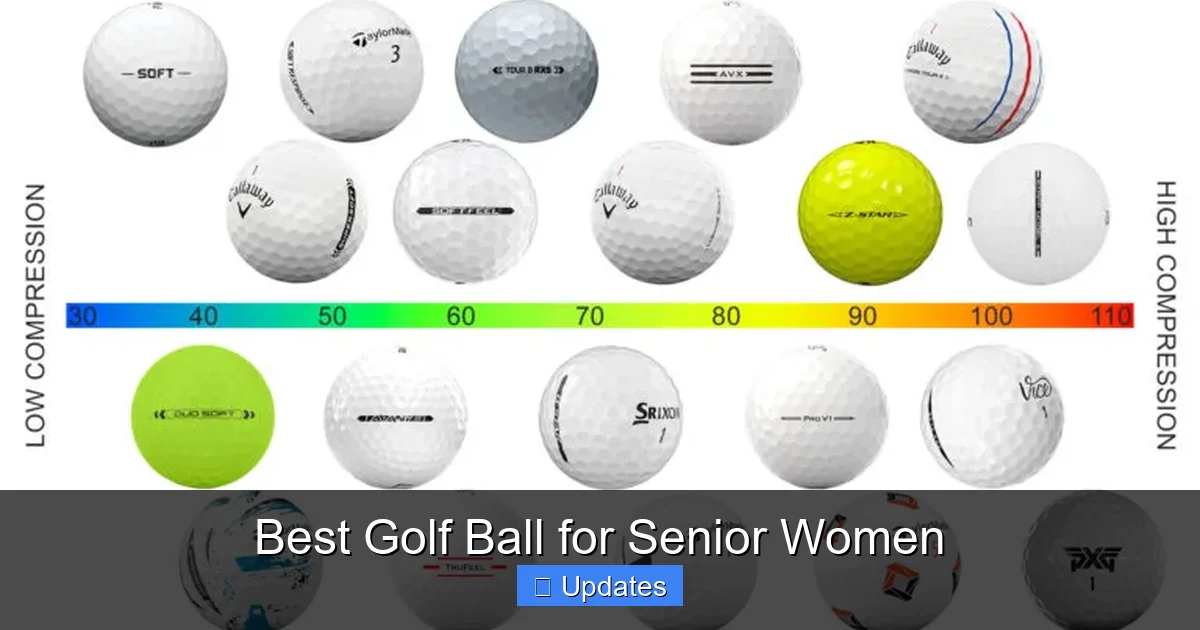
Okay, let’s talk about compression. Think of it like a spring. A high-compression ball has a stiffer spring inside. You need a lot of force (swing speed) to compress it fully. When it decompresses, it releases a lot of energy, but only if you compressed it enough. If your swing is too slow, you’re just hitting a hard ball. A low-compression ball has a softer spring. It compresses easily with less force, still stores energy, and releases it effectively at your swing speed. This leads to higher launch angles (the ball goes up more) and less spin off the driver, which can mean more roll and more total distance. For slower swing speeds, low compression is non-negotiable for maximizing distance.

Visual guide about Best Golf Ball for Senior Women
Image source: m.media-amazon.com
How to Find Your Compression Zone
Most major manufacturers don’t list a specific compression number anymore (it’s considered a marketing term), but they describe their balls in terms of “feel” and “swing speed.” Look for terms like “soft feel,” “low compression,” “for slower swing speeds,” or “designed for maximum distance at moderate swing speeds.” A good rule of thumb: if your swing speed is under 85 mph, you should be looking at a low-compression ball. Many senior women are in the 55-75 mph range, so they are perfect candidates for the softest, lowest-compression models on the market. Don’t be fooled by a ball that says “tour” or “pro”—these are almost always high-compression.
The Myth of “One Ball Fits All”
Some marketing suggests a single ball works for everyone. It’s not true. Your body, your swing, your goals—they’re unique. A touring pro needs a high-spin, high-compression ball to control their powerful shots. A senior woman golfer needs a ball that launches high, spins enough on short irons and wedges to hold greens, and feels great off the putter. Embracing a ball designed for your swing speed is not a compromise; it’s an optimization. It’s using the right tool for the job. You wouldn’t use a sledgehammer to put in a picture hook. Don’t use a Tour-pro ball for your swing.
Cover Material: Urethane vs. Surlyn – The Feel and Spin Battle
Under the cover, literally, is where the magic (or frustration) happens. There are two primary cover materials: urethane and surlyn (or other ionomer blends). Urethane is the premium, soft material used on tour-level balls. It’s incredibly responsive, provides excellent spin on wedge shots, and offers a soft, “mushy” feel that many love. The downside? It’s less durable. It can get nicks and cuts from cart paths, trees, and aggressive wedge play. Surlyn is a harder, more durable plastic. It’s very tough, lasting many rounds without cosmetic damage. However, it generally produces less spin on short game shots and can feel firmer off the putter and chips.

Visual guide about Best Golf Ball for Senior Women
Image source: golfkitadvisor.com
The Senior Woman’s Sweet Spot
For many senior women, the ideal is a low-compression core paired with a urethane cover. This gives you the easy launch and distance from the core, with the soft feel and high spin potential around the greens from the cover. Advances in technology have made some urethane covers more durable than in the past. Brands like Callaway and Titleist have improved scuff resistance. However, if you play a lot of courses with cart paths or you tend to be hard on wedges, you might prioritize durability and choose a high-quality surlyn cover ball. The spin difference on chips and pitches is noticeable. Test both! Hit a few chip shots with each type and see which one gives you the confidence to attack the pin.
A Note on Colored Balls
Many senior women prefer colored golf balls—yellow, orange, pink—for visibility. This is a totally valid and smart choice! You’ll find the ball faster in the rough, in the shadows, and on the green. The good news is that most major ball models are available in high-visibility colors, and the performance is identical to the white version. Don’t let color be your only deciding factor, but definitely choose a color that helps you see your ball. It’s a simple way to reduce frustration and speed up play.
Dimple Design: The Aerodynamics You Never See
Look at a golf ball. Those tiny dimples aren’t for decoration. They’re critical for flight. Dimples reduce drag and manipulate lift. A ball with a shallower dimple pattern might launch higher with less spin, promoting a penetrating ball flight that rolls more. A deeper, more complex dimple pattern might create a higher, stopping ball flight with more spin. For senior women, a ball flight that is high and carries decently is often more beneficial than a low, “rocket” flight that struggles to get airborne. You want the ball to climb, not fight its way out. Manufacturers tune dimple patterns to work with the ball’s core and cover design.
Visual guide about Best Golf Ball for Senior Women
Image source: cedarwoodgolf.com
What This Means for Your Game
You don’t need to become a dimple expert. But when reading reviews or descriptions, look for terms like “high launch,” “optimized for slower swing speeds,” or “reduced drag for more carry.” These indicate the dimple design is working in your favor. The combination of low compression, soft cover, and an aerodynamic dimple pattern designed for moderate speeds is the trifecta for the best golf ball for senior women. It ensures the ball gets up in the air easily, flies on a trajectory that maximizes carry, and has the potential to stop on the greens.
Top Contenders: Our Recommended Golf Balls for Senior Women
Now, the fun part. Based on the criteria of low compression, soft feel (often with a urethane cover), high launch, and good short-game spin, here are the top models that consistently deliver for senior women golfers. I’ve focused on value and performance, including both premium and budget-friendly options. Remember, the best ball is the one you feel most confident with, so use this as a starting point.
How to Use This Table
This table gives you a quick snapshot. The “Key Benefit” is why it’s on this list for a senior woman. The “Price Point” helps if you’re budget-conscious. The most important thing is to try 2-3 of these over a few rounds. Buy a sleeve (3 balls) of each, play 9 holes with one, then 9 with another. Pay attention to driver feel, iron trajectory, and most importantly, your chip and pitch shots. Which one feels best? Which one stops quicker?
| Ball Model | Compression & Core | Cover Material | Key Benefit for Senior Women | Price Point |
|---|---|---|---|---|
| Callaway Supersoft | Very Low (Soft) | Surlyn (Durable) | Extremely soft feel, excellent distance for slow swings, very durable. Great value. | $ (Budget-Friendly) |
| Titleist Tour Soft | Low-Medium | Urethane | Tour-level soft feel and short-game spin with a core designed for moderate swing speeds. | $$ (Premium) |
| Srixon Soft Feel | Low | Urethane | Incredible softness and control, fantastic for feel players. Consistent flight. | $$ (Premium) |
| Bridgestone e6 | Low | Surlyn | Straight flight, high launch, very soft feel for a surlyn cover. Excellent accuracy. | $ (Budget-Friendly) |
| Wilson Duo Professional | Very Low (Softest) | Urethane | The softest ball on the market. Maximizes distance at sub-70 mph speeds. Great feel. | $$ (Premium) |
Deep Dive on the Top Picks
Callaway Supersoft: This is a perennial favorite for a reason. Its super-soft core launches the ball high and far with a mid-to-high spin wedge. The Surlyn cover is tough, so you won’t worry about scuffs. If you want maximum softness and distance on a budget, start here. It’s the safe, smart choice that works for almost everyone.
Titleist Tour Soft: This is for the player who wants that premium, buttery feel and high spin on chips and pitches. The core is slightly firmer than the Supersoft, but the urethane cover provides a level of control around the greens that is noticeable. If your short game is a priority and you want a ball that feels like a Tour player’s, this is it. It’s a bit more expensive, but the performance is there.
Srixon Soft Feel: Often a “secret weapon,” this ball is beloved by players who prioritize feel. It’s exceptionally soft off the putter and produces high, soft-spinning wedge shots. The flight is very consistent and straight. For the senior woman who loves to shape shots or just wants a incredibly responsive feel, this is a top contender.
Bridgestone e6: This ball is all about accuracy and a soft feel. Its dimple pattern is designed to reduce sidespin, helping to reduce slices and hooks. The Surlyn cover is durable, and the core provides a great high launch. If you’re looking for a straight, high-flying ball that feels good and won’t break the bank, the e6 is a fantastic option.
Wilson Duo Professional: This is the softest ball commercially available. If your swing speed is on the very low end (sub 65 mph) and you’re desperate for distance and a pillowy soft feel, this is your ball. It uses a unique core technology to be extremely compressible. The urethane cover offers good spin. It’s a specialist ball, but for the right player, it’s transformative.
Practical Tips for Testing and Choosing
All the theory in the world doesn’t beat real-world testing. Here’s your actionable plan to find your perfect match.
The On-Course Test (The Only Test That Matters)
Buy sleeves of 2-3 different balls from our list. Play 9 holes with Ball A, 9 with Ball B. Do this over two rounds or even one 18-hole round, switching balls at the turn. Be deliberate. Pay attention to:
- Driver: Did it launch higher? Did it feel solid, or like you were hitting a rock? How far did it go compared to your usual ball?
- Long Irons/Hybrids: Did the ball stop quicker on the green? Did it feel like you could attack pins?
- Short Game (CRITICAL): This is the make-or-break area. Hit 5-10 chip shots with each ball from the same spot. Which one checks up quicker? Which one feels more predictable? Which one gives you more confidence to get it close?
- Putting: How does it feel off the face? Is the sound and feedback pleasant? Do you feel like you can control the speed better?
Keep a simple notebook or notes on your phone. After each 9 holes, jot down: “Ball A: Good distance, but chips felt hard. Ball B: Less distance, but chips stopped quickly.” Your gut feeling is the best data.
The Budget-Conscious Strategy
Golf balls get lost. It’s a fact of life. You don’t need to spend $50 a dozen on a ball you’re going to donate to the woods. The Callaway Supersoft and Bridgestone e6 offer phenomenal performance at a lower price point. They are the ultimate value plays. If you love the feel of urethane but want to save, watch for sales on the Titleist Tour Soft or Srixon Soft Feel. Buying used or recycled balls from reputable sites can also be a great way to try premium balls without the premium price. Just ensure they’re in good condition (no significant scuffs).
Don’t Forget Your Clubs
Your golf ball works in tandem with your clubs. If you’re using old, stiff shafts or irons with low launch, even the perfect ball won’t fix everything. That’s why looking at your equipment is so important. If you haven’t had a club fitting in years, consider it. Modern senior golf clubs—with more flexible shafts and higher lofts—are designed to work perfectly with these low-compression, high-launch balls. They are a synergistic pair. For a comprehensive look at equipment that complements your game, check out our guide on best golf clubs for a senior golfer. It will help you see the full picture of your setup.
Beyond the Ball: The Holistic Game for Senior Women
Let’s be real for a moment. The golf ball is a piece of the puzzle, but it’s not the only piece. Your overall physical condition has a massive impact on your golf game. Strength, flexibility, and balance all contribute to swing speed, consistency, and endurance. If you’re serious about enjoying golf more and playing better, consider your off-course routine.
Fitness for Golf: It’s Not About Running Marathons
You don’t need to become a gym rat. Simple, targeted exercises can make a huge difference. Core strength (think rotational movements) helps generate power. Leg strength aids in balance and drive. Even light resistance bands can help. Many senior-focused fitness programs now include golf-specific regimens. A little strength and flexibility work can add a few mph to your swing speed, which, combined with the right ball, means more distance. For some excellent, low-impact exercise ideas that directly benefit your golf swing and overall vitality, explore our article on best exercises for seniors over 70. What you do off the course directly influences what you do on it.
Equipment Synergy: The Complete Picture
Think of your golf bag as a team. The driver, fairway woods, hybrids, irons, wedges, and ball all need to work together. If you have a driver with a very low loft (8-9 degrees) but a slow swing speed, you’ll struggle to get the ball in the air, no matter what ball you use. A driver with 10-12 degrees of loft, paired with a low-compression ball, is a winning combo for distance. The same goes for your wedges. If you struggle to spin the ball, a softer ball with a urethane cover is your best friend. Sometimes, the answer isn’t just a new ball; it’s a look at your whole set. If you’re building or updating your set from the ground up, our guide to best golf club sets for seniors is an invaluable resource that covers drivers, irons, and putters designed for our generation of players.
Conclusion: Finding Joy, One Ball at a Time
Golf is a game of inches, and those inches are won with confidence. When you step up to the ball knowing that your equipment is working *for* you, not against you, something shifts. The hesitation leaves. The smile returns. That little white ball, once a source of frustration, becomes a tool of expression. Finding the best golf ball for senior women is a journey of self-discovery on the course. It’s about listening to the sound, watching the flight, and feeling the release. It’s about honoring the golfer you are today, with the swing you have now, and equipping yourself for maximum enjoyment.
Start with the knowledge: low compression for your swing speed, a soft cover for feel and spin, and a color you can see. Then, experiment. Grab a sleeve of the Callaway Supersoft and the Titleist Tour Soft. Go play. Feel the difference. Your perfect ball is out there, waiting to be found. It might be the one that gives you an extra five yards, the one that checks up on the green, or the one that just feels right in your hands. That’s the one. That’s your best ball. Now go enjoy the walk, the company, and the beautiful, soaring flight of a ball that finally understands you.
Frequently Asked Questions
What is the best golf ball for senior women?
The best golf ball for senior women typically features a low compression core (around 50-70) to maximize distance with slower swing speeds, while offering a soft feel for better control around the greens. Popular choices include the Callaway Supersoft, Srixon Soft Feel, and Titleist Tour Soft.
Are softer golf balls better for senior women?
Yes, softer golf balls are generally better for senior women because they compress more easily on slower swing speeds, resulting in greater distance and a more satisfying feel. However, “soft” should not mean a complete lack of durability or performance on full shots.
Which golf balls are best for senior women with slower swing speeds?
Golf balls specifically engineered for slower swing speeds are ideal. Look for models with low compression ratings and ionomer or soft urethane covers, such as the Wilson Duo Soft+, Bridgestone e6, or TaylorMade Soft Response, to help get the ball airborne and flying farther.
Do senior women need a special golf ball for distance?
Senior women can significantly benefit from balls designed for distance, which prioritize a low-compression core to generate more ball speed from slower swings. These balls, like the Srixon Distance or Callaway Warbird, often have an aerodynamic dimple pattern to further enhance carry.
What about spin and control for senior women’s golf balls?
While distance is key, maintaining adequate spin for stopping power on approach shots is crucial. Balls with a softer cover material, like a thin urethane or advanced ionomer, provide better greenside control. Models like the Titleist Tour Soft or Vice Pro Soft offer this balance.
Can I use the same golf ball as the pros if I’m a senior woman?
While you can use any ball, tour-level balls have high compression (90+) which is very difficult to compress with a senior woman’s swing speed, leading to a loss of distance and a harsh feel. It’s more effective to choose a ball matched to your swing speed for optimal performance.