
Bed Alarm vs Medical Alert: Which Is Better for Seniors?


Quad Cane for Seniors

Bathtub Transfer Bench

Smart Doorbell Camera
Bed Alarm vs Medical Alert is really a comparison between two different ways to improve safety. A bed alarm watches for movement around the bed. A medical alert system stays with the senior and can help them call for assistance.
The better choice depends on the person’s daily routine. A bed alarm can make sense when a caregiver needs an alert after a senior gets out of bed. A medical alert can be more useful when the senior needs a way to request help while moving around the home.
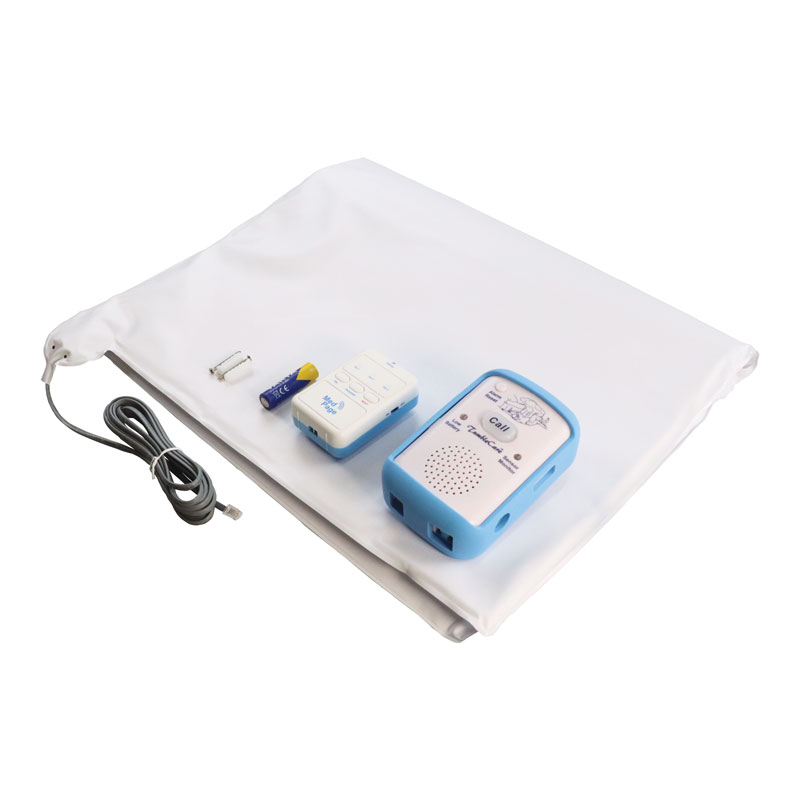
Quick Comparison
For many seniors who live alone, a medical alert system offers broader day-to-day support because it travels with the user. A bed alarm is more focused and can be useful when the main concern is getting out of bed without a caregiver knowing.
The biggest difference is simple: a bed alarm detects movement, while a medical alert is designed around calling for help.
Think of a bed alarm as a caregiver notification tool. Think of a medical alert as a personal help button.

Bed Alarm vs Medical Alert At a Glance
Both can support a safer routine, but they work in very different ways.
| Feature | Bed Alarm | Medical Alert |
|---|---|---|
| Main purpose | Detect bed movement or exit | Request help during an emergency |
| Worn by senior | Usually no | Usually yes |
| Caregiver alerts | Often central to its use | May be included |
| Works away from bed | No | Yes, depending on system |
| Setup | Usually simple | May require setup and account activation |
| User action | Often passive | Usually requires pressing a button |
| Best suited to | Bed-exit monitoring | Personal emergency support |
| Ongoing cost | Depends on system | Often includes a service fee |
Bed Alarm for Senior Safety and Care
A bed alarm is designed to notify a caregiver when a senior moves in a way that triggers the system. It can be placed on or near the bed, depending on the type of alarm.
Its main benefit is focused monitoring rather than personal communication.
Ease of Use
A bed alarm can be simple for the senior because there may be little or nothing to operate. Once properly installed, the senior can follow their normal bedtime routine without remembering to press a button.
This can be useful for someone who may forget to carry a device.
The caregiver, however, needs to understand the alarm and respond when it activates.
Key Strengths
- Passive monitoring can reduce the need for user interaction.
- Useful when the main concern is leaving the bed.
- Can provide a caregiver with an early alert.
- May be suitable for nighttime monitoring.
- The senior does not normally need to wear a device.
Potential Drawbacks
- It is mainly useful around the bed.
- It does not provide the same mobility as a wearable alert.
- It depends on someone receiving and responding to the alert.
- An alarm does not automatically mean that an emergency has occurred.
- False or unnecessary alerts may become frustrating if the setup is not suitable.
Bed alarms should not be treated as a guaranteed way to prevent falls. Evidence on bed and chair sensor alarms for preventing falls is uncertain, so they are better viewed as one part of a wider safety plan rather than a complete solution.
Medical Alert for Seniors Who Need Help
A medical alert system is designed around the senior being able to request assistance. Many systems use a wearable button or device.
This makes the system more useful beyond the bedroom.
Ease of Use
A medical alert can be straightforward when the senior remembers to wear it and understands how to activate it.
The main learning point is simple: the user needs to know when and how to request help.
For seniors with limited dexterity, button size, device comfort, and ease of activation are important factors to check before choosing a system.
Key Strengths
- Travels with the senior around the home.
- Can provide a direct way to request assistance.
- Useful during emergencies away from the bed.
- Can support seniors who live alone.
- Some systems offer additional features such as fall detection or location support, depending on the service.
Potential Drawbacks
- The senior usually needs to wear or carry the device.
- The device may need charging or battery replacement.
- Some services have recurring fees.
- Coverage and features vary between providers.
- It may not help if the senior forgets to wear it or cannot activate it.
The National Institute on Aging notes that emergency medical alert systems can help older adults living alone during situations such as falls or other emergencies, but they need to be set up correctly, worn as intended, and maintained with charged or replaced batteries.
Which Is Easier for Seniors to Use?
Ease of use depends on what the senior needs to do.
A bed alarm can be easier when the goal is passive monitoring. The senior generally does not have to remember to activate it each time they get out of bed.
A medical alert requires more user involvement. The senior must normally keep the device nearby and know how to activate it.
| Senior Need | Bed Alarm | Medical Alert |
|---|---|---|
| Minimal user interaction | Strong fit | Less suitable |
| Nighttime bed monitoring | Strong fit | Useful but broader |
| Moving around the home | Limited | Strong fit |
| Calling for assistance | Limited | Strong fit |
| Caregiver monitoring | Strong fit | Can be useful |
| Forgetting to carry a device | Advantage | Potential drawback |
For a senior who spends most of the day independently around the home, the mobility of a medical alert can be more useful. For someone whose main concern happens around bedtime, a bed alarm may be the more focused option.
Performance Comparison
These products perform different jobs, so performance should be judged against the intended use.
A bed alarm performs its main function by detecting movement or a bed exit and sending an alert through the available system. Its usefulness depends heavily on correct placement, settings, and the caregiver’s ability to respond.
A medical alert performs its main function by giving the user a way to request help. Its usefulness depends on wearing the device, battery status, system coverage, and the service’s available response options.
| Performance Area | Bed Alarm | Medical Alert |
|---|---|---|
| Bed monitoring | Excellent fit | Limited |
| Home mobility | Limited | Better fit |
| User-initiated help | Limited | Strong fit |
| Caregiver notification | Strong fit | Often available |
| Nighttime monitoring | Strong fit | Useful |
| Emergency support away from bed | Limited | Stronger fit |
Neither system should be viewed as a replacement for sensible fall-prevention measures or appropriate caregiver support.
Comfort, Accessibility, and Senior-Friendly Design
The comfort question is different for each product.
A bed alarm usually places fewer demands on the senior because there is little to wear. The main accessibility issue is whether the alarm is positioned correctly and whether the caregiver can hear or receive the notification.
A medical alert puts more responsibility on the wearer. The device should be comfortable enough for regular use. The button should also be easy to identify and press.
For seniors with limited hand strength or dexterity, simple controls can matter more than a long list of extra features.
Features Comparison
The most useful features are the ones that solve the actual safety problem.
| Feature | Bed Alarm | Medical Alert |
|---|---|---|
| Bed-exit detection | Core feature | Usually not the main purpose |
| Wearable device | Usually no | Usually yes |
| Two-way communication | Depends on system | Available with some systems |
| Fall detection | Depends on model | Available with some systems |
| Caregiver notification | Common purpose | Often available |
| Location support | Usually limited | Available with some mobile systems |
Features vary widely between products. Check the exact system before assuming a particular function is included.
Price, Maintenance, and Long-Term Value
The cost structure can be quite different.
A basic bed alarm may have a simpler ownership model, although more advanced systems can add transmitters, receivers, monitoring equipment, or other components.
Medical alert systems often involve both equipment and an ongoing service fee. The National Institute on Aging notes that these services commonly have a startup cost followed by a monthly fee, although prices and coverage vary.
| Cost Factor | Bed Alarm | Medical Alert |
|---|---|---|
| Equipment | Usually the main cost | May be included or charged separately |
| Monthly service | Depends on system | Common with monitored services |
| Battery needs | Depends on model | Important consideration |
| Replacement parts | Depends on model | Device-specific |
| Long-term value | Strong for focused monitoring | Strong for mobile emergency support |
The cheaper option is not automatically the better value. Consider how often the system will be used and what problem it needs to solve.
Who Should Choose a Bed Alarm?
A bed alarm may make sense for seniors or caregivers who:
- Mainly need monitoring around the bed.
- Want passive movement detection.
- Have a caregiver who can respond to alerts.
- Do not want the senior to wear another device.
- Need nighttime monitoring.
- Want a focused solution rather than a mobile emergency system.
Who Should Choose a Medical Alert?
A medical alert may make more sense for seniors who:
- Spend time moving around the home alone.
- Want a way to request help directly.
- May need assistance outside the bedroom.
- Live alone and want an additional emergency communication option.
- Can comfortably wear and operate the device.
- Want features such as mobile coverage or fall detection when offered by the chosen service.
Bed Alarm vs Medical Alert — Final Verdict
There is no universal winner because these products solve different problems.
For bed monitoring: Bed Alarm
For personal emergency support: Medical Alert
For mobility around the home: Medical Alert
For passive caregiver notification: Bed Alarm
For seniors living alone: Medical Alert may provide broader support
The key question is not simply which product has more features. Ask what situation you are trying to manage. If the concern is getting out of bed unnoticed, a bed alarm is more targeted. If the concern is being able to request help anywhere around the home, a medical alert is usually the more relevant option.
Scoring Summary
Scores are only useful when they reflect the purpose of the products. Because these systems serve different roles, the scores below are best understood as category-specific rather than a single overall ranking.
| Category | Bed Alarm | Medical Alert |
|---|---|---|
| Ease of Use | 9/10 | 8/10 |
| Senior-Friendly Design | 8/10 | 8/10 |
| Bed Monitoring | 10/10 | 5/10 |
| Mobility Support | 4/10 | 9/10 |
| Caregiver Support | 9/10 | 8/10 |
| Everyday Flexibility | 5/10 | 9/10 |
How We Evaluate These Products
This comparison focuses on practical factors that matter to older adults and caregivers.
We consider:
- Ease of use
- Accessibility
- Comfort
- Safety
- Monitoring
- Emergency support
- Maintenance
- Setup
- Long-term practicality
- Overall value
The goal is to compare how each product fits a real use case, not to reward the product with the longest feature list.
Senior-Specific Buying Considerations
The right choice starts with the senior’s daily routine.
Physical Effort
Consider whether the senior needs to press a small button, wear a device, or interact with controls during an emergency.
Controls
Look for simple buttons and clear controls. A complicated system may be harder to use when the user is tired or stressed.
Maintenance
Check battery requirements, charging, cleaning, and replacement needs before buying.
Setup
Make sure the system can be installed correctly. A device that is not positioned or configured properly may not provide the expected alerts.
Safety
Do not treat either product as a guarantee against falls. Bed alarms, in particular, have uncertain evidence for actually reducing falls. A broader safety plan may be needed when fall risk is a concern.
Common Buying Mistakes
Avoid these common mistakes when comparing the two:
- Choosing a bed alarm when the real need is mobile emergency support.
- Choosing a medical alert without considering whether the senior will wear it.
- Focusing only on the purchase price.
- Forgetting about monthly monitoring fees.
- Ignoring battery and charging requirements.
- Assuming a feature is included without checking the exact model or service.
- Treating an alarm as a complete fall-prevention solution.
Safety
A bed alarm should not be treated as a device that physically prevents a senior from getting out of bed. It is an alert tool.
Likewise, a medical alert system is not a guarantee that help will arrive in every situation. The device must be available, maintained, and used correctly. The NIA also notes that emergency alert systems do not replace regular check-ins from family, friends, or caregivers.
If a senior has significant fall risk, mobility problems, or another health-related safety concern, discuss the broader safety plan with an appropriate healthcare professional.
Conclusion
Bed Alarm vs Medical Alert is mainly a comparison between focused bed monitoring and mobile personal emergency support. A bed alarm can be useful when caregivers need to know when a senior leaves the bed. A medical alert can be more useful when the senior needs a way to request assistance while moving around the home.
Choose based on the actual situation. If bed-exit monitoring is the priority, a bed alarm may be the better fit. If personal emergency support and mobility are more important, a medical alert may offer greater everyday flexibility.