
Are Senior Apartments Only for Seniors


Book Holder Stand

Adult Coloring Book

Indoor Security Camera
Senior apartments are primarily designed for older adults, but they’re not always restricted to seniors only. Depending on the community, age requirements, income limits, and household composition, younger individuals or couples may qualify under certain conditions.
Key Takeaways
- Most senior apartments require at least one resident to be 55 or older: The majority of age-restricted communities follow federal or state guidelines that mandate a minimum age, typically 55 or 62.
- Younger spouses or partners may be allowed: In many 55+ communities, a younger spouse or partner can live in the unit as long as the primary resident meets the age requirement.
- Income and disability can influence eligibility: Some senior housing options, especially subsidized or affordable units, prioritize low-income seniors but may accept younger disabled individuals.
- Not all senior housing is age-restricted: Independent living, assisted living, and memory care facilities may not have strict age rules, focusing instead on care needs.
- State and federal laws govern age restrictions: The Housing for Older Persons Act (HOPA) allows communities to legally restrict residency to older adults under specific conditions.
- Exceptions exist for caregivers and family members: Some communities permit live-in caregivers or family members under special circumstances, even if they don’t meet the age criteria.
- Always verify community-specific rules: Policies vary widely, so it’s essential to contact individual properties to understand their unique eligibility requirements.
📑 Table of Contents
Are Senior Apartments Only for Seniors?
When you hear the term “senior apartments,” your first thought might be: “That’s only for old people.” And you’re not entirely wrong—these communities are indeed designed with older adults in mind. But the reality is a bit more nuanced. While most senior apartments do have age restrictions, they aren’t always exclusive to people over 65 or even 60. In fact, many allow younger residents under certain conditions.
So, are senior apartments only for seniors? The short answer is: usually, but not always. The long answer depends on the type of housing, the community’s policies, and the laws that govern them. Whether you’re a 58-year-old looking to downsize, a 45-year-old caring for an aging parent, or a 30-year-old partner of a senior, understanding the rules can help you make informed decisions about housing.
In this guide, we’ll break down everything you need to know about who can live in senior apartments, what the age requirements really mean, and how exceptions and policies vary across different types of housing. We’ll also explore real-life examples, legal frameworks, and practical tips to help you navigate the process.
Understanding Age Restrictions in Senior Housing
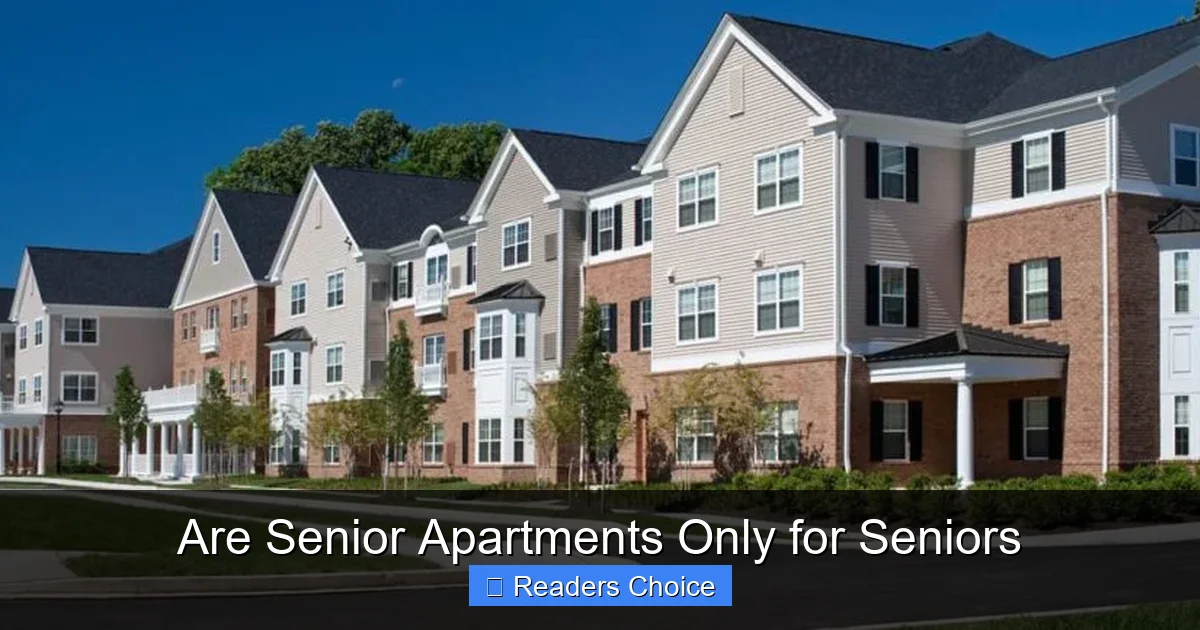
Visual guide about Are Senior Apartments Only for Seniors
Image source: isitnearme.com
Age restrictions in senior apartments are not arbitrary—they’re based on federal and state laws designed to protect the rights of older adults while ensuring communities can legally limit residency. The most important law governing this is the Housing for Older Persons Act (HOPA), part of the Fair Housing Act.
What Is the Housing for Older Persons Act (HOPA)?
Enacted in 1995, HOPA allows housing communities to legally restrict residency to people aged 55 and older, provided they meet certain criteria. To qualify as a “55 and older” community under HOPA, at least 80% of the occupied units must have at least one resident who is 55 or older. Additionally, the community must publish and follow policies that demonstrate its intent to house older persons.
This law gives communities the legal backing to enforce age restrictions without violating fair housing laws, which otherwise prohibit discrimination based on age. However, HOPA only applies to housing that is not federally subsidized. Public housing and Section 8 properties, for example, must follow different rules.
Common Age Thresholds: 55+ vs. 62+
Most senior apartments fall into one of two age categories: 55+ or 62+. Here’s how they differ:
– 55+ Communities: These are the most common type of age-restricted senior housing. They allow residents aged 55 and older, and often permit younger spouses or partners. For example, a 58-year-old can live in a 55+ community with their 48-year-old spouse, as long as the older partner meets the age requirement.
– 62+ Communities: These are typically found in federally subsidized or affordable housing programs. They require at least one resident to be 62 or older. These communities often have income limits and may prioritize low-income seniors.
It’s important to note that not all senior housing is age-restricted. Independent living facilities, assisted living communities, and memory care centers may not have strict age rules. Instead, they focus on the level of care needed. A 50-year-old with early-onset dementia, for instance, might qualify for memory care even if they’re under 62.
Who Can Live in a Senior Apartment?

Visual guide about Are Senior Apartments Only for Seniors
Image source: wiseranker.com
Now that we’ve covered the basics of age restrictions, let’s dive into who is actually allowed to live in a senior apartment. The answer isn’t always “only seniors.”
Primary Residents: The Age Requirement
In most cases, at least one person in the household must meet the community’s age threshold. For a 55+ community, that means someone must be 55 or older. For a 62+ community, the minimum age is 62.
This primary resident is usually the leaseholder or the person whose name is on the application. Their age determines eligibility, even if other household members are younger.
Younger Spouses and Partners
One of the most common exceptions to age restrictions is younger spouses or domestic partners. In a 55+ community, a 57-year-old can live with their 45-year-old partner. The younger partner doesn’t need to meet the age requirement, as long as the older one does.
This policy recognizes that many couples have age gaps and want to live together in a senior-friendly environment. It also helps prevent discrimination against mixed-age households.
However, rules can vary. Some communities require the younger spouse to be at least 40 or 45 years old. Others may limit the age difference. Always check the specific community’s policy.
Live-In Caregivers and Family Members
Another exception involves caregivers and family members. If a senior needs assistance with daily living, a live-in caregiver—such as a home health aide or family member—may be allowed to reside in the unit, even if they’re under the age threshold.
For example, a 70-year-old with mobility issues might have their 35-year-old daughter move in to help with chores and medical needs. In many cases, the community will approve this arrangement, especially if the caregiver is not a permanent resident but provides essential support.
Some communities require caregivers to be employed by a licensed agency, while others allow family members. Documentation, such as a doctor’s note or care plan, may be required.
Disabled Individuals Under 55
While most senior apartments are designed for older adults, some may accept younger individuals with disabilities—especially if the housing is part of an affordable or subsidized program.
For instance, a 40-year-old with a severe physical disability might qualify for a 62+ affordable housing unit if they meet income requirements and the community has a policy for disabled residents. However, this is not guaranteed and depends on the property’s rules and availability.
In general, disability alone does not override age restrictions in private 55+ communities. But in government-assisted housing, fair housing laws require reasonable accommodations for people with disabilities, which could include allowing younger residents if needed.
Types of Senior Housing and Their Rules

Visual guide about Are Senior Apartments Only for Seniors
Image source: i.pinimg.com
Not all senior housing is the same. The type of community you’re considering will greatly influence who can live there. Let’s look at the most common types and their eligibility criteria.
Age-Restricted Senior Apartments
These are the classic “55+” or “62+” communities you see advertised. They’re typically independent living facilities with amenities like fitness centers, social activities, and maintenance-free living. Residents live in apartments or condos and are responsible for their own care.
Key features:
– Age requirement: 55 or 62+
– No medical care provided
– Often include social and recreational programs
– May allow pets and have on-site management
These communities are ideal for active seniors who want to downsize and enjoy a community of peers. Younger spouses are usually welcome, but children and grandchildren typically cannot live there permanently.
Affordable and Subsidized Senior Housing
Run by government agencies or nonprofit organizations, these properties offer reduced rent based on income. They often serve low-income seniors but may have more flexible rules.
For example, a 62+ affordable housing complex might allow a 58-year-old with a disability if they meet income limits and there’s a waiting list. Some programs also prioritize veterans or homeless seniors.
Because these properties receive federal funding, they must follow fair housing laws more strictly. This means they may be more open to exceptions, especially for disabled individuals.
Assisted Living and Memory Care Facilities
Unlike age-restricted apartments, assisted living and memory care communities focus on care needs rather than age. A 50-year-old with Alzheimer’s disease could qualify for memory care, even if they’re decades younger than most residents.
These facilities provide help with daily activities like bathing, dressing, and medication management. They often have licensed nurses on staff and structured daily routines.
While age isn’t the main factor, most residents are seniors. However, the emphasis is on health and safety, not age.
Continuing Care Retirement Communities (CCRCs)
CCRCs offer a range of living options—from independent apartments to skilled nursing care—all on one campus. Residents can move between levels of care as their needs change.
Age requirements vary, but most CCRCs require residents to be at least 55 or 62. However, because they offer multiple care levels, they may be more flexible with younger residents who need long-term care.
For example, a 54-year-old with a chronic illness might be accepted into a CCRC if they can afford the entrance fee and meet health criteria.
Legal and Policy Considerations
Understanding the legal framework behind senior housing is crucial. It helps explain why some communities can enforce age restrictions while others cannot.
Fair Housing Act and Age Discrimination
The Fair Housing Act prohibits discrimination based on race, color, religion, sex, disability, familial status, and national origin. Notably, age is not included—except in the case of housing specifically designed for older persons.
This is where HOPA comes in. It creates a legal exception, allowing communities to restrict residency to older adults as long as they meet the 80% occupancy rule and publish age-related policies.
Without HOPA, age restrictions would likely be considered discriminatory. But because Congress recognized the need for senior-focused housing, these communities are legally protected.
State and Local Laws
While HOPA sets the federal standard, some states and cities have additional rules. For example, California has its own housing laws that may affect how age-restricted communities operate.
In some areas, local zoning laws determine where senior housing can be built. Others may require communities to offer a certain percentage of units to low-income residents.
Always check local regulations, especially if you’re considering a move to a new state.
Enforcement and Compliance
Communities must actively enforce their age policies to maintain HOPA compliance. This means regularly verifying resident ages and maintaining records.
If a community fails to meet the 80% threshold or doesn’t follow its own policies, it could lose its age-restricted status. This could open the door to younger residents—or lead to legal challenges.
Residents can report violations to the U.S. Department of Housing and Urban Development (HUD) if they believe a community is not following the rules.
Practical Tips for Finding the Right Senior Apartment
If you’re considering senior housing—whether for yourself or a loved one—here are some practical tips to help you navigate the process.
Research Community Policies
Don’t assume all senior apartments have the same rules. Call or visit communities directly and ask about:
– Minimum age requirements
– Rules for younger spouses or partners
– Policies on live-in caregivers
– Income or disability accommodations
Ask to see a copy of the community’s residency agreement or handbook. This document will outline all eligibility criteria.
Consider Your Long-Term Needs
Think about more than just age. Do you need help with daily tasks? Are you looking for social activities? Do you want to be near family?
If you’re under 55 but need assisted living, a traditional senior apartment might not be the best fit. Instead, look for facilities that prioritize care over age.
Explore Affordable Options
If cost is a concern, look into subsidized senior housing. These programs often have lower rents and may be more flexible with age and income.
Websites like HUD.gov and Benefits.gov can help you find affordable housing options in your area.
Plan for the Future
Even if you’re healthy now, consider how your needs might change. A CCRC or community with multiple care levels might be a better long-term investment than a basic 55+ apartment.
Also, think about resale value. In age-restricted communities, you may need to sell your unit to another qualified buyer, which could affect pricing.
Involve Family and Professionals
Talk to family members, doctors, or social workers if you’re unsure about your options. They can help you weigh the pros and cons and make an informed decision.
A geriatric care manager can also assist with housing searches and transitions.
Real-Life Examples and Scenarios
Let’s look at a few real-world situations to see how these rules play out.
Scenario 1: A 56-Year-Old and Their 42-Year-Old Partner
Maria, 56, and her partner James, 42, want to move into a 55+ community. Maria meets the age requirement, so they’re eligible. The community allows younger partners as long as the primary resident is 55 or older. They sign a lease with Maria as the primary tenant, and James is listed as a household member.
Scenario 2: A 68-Year-Old with a Live-In Daughter
Robert, 68, has mild dementia and needs help with cooking and medication. His daughter, Lisa, 38, moves in to care for him. The community approves the arrangement after reviewing a doctor’s note and care plan. Lisa is not charged rent but must follow community rules.
Scenario 3: A 45-Year-Old with a Disability
Tasha, 45, has multiple sclerosis and uses a wheelchair. She applies for a 62+ affordable housing unit. While she doesn’t meet the age requirement, the property manager reviews her case due to her disability and low income. After a waiting period, she’s accepted into a unit with accessible features.
These examples show that while age is a major factor, it’s not the only one. Flexibility exists, especially when care, income, or disability are involved.
Conclusion
So, are senior apartments only for seniors? The answer is: mostly, but not exclusively. While the vast majority of senior apartments require at least one resident to be 55 or older, exceptions exist for younger spouses, caregivers, disabled individuals, and low-income applicants.
The key is understanding the specific rules of each community and the legal framework that supports them. Whether you’re a senior looking to downsize, a younger partner hoping to join a loved one, or a caregiver seeking housing solutions, there may be options available.
Always do your research, ask questions, and consider your long-term needs. Senior housing is about more than age—it’s about finding a safe, supportive, and comfortable place to live.
With the right information, you can make a choice that works for you and your family.
Frequently Asked Questions
Can a 40-year-old live in a 55+ senior apartment?
Generally, no—unless they are the spouse or partner of someone who is 55 or older. Most 55+ communities require at least one resident to meet the age threshold, but younger partners are often allowed.
Are children allowed to live in senior apartments?
No, children typically cannot live in age-restricted senior apartments. These communities are designed for older adults, and minors are usually prohibited to maintain the intended environment.
Can a disabled person under 55 qualify for senior housing?
It depends. In subsidized or affordable housing, younger disabled individuals may qualify if they meet income and need-based criteria. Private 55+ communities usually do not accept residents under the age limit, regardless of disability.
What happens if a resident in a 55+ community turns 54?
If the primary resident drops below the age requirement, they may be asked to move out—unless they have a younger spouse who is now over 55. Communities must maintain the 80% occupancy rule to stay compliant with HOPA.
Do senior apartments allow pets?
Many do, but policies vary. Some communities allow small dogs or cats, while others have breed or weight restrictions. Always check the pet policy before applying.
Can I visit my parent in a senior apartment if I’m under 55?
Yes, visitors of any age are usually welcome. However, overnight stays may be limited, and long-term residency is not permitted unless you meet the eligibility criteria.