
Ankle Brace vs Compression Socks for Seniors


Kindle E-Reader

Motion Sensor Night Lights

Automatic Pill Dispenser
Ankle Brace vs Compression Socks is really a choice between two different types of support. An ankle brace is designed mainly to support and stabilize the ankle. Compression socks apply gentle pressure around the foot and lower leg.
For seniors, the better option depends on the reason for wearing one. Someone who wants extra ankle stability may benefit more from a brace. Someone concerned about leg swelling or circulation may find compression socks more useful, when appropriate.
Quick Comparison
An ankle brace is the better choice when ankle stability and protection are the main priorities. Compression socks are better suited to gentle compression and support around the lower leg.
They are not interchangeable products. A brace can restrict or guide ankle movement, while compression socks are designed to apply pressure rather than mechanically stabilize the joint.
Ankle Brace vs Compression Socks At a Glance
Both can support the lower leg, but they do very different jobs.
| Feature | Ankle Brace | Compression Socks |
|---|---|---|
| Main purpose | Ankle support and stability | Graduated compression |
| Joint stability | Stronger | Limited |
| Coverage | Usually ankle and foot | Foot and lower leg |
| Swelling support | Depends on design | Often useful for appropriate users |
| Ease of wear | Varies by brace | Can require effort to put on |
| Daily comfort | Depends on fit | Often comfortable when correctly fitted |
| Best suited for | Ankle support needs | Compression needs |
Compression socks are typically tightest around the ankle and become looser farther up the leg. This design can help support venous blood return.
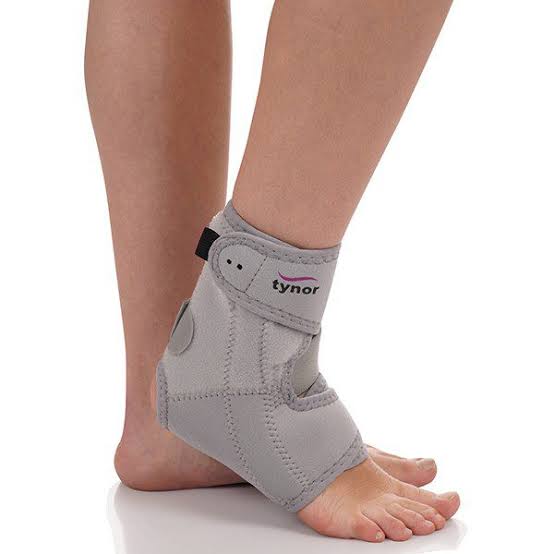
Ankle Brace for Seniors Who Need More Support
An ankle brace is designed to provide physical support around the ankle. Depending on the design, it may limit unwanted movement and provide more stability than a simple sock.
For seniors, this can matter when walking on uneven surfaces or when additional ankle support has been recommended.
Ease of Use
An ankle brace may be fairly simple to put on, but the experience depends heavily on its design.
A basic sleeve-style brace may be easier to handle than a model with multiple straps. Braces with several adjustment points can take more finger strength and coordination.
A good fit matters. A brace that is too loose may not provide enough support, while one that is too tight may be uncomfortable.
Key Strengths
- Provides more direct ankle support
- Can help stabilize the joint
- May be useful when ankle instability is the main concern
- Some designs can be adjusted for a more secure fit
- Does not require the compression level to be selected
Potential Drawbacks
- May feel bulkier than a sock
- Some models can be harder to put on
- May not fit comfortably inside every shoe
- Can restrict movement more than a normal sock
- Different brace designs provide very different levels of support
A brace may be particularly relevant when an injury has caused instability. Bracing is one of the support options used for ankle injuries, although the appropriate type depends on the injury and individual needs.
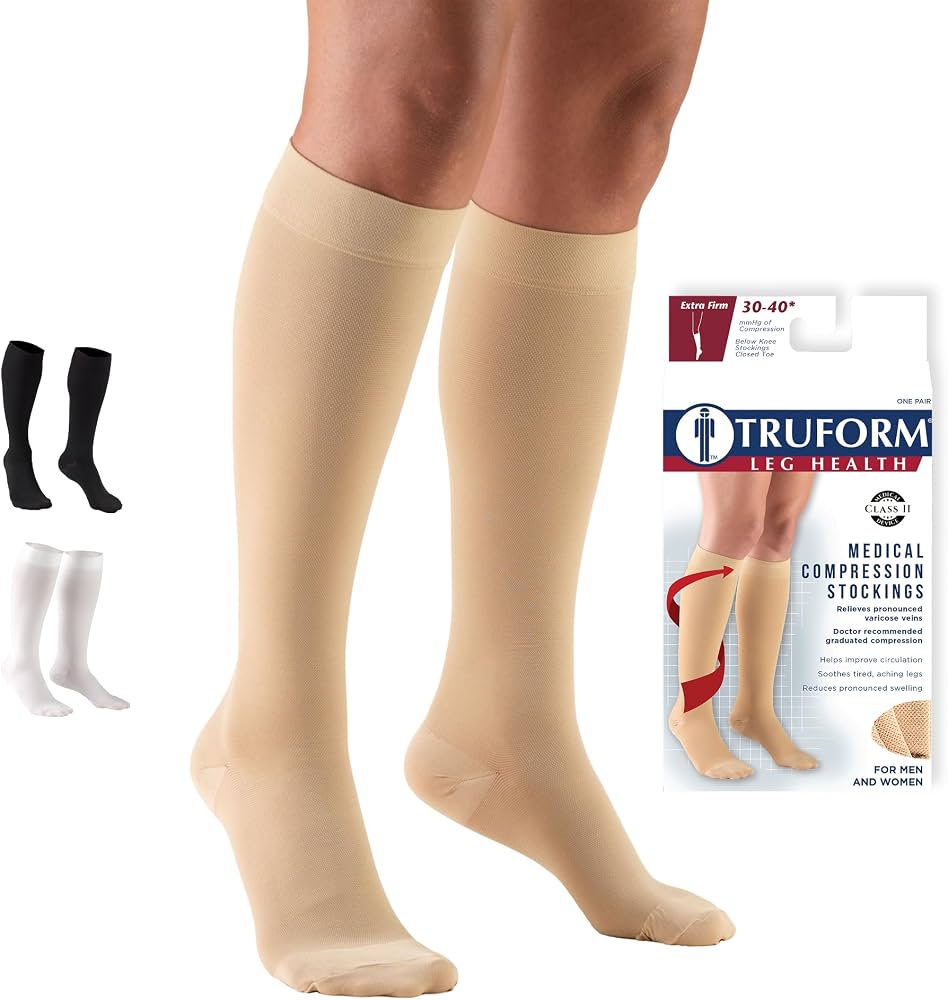
Compression Socks for Everyday Leg Support
Compression socks take a different approach. They use graduated pressure rather than rigid or semi-rigid ankle support.
The greatest pressure is generally around the ankle, with pressure decreasing higher up the leg. This can help encourage venous blood to move back toward the heart.
Ease of Use
Compression socks can look simple, but putting them on may take more effort than expected.
They need to be positioned correctly without bunching or folding. Some seniors may find this difficult if they have limited hand strength or dexterity.
Using gloves or a stocking aid may make application easier. Correct sizing is also important.
Key Strengths
- Lightweight compared with many ankle braces
- Fits more naturally inside shoes
- Provides graduated compression
- Useful for people who need lower-leg compression
- Suitable for everyday wear when correctly selected
Potential Drawbacks
- Can be difficult to put on
- Incorrect sizing can reduce comfort
- Does not provide strong ankle stabilization
- Different compression levels serve different purposes
- May require regular washing and replacement
Compression socks should not simply be treated as ordinary socks when they are being used for a medical reason. The correct size and compression level can matter.
Which Is Easier for Seniors to Use?
There is no universal winner here.
An ankle brace may be easier for someone who needs direct ankle support and can manage its straps or fasteners. A simple brace can also be easier to remove than a tight compression sock.
Compression socks may be easier once they are correctly fitted and the user becomes familiar with the process. However, pulling a tight sock over the heel and lower leg can require considerable hand strength.
For a senior with limited dexterity, application difficulty may be more important than the product’s weight.
The easiest product to use is the one that can be put on correctly without excessive physical effort.
If a compression garment is difficult to apply, an appropriate dressing aid or professional guidance may help.
Performance Comparison
The two products should be judged on different types of performance.
An ankle brace performs mainly through mechanical support. It can help provide stability around the ankle and may be useful when unwanted ankle movement is a concern.
Compression socks perform mainly through graduated pressure. They are intended to support circulation in the lower leg and can help manage swelling in situations where compression is appropriate.
| Performance Area | Ankle Brace | Compression Socks |
|---|---|---|
| Ankle stability | Excellent | Low |
| Lower-leg compression | Low | Excellent |
| Mobility support | Stronger | Limited |
| Lightweight feel | Usually lower | Usually higher |
| Shoe compatibility | Depends on design | Usually good |
| Swelling support | Limited by design | Stronger |
The products therefore should not be judged as if one were simply a better version of the other.
Comfort, Accessibility, and Senior-Friendly Design
Comfort depends heavily on fit.
An ankle brace can feel secure but may be noticeable inside a shoe. A poorly fitted brace may rub against the skin or make footwear feel tight.
Compression socks are usually less bulky, but their tightness can make them uncomfortable if the size or compression level is unsuitable.
For seniors, look for:
- Easy-to-grip straps or openings
- A secure but comfortable fit
- Smooth material around sensitive skin
- Enough room inside the shoe
- Easy removal
- Simple care instructions
Older adults should not be assumed to have the same mobility or dexterity needs. The right choice depends on the individual.
Features Comparison
The most useful features depend on what you need the product to accomplish.
| Feature | Ankle Brace | Compression Socks |
|---|---|---|
| Adjustable support | Often available | Usually limited |
| Compression level | Usually not the main feature | Important |
| Ankle stabilization | Strong | Minimal |
| Foot and leg coverage | Lower | Greater |
| Ease of layering | Depends on design | Generally easy |
| Daily maintenance | Usually simple | Regular washing needed |
With compression socks, fit is especially important. Medical compression garments come in different sizes and pressure levels, so choosing randomly can be a poor approach when the socks are being used for a health-related purpose.
Price, Maintenance, and Long-Term Value
Price varies widely by design, brand, materials, and compression level, so it is difficult to name a single winner on cost.
An ankle brace may cost more initially but can provide useful support for a specific ankle-related need. Compression socks may be easier to buy in multiple pairs, but they are wearable garments that require regular washing and eventual replacement.
| Cost Factor | Ankle Brace | Compression Socks |
|---|---|---|
| Initial cost | Varies widely | Varies widely |
| Replacement | Usually less frequent | More regular |
| Washing | Usually simple | Regular washing required |
| Accessories | Sometimes | Aids may help application |
| Long-term value | Best when support is needed | Best when compression is needed |
Some clinical compression garments are replaced periodically because their compression strength decreases with use. Manufacturer and healthcare instructions should take priority.
Who Should Choose an Ankle Brace?
Choose an ankle brace if:
- Ankle stability is the main concern.
- You need more direct support around the joint.
- A healthcare professional has recommended ankle bracing.
- You want more support than a sock can provide.
- You need a product designed around ankle movement or stability.
A brace makes more sense when the problem is primarily the ankle joint itself.
Who Should Choose Compression Socks?
Choose compression socks if:
- Graduated compression is the main goal.
- You want support around the lower leg rather than strong joint stabilization.
- A healthcare professional has recommended compression.
- You prefer a lightweight product that fits like hosiery.
- You are comfortable with the effort needed to put them on correctly.
Compression therapy can be useful for conditions involving venous circulation and swelling, but it is not appropriate for everyone. Individual circulation, skin condition, mobility, and other factors can affect whether compression is suitable.
Ankle Brace vs Compression Socks — Final Verdict
Best for most seniors: Neither is automatically better.
Best for ankle stability: Ankle brace
Best for graduated compression: Compression socks
Best for shoe-friendly daily wear: Compression socks, when correctly fitted
Best for direct joint support: Ankle brace
The most important question is simple: What type of support do you actually need? If you need ankle stabilization, a compression sock is unlikely to replace a brace. If your goal is appropriate graduated compression, an ankle brace is not a substitute for compression hosiery.
Scoring Summary
Because these products serve different purposes, the scores below reflect their usefulness for each category rather than declaring one product universally superior.
| Category | Ankle Brace | Compression Socks |
|---|---|---|
| Ease of Use | 8/10 | 7/10 |
| Senior-Friendly Design | 8/10 | 8/10 |
| Ankle Support | 10/10 | 3/10 |
| Compression | 3/10 | 10/10 |
| Everyday Comfort | 7/10 | 8/10 |
| Overall Value | 8/10 | 8/10 |
These are category-based editorial scores, not clinical measurements.
How We Evaluate Products
This comparison focuses on practical factors that can affect everyday senior use.
We consider:
- Ease of use
- Accessibility
- Comfort
- Support
- Safety
- Maintenance
- Fit
- Practicality
- Long-term value
No laboratory or hands-on testing is claimed. The comparison is based on the functional differences between the two product categories and available guidance on compression and ankle support.
Senior-Specific Buying Considerations
Physical Effort
Think about how much hand strength is needed to put the product on and remove it.
Compression socks can require significant pulling and positioning. Some ankle braces may require fastening several straps.
Fit
Fit matters with both products.
A brace should feel secure without creating unnecessary pressure. Compression socks should fit correctly and should not bunch or create uncomfortable pressure points.
Maintenance
Compression socks need regular washing and careful handling. Ankle braces are often simpler to clean, but care instructions vary by material.
Storage
Both products are small and easy to store. Keep them somewhere dry and easy to reach.
Safety
Do not assume that compression is suitable for everyone. Some people need assessment of circulation before using medical compression.
If compression causes numbness, significant discomfort, skin changes, or other concerning symptoms, stop and seek appropriate professional advice.
Common Buying Mistakes
- Choosing compression socks when ankle stability is the real need
- Expecting an ankle brace to provide the same function as compression
- Ignoring the effort required to put the product on
- Choosing the wrong size
- Selecting a compression level without considering individual needs
- Buying a bulky brace without checking shoe fit
Safety
Ankle braces and compression socks are not medical treatments for every ankle or leg problem.
If an ankle injury causes significant pain, instability, swelling, or difficulty walking, professional assessment may be appropriate. An ankle brace can be part of care for some injuries, but the right support depends on the injury.
Compression also requires care. People with circulation problems or certain medical conditions may need professional assessment before using compression garments.
Conclusion
Ankle Brace vs Compression Socks is not really a battle between two competing products. They solve different problems. An ankle brace is mainly about stability and joint support, while compression socks are mainly about graduated pressure and lower-leg support.
For seniors, start with the reason for wearing one. If ankle stability is the priority, a brace is the more logical choice. If appropriate compression is the goal, compression socks may be a better fit. The best option is the one that matches the actual need and can be worn correctly and comfortably.
