
Fritz Cane Handle Explained: Benefits and Uses

RMS Deluxe Sock Aid with Foam Handles
Telescopic Grabber Reacher Tool, 5-Level Adjustable Length

Levoit Classic 300S Cool Mist Humidifier
Quick Answer
A Fritz cane handle is a traditional walking cane grip with a relatively flat, gently curved shape that rests across the palm. It is designed to provide a comfortable, secure hold and may reduce concentrated pressure on the hand and wrist for some users, including people with arthritis. Its suitability depends on individual grip comfort, cane fit, and the amount of support needed.
What Is a Fritz Cane Handle?
A Fritz cane handle is a shaped grip attached to the top of a walking cane. Its defining feature is a broad, relatively flat profile with a gentle curve rather than the pronounced hook found on a traditional crook handle.
The handle provides a surface for the palm and fingers to hold while force travels down the cane shaft to its rubber tip. The design is commonly associated with traditional European walking sticks and mobility canes.
Fritz handles are often recommended as an option for people who find narrow or strongly curved grips uncomfortable. Their shape can spread contact across part of the palm, although comfort and pressure distribution vary with the handle’s dimensions and the user’s hand.
The name is associated with Frederick II of Prussia, often called Old Fritz. Historical accounts connect this style with eighteenth-century European walking sticks, although modern Fritz handles vary considerably in shape, materials, and construction.
What Does a Fritz Handle Look Like?
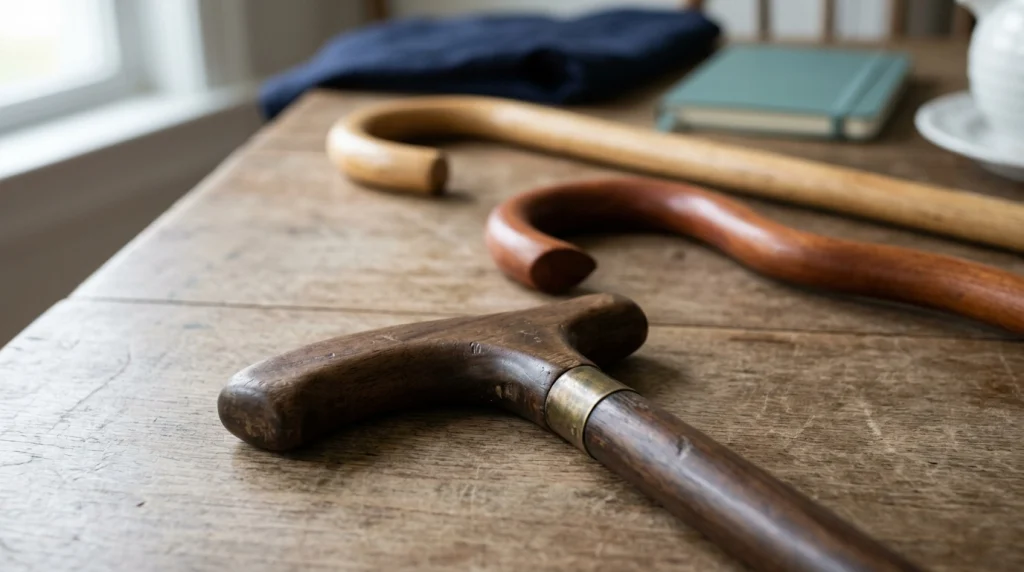
A typical Fritz handle has a fairly level gripping surface, a slight downward or rounded curve at one end, and a connection to the cane shaft near the middle. Viewed from the side, it may resemble a shallow, elongated curve rather than a circular hook.
Its exact appearance depends on the manufacturer. Some handles are slim and tapered, while others have a fuller palm-resting surface or a more pronounced curve.
Common materials include wood, molded plastic, acrylic, and coated materials. The material affects the finish, texture, weight, and feel, but the Fritz name primarily describes the handle’s shape rather than a particular material.
A useful identifying feature is the grip’s relatively flat, supportive profile. However, Fritz and Derby handles can look similar, so their labels are not always enough to determine the exact shape of a particular model.
How Does a Fritz Cane Handle Help?
The main purpose of a Fritz handle is to provide a comfortable gripping surface while allowing the user to transfer appropriate support through the cane. Its potential advantages relate to hand contact, grip position, and everyday handling.
It may reduce concentrated hand pressure
A handle that rests across a broader area of the palm may distribute contact differently from a narrow grip. This can be useful for someone who experiences discomfort when gripping a small or sharply curved handle.
However, a Fritz handle does not eliminate pressure on the hand or guarantee pain relief. Its benefit depends on the shape, size, surface, and the amount of force the user applies while walking.
It can be easier to hold for some users
The relatively flat grip may feel more natural to people who prefer resting their palm over a handle instead of curling their fingers tightly around a hook. This can be particularly relevant when finger movement is uncomfortable.
Still, a broad handle is not automatically the best choice for everyone. People with limited finger movement, small hands, or significant grip weakness may need a different ergonomic design.
It supports ordinary cane handling
A Fritz handle can be used for everyday walking assistance when the cane is appropriate for the person’s mobility needs. It does not, by itself, provide additional ground contact or make a cane suitable for someone who needs substantial weight-bearing support.
The handle is only one part of the mobility aid. The shaft, adjustment mechanism, rubber tip, overall condition, and correct fitting all contribute to safe use.
Who May Benefit From a Fritz Handle?
A Fritz handle may be worth considering if a conventional hooked cane grip feels uncomfortable or concentrates pressure in an unpleasant area of the hand. It can also suit users who prefer a traditional, relatively compact grip.
- People with hand or wrist discomfort: The handle may provide a more comfortable contact area than a narrow grip, depending on the individual.
- People with arthritis: The shape is commonly associated with arthritis-friendly cane designs, but the right choice depends on the location and severity of joint symptoms.
- Everyday cane users: Someone who uses a cane regularly may appreciate a grip that feels comfortable over repeated walking sessions.
- Traditional cane enthusiasts: The classic profile suits users who prefer a conventional walking-stick appearance.
A different handle may be more appropriate if the user needs a specially contoured palm support, has difficulty maintaining a secure grasp, or experiences significant hand pain with ordinary grips.
If walking is unstable or the person needs to lean heavily on the cane, handle preference alone is not enough to determine the right mobility aid. A healthcare professional or physical therapist can assess the required level of support and help with fitting.
Fritz vs. Derby vs. Crook Handles
These three traditional cane handles can look similar at first glance, but their shapes influence how the hand holds them and how conveniently the cane can be carried.
| Handle type | Typical shape | Main consideration |
|---|---|---|
| Fritz | Relatively flat, gently curved grip | May suit users who prefer a broad palm-resting surface |
| Derby | Curved grip with a more pronounced downward end | Offers a familiar grip and may hang conveniently over the forearm |
| Crook | Pronounced J-shaped hook | Can be hooked over the arm or a suitable support when not in use |
The most important difference is the shape of the gripping surface, not a guaranteed difference in stability. All three canes still require appropriate height, a suitable tip, and correct use.
A Fritz handle may be preferable when a broad, flatter grip feels comfortable. A Derby handle may suit someone who likes a more curved grip, while a crook handle may appeal to someone who values its traditional hook. Trying the actual handle is more useful than relying on the name alone.
How Do You Choose the Right Fritz Cane?

Choose a Fritz cane by checking fit, grip comfort, construction, and the amount of support you need. A comfortable handle cannot compensate for a cane that is the wrong height or is not designed for your mobility requirements.
1. Check the handle’s fit in your hand
Hold the cane in the hand you expect to use. Your fingers should rest comfortably around the grip without needing to squeeze excessively, and the handle should not dig painfully into your palm.
Check whether the grip feels too wide, too narrow, slippery, or awkwardly angled. If your hand pain increases during use, another handle shape or size may be more suitable.
2. Confirm the cane’s height
When standing upright with your shoulders relaxed and arms resting naturally at your sides, the handle should generally reach the crease of your wrist. With your hand on the grip, your elbow should remain slightly bent.
The Cleveland Clinic’s cane-fitting and safety guidance explains how correct height and technique affect cane use. Have a healthcare professional help if you are unsure how to measure or adjust your cane.
3. Inspect the shaft and rubber tip
Check that the shaft is straight and undamaged, the handle is secure, and any height-adjustment mechanism locks properly. The rubber tip should fit securely and have enough tread to maintain contact with the floor.
Do not assume that two Fritz canes have the same weight capacity simply because their handles look alike. Check the manufacturer’s rating and instructions for the exact model.
4. Consider materials and maintenance
Wood offers a traditional appearance, while molded or coated handles may provide a different texture or surface feel. Choose a material that is comfortable to hold and easy to maintain rather than selecting solely by appearance.
Inspect the handle, shaft, adjustment points, and rubber tip regularly. If a handle becomes loose, the shaft bends, or the tip is cracked or badly worn, stop relying on the cane until the problem has been addressed.
What Are the Limitations of a Fritz Handle?
A Fritz handle is a grip design, not a special support system. It does not automatically make a cane safer, increase its rated capacity, or provide the wider ground-contact area of a quad cane.
It may also be uncomfortable for users whose hands need a molded, hand-specific grip or a larger surface than the model provides. People with substantial weakness may struggle to maintain a secure hold even when the handle appears ergonomic.
The handle shape does not determine whether a single-point cane is sufficient. Someone who frequently loses balance, cannot use the cane reliably, or needs considerable support may require a different mobility aid.
For more background on the components that affect a cane’s performance, see the existing guide to walking cane shaft construction and design. The handle and shaft must work together as part of a properly fitted device.
Frequently Asked Questions
Is a Fritz handle good for arthritis?
It may be comfortable for some people with arthritis because its shape can provide a relatively broad surface for the palm. However, individual hand symptoms and grip ability vary, so it is not a universal solution.
Can you use a Fritz cane with either hand?
Most conventional Fritz handles are not molded specifically for the left or right hand, so they can generally be held in either hand. Follow the cane’s instructions and get guidance on which side to use if you have an injury or weakness.
Is a Fritz handle better than a Derby handle?
Neither is universally better. A Fritz handle may suit someone who prefers a flatter palm-resting surface, while a Derby handle may feel more comfortable to someone who likes a more curved grip.
Does a Fritz handle provide more stability?
The handle may improve comfort or grip for some users, but it does not automatically provide more balance support. Stability also depends on the cane’s base, fit, condition, and the user’s mobility needs.
Can you replace a walking cane’s handle with a Fritz handle?
Replacement depends on the cane’s construction and whether the manufacturer supports compatible replacement parts. Do not modify a load-bearing cane or attach an unverified handle, because the connection must remain secure during use.
How do you know if a Fritz cane is the wrong fit?
Warning signs include persistent hand pain, difficulty holding the grip securely, a bent wrist, excessive elbow extension, or a cane that feels unstable. Recheck the height and handle comfort, and seek professional fitting help if the problem continues.
Conclusion
A Fritz cane handle is a traditional, relatively flat grip designed to rest comfortably across the palm. Its shape may help some users reduce uncomfortable pressure on the hand and wrist, particularly when a narrow or strongly curved handle is difficult to hold.
The right choice depends on your hand comfort, grip strength, cane height, and required level of walking support. Compare the actual handle shapes rather than relying on product labels, and check that the entire cane is suitable for your needs. If pain, weakness, or balance problems make walking difficult, a professional fitting assessment can help identify a safer and more comfortable option.