
Collapsible Walking Cane Explained: Types & Safety


Toilet Seat Bidet Attachment

Hearing Aid Cleaning Kit

Medical Alert System
Quick Answer
A collapsible walking cane is a mobility aid with a shaft that folds into shorter sections for storage and transport. Most folding models use an internal elastic cord to hold the sections together. Before walking, fully assemble the cane, secure its joints, check its rubber tip, and confirm that its height and support level suit your needs.
What Is a Collapsible Walking Cane?
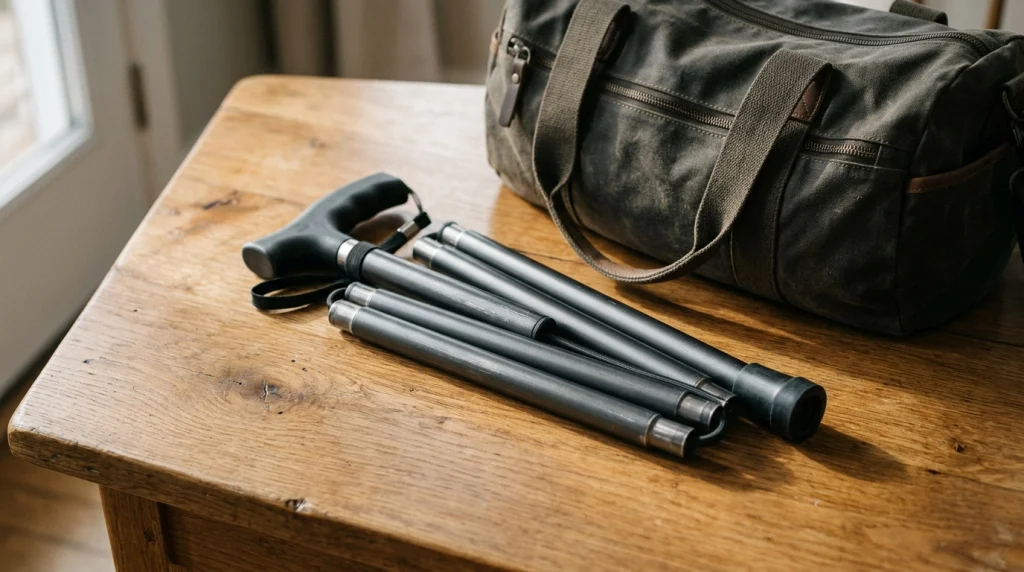
A collapsible walking cane is a walking aid designed to fold into a shorter, more compact shape when it is not being used. Depending on the design, its shaft separates into several connected sections or retracts into itself.
Its main advantage is portability. A folded cane can fit more easily into a bag, suitcase, or storage compartment than a full-length cane. This makes it useful for people who need walking support during certain activities but want to store the cane when sitting, traveling, or moving through a crowded space.
Collapsible does not mean the cane is automatically lighter, stronger, or safer than a fixed cane. Those qualities depend on its materials, construction, locking mechanism, condition, and intended use.
One important distinction: a collapsible support cane is different from a folding white cane designed to help a person with vision loss detect obstacles. A white identification or mobility cane may not be designed to support body weight, so its intended purpose matters.
How Does a Collapsible Walking Cane Work?
Most traditional folding walking canes have several shaft sections connected by an elastic cord running through the center. When the cane is unfolded, the cord draws the sections together and helps them align into a full-length shaft.
Other designs use telescoping tubes, locking collars, or mechanical buttons. These systems may look similar when folded, but their assembly and locking procedures can differ. Always follow the instructions supplied with the specific cane.
Folding sections and elastic cords
On an elastic-cord model, the sections separate when the cane is folded. The cord keeps them connected, making the parts easier to manage and reducing the chance of losing an individual section. When assembled, the joints must fit together securely rather than remain loosely connected.
Telescoping shafts and locking mechanisms
A telescoping cane usually adjusts by sliding one tube inside another. A pin, button, or locking collar secures the selected height. Some canes combine height adjustment with a folding design, so portability and height settings are separate features to check.
A cane is not ready for use simply because it looks straight. Its joints, locking parts, handle, and tip must all be secure.
What Are the Main Types of Collapsible Walking Canes?
The best design depends on how often you use the cane, how much support you need, and how easily you can operate its mechanism.
- Elastic-cord folding cane: Breaks into connected sections and folds compactly for storage. It is useful for travel and occasional support, provided it is assembled correctly before each use.
- Telescoping cane: Retracts into overlapping tubes. It can offer convenient height adjustment, but its locks must be secured and checked according to the manufacturer’s instructions.
- Folding cane with an adjustable shaft: Combines compact storage with height adjustment. Confirm that the usable height range suits your body and that every locking point is secure.
- Collapsible cane with a specialty handle: May feature an ergonomic grip, wrist strap, or other design detail. Choose features based on comfort and function, not appearance alone.
- Multi-point cane: Some canes have three or four feet to provide a wider base of support. A multi-point base is not the same thing as a folding mechanism; check both the base design and the cane’s intended use.
A useful way to compare these designs is to separate portability from stability. A cane that folds into a small package may be convenient to carry, but compact storage alone does not establish that it offers adequate support for your walking needs.
How Do You Open and Check a Collapsible Cane Safely?
Before taking your first step, assemble the cane on a firm, level surface. Do not use it while its sections are partly connected or a locking mechanism remains unsecured.
- Inspect the cane. Look for bent tubes, cracks, damaged elastic cord, loose handles, worn rubber tips, or other visible defects.
- Unfold the shaft. Separate or extend the sections according to the manufacturer’s instructions. Keep fingers clear of the joints to avoid pinching.
- Join every section. Align the connections and push the pieces together until they are fully seated. Do not force a damaged or misaligned joint.
- Secure the lock. If the cane has a push button or locking collar, confirm that it has engaged as instructed. A click alone is not proof that every section is secure.
- Set the height. If the cane is adjustable, use its designated adjustment mechanism and secure the setting before use.
- Check the handle and tip. Make sure the handle does not move unexpectedly and the rubber tip is firmly attached and in usable condition.
- Check the assembled shaft. Confirm that the joints fit tightly and the cane is straight and stable. If anything feels loose, do not lean on it to test whether it will hold.
The manufacturer’s instructions for folding canes emphasize fully joined sections, secure push buttons, intact elastic cords, and a firmly attached tip. These checks matter because a cane that separates or collapses unexpectedly can contribute to a fall.
How Should a Collapsible Cane Fit Your Height?
A collapsible cane must reach the correct height when fully assembled and locked. Folding convenience does not compensate for a poor fit.
For a typical support cane, stand upright as comfortably as possible with your shoulders relaxed and your arms resting at your sides. The top of the handle should generally align with the crease of your wrist. When you grip the handle with the tip on the floor, your elbow should remain slightly bent, usually around 15 to 30 degrees.
These are general fitting guidelines, not a substitute for an individualized assessment. If you have significant balance problems, weakness, pain, or restrictions after surgery, ask a physical therapist or other qualified healthcare professional to help choose and fit the appropriate aid.
Check the cane’s adjustment range before choosing it. A model that folds neatly but cannot be set to a suitable walking height is not an appropriate match.
For additional fitting and walking guidance, see the Mayo Clinic’s advice on choosing and using canes.
What Are the Safety Limits of a Folding Walking Cane?
A standard single-point cane provides an additional point of support and can help with balance or reduce some pressure on a painful or weak leg. It is not designed to replace a walker or another aid when a person needs substantial support.
Check the manufacturer’s maximum user weight and intended-use instructions. Do not assume that every collapsible cane can support full body weight, tolerate the same loading, or work on every surface.
- Loose joints: Do not use a cane if sections do not stay securely connected or the locking mechanism will not engage.
- Damaged cord: Stop using an elastic-cord model if the cord is frayed, cut, or no longer holds the sections together properly.
- Worn or loose tip: Replace a worn tip with a compatible part. A loose or damaged tip can reduce reliable contact with the ground.
- Slippery or unstable ground: Wet floors, ice, loose gravel, and very soft ground can make safe footing difficult. A conventional cane tip may not provide adequate traction in these conditions.
- Insufficient support: If you need to put substantial weight through your arms to remain upright, a single-point cane may not provide enough support.
Never press the tip against the floor with your foot while lifting the handle to force a folding cane apart. This can cause the sections to separate unexpectedly. Follow the specified folding procedure instead.
If the cane suddenly feels unstable, makes an unusual movement at a joint, or develops a loose handle, stop using it until the problem has been resolved. Do not try to compensate for a defective mechanism by gripping harder or leaning less.
How Do You Maintain and Store a Collapsible Cane?
Routine inspection helps identify wear before it interferes with use. Check the cane before walking, especially if it has been stored for a long time or carried in luggage.
- Wipe the shaft and handle clean with a method approved by the manufacturer.
- Keep the folding joints free of dirt that could prevent proper alignment.
- Inspect the elastic cord, locking buttons, collars, handle, wrist strap, and rubber tip.
- Replace worn or damaged components only with compatible parts.
- Fold the cane using its intended procedure and store it where it will not be bent, crushed, or exposed to conditions prohibited by the manufacturer.
Do not stretch the internal cord more than necessary or pull the cane apart aggressively. If the sections no longer remain properly aligned, the cord is damaged, or a lock repeatedly fails, seek guidance from the manufacturer or supplier rather than relying on a temporary workaround.
When Is a Collapsible Cane Not the Right Choice?
A folding cane is most useful when its compact storage is valuable and the user needs the level of support that the particular model provides. It may be a poor choice if its joints are difficult to operate, its height range is unsuitable, or the user cannot reliably assemble and inspect it.
Consider another aid when balance is significantly impaired, both arms are needed for support, or walking requires more assistance than a cane can provide. A walker or another mobility aid may offer a more suitable support base, depending on the person’s needs.
Hand strength and dexterity also matter. If arthritis or limited finger movement makes the folding mechanism difficult to operate, choose a design that can be handled safely or ask a healthcare professional to recommend a more appropriate option.
For guidance on choosing a support level, the Cleveland Clinic’s guide to cane types, fitting, and use explains the differences between single-point and multi-point designs. The right choice depends on the user’s mobility needs, not simply on whether the cane folds.
Related Product
Folding Walking Cane
Compare folding canes by usable height range, handle comfort, locking design, tip condition, and stated weight capacity before choosing one.
As an Amazon Associate, we earn from qualifying purchases.
Frequently Asked Questions

Are collapsible walking canes as strong as regular canes?
Strength depends on the design, materials, joints, and rated capacity. A properly assembled folding cane may be suitable for its intended use, but folding joints introduce components that must remain secure. Compare the manufacturer’s specifications rather than assuming all canes are equally strong.
Can you leave a collapsible cane open all the time?
Yes, if the manufacturer permits it and the cane is stored safely. Keeping it assembled may reduce repeated folding, but it still needs inspection before use and should not be left where someone could trip over it.
Do all folding walking canes adjust to different heights?
No. Some fold into sections but have a fixed usable length, while others include a separate height-adjustment mechanism. Check the specified height range and locking instructions before selecting a cane.
How often should you check a collapsible walking cane?
Inspect it before each use for loose joints, damaged cords, a moving handle, and a worn or loose tip. Follow the manufacturer’s maintenance schedule for replacement parts, and stop using the cane if a safety-critical component is damaged.
Can a collapsible cane support your full body weight?
Do not assume that it can. Many conventional walking canes are intended to assist balance or provide limited support rather than carry full body weight. Follow the stated capacity and seek professional guidance if you need substantial weight-bearing support.
What should you do if a folding cane will not lock securely?
Do not walk with it. Check the manufacturer’s assembly instructions for the correct alignment and locking procedure. If the mechanism still fails, or any part appears damaged, contact the supplier or manufacturer and use an appropriate alternative aid until the problem is resolved.
Conclusion
A collapsible walking cane combines walking support with convenient storage, but its usefulness depends on correct fit, secure assembly, and the right level of support. Before every use, check the joints, locking mechanism, handle, and rubber tip. Never walk with a cane that will not lock securely or has damaged components.
Choose a model that suits your height, hand strength, and mobility needs. If you are unsure whether a cane provides enough stability, ask a qualified healthcare professional to help you select and fit the appropriate walking aid.