
Hybrid vs Memory Foam Mattress for Seniors: Which?


Heated Blanket

Memory Foam Seat Cushion

Lap Desk for Reading
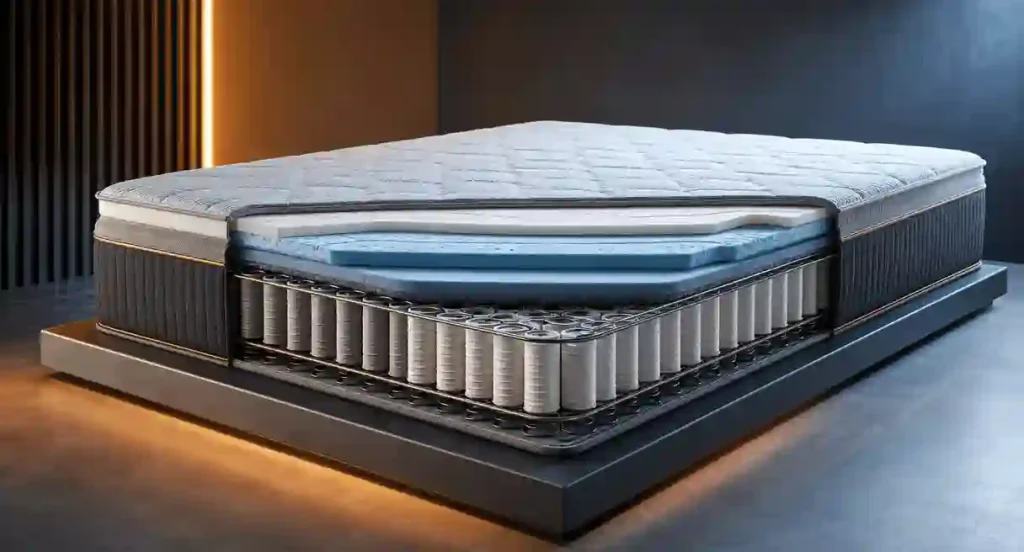
A Hybrid vs Memory Foam Mattress comparison can help seniors choose a bed that fits their sleep style and daily needs. The main difference is simple. A hybrid mattress uses coils with foam, while a memory foam mattress uses foam as its main support system.
Both can offer good comfort. The better choice depends on what matters most. Some sleepers may prefer the gentle feel of memory foam. Others may like the firmer edge support, airflow, and bounce of a hybrid.
Quick Comparison
A hybrid mattress may suit seniors who want easier movement, stronger edge support, and more airflow. A memory foam mattress may suit sleepers who want a softer, more body-hugging feel and less motion transfer.
There is no single winner for every senior. The right choice depends on comfort, mobility, sleeping position, room temperature, and budget.
Hybrid vs Memory Foam Mattress At a Glance
Here is a simple view of the main differences.
| Feature | Hybrid Mattress | Memory Foam Mattress |
|---|---|---|
| Support | Coils plus foam | Foam layers |
| Feel | Responsive and balanced | Contouring and slow response |
| Edge Support | Usually stronger | Often softer |
| Airflow | Usually better | Can retain more heat |
| Motion Transfer | Good | Usually excellent |
| Ease of Movement | Usually easier | May feel slower |
| Pressure Relief | Good | Usually very good |
| Bounce | More | Little to none |
| Weight | Often heavier | Often lighter |
| Best For | Support and movement | Contouring comfort |
Hybrid Mattress Review for Senior Sleepers
A hybrid mattress combines a coil support system with one or more foam layers. The foam adds cushioning, while the coils provide support and response.
For seniors, this design can offer a useful balance. It can feel supportive without feeling as firm as a traditional spring mattress.
Ease of Use
A hybrid mattress usually has more bounce than memory foam. This can make changing sleep positions easier.
Getting in and out of bed may also feel more natural because the surface can respond faster when you move.
Still, hybrid mattresses vary. Some have soft comfort layers that reduce the responsive feel.
Key Strengths
- Good balance of support and cushioning
- Easier movement for many sleepers
- Usually better airflow
- Often stronger edge support
- More responsive when changing positions
- Many firmness choices are available
Potential Drawbacks
- Can be heavy to move
- Some models may feel too firm
- Coils can transfer more movement than dense foam
- Quality can vary by model
- Thicker designs may need more effort to rotate or move
A hybrid is often a good middle ground for sleepers who want both cushioning and support.
Memory Foam Mattress Review for Senior Sleepers
A memory foam mattress uses foam to create a close, cushioned feel. The material can mold around the body when pressure is applied.
This design can feel soft and stable. It also tends to limit movement across the mattress.
Ease of Use
Memory foam can feel very comfortable once you are lying down. But its slower response may make movement harder for some sleepers.
If you often change positions, you may prefer a more responsive surface. If you stay in one position for longer periods, the contouring feel may be more appealing.
Key Strengths
- Strong motion isolation
- Deep, cushioned feel
- Good pressure distribution
- Quiet during movement
- No coil bounce
- Many firmness options are available
Potential Drawbacks
- Some models can retain heat
- Slow response may make movement harder
- Edge support can be weaker
- Some sleepers may feel too deeply surrounded
- Foam quality differs between models
Which Is Easier for Seniors to Use?
Ease of use depends on how you move in bed. A senior who changes position often may prefer the responsive feel of a hybrid.
A memory foam mattress can be a better fit for someone who likes a stable surface and does not move much during sleep.
| Senior Need | Hybrid Mattress | Memory Foam Mattress |
|---|---|---|
| Easy position changes | Usually better | May require more effort |
| Getting up | Responsive surface can help | May feel slower |
| Stable feel | Good | Very good |
| Motion isolation | Good | Excellent |
| Edge support | Usually better | Model dependent |
| Quiet sleep | Good | Excellent |
The mattress height also matters. A bed that is too low or too high can make getting in and out more difficult.
Performance Comparison
Both mattress types can provide good support. Their feel is different because they use different support systems.
Hybrid mattresses use coils to add spring and response. Memory foam relies more on foam density and layer design.
| Performance Area | Hybrid Mattress | Memory Foam Mattress |
|---|---|---|
| Responsiveness | High | Low to moderate |
| Pressure relief | Good to very good | Very good |
| Temperature control | Usually better | Model dependent |
| Motion control | Good | Excellent |
| Edge support | Usually stronger | Often weaker |
| Bounce | Yes | Very little |
A hybrid may have an advantage for sleepers who want easier movement. Memory foam may have an advantage for sleepers who want a calmer, more stable sleep surface.
Comfort, Accessibility, and Senior-Friendly Design
Comfort is personal. A mattress that feels supportive to one sleeper may feel too firm or too soft to another.
For seniors, the most useful features are often simple ones. Easy movement, suitable firmness, stable edges, and a comfortable sleeping height can matter more than extra features.
A hybrid can feel easier to move on because the coils respond quickly. Memory foam can feel more secure because it reduces movement across the surface.
Neither design is automatically more accessible. The mattress firmness, thickness, height, and edge design should all be checked.
Features Comparison
The two mattress types differ most in their support and surface feel.
| Feature | Hybrid Mattress | Memory Foam Mattress |
|---|---|---|
| Support system | Coils and foam | Foam |
| Surface response | Faster | Slower |
| Body contouring | Moderate to high | High |
| Air movement | Usually better | Can be lower |
| Edge support | Often stronger | Varies |
| Noise | Usually low | Very low |
When choosing a specific mattress, check its actual construction. Not every hybrid or memory foam mattress feels the same.
Price, Maintenance, and Long-Term Value
Price depends on mattress size, materials, thickness, brand, and construction. A hybrid is not always more expensive, and a memory foam mattress is not always cheaper.
Maintenance is fairly simple for both. Use a suitable bed frame, follow the manufacturer’s care instructions, and keep the mattress clean and dry.
| Cost Factor | Hybrid Mattress | Memory Foam Mattress |
|---|---|---|
| Initial cost | Varies widely | Varies widely |
| Moving | Often heavier | Often easier |
| Maintenance | Low | Low |
| Replacement parts | Usually none | Usually none |
| Long-term value | Depends on build quality | Depends on foam quality |
Value should be based on fit, comfort, support, and expected use rather than price alone.
Who Should Choose a Hybrid Mattress?
Choose a hybrid mattress if:
- You want easier movement on the bed.
- You prefer a responsive surface.
- Strong edge support matters to you.
- You tend to sleep warm.
- You like a mix of foam and spring support.
- You change sleeping positions often.
- You want some bounce without a traditional spring-only feel.
Who Should Choose a Memory Foam Mattress?
Choose a memory foam mattress if:
- You prefer a close, cushioned feel.
- Motion transfer is a major concern.
- You like a quieter sleep surface.
- You want strong contouring.
- You prefer less bounce.
- You usually stay in one position for longer periods.
- You want a mattress that feels stable around the body.
Hybrid vs Memory Foam Mattress — Final Verdict
A hybrid mattress is a strong choice for seniors who value movement, edge support, airflow, and a responsive feel. Its coil-and-foam design offers a useful balance of support and cushioning.
A memory foam mattress may be better for seniors who prefer deep contouring, low motion transfer, and a stable surface. It can feel more enveloping, but some sleepers may find it harder to move on.
The key is not simply choosing between coils and foam. Check the mattress height, firmness, edge support, comfort layer, and overall feel before buying.
Scoring Summary
Scores are best treated as general category guidance, not laboratory measurements. Individual mattress models can differ.
| Category | Hybrid Mattress | Memory Foam Mattress |
|---|---|---|
| Ease of Use | 9/10 | 8/10 |
| Senior-Friendly Design | 9/10 | 8/10 |
| Performance | 9/10 | 9/10 |
| Maintenance | 8/10 | 8/10 |
| Value | 8/10 | 8/10 |
How We Evaluate Products
This comparison focuses on practical factors that can affect everyday use.
We consider:
- Ease of movement
- Comfort
- Support
- Edge stability
- Temperature control
- Motion isolation
- Maintenance
- Setup and handling
- Long-term practicality
- Overall value
The comparison does not claim hands-on testing or laboratory results.
Senior-Specific Buying Considerations
A few details deserve extra attention before choosing a mattress.
Physical Effort
Consider how easy it is to change position and get out of bed. A highly conforming mattress may feel harder to move on.
Firmness
Do not assume that softer always means more comfortable. The right firmness depends on personal preference and sleeping position.
Mattress Height
Check the total height of the mattress and bed frame together. The finished bed should be comfortable to get into and out of.
Edge Support
If you sit on the edge while dressing or getting up, strong edge support can be useful.
Temperature
If you tend to sleep warm, compare the mattress materials and airflow design before buying.
Setup
Mattresses can be heavy, especially larger hybrids. Make sure there is enough help available for setup when needed.
Common Buying Mistakes
Avoid these common mistakes when comparing hybrid and memory foam mattresses:
- Choosing only by price
- Ignoring mattress height
- Picking firmness without considering sleep position
- Assuming every hybrid feels the same
- Assuming every memory foam mattress sleeps hot
- Ignoring edge support
- Forgetting how the mattress will be moved or installed
- Focusing on brand names instead of actual construction
Safety
A mattress should sit on a suitable, stable base that supports its design. Follow the manufacturer’s instructions for the mattress and bed frame.
For seniors with significant mobility or safety concerns, mattress choice can be part of a wider bedroom setup. Bed height, surrounding space, lighting, and support equipment may also matter.
If a mattress choice relates to a specific medical condition or mobility concern, professional guidance can help determine what setup is appropriate.
Conclusion
The Hybrid vs Memory Foam Mattress choice comes down to feel and daily use. Hybrid mattresses tend to offer more response, airflow, and edge support. Memory foam mattresses tend to offer deeper contouring and stronger motion isolation.
For seniors, the best choice is the one that matches their movement needs, comfort preference, sleeping style, and bedroom setup. Check the actual mattress construction rather than relying only on the mattress type or brand name.
