
Latex vs Innerspring Mattress: Which?


Orthopedic Sandals

Bathtub Grab Bar

Medical Alert System
Latex vs Innerspring Mattress is a useful comparison for seniors who want a bed that feels supportive, comfortable, and easy to manage. Both types can work well, but they feel very different.
Latex gives a more solid, springy feel. Innerspring mattresses give more bounce and airflow. The better choice depends on sleep feel, ease of movement, weight, comfort needs, and budget.
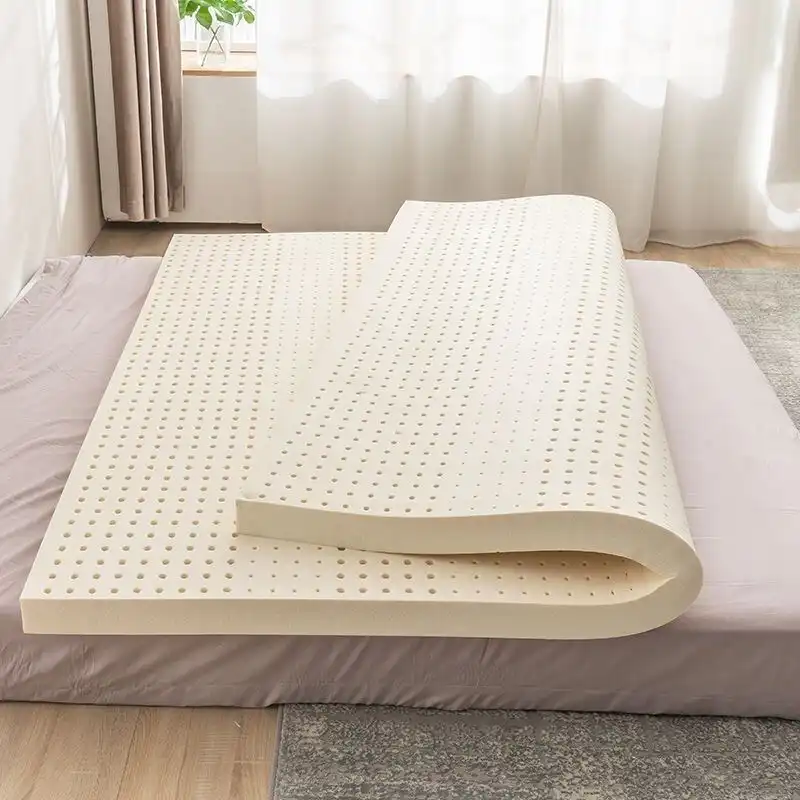
Quick Comparison
For many seniors, latex is a good choice when comfort, pressure relief, and steady support matter most. It also has little motion transfer compared with many traditional innerspring designs.
Innerspring may suit seniors who prefer a firmer, bouncier bed with good airflow. It can also be easier to find at lower prices.
The main difference is simple: latex feels more dense and responsive, while innerspring feels more open and springy.
The right mattress is not the one with the most features. It is the one that fits the sleeper.
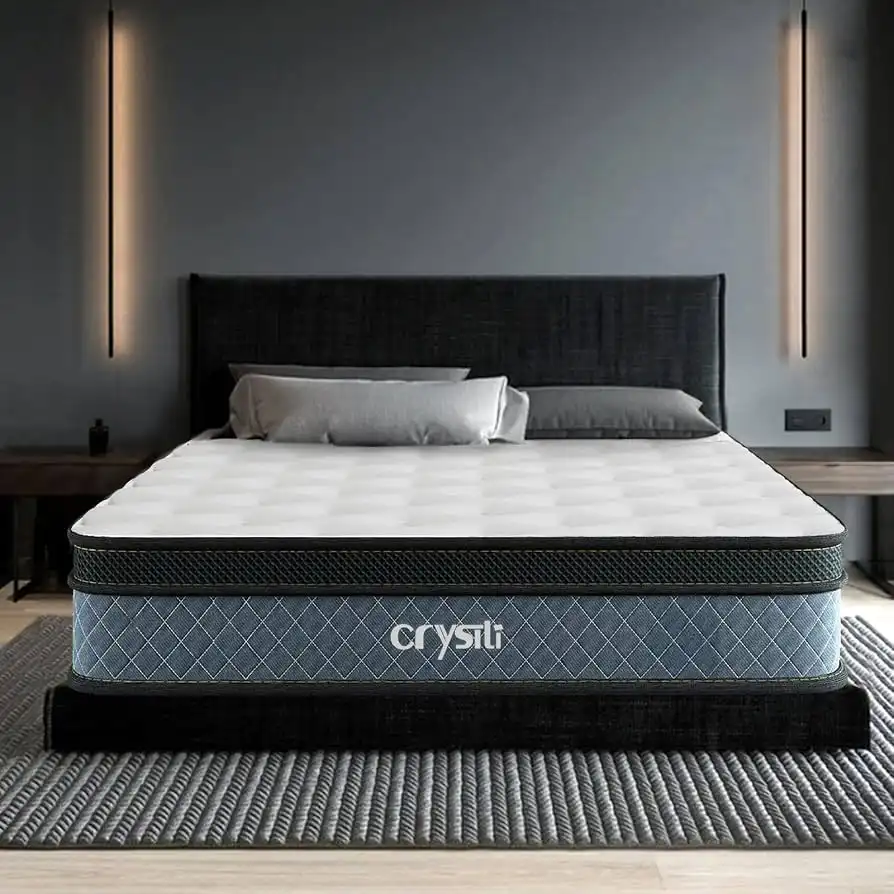
Latex vs Innerspring At a Glance
Both mattress types can provide good support. The table below shows the main differences that may matter to older adults.
| Feature | Latex Mattress | Innerspring Mattress |
|---|---|---|
| Feel | Firm and springy | Bouncy and responsive |
| Support | Even and steady | Strong edge and core support |
| Pressure Relief | Usually very good | Depends on comfort layer |
| Airflow | Good | Usually very good |
| Motion Transfer | Low to moderate | Moderate to high |
| Ease of Movement | Good | Very good |
| Durability | Usually high | Varies by design |
| Weight | Often heavy | Usually lighter |
| Maintenance | Low | Low |
| Price | Often higher | Wide price range |
Latex Mattress for Senior Sleepers
Latex mattresses have a springy feel without the strong bounce of traditional coils. They can give steady support across the body.
For seniors who want a stable sleep surface, latex can be a useful option.
Ease of Use
Latex responds quickly when you move. This can make changing positions easier than with some slow-response foam beds.
The surface also tends to keep its shape well. There is less of a deep sinking feeling.
However, latex mattresses can be heavy. Moving or turning one may require help.
Key Strengths
- Good pressure relief
- Even support
- Easy position changes
- Good durability
- Low motion transfer
- Quiet during movement
- Good balance of softness and support
Potential Drawbacks
- Often heavier than other mattress types
- Can cost more
- Some sleepers may find it too firm
- Natural latex can have a distinct feel
- Moving the mattress may be difficult alone
Innerspring Mattress for Senior Sleepers
Innerspring mattresses use metal coils for support. They have been used for many years and come in many designs.
Some have a thin comfort layer. Others use foam or other materials over the coils.
Ease of Use
Innerspring mattresses usually make it easy to change positions. The coils respond quickly when you move.
This can help seniors who dislike the feeling of sinking into a mattress.
The main drawback is that some models transfer more movement across the bed. This may matter when two people share a mattress.
Key Strengths
- Easy to move on
- Good airflow
- Strong bounce
- Many price options
- Familiar mattress feel
- Good edge support on some models
Potential Drawbacks
- More motion transfer on some models
- Coil noise may occur
- Pressure relief varies
- Quality differs widely
- Some models may feel too firm
Which Is Easier for Seniors to Use?
Ease of use depends more on the mattress feel than its material name.
Latex gives quick response and steady support. This can help when turning or getting into a new position.
Innerspring also responds quickly. Its extra bounce may make movement feel even easier for some sleepers.
For a senior who dislikes sinking, either option can work well.
For a senior who shares a bed and is sensitive to movement, latex may offer a calmer surface.
Performance Comparison
Performance can change from one mattress model to another. Still, the basic designs have clear differences.
Latex tends to provide balanced support across the sleep surface. It also offers good pressure relief without a deep sinking feel.
Innerspring mattresses rely on coils for their main support. Their performance depends on coil design and the comfort layers placed above them.
| Performance Area | Latex | Innerspring |
|---|---|---|
| Support | Even and stable | Strong and responsive |
| Pressure Relief | Very good | Depends on comfort layer |
| Movement | Easy | Very easy |
| Bounce | Moderate | High |
| Airflow | Good | Excellent on many designs |
| Motion Isolation | Usually better | Often lower |
Comfort, Accessibility, and Senior-Friendly Design
Comfort is personal. A mattress that feels soft to one person may feel too firm to another.
Latex can suit sleepers who want a supportive surface with some cushion. It does not usually create the deep hug found with some memory foam beds.
Innerspring may feel more familiar. Its bounce can also make position changes feel natural.
For seniors, check these practical points:
- Can you turn without much effort?
- Can you sit on the edge comfortably?
- Does the surface feel stable?
- Is the mattress too soft or too firm?
- Can you get in and out without struggling?
A mattress should support easy daily movement, not just feel good for a few minutes in a showroom.
Features Comparison
The useful features depend on the exact mattress. Still, these general differences can help narrow the choice.
| Feature | Latex | Innerspring |
|---|---|---|
| Surface Response | Quick | Very quick |
| Bounce | Moderate | High |
| Motion Control | Usually better | Varies |
| Edge Support | Good on many models | Often strong |
| Heat Control | Good | Usually excellent |
| Noise | Usually quiet | May produce some noise |
| Material Options | Natural or synthetic | Many coil designs |
Price, Maintenance, and Long-Term Value
Price can vary greatly for both types. A basic innerspring mattress may cost less than a high-quality latex model.
Latex can have a higher starting price, but its durability may make the long-term value attractive.
Innerspring offers more price choices. This makes it easier to find a basic mattress on a tighter budget.
Neither type usually needs complicated daily maintenance.
| Cost Factor | Latex | Innerspring |
|---|---|---|
| Initial Cost | Often higher | Low to high |
| Maintenance | Low | Low |
| Replacement Parts | Usually none | Usually none |
| Moving | Can be difficult | Often easier |
| Long-Term Value | Strong when durable | Depends on quality |
Who Should Choose a Latex Mattress?
Latex may be a good fit if:
- You want steady support.
- You dislike deep sinking.
- You want good pressure relief.
- You share a bed and want less movement.
- You prefer a quiet mattress.
- You want a durable mattress.
- You do not mind a heavier mattress.
Who Should Choose an Innerspring Mattress?
An innerspring mattress may be a better fit if:
- You like a bouncy feel.
- You want strong airflow.
- You prefer easy movement.
- You want many price options.
- You prefer a familiar mattress feel.
- You want a mattress that is often easier to move.
- You sleep hot and value an open feel.
Latex vs Innerspring Mattress — Final Verdict
Latex and innerspring mattresses can both work well for seniors, but they solve different needs.
Latex is a strong choice for steady support, pressure relief, quiet sleep, and lower motion transfer. Innerspring is useful for seniors who want bounce, airflow, easy movement, and more price choices.
| Category | Better Fit |
|---|---|
| Pressure Relief | Latex |
| Easy Movement | Innerspring |
| Motion Control | Latex |
| Airflow | Innerspring |
| Quietness | Latex |
| Budget Options | Innerspring |
| Durability | Latex |
| Bounce | Innerspring |
Scoring Summary
These scores are broad comparisons of the mattress types, not ratings of individual brands or models.
| Category | Latex | Innerspring |
|---|---|---|
| Ease of Use | 9/10 | 9/10 |
| Senior-Friendly Design | 9/10 | 8/10 |
| Comfort | 9/10 | 8/10 |
| Performance | 9/10 | 8/10 |
| Maintenance | 9/10 | 9/10 |
| Value | 8/10 | 9/10 |
The exact result can change with the model. A well-made innerspring can outperform a poor latex mattress, and the reverse can also be true.
How We Evaluate Products
We compare mattress types using factors that can affect everyday senior use.
The main areas include:
- Ease of movement
- Comfort
- Support
- Pressure relief
- Motion control
- Airflow
- Maintenance
- Durability
- Price and value
- Practical everyday use
The comparison does not assume hands-on testing or laboratory testing.
Senior-Specific Buying Considerations
A mattress should work well with the sleeper’s daily routine. These checks can help before buying.
Physical Effort
Think about how easy it is to turn, sit, and get out of bed.
A very soft mattress may make movement harder for some people. A very firm mattress may feel uncomfortable for others.
Controls
Mattresses do not have complex controls unless they are adjustable models. If the mattress is going on an adjustable base, make sure the mattress is compatible with that base.
Maintenance
Check whether the mattress needs rotation or other care. Also consider how easy it will be to clean the surrounding bed area.
Storage
Mattresses are large items. Make sure the bedroom has enough space for delivery and setup.
Setup
Latex mattresses can be heavy. If help is needed to move the mattress, plan for that before delivery.
Safety
A mattress should sit securely on a suitable bed frame or foundation.
Also check the bed height. A mattress that makes the bed too high or too low may make getting in and out less comfortable.
Common Buying Mistakes
Avoid these mistakes when choosing between latex and innerspring.
- Choosing only by price
- Ignoring mattress firmness
- Forgetting to check bed height
- Assuming every latex mattress feels the same
- Assuming every innerspring mattress has strong support
- Ignoring the return policy
- Buying without checking the foundation
- Forgetting how heavy the mattress will be to move
Conclusion
Latex vs Innerspring Mattress comes down to feel, support, movement, airflow, and value. Latex offers steady support, good pressure relief, quiet operation, and strong durability. Innerspring offers bounce, airflow, easy movement, and a wider range of prices.
For seniors, the best choice is the mattress that makes everyday sleep and movement comfortable. Focus on firmness, support, bed height, movement, and the needs of the person using it rather than choosing by material alone.
