
Electric Bed vs Adjustable Bed for Seniors: Which?


Motion Sensor Night Lights

Automatic Can Opener

Cane with LED Light
Electric Bed vs Adjustable Bed can sound like a comparison between two different types of beds. In most home-use cases, they are actually two names for the same basic idea: a motorized bed base that lets you change the position of the mattress. Current buying guides also commonly describe adjustable beds as electric beds.
For seniors, the more useful question is not which name is better. It is what the bed can adjust, how easy the controls are to use, whether the mattress is compatible, and whether features such as height adjustment are actually included.
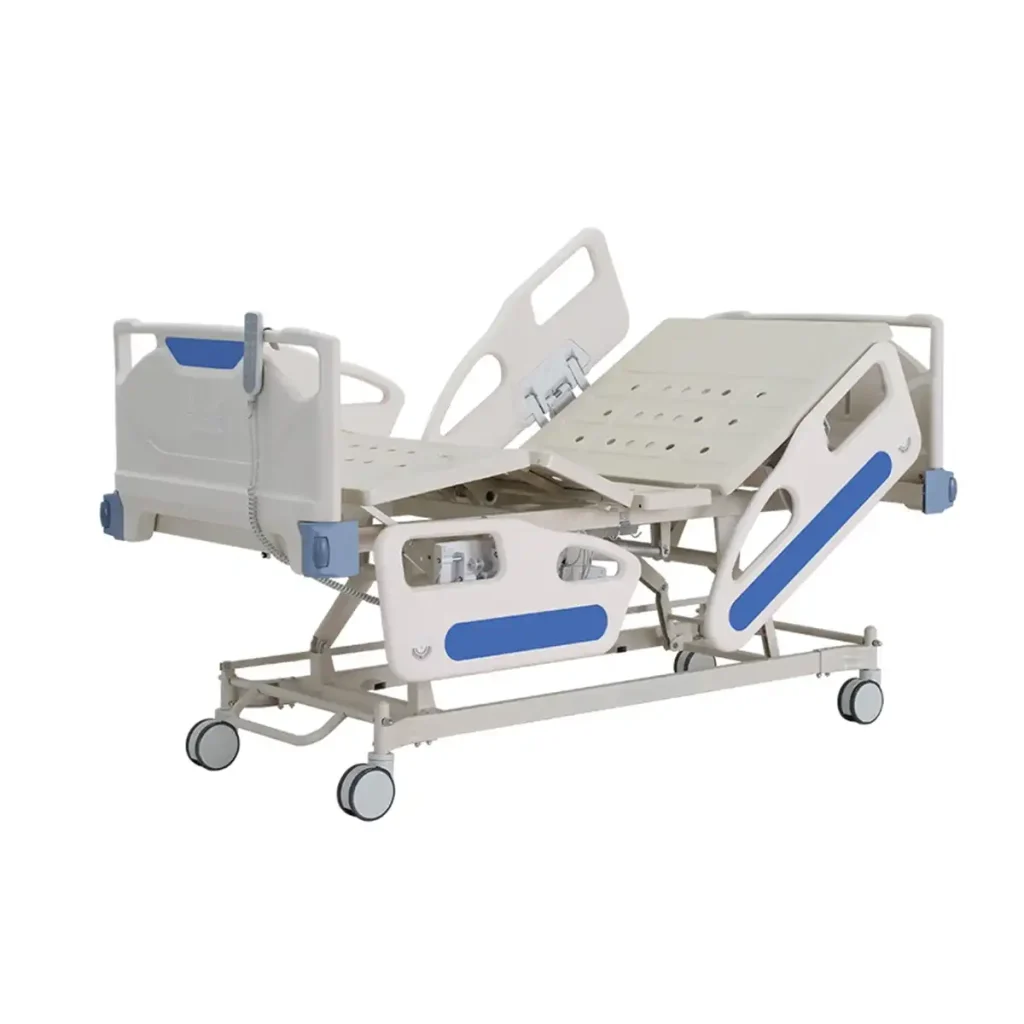
Electric Bed vs Adjustable Bed at a Glance
There is usually no clear winner between the two names. A standard electric bed and a standard adjustable bed can offer the same head and leg adjustment.
The important difference is usually the features and design of the specific model, not whether the product is called electric or adjustable.
| Feature | Electric Bed | Adjustable Bed |
|---|---|---|
| Electric motor | Usually | Usually |
| Head adjustment | Usually | Usually |
| Leg adjustment | Often | Often |
| Remote control | Common | Common |
| Preset positions | Model dependent | Model dependent |
| Massage | Model dependent | Model dependent |
| Split design | Available on some models | Available on some models |
| Whole-bed height adjustment | Model dependent | Model dependent |
The exact feature set varies by model. Some beds add massage, USB ports, memory settings, app control, or under-bed lighting, while others focus only on basic positioning.
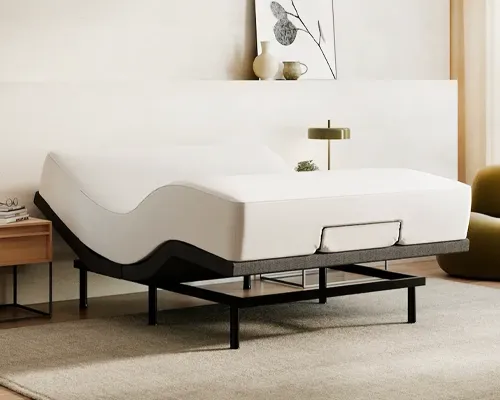
Electric Bed Review for Senior Use
An electric bed is usually a motorized sleep system controlled by a remote. The main benefit is simple: the sleeper can change the position of the bed without manually lifting or repositioning the mattress.
Ease of Use
For many seniors, electric controls can be easier than a manual adjustment system. A remote lets the user raise or lower the head and legs while remaining in bed.
Useful controls may include:
- Large, clearly marked buttons
- Head and foot adjustment
- One-touch preset positions
- Memory settings
- Wireless remote control
- Simple up and down controls
The exact control layout matters. A remote with many buttons may offer more functions but can also take longer to learn.
Key Strengths
- Easy motorized positioning
- Useful for reading or watching TV in bed
- Less physical effort than manual adjustment
- Some models offer preset positions
- Split versions can allow separate adjustment for couples
Potential Drawbacks
- Requires electrical power
- Motors and electronics can need service
- The base may be heavy
- Some models have complicated remotes
- Not every mattress works with every base
Electric adjustable bases are also often heavier and harder to move than standard bed frames.
Adjustable Bed Review for Senior Use
An adjustable bed is commonly the same type of motorized sleep system. The name focuses on the bed’s ability to change position rather than simply highlighting its electric motor.
Ease of Use
A typical adjustable bed can raise the upper body and lower the legs. This can make it easier to find a comfortable position for sleeping, reading, or relaxing.
Some models include wireless remotes, memory positions, massage, USB ports, or smartphone controls. These extras are not standard on every model.
Key Strengths
- Adjustable sleeping positions
- Easy remote operation on many models
- Options for head and leg elevation
- Split models can support different positions for each sleeper
- Some models offer advanced comfort features
Potential Drawbacks
- Higher cost than a basic fixed bed
- Heavy base on many models
- Mattress compatibility must be checked
- More features can mean more complicated controls
- Whole-bed height adjustment is not included on every model
Which Is Easier for Seniors to Use?
When comparing electric bed vs adjustable bed, neither name gives one product an automatic advantage. If both products use similar motorized bases, their ease of use will be similar.
Instead, look closely at the controls.
A senior who wants simple operation may prefer a remote with only the main functions. Someone who wants massage, memory positions, app control, and other features may prefer a more advanced model.
For senior-friendly use, a simple control system can be more useful than a long list of extra features.
Whole-bed height adjustment deserves special attention. Raising the head or legs is not the same as raising the entire bed. Some adjustable beds have height adjustment, while standard models may only change the sleeping angle.
Performance Comparison
Since electric bed and adjustable bed often describe the same basic technology, performance depends mainly on the individual model.
A useful comparison should include:
| Performance Area | Electric Bed | Adjustable Bed |
|---|---|---|
| Head movement | Model dependent | Model dependent |
| Foot movement | Model dependent | Model dependent |
| Motor operation | Electric | Electric |
| Position presets | Some models | Some models |
| Height adjustment | Not universal | Not universal |
| Split adjustment | Some models | Some models |
For a senior buyer, the useful question is how smoothly and simply the bed changes position. Motor power, adjustment range, remote design, and weight capacity can vary by model.
Do not assume that the word “electric” means the whole bed rises and falls. In many consumer models, electric movement refers mainly to the head and foot sections. Whole-bed height adjustment is a separate feature.
Comfort, Accessibility, and Senior-Friendly Design
Comfort is one of the main reasons people choose an adjustable bed. Raising the upper body can create a more upright position for reading or relaxing. Raising the legs can also change the overall sleeping position.
For seniors, consider:
- Remote control visibility
- Button size and labels
- Range of adjustment
- Mattress flexibility
- Bed height
- Ease of getting in and out
- Space around the bed
- Split-bed controls for couples
Some models also use wall-hugging designs that help keep the sleeper closer to the bedside area when the head is raised. Other models offer under-bed lighting or USB ports. These features vary by product.
Electric Bed vs Adjustable Bed Features
The names do not tell you enough about the feature set. Compare the actual specifications instead.
| Feature | Electric Bed | Adjustable Bed |
|---|---|---|
| Head elevation | Common | Common |
| Foot elevation | Common | Common |
| Wireless remote | Common | Common |
| Memory positions | Model dependent | Model dependent |
| Massage | Optional | Optional |
| USB charging | Optional | Optional |
| Under-bed lighting | Optional | Optional |
| App control | Some models | Some models |
| Wall-hugger design | Some models | Some models |
| Hi-Lo height | Special models | Special models |
The most useful features are the ones the sleeper will actually use. A simple remote and reliable head-and-foot movement may matter more than a phone app or massage function.
Price, Maintenance, and Long-Term Value
There is no reliable price difference based only on the words “electric bed” and “adjustable bed.” Retailers can use either term for similar motorized products.
Instead, compare the complete package.
Check whether the price includes:
- Mattress
- Adjustable base
- Remote
- Delivery
- Assembly
- Warranty
- Replacement parts
- Battery backup, if offered
- Additional accessories
Also check mattress compatibility before buying. Not every mattress is suitable for an adjustable base, and the manufacturer should specify which mattress types are supported.
Long-term value depends on how often the adjustment features will be used. Paying extra for features that will rarely be used may not provide much practical value.
Who Should Choose an Electric Bed?
Consider an electric bed if:
- You want motorized head and leg adjustment.
- You prefer remote control over manual adjustment.
- You want a simple way to change your position in bed.
- You find an electric model with controls that are easy to understand.
- The specific model provides the features you need.
Remember that the label alone does not guarantee a particular feature.
Who Should Choose an Adjustable Bed?
Consider an adjustable bed if:
- You want flexible sleeping positions.
- You need head or leg adjustment for comfort.
- You want to compare features such as massage or memory settings.
- You want a split configuration for two sleepers.
- You need a model with a specific height-adjustment feature.
In practice, you may find that an “electric bed” and an “adjustable bed” are the same type of product. The model specifications matter more than the name.
Electric Bed vs Adjustable Bed — Final Verdict
For most home shoppers, electric bed and adjustable bed are not two clearly separate categories. The terms are often used interchangeably for motorized beds that change the position of the sleeping surface.
The better approach is to compare the actual model. Look at the remote, adjustment range, mattress compatibility, height options, warranty, weight capacity, and features you will use regularly.
Best for simple motorized adjustment: Choose a model with clear, easy-to-use controls.
Best for couples: Consider a split adjustable design when independent positioning is important.
Best for specific accessibility needs: Look for features such as suitable bed height and easy controls rather than relying on the “electric” or “adjustable” label.
Scoring Summary
Because the two terms often describe the same product category, assigning different scores to “electric bed” and “adjustable bed” would create a false distinction.
| Category | Electric Bed | Adjustable Bed |
|---|---|---|
| Ease of Use | Model dependent | Model dependent |
| Senior-Friendly Design | Model dependent | Model dependent |
| Performance | Model dependent | Model dependent |
| Maintenance | Model dependent | Model dependent |
| Value | Model dependent | Model dependent |
The model, not the name, should determine the buying decision.
How We Evaluate Products
This comparison focuses on practical factors that matter when a senior chooses a motorized bed.
We look at:
- Ease of use
- Control simplicity
- Accessibility
- Comfort
- Adjustment range
- Safety considerations
- Mattress compatibility
- Maintenance
- Long-term value
- Useful senior-friendly features
This is a category comparison rather than a hands-on test. Features can vary significantly between individual models.
Senior-Specific Buying Considerations
Physical Effort
Check whether the bed can change position without the sleeper needing to push, lift, or manually reposition the mattress.
Controls
Look for a remote with clear labels and buttons that are easy to identify.
Maintenance
Ask how the motors, remote, power supply, and other electronic parts are supported after purchase.
Storage
Adjustable bases can be heavier and bulkier than standard bed frames. Make sure the room can accommodate the base and any movement required during installation.
Setup
Check whether delivery includes assembly. A heavy motorized base may be difficult to set up without assistance.
Safety
Keep power cords organized and follow the manufacturer’s instructions. Make sure the bed is placed where moving sections will not contact nearby furniture.
If the bed is being considered for a significant mobility or medical need, discuss the choice with an appropriate healthcare professional.
Common Buying Mistakes
Avoid these mistakes when comparing electric and adjustable beds:
- Assuming the two names describe different technologies
- Buying without checking mattress compatibility
- Assuming every model has height adjustment
- Choosing too many features without considering control complexity
- Ignoring the weight and size of the base
- Looking only at the initial price
- Forgetting to check warranty and service support
- Assuming an expensive model is automatically easier to use
Frequently Asked Questions
Is an electric bed the same as an adjustable bed?
In many home-use products, yes. Both terms are commonly used for motorized beds that allow the sleeping surface to change position.
Do electric beds raise the whole bed?
Not always. Many consumer models raise the head and foot sections. Whole-bed height adjustment is a separate feature found on some models.
Are adjustable beds good for seniors?
They can be useful for seniors who value easier position changes, but the right choice depends on the person’s needs and the features of the specific model.
Do adjustable beds need special mattresses?
Many adjustable bases require a mattress that can flex with the moving base. Always check the manufacturer’s compatibility requirements before buying.
Are adjustable beds difficult to operate?
They can be simple to operate when the remote has clear controls. More advanced models may have more settings, which can increase the learning curve.
Is an electric bed better than an adjustable bed?
The terms alone do not make one better. In many cases, they describe the same type of motorized bed. Compare the actual features, controls, mattress compatibility, and warranty instead.
Conclusion
Electric Bed vs Adjustable Bed is often a comparison of two names rather than two different products. Both can describe a motorized bed that changes the position of the sleeping surface.
For seniors, focus on the details that affect daily use. Check the controls, adjustment range, mattress compatibility, bed height, setup, maintenance, and warranty. A simple model that fits the user’s needs can be more practical than one packed with features that will rarely be used.
