
Adjustable Bed vs Regular Bed for Seniors: Which?


Bed Exit Alarm Sensor

LED Magnifying Glass

Gardening Kneeler Bench
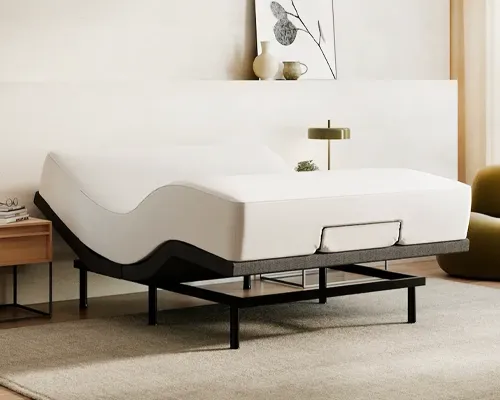
Adjustable Bed vs Regular Bed is a useful comparison for seniors who want to make bedtime more comfortable and practical. The main difference is simple: an adjustable bed can raise or lower parts of the mattress, while a regular bed stays flat.
For many seniors, the choice comes down to how much flexibility they need. An adjustable bed can make reading, watching TV, and changing sleep positions easier. A regular bed is simpler, costs less in many cases, and has fewer parts to operate or maintain.
Quick Comparison
An adjustable bed is usually the better choice for seniors who value position control and easier movement between lying and sitting. Many models let you raise the head and feet with a remote.
A regular bed may be a better fit for someone who wants a simple setup, does not need position changes, and wants to keep the cost and maintenance lower.
Adjustable Bed vs Regular Bed At a Glance
The table below highlights the differences that matter most for everyday senior use.
| Feature | Adjustable Bed | Regular Bed |
|---|---|---|
| Position control | Head and feet can move | Fixed flat position |
| Controls | Usually remote-operated | No motor or remote |
| Setup | More parts to configure | Usually simpler |
| Comfort adjustment | High | Depends mainly on mattress |
| Maintenance | Motor and electrical parts | Fewer moving parts |
| Ease of reading | Can raise upper body | Requires pillows |
| Power needed | Usually yes | No |
| Cost | Usually higher | Usually lower |
| Moving the bed | Often heavier | Usually easier |
| Long-term simplicity | More complex | Simpler |
Adjustable Bed: Senior-Friendly Features and Trade-Offs
An adjustable bed is designed to change the sleeping surface into different positions. This can be useful beyond sleep, especially for seniors who spend time reading or watching TV in bed.
Ease of Use
Most powered adjustable bases use a remote control. The user can raise or lower the head and foot sections without manually lifting the mattress.
This can reduce the physical effort needed to change position. However, the remote adds another device to learn. Seniors who prefer very simple furniture may find a regular bed easier.
Key Strengths
- Adjustable head and foot positions
- Easy position changes with a remote
- Useful for reading or watching TV
- Some models offer preset positions
- Some models include massage, USB ports, or under-bed lighting
- Split models can allow partners to adjust their sides separately
Potential Drawbacks
- Usually costs more than a basic bed setup
- Motorized parts add complexity
- The base can be heavy
- It needs electrical power
- Mattress compatibility must be checked
- Some accessories may not work with every adjustable base
Regular Bed: Simple Setup and Everyday Use
A regular bed uses a fixed sleeping surface. It does not raise or lower the head or foot sections, so there is no motor or remote to operate.
Ease of Use
Simplicity is the biggest advantage. There are no electronic controls, charging requirements, or motor settings.
Getting into bed is also straightforward. For seniors who already sleep comfortably on a flat surface, there may be little reason to add moving parts.
Key Strengths
- Simple to operate
- No remote required
- No motor to maintain
- No electricity needed
- Usually easier to move
- Often costs less
- Wide choice of mattresses and bed frames
Potential Drawbacks
- Fixed sleeping position
- Less flexibility for reading in bed
- Requires pillows to change upper-body position
- Cannot independently raise the legs
- Does not offer adjustable-bed features
Which Is Easier for Seniors to Use?
The answer depends on what “easy” means for the individual.
An adjustable bed can be easier for a senior who has trouble changing positions manually. Pressing a remote button may be simpler than repeatedly arranging several pillows.
A regular bed can be easier for someone who dislikes electronic controls or wants a setup with almost nothing to learn.
The easier bed is the one that reduces the tasks the user actually finds difficult.
Remote readability also matters. A model with small buttons or confusing controls may reduce the benefit of motorized adjustment. A simple remote with clear controls can make daily use much easier.
Performance Comparison
For an adjustable bed, performance is mainly about how smoothly and reliably the base changes position. The useful range of movement also varies by model.
Many adjustable bases allow separate head and foot adjustment, while some offer preset positions such as zero gravity.
A regular bed has no position-adjustment performance to evaluate. Its performance depends more on the mattress, foundation, frame strength, and overall comfort.
| Performance Area | Adjustable Bed | Regular Bed |
|---|---|---|
| Position changes | Excellent flexibility | Fixed |
| Upper-body elevation | Built in | Requires pillows |
| Leg elevation | Available on many models | Not available |
| Reading position | Easy to create | Requires support |
| Mechanical complexity | Higher | Low |
| Power dependence | Yes | No |
Comfort, Accessibility, and Senior-Friendly Design
An adjustable bed can offer more ways to create a comfortable position. Raising the head or legs may also make certain activities in bed easier.
Some seniors may appreciate being able to sit more upright without stacking pillows. Others may prefer the familiar feel of a flat bed.
Health-related benefits should not be assumed for everyone. Sleep position can affect some symptoms, but people with specific medical concerns should discuss whether an adjustable position is appropriate with a healthcare professional.
For accessibility, consider the remote, mattress height, bed clearance, and ease of getting in and out. The bed itself should not be judged only by the number of features it offers.
Features Comparison
Features can make an adjustable bed more useful, but they can also increase cost and complexity.
| Feature | Adjustable Bed | Regular Bed |
|---|---|---|
| Head adjustment | Yes | No |
| Foot adjustment | Often | No |
| Wireless remote | Usually | No |
| Preset positions | Some models | No |
| Massage | Some models | No |
| USB charging | Some models | No |
| Under-bed lighting | Some models | No |
| Split adjustment | Some models | No |
Not every adjustable bed has all these features. Always check the exact model before buying.
Price, Maintenance, and Long-Term Value
Regular beds generally have the advantage when simplicity and upfront cost matter most. Adjustable beds usually require a larger investment because the base contains motors and electronic controls.
The long-term value depends on whether those features are actually useful. Paying more for adjustments that are rarely used may not make sense.
Maintenance is also different. A regular bed has fewer moving components. An adjustable base may require attention to its electrical parts, remote, motor, and compatible accessories.
Mattress compatibility is especially important. Manufacturers may specify which mattress types and support systems can be used with an adjustable base. For example, Tempur-Pedic states that its mattresses are compatible with its power bases, while support requirements vary by foundation type.
Who Should Choose an Adjustable Bed?
An adjustable bed may be a good fit for seniors who:
- Want to change their head or leg position easily.
- Spend a lot of time reading or watching TV in bed.
- Prefer remote-controlled adjustments.
- Want more control over their sleeping position.
- Share a bed and want independent adjustment on a split model.
- Are comfortable paying more for added features.
The key benefit is flexibility. If changing position is an important part of daily comfort, the extra complexity may be worthwhile.
Who Should Choose a Regular Bed?
A regular bed may suit seniors who:
- Prefer a simple sleeping setup.
- Do not need head or foot adjustment.
- Want fewer electronic components.
- Want to avoid remote controls.
- Need a more budget-friendly setup.
- Prefer a bed that is easier to move or replace.
For someone who sleeps comfortably on a flat mattress, an adjustable base may offer features they simply do not need.
Adjustable Bed vs Regular Bed — Final Verdict
Best for position flexibility: Adjustable Bed
Best for simple operation: Regular Bed
Best for fewer maintenance concerns: Regular Bed
Best for reading and relaxing in bed: Adjustable Bed
Best for basic value: Regular Bed
Best for customizable comfort: Adjustable Bed
There is no single choice that fits every senior. An adjustable bed adds useful flexibility, but a regular bed keeps the experience simple.
Scoring Summary
The scores below are based on practical senior-use factors, not laboratory testing.
| Category | Adjustable Bed | Regular Bed |
|---|---|---|
| Ease of Use | 8/10 | 9/10 |
| Senior-Friendly Design | 9/10 | 8/10 |
| Performance Flexibility | 10/10 | 6/10 |
| Maintenance | 7/10 | 9/10 |
| Value | 7/10 | 9/10 |
These scores are broad comparisons. Individual models can differ in controls, construction, price, and available features.
How We Evaluate Products
This comparison focuses on factors that matter during everyday senior use.
We consider:
- Ease of operation
- Position flexibility
- Accessibility
- Comfort
- Maintenance
- Setup
- Safety
- Long-term practicality
- Cost and value
This is a product comparison based on available product information and general usability factors. It does not represent hands-on testing of a specific adjustable bed or regular bed.
Senior-Specific Buying Considerations
Before choosing between the two, look beyond the mattress itself.
Physical Effort
Think about how much effort is needed to change position. An adjustable base can handle the movement electronically, while a regular bed requires the user to reposition manually.
Controls
If choosing an adjustable bed, check the remote. Large, clear buttons are generally easier to understand than a crowded control layout.
Maintenance
Consider whether the user is comfortable with a motorized product. A regular bed has fewer components that can require attention.
Setup
Measure the room and check the bed dimensions. Adjustable bases can also be heavier and may require more planning during installation.
Mattress Compatibility
Do not assume every mattress works with every adjustable base. Check the manufacturer’s compatibility requirements before purchasing.
Safety
Keep electrical cords clear of walking paths. Follow the manufacturer’s instructions for cleaning and servicing the powered base. Manufacturer safety instructions commonly advise unplugging an adjustable base before servicing or cleaning.
Common Buying Mistakes
A few mistakes can make the choice harder than it needs to be.
- Buying an adjustable bed for features that will rarely be used.
- Choosing a regular bed without considering how often the user sits up in bed.
- Forgetting to check mattress compatibility.
- Ignoring the remote-control design.
- Focusing only on the initial price.
- Forgetting to measure the available bedroom space.
Safety
Adjustable beds contain electrical and moving components, so proper setup matters. Keep cords away from heat and areas where they could create a tripping hazard.
Do not assume that ordinary bed accessories will work with an adjustable base. For example, traditional bed rails may interfere with the movement of some adjustable bases, and compatibility can vary by model.
If the bed is being considered because of a specific medical or mobility concern, it is sensible to discuss the setup with an appropriate healthcare professional.
Conclusion
The main difference between an adjustable bed and a regular bed is flexibility. An adjustable bed gives users more control over head and leg positions, while a regular bed keeps things simple.
For seniors who value adjustable positioning, reading comfort, or easier position changes, an adjustable bed may offer meaningful benefits. For those who prefer simplicity, lower complexity, and fewer maintenance concerns, a regular bed remains a practical choice.
