
Raised Toilet Seat vs Toilet Safety Rails: Which?


GPS Tracker for Elderly

Digital Thermometer

Memory Foam Seat Cushion
A Raised Toilet Seat vs Toilet Safety Rails comparison comes down to one key need. Do you need more height, more hand support, or both?
A raised toilet seat lifts the sitting height. This can make sitting down and standing up easier for people who find a low toilet hard to use. Toilet safety rails add handles for support during these movements.
These products solve different problems. Some seniors may benefit from a raised seat. Others may need firm hand support. Some may need both features in one setup.
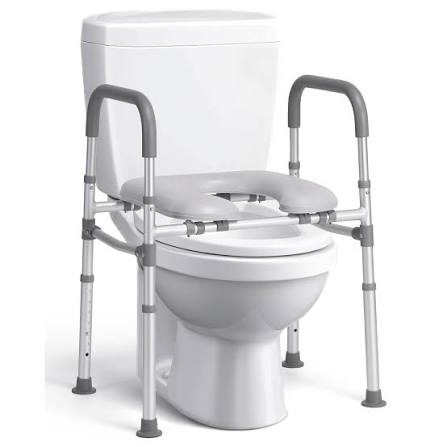
Quick Comparison
A raised toilet seat is the better fit when the main problem is toilet height. Toilet safety rails are more useful when the main need is hand support.
For many users, the choice is not really about one product being better. It is about what makes the toilet easier and safer to use.
Simple rule: Choose more height for easier sitting. Choose rails for more hand support.
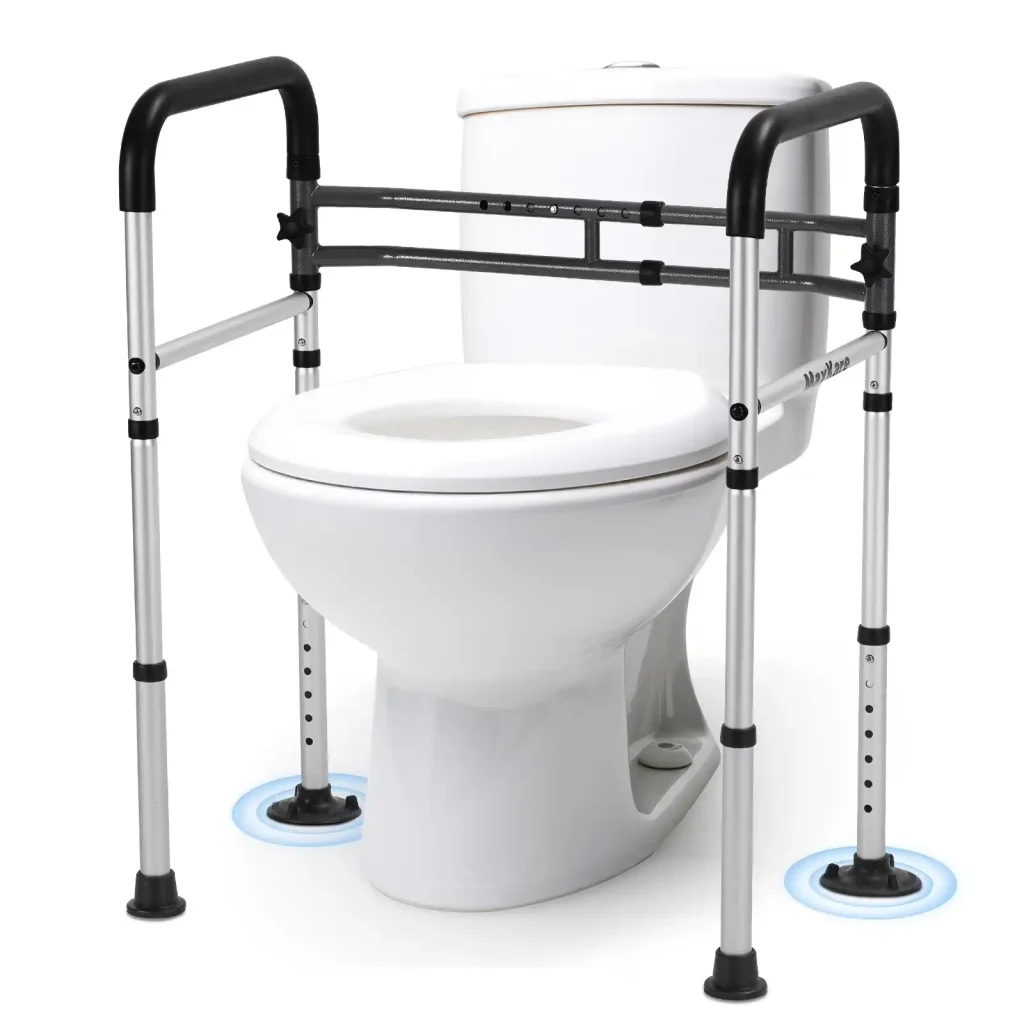
Raised Toilet Seat vs Toilet Safety Rails At a Glance
The main difference is simple. One changes the height of the toilet. The other adds support for the hands.
| Feature | Raised Toilet Seat | Toilet Safety Rails |
|---|---|---|
| Main purpose | Raises toilet height | Adds hand support |
| Sitting height | Higher | Usually unchanged |
| Hand support | Only on some models | Main feature |
| Bending effort | Can reduce it | Usually does not |
| Sit-to-stand help | Helps by raising height | Helps with hand support |
| Setup | Fits on toilet | Fits around or onto toilet |
| Cleaning | Usually simple | Rails need cleaning too |
| Best for | Low toilet height | Need for support |
Raised Toilet Seat: A Closer Look
A raised toilet seat sits on top of, or replaces, the normal toilet seat. It reduces the distance between the user and the seat.
Some models have armrests. Others are simple risers with no handles.
Ease of Use
A raised seat can reduce the amount of bending needed. This may help a senior who finds a standard toilet too low.
Installation varies by model. Some use a locking or clamping system. Others use a simpler attachment method.
The fit matters. The seat should be secure before use. Users should follow the product instructions and check the attachment often.
Key Strengths
- Raises the toilet seat height.
- May reduce bending.
- Can make standing easier for some users.
- Many models are easy to clean.
- Some models include armrests.
- Different height options are available.
Potential Drawbacks
- It does not always provide hand support.
- Some models may not fit every toilet.
- Added height can feel unusual at first.
- Installation must be secure.
- Models with arms can take up more space.
Toilet Safety Rails: A Closer Look
Toilet safety rails are designed to give the user something to hold while sitting or standing.
They can come as side rails or as a larger frame. Many models have adjustable height. Some can fold for storage.
Ease of Use
The main benefit is clear hand support. A user can place their hands on the grips while lowering onto the toilet or rising from it.
This can be useful when the main challenge is getting up rather than reaching a low seat.
Many rail systems also allow height or width adjustment. This can help create a better fit for the user and toilet.
Key Strengths
- Provides hand support.
- Helps with sit-to-stand movement.
- Many models have adjustable height.
- Some models have padded grips.
- Some frames can fold for storage.
- Can work with standard or raised toilets, depending on the model.
Potential Drawbacks
- Does not automatically raise the toilet.
- Needs enough floor or side space.
- Poor setup can reduce stability.
- Rails and grips need regular cleaning.
- Some models may interfere with a small bathroom layout.
Which Is Easier for Seniors to Use?
There is no single answer for every senior.
A raised toilet seat may be easier for someone who struggles with a low toilet. The extra height can reduce the depth of the sitting motion.
Toilet rails may be easier for someone who wants something to hold. The grips can provide a clear hand position during sitting and standing.
For users who need both height and hand support, a raised toilet seat with arms may combine the two functions. Another option is a raised seat used with separate safety rails.
The right setup should match the user’s needs, toilet shape, bathroom space, and ability to use the support safely.
Performance Comparison
These products have different jobs, so performance should be judged in different ways.
| Performance Area | Raised Toilet Seat | Toilet Safety Rails |
|---|---|---|
| Raises seat | Strong | Limited |
| Reduces bending | Strong | Limited |
| Hand support | Model dependent | Strong |
| Sit-to-stand support | Height helps | Hand support helps |
| Bathroom space | Usually compact | Needs more space |
| Flexibility | Depends on fit | Often adjustable |
A raised seat performs best when height is the main issue. Rails perform best when hand support is the main issue.
Some products combine both functions, but they may take up more room and cost more than a simple product.
Comfort, Accessibility, and Senior-Friendly Design
Comfort depends on fit as much as design.
A raised seat should provide a stable and comfortable sitting position. The height should not be chosen only because it is the tallest option.
Rails should also be at a useful height. Handles that are too low or too high may be harder to use.
Grip design matters too. Padded or non-slip grips can feel easier to hold than smooth surfaces.
Bathroom space is another factor. A rail frame can make a narrow bathroom feel crowded. A simple raised seat may use less space.
Features Comparison
The most useful features are those that solve the user’s actual problem.
| Feature | Raised Toilet Seat | Toilet Safety Rails |
|---|---|---|
| Height adjustment | Some models | Common on frames |
| Armrests | Some models | Main feature |
| Locking system | Common on many models | Depends on design |
| Folding | Less common | Available on some models |
| Adjustable width | Some models | Common on some frames |
| Non-slip parts | Common | Common |
| Easy cleaning | Usually | Usually |
Do not assume that more features mean a better choice. A simple product can be easier to use and maintain.
Price, Maintenance, and Long-Term Value
Prices vary widely by design and brand. A basic raised toilet seat is often simpler than a larger safety frame. Models with arms, adjustment features, or extra support can cost more.
Maintenance is usually simple for both types. Regular cleaning is important because bathroom surfaces can collect moisture and dirt.
Check replacement parts before buying a model with special hardware. This matters if a bracket, grip, or other component wears out.
Value depends on the problem being solved.
A low-cost raised seat may offer good value when toilet height is the main concern. A safety rail may offer better value when hand support is the main need.
Who Should Choose a Raised Toilet Seat?
Choose a raised toilet seat if:
- The standard toilet feels too low.
- Bending down is difficult.
- Standing from a low seat takes extra effort.
- You want a simple height solution.
- Bathroom space is limited.
- You do not need large side rails.
- You prefer a compact bathroom aid.
A model with arms may be worth considering if you also want hand support.
Who Should Choose Toilet Safety Rails?
Choose toilet safety rails if:
- You mainly need something to hold.
- Sit-to-stand movement is difficult.
- You want adjustable hand positions.
- You already have a comfortable toilet height.
- You want support without replacing the toilet seat.
- You have enough space around the toilet.
Rails can also be useful with a raised toilet seat when both height and hand support are needed.
Raised Toilet Seat vs Toilet Safety Rails — Final Verdict
The better choice depends on the problem.
Best for increasing toilet height: Raised toilet seat
Best for hand support: Toilet safety rails
Best for a low toilet: Raised toilet seat
Best for users who want side grips: Toilet safety rails
Best for combining both needs: A raised toilet seat with arms, or a raised seat paired with suitable rails
The key difference is easy to remember. A raised toilet seat changes where you sit. Toilet safety rails change what you can hold while sitting or standing.
Scoring Summary
Scores are only a simple category guide. They do not replace checking the user’s needs and the exact product model.
| Category | Raised Toilet Seat | Toilet Safety Rails |
|---|---|---|
| Ease of Use | 9/10 | 9/10 |
| Height Support | 10/10 | 5/10 |
| Hand Support | 6/10 | 10/10 |
| Space Efficiency | 9/10 | 7/10 |
| Flexibility | 7/10 | 9/10 |
| Overall Practicality | 9/10 | 9/10 |
How We Evaluate These Products
We focus on practical factors that matter during everyday toilet use.
These include:
- Ease of use
- Accessibility
- Comfort
- Stability
- Setup
- Cleaning
- Maintenance
- Bathroom space
- Adjustability
- Long-term practicality
We do not treat a product as better simply because it has more features.
Senior-Specific Buying Considerations
Before choosing either product, check the points below.
Physical Effort
Think about the movement needed to sit and stand. If bending is the main problem, extra height may help.
If pushing up or lowering down is the main problem, hand support may matter more.
Controls and Adjustments
Check whether knobs, clamps, or adjustment points are easy to use.
Small parts may be harder to operate for someone with limited hand strength or dexterity.
Maintenance
Look for surfaces that are easy to wipe clean.
Check whether the product has removable parts that need regular cleaning.
Storage
A simple raised seat usually takes less space than a full safety frame.
Measure the bathroom before choosing a larger rail system.
Setup
Check that the product fits the toilet correctly.
Do not assume that a product labeled “universal” will fit every toilet in the same way.
Safety
Make sure the raised seat or rail is firmly installed before use.
Do not exceed the manufacturer’s weight limit. Check the product regularly for loose hardware, movement, worn grips, or damaged parts.
If a person has major balance or mobility concerns, it may be useful to ask a healthcare professional or qualified occupational therapist about the safest bathroom setup.
Common Buying Mistakes
- Choosing height without checking the user’s needs.
- Buying rails without measuring bathroom space.
- Ignoring toilet shape and compatibility.
- Choosing a product only because it is cheap.
- Forgetting to check the weight limit.
- Assuming every raised seat includes hand support.
- Assuming every safety rail raises the toilet.
- Failing to check that the product stays secure.
Safety
Bathroom safety products must be installed and used as directed.
A raised toilet seat should sit securely on the toilet. A safety rail should also be firmly positioned and checked before use.
Avoid leaning heavily on a product unless the manufacturer says it is designed for that type of support.
Wet bathroom floors can also increase slip risk. Keep the area around the toilet as dry and clear as practical.
If the user needs substantial physical support, do not rely on a product label alone. Consider getting professional advice about the correct setup.
Conclusion
A raised toilet seat and toilet safety rails solve different problems. A raised seat increases toilet height and may reduce bending. Safety rails provide hand support for sitting and standing.
For a low toilet, start by looking at a raised seat. For a need for hand support, look at safety rails. If both needs are present, consider a model that combines height and arms or use two compatible products.
