
10 Best Bath Transfer Benches for Caregivers: Top Safe, Comfortable Options and Buying Tips


Audiobook Player

Easy Grip Knife Set

Medication Reminder Alarm
Bath transfers benches help caregivers move people safely into and out of bathtubs and showers. They reduce lifting, lower the risk of slips, and let caregivers focus on support rather than brute force. Many designs slide across the tub edge, have transfer seats, backrests, and adjustable legs to fit different tub shapes and user needs.
Choosing the right bench comes down to stability, seat width, and ease of use. A stable frame with non-slip feet, a comfortable wide seat, and a secure locking or sliding mechanism are the most important features to avoid falls and make transfers smoother. We tested many styles and sizes to find benches that balance safety, comfort, and ease of cleaning so caregivers can work faster and with less strain.
Best Bath Transfer Benches for Caregivers
Below is our full list of the best bath transfer benches for caregivers. We chose options that balance safety, comfort, and ease of use to help with transfers and bathing. Our picks include sturdy frames, non-slip features, and models suited for different bathroom layouts.
Drive Tub Transfer Bench

We recommend this bench for caregivers who need a sturdy, easy-to-position transfer seat that makes tub transfers safer and quicker.
Pros
- Solid aluminum frame feels durable and stable.
- Adjustable legs let us match the bench to most tub heights.
- Reversible design and suction feet work well in different bathroom layouts.
Cons
- The suction feet can lose grip on worn or textured tubs.
- Seat padding is minimal, so longer baths feel less comfortable.
- Assembly takes a few extra minutes and an extra pair of hands helps.
We used this bench with a parent who needed help getting in and out of the tub. Sliding across the seat felt smooth and lowered the strain on both of us. The backrest gives good support when they leaned back to wash.
Adjusting the legs in half-inch steps made it easy to find the right fit. Once set, the A-frame and dual columns gave the seat a stable feel under movement. Drain holes kept water from pooling, which made rinsing and drying faster.
On textured tub surfaces the suction-style feet didn’t always stick as firmly, so we placed a rubber mat beneath for extra grip. The plastic seat is firm; a thin cushion helps for longer sits but keeps water drainage working. Overall, this bench saved time and reduced risk during transfers.
Medline Transfer Bench

We recommend this bench if you want a sturdy, no-frills transfer seat that handles heavier users and fits most tubs.
Pros
- Very solid feel and high 400 lb capacity.
- Reversible backrest and adjustable height for a custom fit.
- Suction feet grip well inside the tub for security.
Cons
- Bench is a bit wide for some narrow tubs.
- Aluminum frame can feel cold to the touch.
- Armrest is fixed on one side and may not suit every setup.
We used this bench helping a family member move in and out of the tub. The seat felt stable as soon as it was in place, and the wide suction cups held firm on smooth tub surfaces. Pushing the buttons to set the height took seconds, which made adjustments quick during real use.
Getting the backrest switched sides was straightforward and gave us more room to work in tighter shower spaces. The plastic seat drains water well and cleaned easily after use. The armrest gave good leverage when standing, though we wished it could move to the other side sometimes.
In daily use the bench held up to heavier users without wobble. It is wide, so measure your tub if space is limited. Overall, we found it reliable, simple to set up, and confident under weight — a solid pick for caregivers who want durability without extra bells and whistles.
HOMLAND Tub Transfer Bench
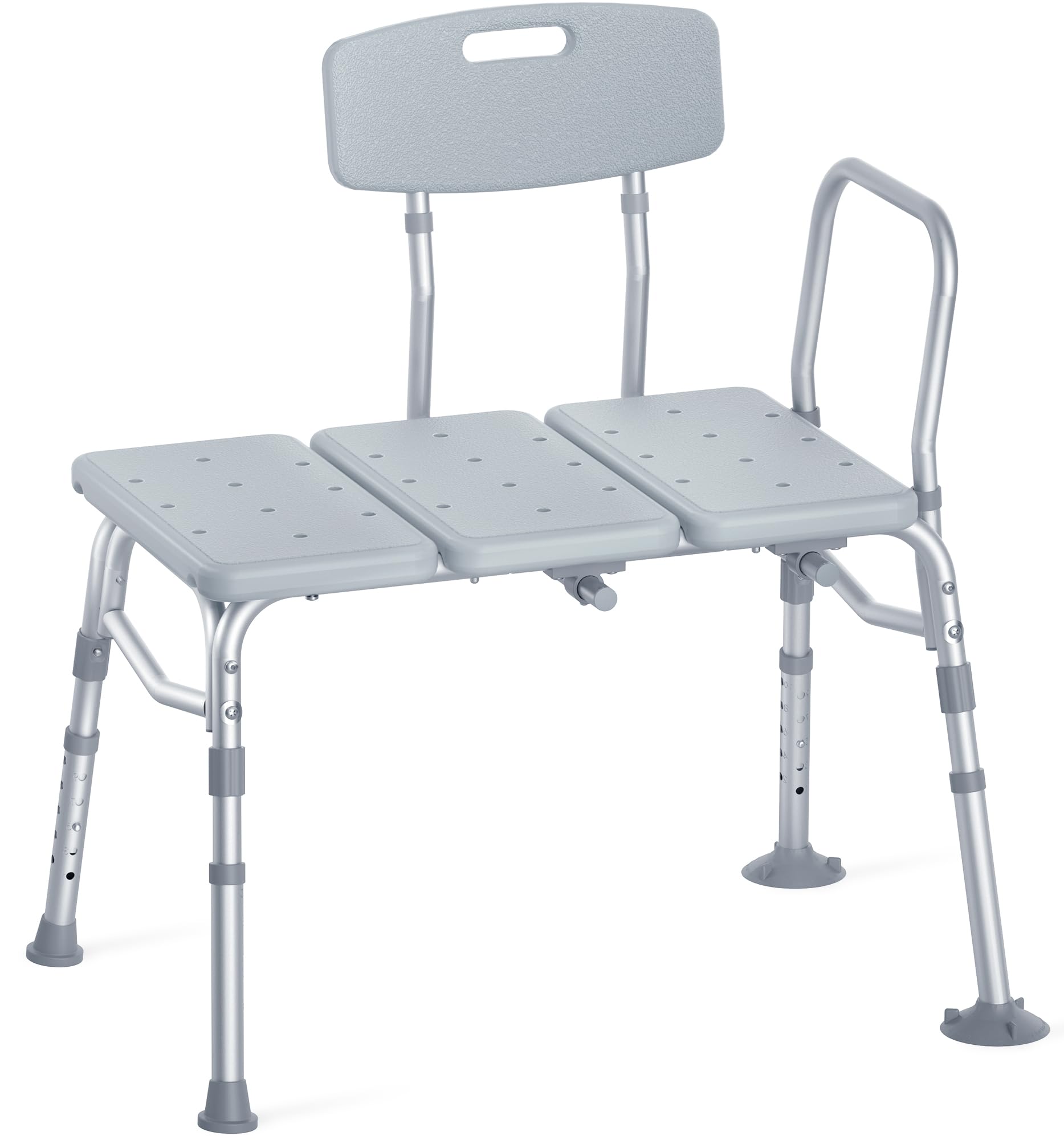
We recommend this bench if you need a sturdy, lightweight transfer seat that makes bathing safer for caregivers and users.
Pros
- Solid, stable frame that felt secure when we helped someone sit and slide.
- Lightweight aluminum made moving and positioning the bench easy.
- Adjustable height and reversible backrest fit different tubs and users.
Cons
- The plastic seat feels a bit hard on longer showers.
- Assembly requires two people if you want to be quick and tidy.
- Width may be bulky in smaller bathrooms.
We used this bench for several weeks while assisting a parent after hip surgery. The extra-wide seat and backrest give good support during transfers. Sliding over the tub edge felt much safer than lifting.
Setup was straightforward with the button-lock legs. We liked that the rubber feet gripped wet floors well and the drainage holes kept the seat from pooling water.
Adjusting the height took seconds and the backrest swapped sides without tools. If you need a bench that’s strong but easy to move, this one worked reliably for us.
Medical King Transfer Bench MK7140

We recommend this bench for caregivers who need a sturdy, no-frills transfer aid that holds heavy users and stays easy to clean.
Pros
- Very strong for its weight, handled a heavy user without wobble.
- Seat and backrest felt comfortable during full showers.
- Lightweight and easy for one caregiver to move and position.
Cons
- Plastic feels a bit thin around the edges compared to metal frames.
- Assembly takes some time and can be fiddly with small parts.
- Limited padding on the seat; might feel hard for long sits.
We used this bench a few times helping a family member shower and found the wide seat made sliding in and out simple. The backrest adds real confidence when rinsing hair, and the arm area gives a quick place to steady someone while they move.
Moving it around was easy because it’s light, but that same lightness makes it catch on tub lips during positioning. Tightening the legs and checking all fasteners helped reduce flex. The plastic cleaned very quickly after soap and shampoo.
Height adjustments let us match different tub walls without too much hassle. The design stayed steady under a heavier user, which mattered most to us. If you want extra comfort, add a thin bath pad, but for solid, practical use this bench performed well.
DMI Sliding Transfer Bench

We recommend this bench when caregivers need a sturdy, simple way to move someone safely into a tub or shower.
Pros
- Strong frame holds larger users without wobble.
- Sliding seat makes transfers easier and saves caregiver effort.
- Tool-free setup and reversible backrest fit many bathrooms.
Cons
- Bench is wide — measure your tub first.
- Plastic seat feels hard for long baths.
- Suction feet can lose grip on worn surfaces.
We used this bench many times for transfers and found the sliding motion genuinely reduces strain. The seat glides smoothly and the nylon locks keep it from shifting when you don’t want it to move.
Adjusting the legs was quick and the range allowed us to match most tub heights. The backrest flips sides easily, which helped when different caregivers had to work from opposite sides.
Cleaning stayed simple because the plastic wiped down fast, though the seat’s firmness might need a cushion for comfort. Overall, it felt dependable and made transfers safer in everyday use.
Platinum Health Carousel
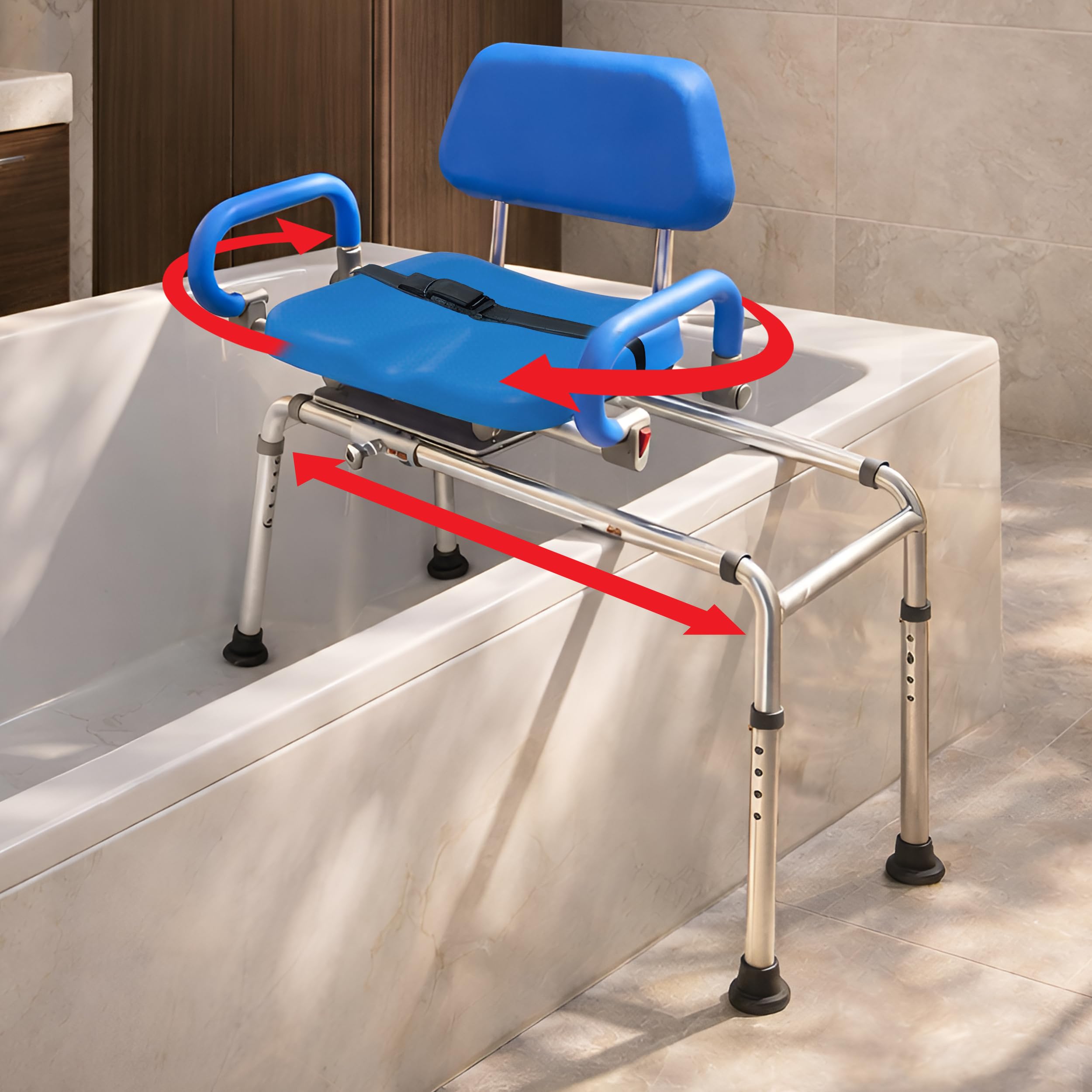
We recommend this if you need a sturdy, padded transfer bench that makes tub-to-shower moves safer and more comfortable.
Pros
- Smooth swivel and slide made transfers quick and controlled.
- Thick, warm padding felt far safer than hard plastic seats.
- Narrow footprint kept the bathroom less crowded.
Cons
- Frame and padding add weight; setup felt heavy for one person.
- Swivel mechanism needs occasional tightening after heavy use.
- Size may not fit very narrow tubs without the optional extension kit.
We used the bench on multiple patient transfers and noticed how the seat glided smoothly across the tub edge. The padded armrests gave good leverage and cut down on caregiver strain when helping someone sit and stand.
The padded seat and back stayed dry and cleaned easily after showers. The closed-cell foam never soaked up water, so it felt more comfortable than the older plastic benches we tried.
Moving around the bathroom felt easier because the swivel seat took up less space than a fixed bench. We did need to check fit before buying since the bench is wider than some compact models.
Overall, the bench felt like a solid, clinic-grade option for regular caregiver use, though you might need help unpacking and occasional maintenance on the pivot.
Loyoda Sliding Swivel Transfer Bench
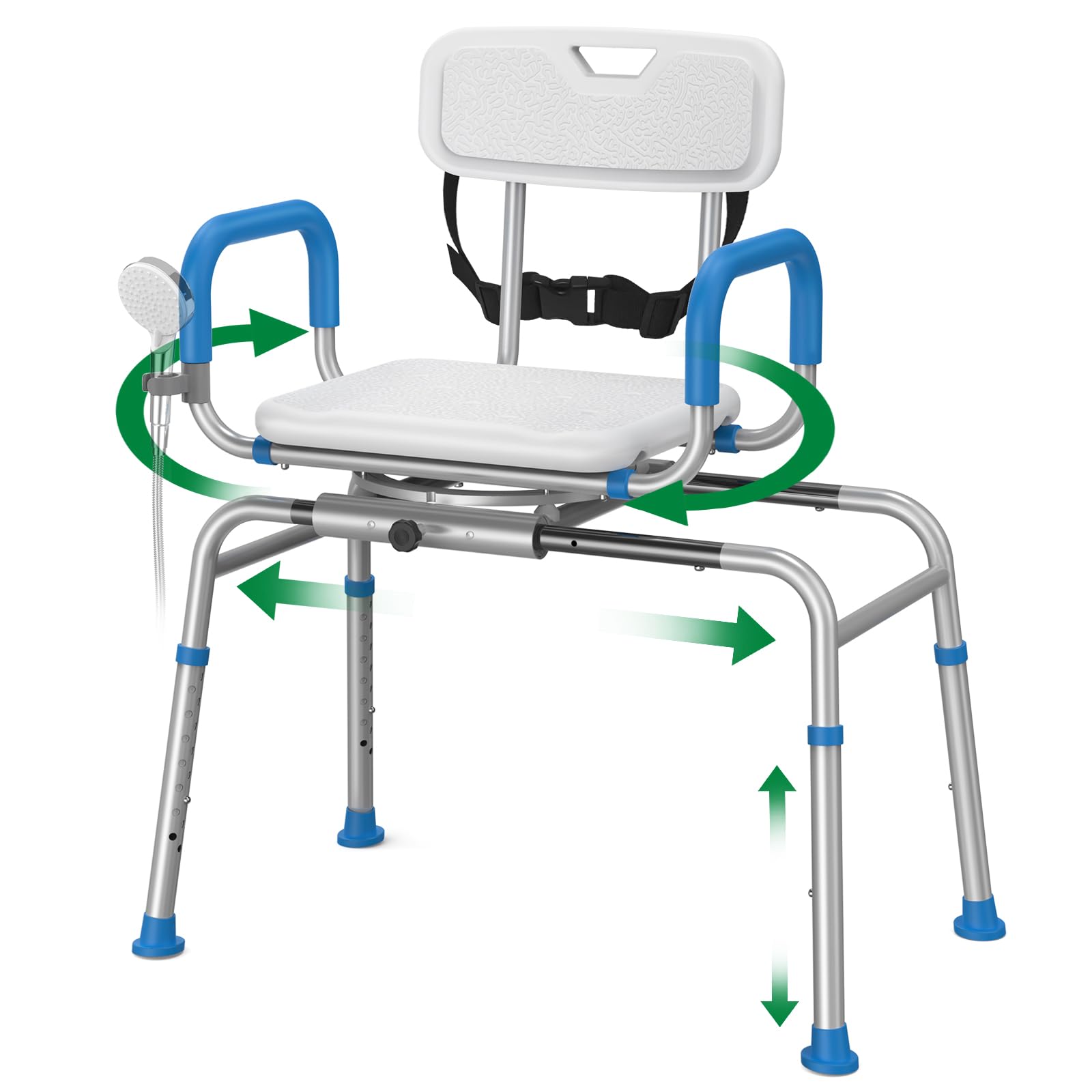
We recommend this bench when you need a sturdy, space-saving transfer chair that makes caregiver-assisted moves easier.
Pros
- Smooth sliding action for easy transfers
- Swivels close to the tub to save space
- Lightweight aluminum resists rust
Cons
- Requires two people for safe transfers
- Plastic parts feel a bit light compared with the frame
- Setup needs careful adjustment for height and fit
We used this bench in a small bathroom and appreciated how it rotates without needing extra clearance. Sliding the seat over the tub edge felt controlled and cut down on lifting strain.
The aluminum frame stayed solid while moving someone who needed steady support. The seat height adjustments let us match different users, and the swivel kept the user close to the wall which helped in tight spaces.
Some plastic pieces felt less robust than the metal parts, so we checked fasteners often. Transfers worked best with two people—one to steady the user and one to slide—so plan for that when using it.
Lamorland Sliding Tub Transfer Bench
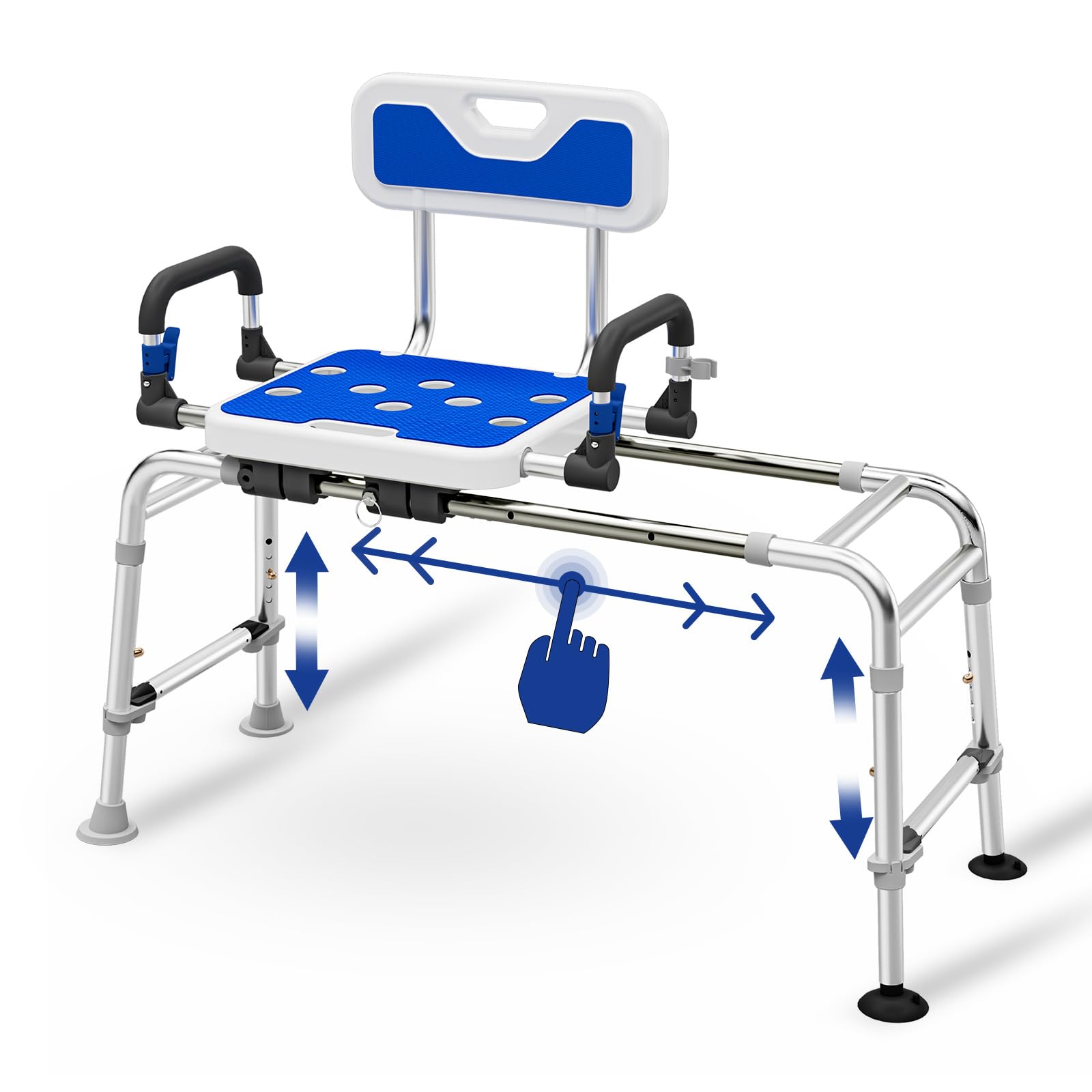
We recommend this bench when you need a sturdy, easy-to-use transfer seat that makes bathing safer for caregivers and users.
Pros
- Smooth glide makes seated transfers simple and steady.
- Very strong frame supports heavy users without wobble.
- Tool-free setup and adjustable height speed up installation.
Cons
- Sliding mechanism needs practice to use smoothly at first.
- Suction cups may not grip well on some tub textures.
- Armrests are detachable but a bit snug for larger arms.
We used this bench for several weeks while helping a family member with daily showers. The sliding seat really cuts down on lifting and we felt more in control during transfers. The glide ran smoothly once we adjusted the bench and worked on technique.
The frame felt solid under weight and the wide feet gave confidence on damp surfaces. Adjusting height was easy with the push-button legs, so we matched the seat to the tub quickly. The backrest added support for longer sits and the seat drained well after each use.
We noticed the suction cups help keep the bench from shifting, but they didn’t always bite into older, textured tubs. The sliding action took a few tries to coordinate between caregiver and user. Still, the overall build and simple assembly made it a reliable choice for everyday caregiver use.
Buy the Lamorland Sliding Tub Transfer Bench
Drive Medical Splash Defense Tub Transfer Bench

We recommend this bench when you need a stable, easy-to-adjust transfer seat that keeps the shower curtain in place and reduces spills.
Pros
- Very stable and sturdy under weight.
- U-shaped cutout helps keep the curtain out of the tub.
- Simple height adjustments with a pinch-free lever.
Cons
- Plastic seat feels firm for longer baths.
- Legs can be tricky to align on narrow tubs.
- Backrest is basic and not very padded.
We used this bench for weekly bathing sessions and found it reliable. Getting in and out felt safer than using a standard tub seat, and the wide seat gave enough room for shifting positions. The 400 lb capacity gave us confidence when helping larger users.
Adjusting the height proved fast. The pushpin system works without pinching fingers, and the half-inch increments let us dial in a comfortable level for different caregivers and users. The reversible layout fit both left- and right-side transfers with no hassle.
Water stayed out of the bathroom more often thanks to the U-shaped cutout. The shower curtain stayed behind the guard instead of slipping into the tub. On the downside, the seat’s hard plastic can be less comfortable for longer soaks, so we added a thin mat for padding.
Overall, this bench balances safety and simplicity for caregivers who need a dependable transfer aid. For a hands-on helper, it kept the process smoother and safer during regular use.
Caring Transfer Bench (400 lb)
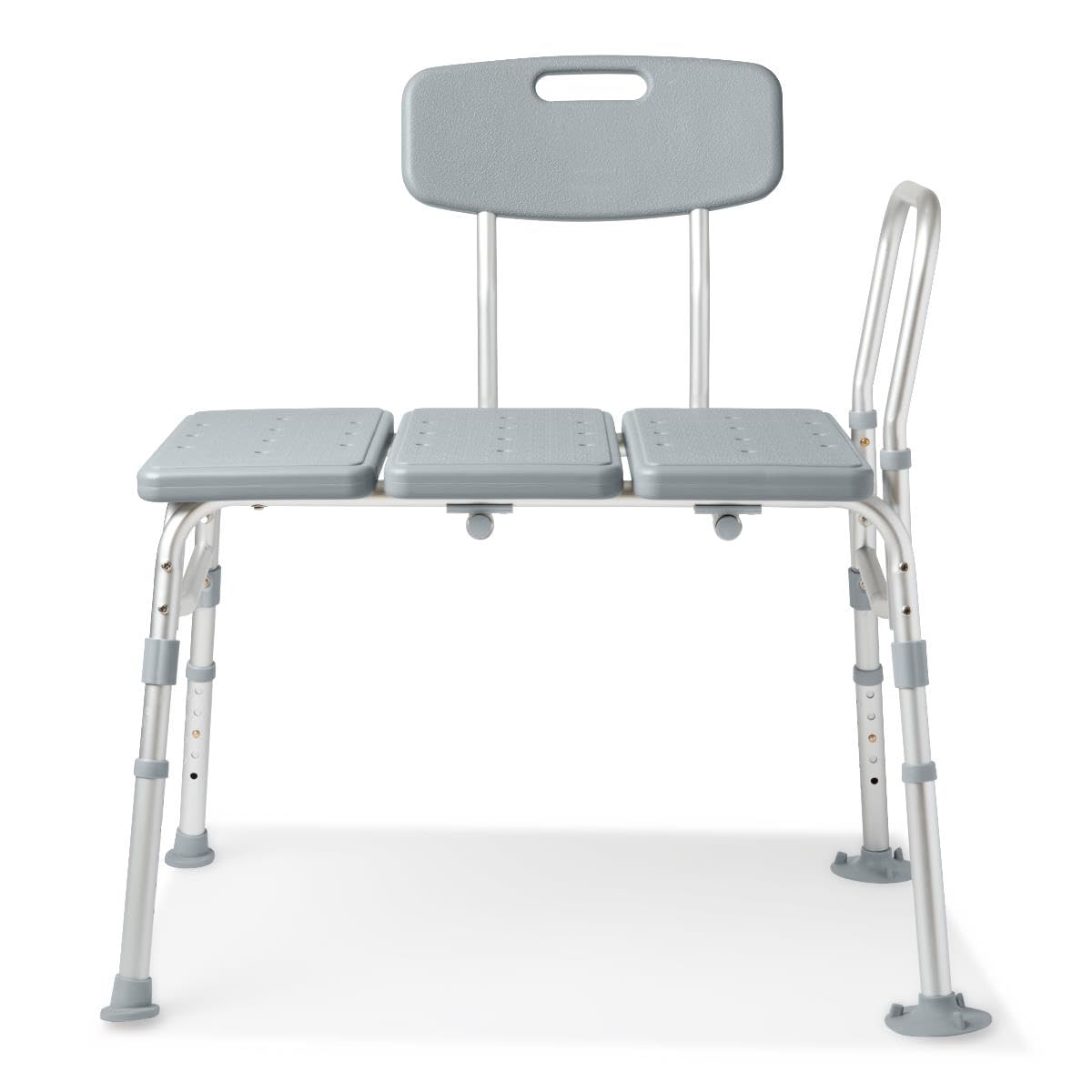
We recommend this bench when you need a sturdy, easy-to-use seat that makes transfers safer for caregivers and users.
Pros
- Very solid frame that felt secure during transfers.
- Extra-wide, comfortable seat with back support.
- Tool-free setup and reversible for left or right-side tubs.
Cons
- Plastic seat can feel hard for long baths.
- Suction feet grip best on clean, flat tubs only.
- Aluminum frame shows scuffs after moving it around.
We used this bench for several assisted baths and found it stable under load. Sliding across the wide seat felt natural, and the backrest helped keep the person upright without constant hand support.
Adjusting the legs took seconds and let us match different tub heights without tools. Flipping the bench to fit left- or right-side tubs was straightforward, which saved time when moving between bathrooms.
The suction-cup feet held well on smooth tubs but lost grip if soap residue built up. We wiped the tub before each use to keep it steady. Overall, it gave us confidence during transfers while staying simple to clean and maintain.
Buying Guide
We focus on safety, comfort, and ease of use when choosing a bath transfer bench for caregiving. Start by measuring the tub height, door width, and available bathroom space to ensure a good fit.
We look for sturdy materials and a high weight capacity. Aluminum and reinforced plastics give strength without too much weight. Check the bench’s weight limit against the user’s weight plus any gear.
We check seat design and padding. A wide, non-slip seat with drainage holes helps keep the user dry and stable. Removable or reversible seats add flexibility for different bathrooms.
We value adjustable legs and feet for uneven floors. Rubber tips or suction pads prevent slips. Height adjustability helps align the seat with the tub and reduce lifting.
We consider transfer style and armrests. Open-front or sliding seats ease side-to-seat motion. Sturdy, well-placed armrests or handles give users and caregivers support during transfers.
We examine assembly and maintenance. Simple tools, clear instructions, and easy-to-clean surfaces speed setup and daily care. Removable parts that resist mold and rust extend product life.
We recommend checking additional features like swivel seats, backrests, and tool-free adjustments. Compare warranties and return policies before buying. Use customer support access as a tie-breaker when features are similar.
Quick checklist
| Feature | Why it matters |
|---|---|
| Weight capacity | Matches user safely |
| Seat width & padding | Comfort and stability |
| Adjustability | Fits bathroom and user height |
| Slip-resistant feet | Prevents accidents |
| Ease of cleaning | Hygiene and durability |
Editor’s Choice
We picked the model that balances safety, comfort, and ease of use for most caregivers. It has a stable frame, non-slip feet, and a wide seat that supports transfers without extra effort.
The bench adjusts in height quickly and locks securely. This lets us match tub rims and user needs without tools.
We value padding that withstands water and resists mold. The chosen seat material stays comfortable during longer baths and cleans easily with mild soap.
Assembly takes minutes with clear instructions and few parts. We tested the bench for wobble and found the reinforced crossbars keep it steady under typical loads.
Key features we liked:
- Adjustable height for different tubs.
- Non-slip suction feet that grip most surfaces.
- Waterproof, padded seat that cleans easily.
- Tool-free assembly for quick setup.
We also checked weight capacity and found it suitable for most adults. Replacement parts and a clear warranty add confidence for long-term use.
Conclusion
We focused on features that matter to caregivers: safety, ease of use, durability, and comfort. Choosing the right transfer bench reduces strain for both the caregiver and the person using it.
We recommend prioritizing models with sturdy frames and non-slip surfaces. Adjustable height and a wide seat make transfers smoother and safer.
If mobility is limited, we suggest benches with swivel seats or padded armrests. Those options cut down on awkward movements and help prevent falls.
We encourage testing fit and clearance when possible. A bench that fits the tub and the user’s needs will save time and reduce frustration.
We included price and maintenance as practical factors. A mid-range bench often balances quality and affordability.
We advise keeping a list of must-have features before shopping. That list helps us compare options and choose confidently.
FAQS
What is a bath transfer bench and who needs one?
We use a transfer bench to help someone move safely into and out of a tub. It is useful for people with limited mobility, balance issues, or recovery after surgery.
How do we choose the right size and weight capacity?
Measure the tub width and the user’s hip and thigh size. Check the bench’s weight limit and choose one that exceeds the user’s weight by at least 50 lbs for safety.
Are transfer benches easy to clean and maintain?
Yes. Most benches have plastic or coated surfaces that wipe clean. We should rinse and dry after use and check for rust or loose parts regularly.
Can one bench fit multiple tubs or users?
Some designs are adjustable for different tub widths and heights. We recommend measuring and choosing a model with adjustable legs or removable arms if multiple tubs will be used.
Do they require tools to assemble?
Many models snap or bolt together with basic tools included. We advise following the manufacturer’s instructions and tightening all fasteners before use.
Is installation reversible and non-damaging to the tub?
Most benches rest on the tub edge and floor without drilling. We should avoid overtightening clamps and use rubber pads to protect the tub surface.
How do we ensure safe transfers?
Use non-slip mats, lock wheels if present, and position the bench properly. We should always support the user and move slowly during transfers.