
Psychometric Tests for Senior Executives


Portable Radio with Large Buttons

Indoor Security Camera

Smart Doorbell Camera
Psychometric tests for senior executives are powerful tools that measure cognitive abilities, personality traits, and leadership competencies beyond traditional interviews. These scientifically validated assessments help identify high-potential leaders, reduce hiring risks, and support executive development. By evaluating factors like emotional intelligence, strategic thinking, and stress management under pressure, companies gain deeper insights into whether a candidate can drive organizational success at the highest levels.
Key Takeaways
- Psychometric tests assess more than IQ: They evaluate emotional intelligence, leadership style, decision-making patterns, and cognitive flexibility—key traits for senior leadership roles.
- Reduce hiring bias with data-driven insights: Objective scoring minimizes unconscious bias and ensures selection is based on measurable competencies rather than gut feelings.
- Improve succession planning: Regular assessment helps identify internal talent gaps and prepares high-potential employees for future C-suite positions.
- Enhance team performance: Understanding individual leadership styles enables better team composition and conflict resolution at executive levels.
- Support executive coaching: Test results provide concrete feedback for personal development plans tailored to each leader’s strengths and growth areas.
- Validate cultural fit: Behavioral assessments reveal alignment with company values and long-term strategic vision beyond technical qualifications.
- Compliance and ethics matter: Reputable providers ensure tests meet legal standards for fairness, confidentiality, and accessibility across diverse executive populations.
📑 Table of Contents
- Introduction: Why Senior Executives Need More Than Just a Resume
- What Are Psychometric Tests for Senior Executives?
- Types of Psychometric Tests Used for Senior Leaders
- Benefits of Using Psychometric Testing at the Executive Level
- How to Choose the Right Psychometric Assessment Provider
- Common Misconceptions About Executive Psychometrics
- Real-World Applications: Where Executive Psychometrics Shine
- Preparing Executives for Psychometric Testing
- Future Trends in Executive Psychometrics
- Conclusion: Investing in Smarter Leadership Decisions
Introduction: Why Senior Executives Need More Than Just a Resume
When you think about hiring someone for a C-suite position—CEO, CFO, or Chief Marketing Officer—what do you look for? A strong resume? Ivy League credentials? Decades of industry experience? All of those matter, yes. But here’s the reality: even the most impressive resume can hide critical blind spots in judgment, emotional control, or strategic foresight.
That’s where psychometric tests for senior executives come in. Unlike simple personality quizzes found online, these are scientifically designed instruments used by Fortune 500 companies, government agencies, and global consultancies to assess leadership potential with precision. They measure not just what you know, but how you think, react under pressure, lead teams, and make decisions when stakes are high.
In today’s fast-paced business environment, mis-hiring a senior leader can cost millions—not just in recruitment fees, but in lost opportunities, damaged morale, and broken trust. Psychometric testing gives HR leaders and board members confidence in their choices by revealing hidden capabilities and risks before a final offer is made.
What Are Psychometric Tests for Senior Executives?
A Closer Look at Executive-Level Assessments
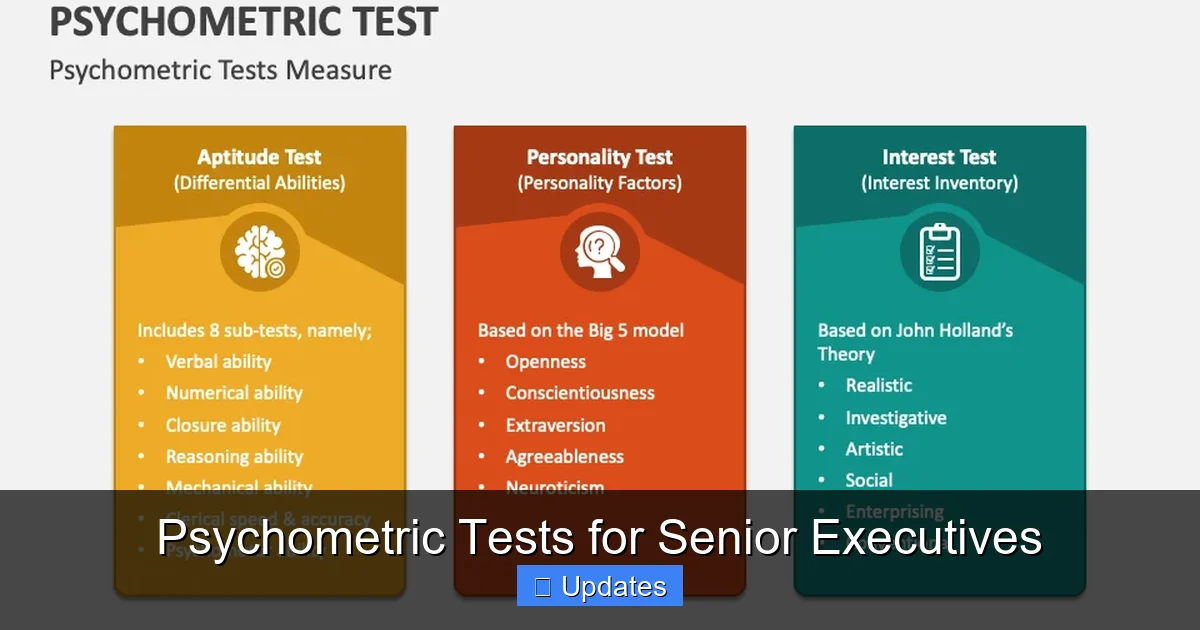
Psychometric tests for senior executives are standardized, objective evaluations designed specifically for individuals in leadership roles. These aren’t your typical “take this quiz and get your career advice” tools. Instead, they’re used by top-tier organizations to predict job performance, leadership effectiveness, and cultural alignment.
Visual guide about Psychometric Tests for Senior Executives
Image source: collidu.com
These assessments typically fall into two categories:
- Cognitive ability tests – Measure problem-solving speed, logical reasoning, numerical analysis, and verbal comprehension.
- Personality and behavioral assessments – Evaluate traits like emotional stability, dominance, conscientiousness, and openness to change—all crucial for executive decision-making.
For example, a common test might ask an executive to interpret complex data sets under time constraints while also measuring their tolerance for ambiguity. Another could simulate a crisis scenario and assess how they delegate, communicate, and remain calm under fire.
The Science Behind the Scoring
Unlike self-reported surveys, psychometric tests rely on empirically validated frameworks such as the Big Five Personality Traits (OCEAN model), McClelland’s Achievement Motivation Theory, or Hogan Leadership Forecast Series. Each question is carefully crafted to distinguish between effective and ineffective leadership behaviors.
Scoring is then benchmarked against large normative groups—typically other successful executives—so results show where a candidate stands relative to peers. This percentile ranking offers clarity: Is this person in the top 10% for strategic thinking? Do they score high on integrity and ethical reasoning?
This scientific rigor makes psychometric testing invaluable during mergers, succession planning, or when building a resilient leadership pipeline across international markets.
Types of Psychometric Tests Used for Senior Leaders
Cognitive Ability Assessments
One of the most widely used types of psychometric tests for senior executives focuses on cognitive capacity. These include:
Visual guide about Psychometric Tests for Senior Executives
Image source: cdn.onbuy.com
- Inductive reasoning: Ability to spot patterns and apply logic to new situations—critical for innovation and risk assessment.
- Numerical reasoning: For finance and operations leaders who must interpret financial reports quickly and accurately.
- Verbal reasoning: Essential for CEOs and general managers who need to articulate vision clearly and influence stakeholders.
For instance, during a merger negotiation, an executive with strong inductive reasoning can anticipate competitor moves faster than someone relying solely on past experience.
Leadership Style Inventories
Tests like the Leader Behavior Description Questionnaire (LBDQ) or Multifactor Leadership Questionnaire (MLQ) examine how leaders behave in real-world scenarios. They differentiate between transformational leaders (who inspire change) and transactional ones (who focus on rewards/punishments).
Imagine two candidates vying for COO: One scores high on charisma and vision; the other excels at process optimization and stakeholder management. The MLQ helps decide which style aligns best with current organizational needs.
Emotional Intelligence (EQ) Evaluations
Recent research shows EQ may be more predictive of executive success than IQ alone. Tools like the MSCEIT (Mayer-Salovey-Caruso Emotional Intelligence Test) measure four branches:
- Perceiving emotions accurately
- Using emotions to facilitate thinking
- Understanding emotional meanings
- Managing emotions wisely
A CEO who scores low in managing emotions might struggle with public speaking or handling investor criticism—even if technically brilliant.
Assessment Centers and Simulations
Many firms now combine multiple psychometric methods within simulated environments. Participants might:
- Lead a mock board meeting via video conference
- Resolve conflicts among virtual team members
- Present a turnaround strategy under time pressure
Observers—often trained psychologists—score performance using rubrics derived from decades of research into executive behavior.
Benefits of Using Psychometric Testing at the Executive Level
Improved Hiring Accuracy
Traditional interviews often suffer from recency bias or halo effects (e.g., liking someone because they went to the same school). In contrast, psychometric tests for senior executives eliminate subjectivity by focusing on measurable outcomes.

Visual guide about Psychometric Tests for Senior Executives
Image source: how2become.com
Studies show that combining assessments with interviews increases prediction accuracy by up to 40%. That means fewer bad hires and higher ROI on leadership investments.
Better Succession Planning
Organizations using regular psychometric evaluations can map internal talent more effectively. For example, if the next CEO needs strong crisis-management skills, assessments highlight which VPs already demonstrate those traits through past responses to setbacks.
This proactive approach reduces last-minute scrambles during leadership transitions and maintains continuity in strategic direction.
Enhanced Team Dynamics
When HR understands each leader’s preferred communication style or conflict-resolution approach, they can build balanced boards and advisory councils. Mixing introverted analysts with extroverted sales leaders isn’t always ideal—but knowing strengths and weaknesses allows intentional pairing.
Personalized Development Plans
Post-assessment reports often include actionable recommendations. Say an executive scores high on decisiveness but low on empathy. Their development plan might involve mentoring junior staff or attending workshops on active listening—skills that directly impact team retention and engagement.
How to Choose the Right Psychometric Assessment Provider
Look for Accreditation and Normative Data
Not all tests are created equal. Reputable providers—such as Hogan Assessments, SHL, or Psytech—publish peer-reviewed validation studies and maintain large databases of comparable professionals. Avoid vendors offering generic “executive quizzes” without empirical backing.
Ensure Cultural Sensitivity
If your firm operates globally, verify that tests have been normed across regions and languages. What works in London may not reflect leadership norms in São Paulo or Mumbai.
Prioritize Confidentiality and Ethics
Executive assessments often involve sensitive topics like risk tolerance or ethical dilemmas. Choose platforms compliant with GDPR, EEOC guidelines, and professional codes of conduct. Candidates should receive clear explanations of how results will be used.
Integrate With Existing Processes
The best results happen when assessments feed into broader talent strategies—not stand-alone events. Work with HRIS systems that allow seamless integration with performance reviews or 360-degree feedback tools.
Common Misconceptions About Executive Psychometrics
Myth: “It’s Just Another Interview Trick”
Some view these tests as corporate gimmicks. Nothing could be further from the truth. When administered properly, they follow strict protocols akin to clinical psychological evaluations—just applied to professional contexts.
Myth: “Everyone Should Score High”
Executives don’t need perfection—they need fit. Someone who scores moderately high on adaptability may thrive in dynamic startups, whereas rigid thinkers suit stable industries like utilities or defense contracting.
Myth: “Results Are Final”
Leadership evolves. Many firms re-administer tests annually to track growth. Think of it like fitness tracking: progress matters more than a single snapshot.
Real-World Applications: Where Executive Psychometrics Shine
Mergers & Acquisitions Due Diligence
Before acquiring another company, buyers use psychometric profiles to assess whether the target’s leadership team can integrate smoothly. Differences in decision-making styles or communication preferences often derail post-merger success.
High-Potential Identification Programs
Google’s “Project Oxygen” famously combined behavioral data with managerial effectiveness. Similarly, banks run “fast-track” programs using assessments to fast-track rising stars toward C-suite readiness.
Crisis Management Training
After disasters—natural or financial—organizations train leaders using simulation-based assessments. Seeing how they perform under stress builds resilience and improves emergency response protocols.
Preparing Executives for Psychometric Testing
Set Clear Expectations
Treat assessments as serious professional exercises—not games. Explain why they’re being done, how long they’ll take, and what skills are being measured. Transparency reduces anxiety and boosts engagement.
Practice Sample Questions
While you can’t “game” valid tests, familiarizing yourself with formats (e.g., situational judgment tasks) helps reduce time pressure during actual sessions.
Maintain Authenticity
Don’t try to present a false image. Authentic responses yield the most useful insights. If you’re naturally collaborative, don’t fake assertiveness just to appear strong—it backfires in real leadership roles.
Seek Feedback Proactively
After completion, request detailed breakdowns. Ask coaches or mentors to help interpret results and create stretch goals aligned with organizational needs.
Future Trends in Executive Psychometrics
AI-Powered Adaptive Testing
Next-gen platforms adjust difficulty in real time based on responses, providing ultra-personalized evaluations that maximize diagnostic power while minimizing test fatigue.
Neuroscientific Integration
Emerging tools use EEG headsets or eye-tracking to monitor cognitive load during decision simulations—offering unprecedented insight into mental processing under duress.
Wellbeing-Focused Metrics
With burnout rates soaring among executives, future assessments will likely include measures of work-life balance orientation, stress resilience, and sustainable leadership practices.
Conclusion: Investing in Smarter Leadership Decisions
In a world where leadership mistakes carry enormous consequences, relying solely on intuition or résumé screening is no longer sufficient. Psychometric tests for senior executives offer a disciplined, evidence-based path forward—one that balances human insight with scientific rigor.
Whether you’re selecting a new CEO, preparing your board for digital transformation, or nurturing tomorrow’s leaders, these assessments deliver actionable intelligence that transforms talent strategy from guesswork into precision engineering.
As organizations increasingly prioritize agility, ethics, and employee well-being at the highest levels, psychometrics will only grow in importance. The smartest companies aren’t just looking for capable leaders—they’re investing in those who think critically, lead authentically, and sustain success over time.
Frequently Asked Questions
Are psychometric tests fair for all executive candidates?
Yes, reputable providers design tests to minimize bias through culturally neutral questions and large normative samples. They comply with legal standards like EEOC and GDPR to ensure equitable evaluation regardless of background.
Can I improve my score after taking a test?
Absolutely. While raw cognitive abilities change slowly, behavioral tendencies like communication style or stress response can be developed through targeted coaching, practice, and self-awareness exercises.
How long do executive psychometric assessments take?
Most comprehensive batteries last 90 minutes to 3 hours, including cognitive tests, personality inventories, and situational judgment tasks. Shorter versions exist for preliminary screening.
Do results expire?
Typically, scores remain valid for 1–2 years since leadership behaviors can shift rapidly. Some firms re-administer every 18 months to track development.
Can psychometrics predict job success accurately?
Studies show they predict performance better than interviews or references alone. Combined with structured interviews, validity exceeds 0.50 correlation—meaning they explain over 25% of performance variance.
Are these tests confidential?
Yes. Results are shared only with authorized personnel (HR, hiring managers, coaches) and stored securely. Candidates must consent to usage per privacy regulations.