
Civil Air Patrol Senior Member Uniforms

Electric Heating Pad

Puzzle Book for Seniors

Raised Toilet Seat
Civil Air Patrol Senior Member Uniforms are more than just clothing—they represent dedication, service, and pride in a national organization focused on aerospace education, emergency services, and cadet mentoring. Whether you’re a new senior member or preparing for a formal event, understanding your uniform is essential. From the distinctive insignia to proper fit and maintenance, this guide covers everything you need to know about wearing and caring for your CAP uniform with honor and professionalism.
The Civil Air Patrol (CAP) is often called America’s largest all-volunteer civilian auxiliary of the U.S. Air Force. But beyond its mission in aerospace education, emergency services, and cadet programs, there’s a strong tradition of pride and identity that comes with being part of this organization. One of the clearest ways this identity is expressed is through the Civil Air Patrol Senior Member Uniforms. Wearing the uniform isn’t just about looking professional—it’s a symbol of commitment, discipline, and service.
For senior members—those who have transitioned from active cadet roles into leadership, training, or support positions—the uniform takes on even greater significance. It represents years of experience, mentorship, and dedication to the CAP mission. Whether you’re attending a national encampment, responding to an emergency, or simply participating in a community outreach event, knowing how to wear and maintain your CAP uniform correctly shows respect for the organization and sets you apart as a trusted leader.
In this comprehensive guide, we’ll walk you through everything you need to know about the Civil Air Patrol Senior Member Uniforms. We’ll cover the official components, proper wear, insignia placement, care tips, and even answer common questions so you can feel confident every time you put on your uniform. By the end, you’ll understand not just what makes up the uniform, but why it matters.
Key Takeaways
- The Civil Air Patrol Senior Member Uniform consists of three primary components: the dress blue jacket, trousers, and appropriate headgear, all regulated by CAP national standards.
- Insignia and emblems are strategically placed to denote rank, unit affiliation, and specializations such as aerospace education or emergency services.
- Uniforms must be worn properly at official functions, meetings, and public events to maintain the integrity and professionalism of the CAP brand.
- Proper care and maintenance extend the life of your uniform and ensure it looks sharp year-round—dry cleaning is recommended for formal wear.
- Senior members may earn additional distinctions through service, leadership, and training, which can include special pins or ribbons displayed on the uniform.
- Uniform guidelines are outlined in CAP Regulation 39-1 (Uniform and Insignia), which all members must follow.
- Customization options are limited but allow for personal touches like name tags or organizational patches within approved parameters.
[FEATURED_IMAGE_PLACEHOLDER]
📑 Table of Contents
- Understanding the Purpose of the CAP Uniform
- Official Components of the Civil Air Patrol Senior Member Uniform
- Insignia Placement and Meaning
- How to Wear Your Civil Air Patrol Senior Member Uniforms Properly
- Care and Maintenance Tips for Your CAP Uniform
- Special Considerations for Different Roles
- Common Mistakes to Avoid
- Conclusion: Pride in Every Stitch
Understanding the Purpose of the CAP Uniform
Before diving into specifics, it helps to understand why uniforms matter in the Civil Air Patrol. Unlike many civilian organizations, CAP operates under the authority of the U.S. Air Force and maintains strict standards of appearance and conduct. The uniform serves several key purposes:
First, it fosters unity and esprit de corps. When you see someone wearing the same uniform across different states and units, it creates a sense of belonging and shared purpose. For senior members, especially those traveling to conferences or representing CAP at public events, the uniform instantly signals their role and credibility.
Second, the uniform reinforces accountability. Because CAP members often interact with government agencies, schools, and the public during emergencies or educational programs, dressing professionally builds trust and demonstrates reliability.
Finally, the uniform honors the legacy of service. Every button, stripe, and patch tells a story—of training completed, missions supported, and lives touched. For senior members, whose influence extends far beyond day-to-day operations, the uniform becomes a walking reminder of their contributions to national defense and youth development.
Official Components of the Civil Air Patrol Senior Member Uniform
Visual guide about Civil Air Patrol Senior Member Uniforms
Image source: imgv2-2-f.scribdassets.com
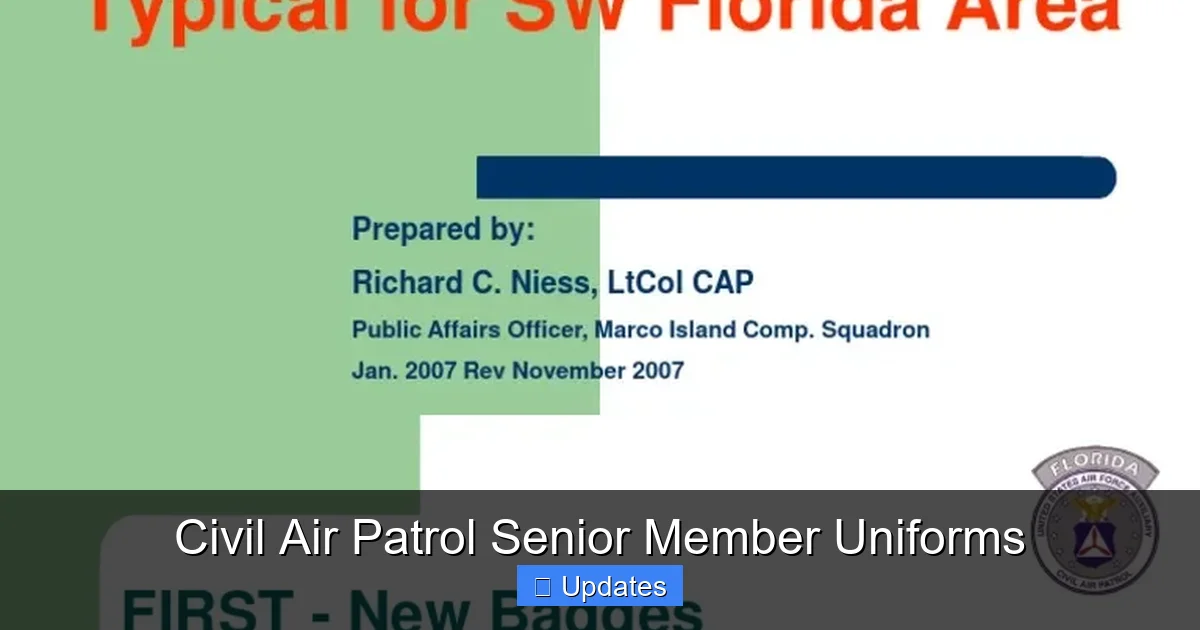
The Civil Air Patrol Senior Member Uniform is designed for comfort, durability, and professional appearance. While there are variations based on occasion (dress, service, flight), the standard ensemble includes the following core items:
Dress Blue Jacket
The centerpiece of the uniform is the dress blue jacket, typically made from a wool blend fabric for durability and a polished look. This jacket features a four-button front, shoulder loops, and two flap chest pockets. It must be worn zipped to the top button, with sleeves rolled no lower than halfway down the forearm.
On the left breast pocket, senior members display their Civitan International membership pin if applicable, positioned above the CAP emblem. The right sleeve bears the unit insignia, usually a small embroidered patch denoting the specific squadron or region.
Inside the jacket, near the collar, you’ll find the name tag (silk tie)—a thin strip of fabric bearing your full name and CAP ID number. This is worn diagonally across the chest, secured with a slide-on clasp.
Trousers
Matching dress blue trousers are worn with belt loops and a standard waistband. They should fit snugly without being tight and be hemmed to match your height precisely. Belt buckles must be plain and non-reflective; metallic logos or military-style hardware are not permitted unless specified.
Headgear
Appropriate headwear includes the blue peaked cap (brogans) for men and the blue pillbox hat for women. These caps feature the CAP emblem centered on the front and are worn squarely on the head. During outdoor activities or inclement weather, a black leather flight helmet may be authorized for flight personnel, though this is typically reserved for aviators.
Footwear and Accessories
Black leather oxford shoes are required for formal occasions. Socks should be solid black or navy and reach just below the knee. Belts must match the shoe color and be plain without adornments. Ties are optional but encouraged during ceremonies or inspections.
Insignia Placement and Meaning
Visual guide about Civil Air Patrol Senior Member Uniforms
Image source: rockinghamnc.cap.gov
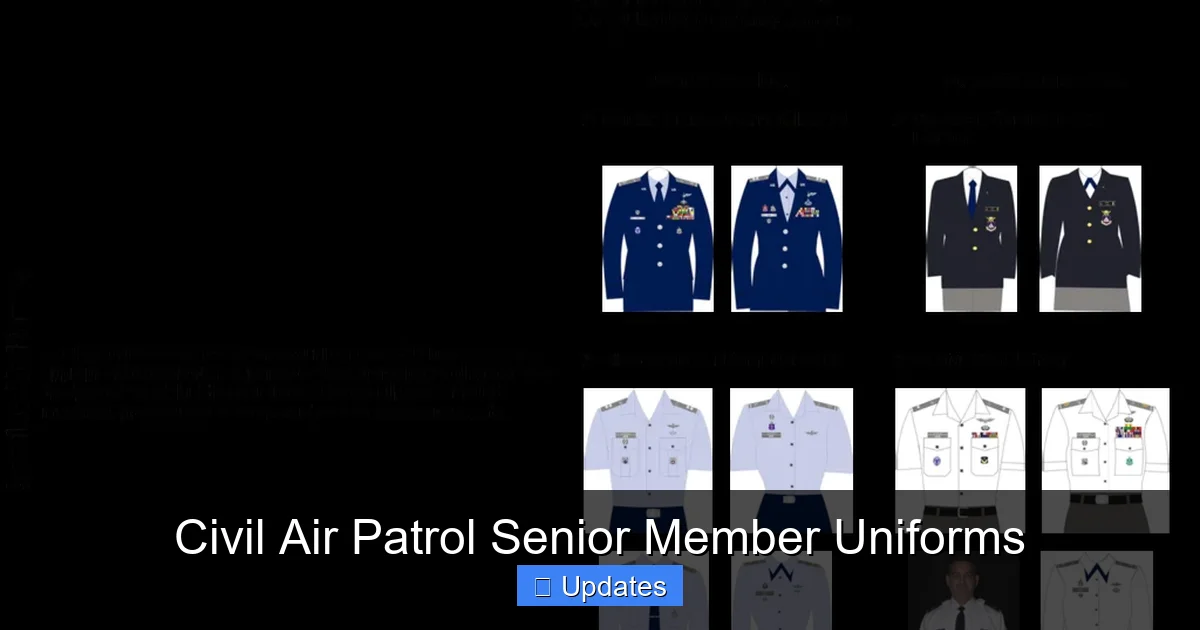
One of the most important aspects of wearing the Civil Air Patrol Senior Member Uniforms correctly is understanding where and how to place insignia. Each piece of embroidery, pin, or ribbon carries meaning and must be positioned according to CAP regulations.
Rank Insignia
Senior members wear rank stripes on both sleeves of the dress jacket. The number and style of stripes correspond to your position:
– Major General: Three gold stars
– Brigadier General: Two gold stars
– Colonel: One gold star
– Lieutenant Colonel: Two silver bars
– Major: One silver bar
– Captain: Two gold chevrons
– First Lieutenant: One gold chevron
– Second Lieutenant: Two silver chevrons
These stripes are sewn onto shoulder boards located on the outside edge of each sleeve, about one inch below the seam. They must be parallel to the cuff and evenly spaced.
Unit Patch
Located on the right sleeve of the dress jacket, the unit patch identifies your home squadron or region. It’s typically positioned just below the shoulder seam and centered vertically. This patch is a point of local pride and helps others quickly identify your affiliation.
Aerospace Education and Emergency Services Pins
Senior members who complete specialized training may earn aerospace education pins or emergency services emblems. These are worn on the left lapel, below the Civitan pin (if present). Aerospace pins often feature aircraft silhouettes or orbital symbols, while emergency service badges reflect qualifications in search-and-rescue, disaster relief, or communications.
Ribbons and Medals
While less common for general senior members, those with extensive service may display CAP campaign ribbons or U.S. Air Force-related medals on the left side of the jacket, aligned with the pocket flap. These must follow strict spacing rules and are usually reserved for high-ranking officials or long-serving volunteers.
How to Wear Your Civil Air Patrol Senior Member Uniforms Properly
Visual guide about Civil Air Patrol Senior Member Uniforms
Image source: ftsnelling.cap.gov
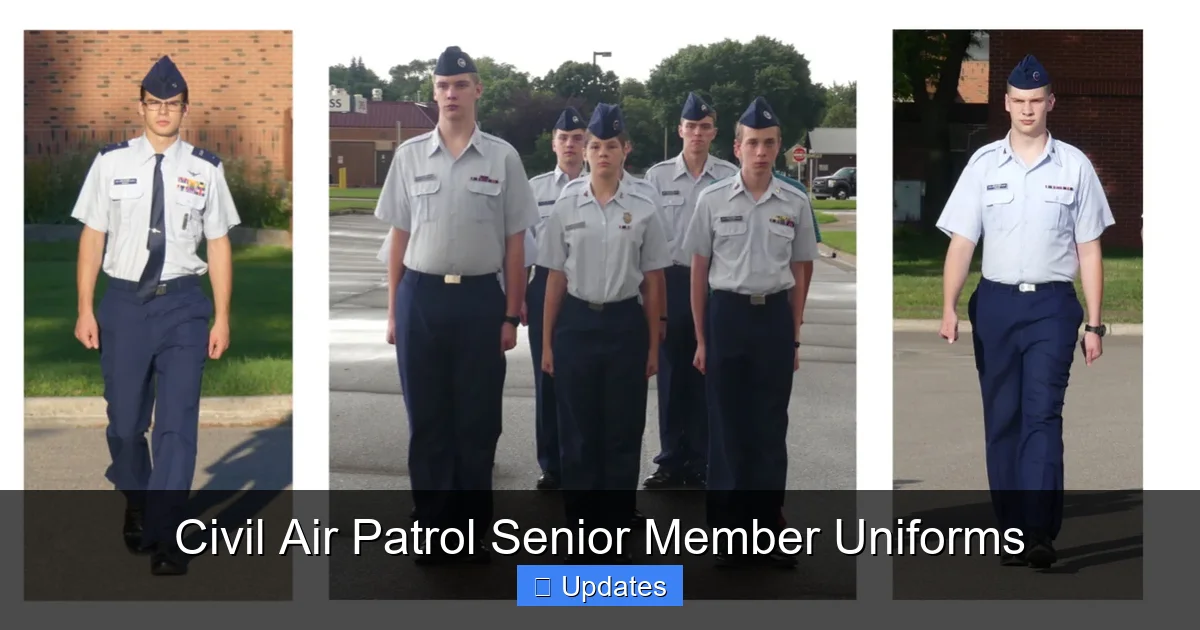
Wearing your uniform isn’t just about throwing on a jacket and heading out. There are precise guidelines to ensure you present yourself professionally and respectfully.
Fit and Posture
Your jacket should sit comfortably across the shoulders without pulling at the seams. Sleeves should expose about an inch of shirt cuff when arms are relaxed at your sides. Stand straight, keep your chest out, and avoid slouching—this conveys confidence and readiness.
Buttoning and Zippers
Always zip the dress jacket completely. Never leave it unzipped at formal events. Buttons should be fastened except for the top one on some interpretations (though CAP regulation specifies all four must be buttoned).
Grooming Standards
Hair must be neat and professional. Men should trim beards and mustaches to avoid bulk near insignia. Women may wear modest makeup and hairstyles that don’t obstruct visibility of rank or name tags. Jewelry should be minimal—no dangling earrings or large rings.
Occasion-Based Variations
While the full dress uniform is reserved for parades, ceremonies, and official inspections, senior members also have service uniforms for daily duties and flight uniforms for aviation-related tasks. Each has its own set of rules regarding insignia and accessories.
For example, during a aerospace education workshop at a local school, you might wear the service uniform with simplified insignia. But at a national conference in Washington, D.C., the full dress uniform would be expected.
Care and Maintenance Tips for Your CAP Uniform
Keeping your Civil Air Patrol Senior Member Uniforms looking sharp requires regular attention. Here’s how to preserve its appearance and longevity:
Dry Cleaning
The dress blue jacket and trousers should be taken to a professional cleaner experienced with military or aviation fabrics. Avoid home dry cleaning kits—they can damage delicate wool blends and fade colors. Most cleaners recommend scheduling a cleaning every 6–8 weeks during peak use.
Storage Solutions
Hang your jacket on a sturdy wooden hanger with wide shoulders to prevent shoulder strain. Use garment bags for off-season storage to protect against dust and moths. Fold trousers neatly and store them in drawers with acid-free tissue paper.
Stain Removal
If you spill coffee or ink, blot immediately—don’t rub. Apply a mild detergent to the affected area and rinse with cold water. For stubborn stains, consult a specialist cleaner before attempting DIY fixes.
Repairs and Replacements
Damaged insignia or buttons should be reported to your unit commander. Never attempt to reattach loose patches yourself—they must meet CAP standards for size, thread color, and placement. If your jacket develops holes or tears, contact the CAP supply system for replacement parts.
Seasonal Adjustments
During colder months, layering is allowed under the jacket, but inner layers must be neutral-colored (white, gray, or navy) and not distract from insignia visibility. In summer, lightweight cotton shirts are acceptable, but still require collars and ties.
Special Considerations for Different Roles
Not all senior members wear the uniform identically. Depending on your responsibilities, certain modifications or additions may apply.
Aviation Personnel
Pilots, ground controllers, and flight officers often receive authorization to wear flight helmets or specialized headgear during operations. They may also carry pilot wings similar to those seen in the Air Force, though these are distinct from military awards and serve as recognition of CAP-specific flight qualifications.
For instance, if you’re leading a search-and-rescue mission, your uniform might include a reflective vest over the jacket and a headset clipped discreetly to your cap brim.
Training Officers and Mentors
Senior instructors who teach cadets may add teaching badges or mentor pins to their attire during classroom sessions. These are typically smaller than standard service pins and worn closer to the collar.
Public Relations and Outreach
Members representing CAP at schools, fairs, or civic events often emphasize visibility. In these cases, brightly colored name tags or unit banners may be used alongside the standard uniform—but only with prior approval from the regional commander.
Common Mistakes to Avoid
Even experienced senior members occasionally slip up. Watch out for these frequent errors:
– Wearing civilian shoes—always pair your uniform with black leather oxfords.
– Over-accessorizing—stick to one or two meaningful pins max.
– Misplaced insignia—double-check rank stripes and unit patches before heading out.
– Improper length of trousers—they should break slightly over the shoe heel.
– Neglecting grooming—clean-shaven faces and tidy hair are non-negotiable.
When in doubt, ask your unit’s quartermaster or review CAP Regulation 39-1 online. Better safe than sorry!
Conclusion: Pride in Every Stitch
Wearing the Civil Air Patrol Senior Member Uniforms is more than following rules—it’s embracing a legacy of service, leadership, and community impact. Every time you zip up your jacket and adjust your cap, you’re honoring decades of volunteers who’ve shaped young minds, responded to disasters, and defended American skies.
Whether you’re mentoring a group of eager cadets, presenting at a state-level conference, or volunteering at an airshow, your uniform speaks volumes. It says, “I stand with CAP,” and “I’m ready to serve.”
By mastering the details—from correct insignia placement to proper care—you elevate not just your own image, but the reputation of the entire organization. So take pride in your uniform, treat it with respect, and remember: you’re not just wearing fabric—you’re carrying history on your shoulders.
Now go out there, wear it well, and make your mark.
Frequently Asked Questions
What is included in the Civil Air Patrol Senior Member Uniform?
The standard uniform consists of a dress blue jacket, matching trousers, a peaked cap or pillbox hat, black oxford shoes, and appropriate insignia including rank stripes, unit patch, and service pins. Additional accessories like name tags and belts are required per CAP regulations.
Can I customize my Civil Air Patrol Senior Member Uniform?
Minor customization is allowed within strict guidelines—such as adding a Civitan pin or personal name tag—but major alterations like changing insignia placement or fabric color violate CAP Regulation 39-1 and are prohibited.
How do I know which insignia to wear?
Refer to CAP Regulation 39-1 for detailed placement charts. Your unit commander or supply officer can also provide guidance based on your role and achievements within the organization.
Is there a difference between male and female Civil Air Patrol Senior Member Uniforms?
Yes. Female members wear a pillbox hat instead of a peaked cap and may opt for tailored jackets or skirts depending on unit policy and occasion. All other components remain consistent with gender-neutral design principles.
How often should I dry clean my CAP uniform?
Professional dry cleaning is recommended every 6–8 weeks during active use. Over-cleaning can wear out fabric faster, while skipping cleanings leads to stains and wrinkles that detract from appearance.
Where can I purchase official Civil Air Patrol Senior Member Uniforms?
Uniforms must be ordered through authorized CAP suppliers listed on the national website. Personal purchases from third-party vendors may not meet quality or regulation standards and could result in disciplinary action.