
Mass Senior Circuit Breaker Credit


Talking Clock

Mattress Topper Memory Foam

Sudoku Puzzle Book
The Mass Senior Circuit Breaker Credit helps eligible older adults reduce their property tax burden by offering a refundable tax credit based on income and home value. This program supports Massachusetts seniors who own homes but have limited retirement income. Understanding your eligibility and applying correctly ensures you receive the full benefit available under state law.
Key Takeaways
- What it is: A state-funded tax credit that reduces or eliminates property taxes for low- and moderate-income seniors who own their homes.
- Eligibility matters: Applicants must be 65 or older (or permanently disabled), live in their primary residence, and meet income limits set annually.
- Income thresholds vary: Single homeowners over 80 face stricter limits than those under 80; couples also have adjusted thresholds depending on age.
- Credit amount depends on home value: The higher your home’s assessed value, the larger the potential credit—up to statutory maximums.
- Application timing is key: File by April 15 of each year to claim the credit for the previous calendar year’s property taxes.
- Refundable benefit: If the credit exceeds your tax liability, you may receive a direct payment from the Commonwealth.
- No retroactive claims: You can only apply for up to three prior years, so stay organized with receipts and tax records.
📑 Table of Contents
- Understanding the Mass Senior Circuit Breaker Credit: Your Guide to Lower Property Taxes
- What Exactly Is the Mass Senior Circuit Breaker Credit?
- Who Qualifies for the Mass Senior Circuit Breaker Credit?
- How Much Can You Save With the Mass Senior Circuit Breaker Credit?
- How to Apply for the Mass Senior Circuit Breaker Credit
- Common Mistakes Seniors Make (And How to Avoid Them)
- Is the Mass Senior Circuit Breaker Credit Still Available?
- Final Thoughts: Don’t Miss Out on This Lifeline
Understanding the Mass Senior Circuit Breaker Credit: Your Guide to Lower Property Taxes
If you’re a Massachusetts senior living on a fixed income, rising property taxes can feel like another bill creeping into your monthly budget. Even if you’ve owned your home for decades, stagnant pensions, Social Security alone, or modest savings might not cover increasing local assessments. That’s where the Mass Senior Circuit Breaker Credit comes in—a lifeline designed specifically for homeowners aged 65 and up (or those who qualify due to disability). This program doesn’t lower your tax rate or freeze your assessment; instead, it offers a dollar-for-dollar reduction (or even a cash refund) based on how much you pay in property taxes versus what you earn.
This article walks you through everything you need to know about the Mass Senior Circuit Breaker Credit—from who qualifies to how much you could save, how to apply, and why staying proactive is essential. Whether you’re just learning about this benefit or preparing to file your first application, we’ll make sure you’re fully informed and ready to take advantage of what Massachusetts offers its aging residents.
What Exactly Is the Mass Senior Circuit Breaker Credit?
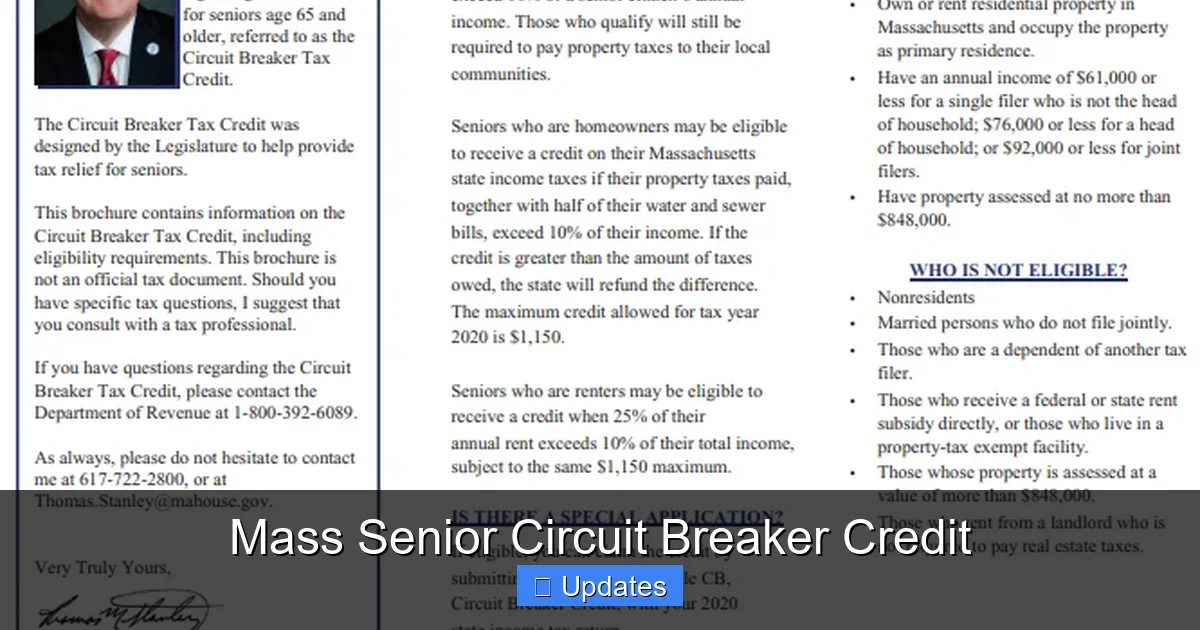
The term “circuit breaker” refers to a policy that “breaks” the link between property tax increases and household income—ensuring no one pays more than a certain percentage of their earnings toward real estate taxes. In Massachusetts, this means if your property taxes consume too large a share of your income, the state steps in to cap that cost. The result? Seniors keep more of their hard-earned money instead of losing it to skyrocketing municipal bills.
Visual guide about Mass Senior Circuit Breaker Credit
Image source: repdaverogers.com
Unlike some programs that offer exemptions or deferrals, the Mass Senior Circuit Breaker Credit is actually a refundable tax credit applied directly against your state income tax return. If your credit exceeds what you owe in taxes, the difference gets paid back to you—often within weeks of filing. This makes it especially valuable for retirees who don’t owe much (or anything) in state income tax but still struggle with high local property assessments.
How Does It Work Step by Step?
Here’s the basic process:
- Determine your eligibility based on age, residency, and income.
- Gather documentation: recent property tax bills, proof of income (Social Security statements, pension stubs, etc.), and your home’s current assessed value.
- Complete Form ST-CB (Senior Circuit Breaker Credit Application).
- File your Massachusetts income tax return (Form 1) along with the completed form.
- Wait for processing—most credits are issued within 8–12 weeks.
Importantly, you must file every year to remain eligible. Missing a single year resets your application window unless you qualify for hardship exceptions.
Who Qualifies for the Mass Senior Circuit Breaker Credit?
Not everyone over 65 automatically qualifies—there are specific rules about income, residency, and home ownership. Let’s break them down.

Visual guide about Mass Senior Circuit Breaker Credit
Image source: repmindydomb.com
Basic Eligibility Requirements
- Age or Disability: Must be at least 65 years old OR permanently and totally disabled as defined by federal law.
- Primary Residence: Owned and occupied as your main home throughout the entire tax year.
- Massachusetts Resident: Must be domiciled in Massachusetts during the tax year.
- Income Limits: Adjusted annually for inflation. For 2024, single filers over 80 have a limit of $47,000; those under 80 cap at $41,000. Married couples follow similar brackets based on both spouses’ ages.
These numbers change yearly—always check the latest figures on the Massachusetts Department of Revenue website before applying.
Special Considerations for Widows/Widowers
If your spouse passed away recently, you may still qualify even if you haven’t reached 65 yet—but only under narrow circumstances. Surviving spouses can use their deceased partner’s age bracket for up to two years after death, provided they continue meeting all other requirements. Consult the DOR guidelines for exact timelines and documentation needed.
What About Renters or Those in Assisted Living?
Renters generally do not qualify because they don’t pay property taxes directly—landlords do. However, if you live in a cooperative housing unit where members collectively own the building and pay pro-rata property taxes, you might still be eligible. Similarly, residents of licensed assisted living facilities usually aren’t considered homeowners unless they own their unit outright (which is rare).
How Much Can You Save With the Mass Senior Circuit Breaker Credit?
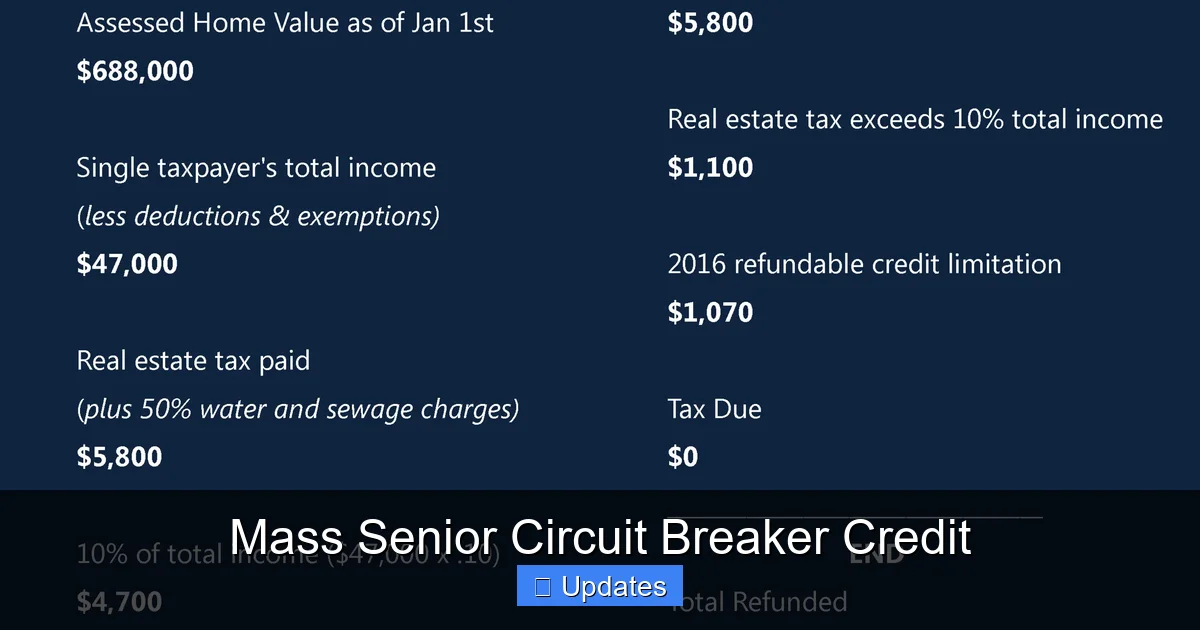
The amount of credit you receive hinges on two main factors: your household income and the amount of property taxes you paid in the previous calendar year. The formula is straightforward but variable:
Visual guide about Mass Senior Circuit Breaker Credit
Image source: images.squarespace-cdn.com
Credit = (Maximum Allowable Tax Payment – Actual Tax Paid) × Percentage Factor
Let’s unpack that with real-world examples.
Example 1: Single Homeowner Under 80
Scenario: Maria is 72, lives alone, earns $38,000 annually from Social Security and a small IRA. Her town assessed her home at $320,000, and she paid $4,200 in property taxes last year.
Calculation:
– Max allowable tax payment for her age/income tier: $2,800
– Actual tax paid: $4,200
– Difference: $1,400
– Apply percentage factor (based on income-to-assessed-value ratio): ~65%
– Final credit: $910
Maria would receive a $910 refund on her state tax return—effectively cutting her property tax burden by over 21%.
Example 2: Married Couple Over 80
Scenario: Robert and Linda, both 81, jointly earn $52,000 from pensions. Their home is assessed at $290,000; they paid $3,900 in property taxes.
Result: Due to their higher income threshold ($47,000 max), combined with lower assessed value relative to income, they’d likely qualify for the maximum annual credit of $1,200—a significant relief given their tight retirement budget.
Remember: these amounts fluctuate yearly based on legislative updates and inflation adjustments.
How to Apply for the Mass Senior Circuit Breaker Credit
Applying isn’t complicated, but missing key details can delay your refund or disqualify you entirely. Follow these steps carefully.
Step 1: Gather Required Documents
- Copy of your most recent property tax bill(s)
- Proof of income (Social Security award letters, pension statements, bank interest reports)
- Homeownership deed or mortgage statement showing your name(s)
- Driver’s license or state ID
Step 2: Complete Form ST-CB
Download the official form from the Massachusetts DOR website. Fill out Sections A through E completely. Be honest—omitting assets or misrepresenting income can lead to penalties or loss of future eligibility.
Step 3: Attach to Your State Tax Return
Mail or e-file your Form 1 (Massachusetts Personal Income Tax Return) with Form ST-CB attached. Include copies of supporting documents. Keep originals for your records.
Pro Tips for Smooth Processing
- Apply early—processing times peak in late winter/early spring.
- Double-check Social Security numbers match across all forms.
- If you moved within Massachusetts, provide addresses for both old and new properties.
- Sign and date every page.
Common Mistakes Seniors Make (And How to Avoid Them)
Even experienced filers sometimes stumble. Here are frequent errors and fixes:
- Mistake: Filing late. Solution: Submit by April 15 to claim the prior year’s credit. Late filings risk denial.
- Mistake: Using outdated income limits. Solution: Always verify current thresholds—they rise each year.
- Mistake: Claiming for rental properties. Solution: Only owner-occupied primary residences count.
- Mistake: Not updating contact info. Solution: Notify the DOR if you relocate or change phone numbers.
When in doubt, call the DOR’s Senior Circuit Breaker hotline—they’re trained to help without judgment.
Is the Mass Senior Circuit Breaker Credit Still Available?
Yes—as of 2024, the program remains active and funded. However, funding levels depend on state budgets, so while benefits haven’t been cut recently, advocates continue pushing for expansion to include younger disabled individuals and lower-income non-seniors. Stay tuned to legislative news if you believe broader access should be your next advocacy goal.
Alternatives and Complementary Programs
If you don’t quite meet the income ceiling, consider these options:
- Property Tax Work-off Program: Volunteer hours in exchange for reduced taxes (limited availability).
- Veterans Benefits: Some veterans qualify for additional property tax exemptions regardless of age.
- Local Senior Exemptions: Certain towns offer extra relief beyond state mandates.
For personalized advice, visit your local senior center—many staff assist with applications free of charge. See our guide on Plummer Place Home Of The Northbridge Senior Center for resources near you.
Final Thoughts: Don’t Miss Out on This Lifeline
The Mass Senior Circuit Breaker Credit isn’t just paperwork—it’s financial security for thousands of Bay Staters. By capping what you pay in property taxes relative to your income, it preserves dignity in retirement. And because it’s refundable, even those with minimal state tax liability walk away with real cash.
Take action today: review your eligibility, grab your tax bills, and file your application. If you’ve never applied before, start now—don’t assume you won’t qualify. Many seniors are surprised to learn they’re eligible after decades of paying full price.
And remember, you’re not alone. Local agencies, nonprofit groups, and even community volunteers often host free workshops teaching seniors how to navigate these benefits. Check out Paradise Valley Senior Center Phoenix Az for inspiration on what support networks look like nationwide.
Your peace of mind matters. Use every tool available to protect your nest egg—because when it comes to housing costs, Massachusetts wants to ensure you stay in your home, not out of it.
Frequently Asked Questions
What is the Mass Senior Circuit Breaker Credit?
The Mass Senior Circuit Breaker Credit is a Massachusetts state tax program that provides refundable credits to eligible seniors (65+) or disabled homeowners who own and occupy their primary residence. The credit reduces or eliminates property tax burdens based on income and home value, ensuring no senior pays more than a capped percentage of their earnings toward real estate taxes.
How do I know if I qualify for the Mass Senior Circuit Breaker Credit?
You qualify if you are at least 65 years old, permanently disabled, own and live in your home as your primary residence in Massachusetts, and meet income limits set annually. For 2024, single filers under 80 must have incomes below $41,000, while those over 80 face a $47,000 cap. Married couples follow similar brackets based on combined age and income.
Can I still apply if my spouse died recently?
Yes, surviving spouses may use their deceased partner’s age bracket for up to two years after death, provided they continue meeting all other requirements, including income thresholds and continued homeownership and occupancy.
Do renters or people in assisted living qualify?
Generally, no. Renters don’t pay property taxes directly and thus cannot claim the credit. Similarly, residents of licensed assisted living facilities typically don’t qualify unless they own their unit individually—which is uncommon in group care settings.
What happens if I miss the April 15 deadline?
You lose eligibility for that tax year unless you file within three years of the original due date. For example, to claim 2023’s credit, you must apply by April 15, 2024, or no later than April 15, 2027. Late filings risk denial even if you meet all other criteria.
Where can I get help applying for the credit?
Many Massachusetts senior centers offer free assistance with applications. You can also consult the Department of Revenue’s website or call their helpline. For local support, visit organizations like Plummer Place Home Of The Northbridge Senior Center for guidance tailored to your community.