
Low Income Senior Housing Buffalo Ny


Bathtub Transfer Bench

Jar Opener for Weak Hands

Book Holder Stand
Finding low income senior housing Buffalo NY can provide safe, affordable shelter for older adults on fixed incomes. With rising living costs and limited retirement savings, many seniors face difficult choices about where to live. Fortunately, several state and nonprofit programs offer subsidized apartments, supportive services, and community access tailored to low-income residents. This guide walks you through available options, how to qualify, and practical steps to secure housing that meets your needs.
Finding dignified, affordable housing as a senior doesn’t have to mean sacrificing comfort or independence. In Buffalo, New York—a city rich in history and community spirit—many low income senior housing options exist to support older adults who need financial assistance but still want access to safety, healthcare, and social engagement. Whether you’re a lifelong Buffalo resident returning after decades away or relocating from another state, understanding your choices is the first step toward stable, fulfilling housing.
Low income senior housing Buffalo NY isn’t one-size-fits-all. Instead, it includes a mix of public programs, private nonprofits, and faith-based initiatives designed to meet diverse needs. From studio apartments near medical centers to larger units with communal kitchens and activity rooms, these homes prioritize affordability without compromising quality. Many also connect residents with transportation, nutrition programs, and wellness checks—services that help seniors age in place confidently.
In this article, we’ll explore everything you need to know about securing low income senior housing in Buffalo. You’ll learn which programs are available, how eligibility works, what documents you’ll need, and where to start your search. We’ll also share tips from people who’ve successfully navigated the system and highlight organizations that go above and beyond to support Buffalo’s aging population.
Key Takeaways
- Multiple housing types: Buffalo offers low income senior housing including Section 8 vouchers, HUD-assisted apartments, and nonprofit-run communities—each with different rules and benefits.
- Eligibility depends on income and age: Most programs require applicants to be 62+ and have income below a county-specific threshold, often 50–80% of area median income.
- Waiting lists are common: Due to high demand, many low income senior housing Buffalo NY options maintain long waitlists; applying early is essential.
- Support services vary: Some properties include meal plans, transportation, health screenings, or social activities—great for maintaining independence and connection.
- Application process takes time: Be prepared to gather documents like ID, proof of income, medical records, and references before submitting an application.
- Nonprofits offer alternatives: Organizations like Catholic Charities or Erie County’s aging services network may provide case management and housing referrals even if no units are open.
- Stay updated on openings: Sign up for alerts from housing authorities or follow local senior centers to learn when new low income senior housing Buffalo NY becomes available.
📑 Table of Contents
- Types of Low Income Senior Housing in Buffalo
- How to Qualify for Low Income Senior Housing in Buffalo
- Where to Apply for Low Income Senior Housing in Buffalo
- What to Expect During the Application Process
- Costs and Financial Assistance Options
- Living Well in Buffalo: Community and Support
- Tips for Success When Seeking Low Income Senior Housing in Buffalo
- Conclusion: Hope and Help Are Within Reach
Types of Low Income Senior Housing in Buffalo
Buffalo’s approach to senior housing blends federal funding with local compassion. The most common forms include:
HUD-Assisted Properties
Administered by the U.S. Department of Housing and Urban Development (HUD), these buildings offer rent subsidies based on your income. Tenants typically pay 30% of their monthly earnings toward rent, while HUD covers the rest. In Buffalo, several apartment complexes participate in this program—often managed by private companies but regulated by HUD. Examples include properties like The Parkside Apartments or Seneca Towers, both located in convenient neighborhoods with easy bus access.
Section 8 Project-Based Vouchers
Unlike tenant-based vouchers (which move with you), project-based Section 8 means the subsidy is tied to a specific building. If approved, you’ll live in a designated low income senior housing Buffalo NY complex where rent is capped at a percentage of your income. These sites usually have waiting lists, so being patient and persistent pays off.
Nonprofit and Faith-Based Communities
Organizations such as Catholic Charities Diocese of Buffalo or Habitat for Humanity ReStore sometimes develop or manage senior housing tailored to low-income individuals. These may include shared-living models, congregate care, or even tiny home villages—all designed to foster neighborly support.
Erie County Supportive Housing
Through partnerships with local agencies, Erie County runs or funds housing with added services like meal delivery, home repairs, or counseling. These aren’t always traditional apartments; they might be group homes or subsidized rentals in existing buildings.
Each type has its pros and cons. HUD-assisted units often have the longest histories and established reputations, while nonprofit models may offer more personalized care. Your best bet is to compare locations, amenities, and application timelines to find what fits your lifestyle.
How to Qualify for Low Income Senior Housing in Buffalo
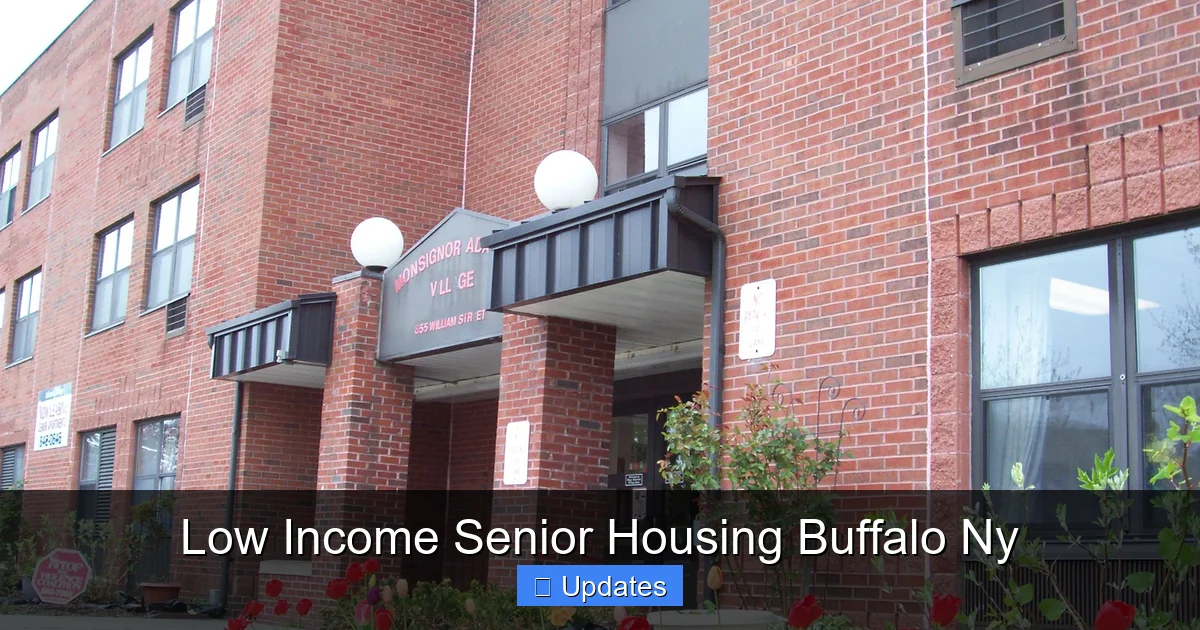
Visual guide about Low Income Senior Housing Buffalo Ny
Image source: lowincomehousing.us
Eligibility hinges on three main factors: age, income, and residency. Let’s break them down.
Age Requirement
Almost all low income senior housing Buffalo NY programs require applicants to be at least 62 years old. Some specialized developments accept younger disabled individuals, but the standard cutoff is 62. Proof of birth date or Social Security card is required during screening.
Income Limits
Income thresholds vary by program but generally fall between 50% and 80% of the Area Median Income (AMI) for Erie County. As of recent data, that means:
– For a single person: max $39,700/year
– For a couple: max $45,350/year
Keep in mind that “income” includes wages, pensions, Social Security, unemployment benefits, and even small inheritances. Exceptions exist for veterans’ disability payments or Supplemental Security Income (SSI), which are counted differently.
Residency Rules
Most Buffalo-area housing prioritizes Erie County residents. If you’re moving here, you’ll need to establish domicile—usually shown by utility bills, voter registration, or driver’s license. Out-of-state seniors can apply if space allows, but locals get preference.
Additional considerations include criminal background checks (felonies may disqualify you), credit history, and whether pets are allowed. Don’t assume you’re automatically ineligible—many applicants with past issues still qualify after appeal or documentation.
Where to Apply for Low Income Senior Housing in Buffalo

Visual guide about Low Income Senior Housing Buffalo Ny
Image source: lowincomehousing.us
The official starting point is the Buffalo Niagara Region Housing Authority (BNRHA), which manages several HUD-funded projects. Their website lists current vacancies and provides downloadable applications. You can also call their intake line during business hours to ask questions.
Other key places to check:
Catholic Charities Diocese of Buffalo
They operate the St. Vincent de Paul Village, a 100-unit development offering subsidized rents for seniors earning under 60% AMI. Applications are accepted quarterly, so plan ahead.
Erie County Department for Senior Services
This agency coordinates aging-related resources, including housing referrals. Staff can walk you through eligibility, help fill out forms, and connect you with waiting list managers.
New York State Homes and Community Renewal (HCR)
While not Buffalo-specific, HCR oversees statewide affordable housing programs. Their portal lets you search for units by ZIP code and filter by senior-friendly features.
Local Churches and Synagogues
Many religious groups run small-scale housing or know of openings before they’re advertised publicly. Reach out to places like St. Joseph’s Cathedral or Temple Sinai—they often keep tabs on opportunities.
Pro tip: Visit senior centers like the West Side Senior Center or North Buffalo Senior Center. Staff there frequently hear about new units and can distribute flyers or host application workshops.
What to Expect During the Application Process
Visual guide about Low Income Senior Housing Buffalo Ny
Image source: lowincomehousing.us
Applying for low income senior housing Buffalo NY isn’t instant. It usually takes 3–6 months from submission to move-in—sometimes longer. Here’s what to anticipate:
Gathering Documents
You’ll need:
– Photo ID (driver’s license or passport)
– Birth certificate or Social Security card
– Proof of income (last 3 pay stubs, pension statements, SSA-1099)
– Bank statements (checking/savings, last 3 months)
– Lease agreements if currently renting
– Medical records (for disability waivers, if applicable)
Don’t wait until the last minute! Missing paperwork delays everything.
Interview and Background Check
After submitting, you’ll schedule an interview—either in person or via Zoom. Expect questions about your health, daily needs, and emergency contacts. A background check follows, covering criminal history and landlord references.
Waiting List Placement
Once cleared, you join a queue. Priority often goes to:
1. Widows/widowers over 75
2. Veterans
3. Those with disabilities
4. Longtime Erie County residents
Even then, waits can stretch 1–2 years. Stay proactive by calling monthly to confirm your status.
Move-In Requirements
When a unit opens, you’ll sign a lease, pay a security deposit (usually $200–$500), and attend a welcome orientation. Utilities may be included or billed separately—check the fine print.
Remember: rejection isn’t permanent. If denied, request feedback and reapply when circumstances change (e.g., income drops due to job loss).
Costs and Financial Assistance Options
True “low income” means affordable—not free. But costs are far lower than market rate. Typical rent structures include:
Percentage-Based Rent
You pay 30% of your gross monthly income. For someone making $2,000/month, that’s $600 rent. Utilities may be extra.
Flat-Rate Subsidy
Some properties cap rent at a set amount regardless of income—great for stability. Example: $650/month total, including water and trash.
Utilities Assistance Programs
If heating or electricity costs eat into your budget, look into:
– NYSERDA Home Energy Assistance Program (HEAP): Covers winter heating bills.
– National Grid’s CARE Program: Reduced rates for eligible seniors.
– Niagara Mohawk Power Corporation’s Low-Income Rate Plan: Discounted electricity.
These won’t reduce rent, but they ease monthly strain.
Supplemental Benefits
Beyond housing, Buffalo offers:
– **Food pantries** (e.g., Food Bank of Western NY)
– **Free legal aid** (Erie County Bar Association)
– **Transportation vouchers** (Erie County Transit)
Combined, these can stretch your dollars significantly.
Living Well in Buffalo: Community and Support
Affordable housing is just part of the picture. Buffalo’s strong sense of community makes it easier to thrive as a senior. Consider joining:
Senior Centers
Places like the **East Side Senior Center** or **Southtowns Senior Center** host bingo nights, fitness classes, and volunteer opportunities. They’re hubs for news about housing openings too.
Healthcare Access
Buffalo General Medical Center and Oishei Children’s Hospital have geriatric specialists nearby. Medicaid (called Medicaid Managed Long Term Care) covers home health aides, adult day care, and nursing visits—services that let you stay independent longer.
Social Activities
From art workshops at Albright-Knox Art Gallery to walking clubs along Delaware Park, there’s no shortage of ways to stay engaged. Many low income senior housing Buffalo NY properties organize field trips or movie nights—another perk of communal living.
Pet-Friendly Options
Yes, some Buffalo senior housing allows dogs or cats! Ask about pet policies during your tour. Companionship animals improve mental health and reduce loneliness.
Tips for Success When Seeking Low Income Senior Housing in Buffalo
Navigating the system can feel overwhelming, but these strategies make it smoother:
1. **Start early**: Begin gathering documents 2–3 months before you need housing.
2. **Be flexible with location**: Expanding your search to nearby suburbs like Cheektowaga or Lackawanna increases chances.
3. **Network**: Tell friends, family, and doctors about your search—they might know of unadvertised units.
4. **Attend info sessions**: BNRHA and Catholic Charities host monthly webinars explaining eligibility and timelines.
5. **Follow up weekly**: Call housing offices to check your waiting list rank.
6. **Consider co-housing**: Some seniors pool resources to rent duplexes or townhomes with shared costs.
7. **Explore alternatives**: If apartments are full, ask about subsidized single-room occupancy (SRO) hotels like those run by Volunteers of America.
Also, don’t overlook **home modifications**. Erie County’s Aging & Disability Services can fund grab bars, ramps, or stairlifts—even if you haven’t moved yet!
Conclusion: Hope and Help Are Within Reach
Securing low income senior housing Buffalo NY requires patience and persistence, but it’s absolutely possible. With the right preparation and support, you can find a home that’s not only affordable but enriching—filled with neighbors who become friends and staff who treat you with dignity.
Remember, you’re not alone. Thousands of seniors in Buffalo live well thanks to these programs. By knowing your options, staying organized, and leaning on local resources, you’ll increase your odds of success. And when you do move in? Celebrate—you’ve taken a vital step toward comfort, security, and community.
For more guidance, revisit our earlier sections or reach out to Erie County’s aging services team. They’re there to help.
—
Frequently Asked Questions
What is the average wait time for low income senior housing in Buffalo?
Wait times typically range from 6 months to 2 years, depending on the property and demand. Some popular buildings like Seneca Towers have waits exceeding 18 months. Staying on multiple lists and checking monthly improves your chances.
Can I apply if I’m not a U.S. citizen?
Yes, but non-citizens must have lawful immigration status and meet income/age requirements. Refugees, asylees, and certain permanent residents are eligible. Documentation proving status is required during application.
Are utilities included in low income senior housing rents?
It varies by building. Some HUD-assisted units bundle utilities; others charge separately. Always ask during your application review. If heating/electricity costs worry you, contact NYSERDA for HEAP assistance.
What if my income suddenly drops due to illness or job loss?
Notify your housing provider immediately. Many programs allow recertification every 6–12 months, and a drop in income could lower your rent retroactively. Keep records of medical bills or layoff notices to support your case.
Do I need to have a medical condition to qualify?
No—most low income senior housing Buffalo NY serves healthy seniors over 62. However, some disability-focused units accept younger applicants. Age is the primary requirement for standard programs.
Is there low income senior housing near public transit in Buffalo?
Absolutely. Many HUD properties are within walking distance of Erie County Transit buses, especially in areas like Downtown, Allentown, or South Buffalo. Ask about transit passes or discounted fare cards during your tour.